
National
Canada Needs an Alternative to Carney’s One Man Show


When the Carney government’s honeymoon is over, and its missteps on a variety of fronts become more evident, the search will begin in earnest for “alternatives”. Looking ahead, what might such alternatives be?

On the fiscal front, the recent federal budget gets off on the wrong foot by attributing Canada’s economic woes to major global events and Trump’s tariffs, without in any way acknowledging the consequences of a decade of mismanagement by the Trudeau regime. The budget also still contains references to Net Zero on the climate change front, a Carney fixation. What an alternative budget might look like is a discussion for the weeks ahead, but it might begin by calling for a federal commitment to an alternative Net Zero: Federal Expenditures Minus Federal Revenues to Equal Zero by 2030.
Balancing the federal budget will require a major downsizing of the massive federal bureaucracy. But the downsizing method chosen by the Carney government is an old and unimaginative approach which simply doesn’t work – charging the bureaucracy itself to define and implement its own downsizing[1]. The alternative? Establishing a completely independent outside agency to tackle the task – an improved Canadianized version of Trump’s Department of Government Efficiency (DOGE) or its UK version as being developed by Reform UK.
On the economic front and the need for industrial projects to stimulate an economic recovery, the Carney government predictably puts its faith in its own ability to pick winners and losers, and in a government-run Major Projects Office to guide the winners. A better alternative? Issue a Request for Proposals from the private sector leaders of Canada’s key industrial sectors – especially those in the natural resource sectors which are Canada’s greatest strength – to identify what the market place and the investment community, not politicians and bureaucrats, believe to be the most stimulative and urgently required projects and the conditions for advancing them. Not surprisingly, one of the main conditions will likely be for an over-regulating over-taxing federal government to “get out of the way”.
On the national unity front, federal-provincial relations are being strained to the breaking point by major federal intrusions in areas of provincial jurisdiction, fueling secessions movements in both Quebec and western Canada. The alternative? A federal Act Respecting Provincial Sovereignty which repeals or amends those statutes authorizing such intrusions in areas the constitution clearly assigns to the provinces – natural resources, health, municipal governance, property and civil rights – to eliminate or reduce federal intrusiveness. Insist also that both levels of government “stay in their lanes”, with the federal government focusing on improving its performance in those areas where no one disputes its jurisdiction or responsibility – foreign affairs, trade and commerce, indigenous affairs, defense, and monetary policy.
Then there is the tariff front where US tariffs and Canada’s erratic and ineffective responses are raising prices and killing jobs, as tariff wars always do, while seriously damaging Canada-US relations. Mr. Carney’s approach has been to first impose counter-tariffs and then withdraw them – elbows up then elbows down – while engaging sporadically in high-level elite-to-elite talks in Washington.
The alternative? Be advised, and be accompanied to Washington, by deal-making representatives of the sectors which the US most needs to become energy self-sufficient – one of Trump’s main objectives. Begin to seek the support of Trump’s constituency for tariff-modification policies – on Main Street not Wall street and in Middle not Washington America – the people Trump must listen to in order to satisfy and maintain his political base. Communicate with that constituency through the independent US media and the Rogan-Carlson-Shapiro media that Trump’s constituency talks and listens to. And begin to ally Canadians more closely with American friends and associates seeking to ensure that more tariff-modifying Republicans are elected to the US Congress in the 2026 Congressional elections.
On the leadership front, more and more Canadians are becoming disillusioned with the “one man show” style of political leadership – first from Justin Trudeau and now Mark Carney – self-absorbed politicians who want to be “the bride at every wedding and the corpse at every funeral, just as long as all eyes are upon them”.
The Budget is the Carney Budget, with Finance Minister Champagne merely the budget speech reader. It is Mr. Carney who goes to Washington and gets the photo ops, with Minister LeBlanc, listed as the Minister Responsible for Canada-US Trade, merely carrying the suitcases. It is Mr. Carney who announces the Big Projects and must even participate in the Grey Cup coin toss, notwithstanding the boos of the crowd who came to watch football not political posturing.
The Alternative? A visible, competent Leadership Team at the federal level, with the PM as the captain but visibly surrounded by strong, regional, and sectoral lieutenants with executive experience – Mackenize King’s War Cabinet a possible model to emulate.
Finally, a key question – who will forcefully and effectively represent these alternatives in the federal political arena? Could it be the current Leader of the Official Opposition? If in the days ahead, he were to become more than the Leader of the Opposition but Leader of the Official Alternative, could he not yet become the Leader of the Alternative Government Canada so desperately needs?
[1] The Comprehensive Expenditure Review described in the recent federal budget asked “federal departments and agencies” to conduct a thorough review of their own organizations, programs, and activities – subject to numerous politically motivated limitations – and under the ultimate supervision of politicians – a Cabinet Committee and the Prime Minister. (Budget 2025, page207)


Prince Rupert Port Authority CEO Shaun Stevenson. Photo courtesy Prince Rupert Port Authority
From the Canadian Energy Centre
A strategic gateway to the world
Tucked into the north coast of B.C. is the deepest natural harbour in North America and the port with the shortest travel times to Asia.
With growing capacity for exports including agricultural products, lumber, plastic pellets, propane and butane, it’s no wonder the Port of Prince Rupert often comes up as a potential new global gateway for oil from Alberta, said CEO Shaun Stevenson.
Thanks to its location and natural advantages, the port can efficiently move a wide range of commodities, he said.
That could include oil, if not for the federal tanker ban in northern B.C.’s coastal waters.

The Port of Prince Rupert on the north coast of British Columbia. Photo courtesy Prince Rupert Port Authority
“Notwithstanding the moratorium that was put in place, when you look at the attributes of the Port of Prince Rupert, there’s arguably no safer place in Canada to do it,” Stevenson said.
“I think that speaks to the need to build trust and confidence that it can be done safely, with protection of environmental risks. You can’t talk about the economic opportunity before you address safety and environmental protection.”
Safe Transit at Prince Rupert
About a 16-hour drive from Vancouver, the Port of Prince Rupert’s terminals are one to two sailing days closer to Asia than other West Coast ports.
The entrance to the inner harbour is wider than the length of three Canadian football fields.
The water is 35 metres deep — about the height of a 10-storey building — compared to 22 metres at Los Angeles and 16 metres at Seattle.
Shipmasters spend two hours navigating into the port with local pilot guides, compared to four hours at Vancouver and eight at Seattle.
“We’ve got wide open, very simple shipping lanes. It’s not moving through complex navigational channels into the site,” Stevenson said.
A Port on the Rise
The Prince Rupert Port Authority says it has entered a new era of expansion, strengthening Canada’s economic security.
The port estimates it anchors about $60 billion of Canada’s annual global trade today. Even without adding oil exports, Stevenson said that figure could grow to $100 billion.
“We need better access to the huge and growing Asian market,” said Heather Exner-Pirot, director of energy, natural resources and environment at the Macdonald-Laurier Institute.
“Prince Rupert seems purpose-built for that.”
Roughly $3 billion in new infrastructure is already taking shape, including the $750 million rail-to-container CANXPORT transloading complex for bulk commodities like specialty agricultural products, lumber and plastic pellets.

The Ridley Island Propane Export Terminal, Canada’s first marine propane export terminal, started shipping in May 2019. Photo courtesy AltaGas Ltd.
Canadian Propane Goes Global
A centrepiece of new development is the $1.35-billion Ridley Energy Export Facility — the port’s third propane terminal since 2019.
“Prince Rupert is already emerging as a globally significant gateway for propane exports to Asia,” Exner-Pirot said.
Thanks to shipments from Prince Rupert, Canadian propane – primarily from Alberta – has gone global, no longer confined to U.S. markets.
More than 45 per cent of Canada’s propane exports now reach destinations outside the United States, according to the Canada Energy Regulator.
“Twenty-five per cent of Japan’s propane imports come through Prince Rupert, and just shy of 15 per cent of Korea’s imports. It’s created a lift on every barrel produced in Western Canada,” Stevenson said.
“When we look at natural gas liquids, propane and butane, we think there’s an opportunity for Canada via Prince Rupert becoming the trading benchmark for the Asia-Pacific region.”
That would give Canadian production an enduring competitive advantage when serving key markets in Asia, he said.
Deep Connection to Alberta
The Port of Prince Rupert has been a key export hub for Alberta commodities for more than four decades.
Through the Alberta Heritage Savings Trust Fund, the province invested $134 million — roughly half the total cost — to build the Prince Rupert Grain Terminal, which opened in 1985.
The largest grain terminal on the West Coast, it primarily handles wheat, barley, and canola from the prairies.

The Prince Rupert Grain Terminal. Photo courtesy Prince Rupert Port Authority
Today, the connection to Alberta remains strong.
In 2022, $3.8 billion worth of Alberta exports — mainly propane, agricultural products and wood pulp — were shipped through the Port of Prince Rupert, according to the province’s Ministry of Transportation and Economic Corridors.
In 2024, Alberta awarded a $250,000 grant to the Prince Rupert Port Authority to lead discussions on expanding transportation links with the province’s Industrial Heartland region near Edmonton.
Handling Some of the World’s Biggest Vessels
The Port of Prince Rupert could safely handle oil tankers, including Very Large Crude Carriers (VLCCs), Stevenson said.
“We would have the capacity both in water depth and access and egress to the port that could handle Aframax, Suezmax and even VLCCs,” he said.
“We don’t have terminal capacity to handle oil at this point, but there’s certainly terminal capacities within the port complex that could be either expanded or diversified in their capability.”
Market Access Lessons From TMX
Like propane, Canada’s oil exports have gained traction in Asia, thanks to the expanded Trans Mountain pipeline and the Westridge Marine Terminal near Vancouver — about 1,600 kilometres south of Prince Rupert, where there is no oil tanker ban.
The Trans Mountain expansion project included the largest expansion of ocean oil spill response in Canadian history, doubling capacity of the West Coast Marine Response Corporation.

The K.J. Gardner is the largest-ever spill response vessel in Canada. Photo courtesy Western Canada Marine Response Corporation
The Canada Energy Regulator (CER) reports that Canadian oil exports to Asia more than tripled after the expanded pipeline and terminal went into service in May 2024.
As a result, the price for Canadian oil has gone up.
The gap between Western Canadian Select (WCS) and West Texas Intermediate (WTI) has narrowed to about $12 per barrel this year, compared to $19 per barrel in 2023, according to GLJ Petroleum Consultants.
Each additional dollar earned per barrel adds about $280 million in annual government royalties and tax revenues, according to economist Peter Tertzakian.
The Road Ahead
There are likely several potential sites for a new West Coast oil terminal, Stevenson said.
“A pipeline is going to find its way to tidewater based upon the safest and most efficient route,” he said.
“The terminal part is relatively straightforward, whether it’s in Prince Rupert or somewhere else.”
Under Canada’s Marine Act, the Port of Prince Rupert’s mandate is to enable trade, Stevenson said.
“If Canada’s trade objectives include moving oil off the West Coast, we’re here to enable it, presuming that the project has a mandate,” he said.
“If we see the basis of a project like this, we would ensure that it’s done to the best possible standard.”
From the Fraser Institute
By Gary Mauser
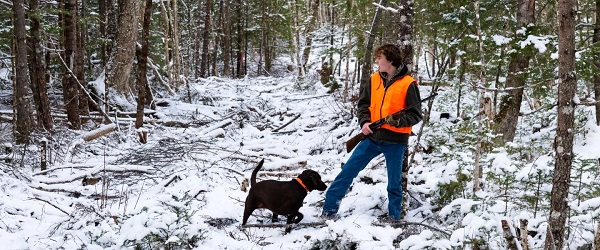
The government told Cape Bretoners they had two weeks to surrender their firearms to qualify for reimbursement or “buyback.” The pilot project netted a grand total of 22 firearms.
Five years after then-prime minister Justin Trudeau banned more than 100,000 types of so-called “assault-style firearms,” the federal government recently made the first attempt to force Canadians to surrender these firearms.
It didn’t go well.
The police chief in Cape Breton, Nova Scotia, volunteered to run a pilot “buyback” project, which began last month. The government told Cape Bretoners they had two weeks to surrender their firearms to qualify for reimbursement or “buyback.” The pilot project netted a grand total of 22 firearms.
This failure should surprise no one. Back in 2018, a survey of “stakeholders” warned the government that firearms owners wouldn’t support such a gun ban. According to Prime Minister Carney’s own Privy Council Office the “program faces a risk of non-compliance.” And federal Public Safety Minister Gary Anandasangaree was recently recorded admitting that the “buyback” is a partisan maneuver, and if it were up to him, he’d scrap it. What’s surprising is Ottawa’s persistence, particularly given the change in the government and the opportunity to discard ineffective policies.
So what’s really going on here?
One thing is for certain—this program is not, and never has been, about public safety. According to a report from the federal Department of Justice, almost all guns used in crimes in Canada, including in big cities such as Toronto, are possessed illegally by criminals, with many smuggled in from the United States. And according to Ontario’s solicitor general, more than 90 per cent of guns used in crimes in the province are illegally imported from the U.S. Obviously, the “buyback” program will have no effect on these guns possessed illegally by criminals.
Moreover, Canadian firearms owners are exceptionally law-abiding and less likely to commit murder than other Canadians. That also should not be surprising. To own a firearm in Canada, you must obtain a Possession and Acquisition Licence (PAL) from the RCMP after initial vetting and daily monitoring for possible criminal activity. Between 2000 and 2020, an average of 12 PAL-holders per year were accused of homicide, out of approximately two million PAL-holders. During that same 10-year period, the PAL-holder firearms homicide rate was 0.63 (per 100,000 PAL-holders) compared to 0.72 (per 100,000 adult Canadians)—that’s 14 per cent higher than the rate for PAL-holders.
In other words, neither the so-called “assault-style firearms” nor their owners pose a threat to the public.
And the government’s own actions belie its claims. If these firearms are such a threat to Canadians, why slow-roll the “buyback” program? If inaction increased the likelihood of criminality by law-abiding firearms owners, why wait five years before launching a pilot program in a small community such as Cape Breton? And why continue to extend the amnesty period for another year, which the government did last month at the same time its pilot project netted a mere 22 firearms?
To ask those questions is to answer them.
Another question—how much will the “buyback” program cost taxpayers?
The government continues to block any attempt to disclose the full financial costs (although the Canadian Taxpayers Federation has launched a lawsuit to try to force the government to honour its Access to Information Act request). But back in 2020 the Trudeau government said it would cost $200 million to compensate firearms owners (although the Parliamentary Budget Officer said compensation costs could reach $756 million). By 2024, the program had spent $67.2 million—remember, that’s before it collected a single gun. The government recently said the program’s administrative costs (safe storage, destruction of hundreds of thousands of firearms, etc.) would reach an estimated $1.8 billion. And according to Carney’s first budget released in November, his government will spend $364 million on the program this fiscal year—at a time of massive federal deficits and debt.
This is reminiscent of the Chretien government’s gun registry fiasco, which wound up costing more than $2 billion even after then-justice minister Allan Rock promised the registry program would “almost break even” after an $85 million initial cost. The Harper government finally scrapped the registry in 2012.
As the Carney government clings to the policies of its predecessor, Canadians should understand the true nature of Ottawa’s gun “buyback” program and its costs.

Gary Mauser
Professor Emeritus, Simon Fraser University


From Underdog to Top Broodmare

Boris Johnson Urges Ukraine to Continue War

Crown seeks to punish peaceful protestor Chris Barber by confiscating his family work truck “Big Red”

Health Canada suggests MAiD expansion by pre-approving ‘advance requests’
Federal major projects list raises questions

RCMP veterans’ group promotes euthanasia presentation to members

Google denies scanning users’ email and attachments with its AI software
-
 COVID-192 days ago
The dangers of mRNA vaccines explained by Dr. John Campbell
-
 Alberta2 days ago
Keynote address of Premier Danielle Smith at 2025 UCP AGM
-
 Artificial Intelligence1 day ago
‘Trouble in Toyland’ report sounds alarm on AI toys
-
 Energy1 day ago
Canadians will soon be versed in massive West Coast LPG mega-project
-
 National1 day ago
Media bound to pay the price for selling their freedom to (selectively) offend
-
 Daily Caller1 day ago
Tom Homan Predicts Deportation Of Most Third World Migrants Over Risks From Screening Docs
-
 Bruce Dowbiggin24 hours ago
Sometimes An Ingrate Nation Pt. 2: The Great One Makes His Choice
-
 Brownstone Institute21 hours ago
The Unmasking of Vaccine Science