
Economy
Climate Panic Behind Energy Crisis


Climate activists, including members of Extinction Rebellion, participate in a demonstration in front of the Thurgood Marshall US Courthouse on June 30, 2022 in New York City. (Photo by Spencer Platt/Getty Images)
My testimony to U.S. Congress

I was delighted to be invited to testify before the United States Congress for the seventh time in two years. Below are my oral remarks. All references can be found in my full testimony, which draws on much of what I have published here on Substack over the last 18 months. To read my full testimony, please click here.
Good morning Chairwoman Maloney, Environment Subcommittee Chairman Khanna, and Ranking Member Comer, and members of the Committee. I am grateful to you for inviting my testimony.
I share this committee’s concern with climate change and misinformation. It is for that reason that I have, for more than 20 years, conducted energy analysis, worked as a journalist, and advocated for renewables, coal-to-natural gas switching, and nuclear power to reduce carbon emissions.
At the same time, I am deeply troubled by the way concern over climate change is being used to repress domestic energy production. The U.S. is failing to produce sufficient quantities of natural gas and oil for ourselves and our allies. The result is the worst energy crisis in 50 years, continuing inflation, and harm to workers and consumers in the U.S. and the Western world. Energy shortages are already resulting in rising social disorder and the toppling of governments, and they are about to get much worse.
We should do more to address climate change but in a framework that prioritizes energy abundance, reliability, and security. Climate change is real and we should seek to reduce carbon emissions. But it’s also the case that U.S. carbon emissions declined 22% between 2005 and 2020, global emissions were flat over the last decade, and weather-related disasters have declined since the beginning of this century. There is no scientific scenario for mass death from climate change. A far more immediate and dangerous threat is insufficient energy supplies due to U.S. government policies and actions aimed at reducing oil and gas production.
The Biden administration claims to be doing all it can to increase oil and natural gas production but it’s not. It has issued fewer leases for oil and gas production on federal lands than any other administration since World War II. It blocked the expansion of oil refining. It is using environmental regulations to reduce liquified natural gas production and exports. It has encouraged greater production by Venezuela, Saudi Arabia, and other OPEC nations, rather than in the U.S. And its representatives continue to emphasize that their goal is to end the use of fossil fuels, including the cleanest one, natural gas, thereby undermining private sector investment.
 |
If this committee is truly concerned about corporate profits and misinformation, then it must approach the issue fairly. The big tech companies make larger profits than big oil but have for some reason not been called to account. Nor has there been any acknowledgement that the U.S. oil and gas industry effectively subsidized American consumers to the tune of $100 billion per year for most of the last 12 years, resulting in many bankruptcies and financial losses. As for misinformation about climate change and energy, it is rife on all sides, and I question whether the demands for censorship by big tech firms are being made in good faith, or are consistent with the rights protected by the First Amendment.
Efforts by the Biden administration and Congress to increase reliance on weather dependent renewable energies and electric vehicles (EVs) risk undermining American industries and helping China. China has more global market share of the production of renewables, EVs, and their material components than OPEC has over global oil production. It would be a grave error for the U.S. to sacrifice its hard-won energy security for dependence on China for energy. While I support the repatriation of those industries to the U.S., doing so will take decades, not years. Increased costs tied to higher U.S. labor and environmental standards could further impede their development. There are also significant underlying physical problems with renewables, stemming from their energy-dilute, material-intensive nature, that may not be surmountable. Already we have seen that their weather-dependence, large land requirements, and large material throughput result in renewables making electricity significantly more expensive everywhere they are deployed at scale.
The right path forward would increase oil and natural gas production in the short and medium terms, and increase nuclear production in the medium to long terms. The U.S. government is, by extending and expanding heavy subsidies for renewables, expanding control over energy markets, but without a clear vision for the role of oil, gas, and nuclear.
We should seek a significant expansion of natural gas and oil production, pipelines, and refineries to provide greater energy security for ourselves, and to produce in sufficient quantities for our allies. We should seek a significant expansion of nuclear power to increase energy abundance and security, produce hydrogen, and one day phase out the use of all fossil fuels. While the latter shouldn’t be our main focus, particularly now, radical decarbonization can and should be a medium- to long-term objective within the context of creating abundant, secure, and low-cost energy supplies to power our remarkable nation and civilization.

From LifeSiteNews
If ‘the idea of a global corporate tax becomes normalized, we may eventually see other agreements to impose other taxes, on carbon, airfare, or who knows what.’
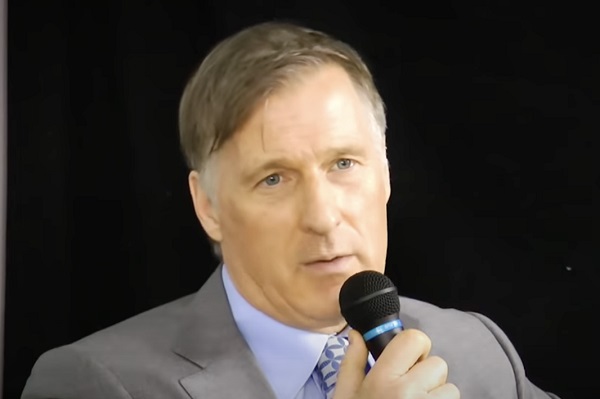
People’s Party of Canada leader Maxime Bernier has warned that the Liberal government’s push for World Economic Forum (WEF) “Global Tax” scheme should concern Canadians.
According to Canada’s 2024 Budget, Prime Minister Justin Trudeau is working to pass the WEF’s Global Minimum Tax Act which will mandate that multinational companies pay a minimum tax rate of 15 percent.
“Canadians should be very concerned, for several reasons,” People’s Party leader Maxime Bernier told LifeSiteNews, in response to the proposal.
“First, the WEF is a globalist institution that actively campaigns for the establishment of a world government and for the adoption of socialist, authoritarian, and reactionary anti-growth policies across the world,” he explained. “Any proposal they make is very likely not in the interest of Canadians.”
“Second, this minimum tax on multinationals is a way to insidiously build support for a global harmonized tax regime that will lower tax competition between countries, and therefore ensure that taxes can stay higher everywhere,” he continued.
“Canada reaffirms its commitment to Pillar One and will continue to work diligently to finalize a multilateral treaty and bring the new system into effect as soon as a critical mass of countries is willing,” the budget stated.
“However, in view of consecutive delays internationally in implementing the multilateral treaty, Canada cannot continue to wait before taking action,” it continued.
The Trudeau government also announced it would be implementing “Pillar Two,” which aims to establish a global minimum corporate tax rate.
“Pillar Two of the plan is a global minimum tax regime to ensure that large multinational corporations are subject to a minimum effective tax rate of 15 per cent on their profits wherever they do business,” the Liberals explained.
“The federal government is moving ahead with legislation to implement the regime in Canada, following consultations last summer on draft legislative proposals for the new Global Minimum Tax Act,” it continued.
According to the budget, Trudeau promised to introduce the new legislation in Parliament soon.
The global tax was first proposed by Secretary-General of Amnesty International at the WEF meeting in Davos this January.
“Let’s start taxing carbon…[but] not just carbon tax,” the head of Amnesty International, Agnes Callamard, said during a panel discussion.
According to the WEF, the tax, proposed by the Organization for Economic Co-operation and Development (OECD), “imposes a minimum effective rate of 15% on corporate profits.”
Following the meeting, 140 countries, including Canada, pledged to impose the tax.
While a tax on large corporations does not necessarily sound unethical, implementing a global tax appears to be just the first step in the WEF’s globalization plan by undermining the sovereignty of nations.
While Bernier explained that multinationals should pay taxes, he argued it is the role of each country to determine what those taxes are.
“The logic of pressuring countries with low taxes to raise them is that it lessens fiscal competition and makes it then less costly and easier for countries with higher taxes to keep them high,” he said.
Bernier pointed out that competition is good since it “forces everyone to get better and more efficient.”
“In the end, we all end up paying for taxes, even those paid by multinationals, as it causes them to raise prices and transfer the cost of taxes to consumers,” he warned.
Bernier further explained that the new tax could be a first step “toward the implementation of global taxes by the United Nations or some of its agencies, with the cooperation of globalist governments like Trudeau’s willing to cede our sovereignty to these international organizations.”
“Just like ‘temporary taxes’ (like the income tax adopted during WWI) tend to become permanent, ‘minimum taxes’ tend to be raised,” he warned. “And if the idea of a global corporate tax becomes normalized, we may eventually see other agreements to impose other taxes, on carbon, airfare, or who knows what.”
Trudeau’s involvement in the WEF’s plan should not be surprising considering his current environmental goals – which are in lockstep with the United Nations’ 2030 Agenda for Sustainable Development – which include the phasing out coal-fired power plants, reducing fertilizer usage, and curbing natural gas use over the coming decades.
The reduction and eventual elimination of so-called “fossil fuels” and a transition to unreliable “green” energy has also been pushed by the World Economic Forum – the aforementioned group famous for its socialist “Great Reset” agenda – in which Trudeau and some of his cabinet are involved.

From the Fraser Institute
By Ben Eisen, Milagros Palacios and Lawrence Schembri
Canada’s inflation-adjusted per-person annual economic growth rate (0.7 per cent) is meaningfully worse than the G7 average (1.0 per cent) over this same period. The gap with the U.S. (1.2 per cent) is even larger. Only Italy performed worse than Canada.
Growth in gross domestic product (GDP), the total value of all goods and services produced in the economy annually, is one of the most frequently cited indicators of Canada’s economic performance. Journalists, politicians and analysts often compare various measures of Canada’s total GDP growth to other countries, or to Canada’s past performance, to assess the health of the economy and living standards. However, this statistic is misleading as a measure of living standards when population growth rates vary greatly across countries or over time.
Federal Finance Minister Chrystia Freeland, for example, recently boasted that Canada had experienced the “strongest economic growth in the G7” in 2022. Although the Trudeau government often uses international comparisons on aggregate GDP growth as evidence of economic success, it’s not the first to do so. In 2015, then-prime minister Stephen Harper said Canada’s GDP growth was “head and shoulders above all our G7 partners over the long term.”
Unfortunately, such statements do more to obscure public understanding of Canada’s economic performance than enlighten it. In reality, aggregate GDP growth statistics are not driven by productivity improvements and do not reflect rising living standards. Instead, they’re primarily the result of differences in population and labour force growth. In other words, they aren’t primarily the result of Canadians becoming better at producing goods and services (i.e. productivity) and thus generating more income for their families. Instead, they primarily reflect the fact that there are simply more people working, which increases the total amount of goods and services produced but doesn’t necessarily translate into increased living standards.
Let’s look at the numbers. Canada’s annual average GDP growth (with no adjustment for population) from 2000 to 2023 was the second-highest in the G7 at 1.8 per cent, just behind the United States at 1.9 per cent. That sounds good, until you make a simple adjustment for population changes by comparing GDP per person. Then a completely different story emerges.
Canada’s inflation-adjusted per-person annual economic growth rate (0.7 per cent) is meaningfully worse than the G7 average (1.0 per cent) over this same period. The gap with the U.S. (1.2 per cent) is even larger. Only Italy performed worse than Canada.
Why the inversion of results from good to bad? Because Canada has had by far the fastest population growth rate in the G7, growing at an annualized rate of 1.1 per cent—more than twice the annual population growth rate of the G7 as a whole at 0.5 per cent. In aggregate, Canada’s population increased by 29.8 per cent during this time period compared to just 11.5 per cent in the entire G7.
Clearly, aggregate GDP growth is a poor tool for international comparisons. It’s also not a good way to assess changes in Canada’s performance over time because Canada’s rate of population growth has not been constant. Starting in 2016, sharply higher rates of immigration have led to a pronounced increase in population growth. This increase has effectively partially obscured historically weak economic growth per person over the same period.
Specifically, from 2015 to 2023, under the Trudeau government, inflation-adjusted per-person economic growth averaged just 0.3 per cent. For historical perspective, per-person economic growth was 0.8 per cent annually under Brian Mulroney, 2.4 per cent under Jean Chrétien and 2.0 per cent under Paul Martin.
Due to Canada’s sharp increase in population growth in recent years, aggregate GDP growth is a misleading indicator for comparing economic growth performance across countries or time periods. Canada is not leading the G7, or doing well in historical terms, when it comes to economic growth measures that make simple adjustments for our rapidly growing population. In reality, we’ve become a growth laggard and our living standards have largely stagnated for the better part of a decade.
Authors:



Deborah Birx Gets Her Close-Up

Biden’s Kill Switch: The Growing Threat of Government Control of Your Car
US firms like BlackRock are dropping their climate obsession while Europe ramps theirs up
Conservative MP testifies that foreign agents could effectively elect Canada’s prime minister, premiers
-
 Energy2 days ago
Anti-LNG activists have decided that they now actually care for LNG investors after years of calling to divest
-
 International2 days ago
UN attacks stay-at-home motherhood as ‘gender inequality’
-
 Energy2 days ago
Reflections on Earth Day
-
 Alberta2 days ago
Province to stop municipalities overcharging on utility bills
-
 Housing1 day ago
Trudeau’s 2024 budget could drive out investment as housing bubble continues
-
 2024 City Councilor By-Election2 days ago
Chad Krahn wins City Council by-election: Official results Friday
-
 Alberta1 day ago
Alberta government should create flat 8% personal and business income tax rate in Alberta
-
 National1 day ago
Low and middle income Canadians hit hardest by high marginal effective tax rates