
Opinion
Why Everything We Thought About Drugs Was Wrong

Michael Schellenberger is a leading environmentalist and progressive activist who has become disillusioned with the movements he used to help lead.
His passion for the environment and progressive issues remains, but his approach is unique and valuable.
Michael Shellenberger is author of the best-selling “Apocalypse Never”
This newsletter was sent out to Michael Schellenberger’s subscribers on Substack

The road to hell was paved with victimology
In the late 1990s and early 2000s, I worked with a group of friends and colleagues to advocate drug decriminalization, harm reduction, and criminal justice reform. I helped progressive Congressperson Maxine Waters organize civil rights leaders to advocate for needle exchange so that heroin users wouldn’t get HIV-AIDS. I fought for the treatment of drug addiction as a public health problem not a criminal justice one. And we demanded that housing be given to the homeless without regard for their own struggles with drugs.
Our intentions were good. We thought it was irrational to criminalize the distribution of clean needles to drug users when doing so had proven to save lives. We were upset about mass incarceration, particularly of African Americans and Latinos, for nonviolent drug offenses. And we believed that the approach European nations like the Netherlands and Portugal had taken to decriminalize drugs, and expand drug treatment, was the right one.
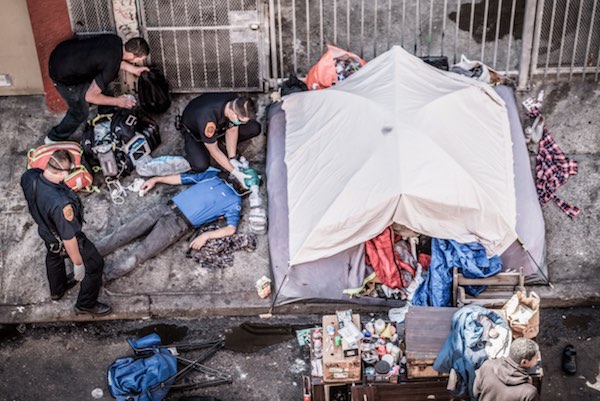
But it’s obvious now that we were wrong. Over the last 20 years the U.S. liberalized drug laws. During that time, deaths from illicit drugs rose from 17,000 to 93,000. Three three times more people die from illicit drug use than from car accidents; five times more die from drugs than homicide. Many of those people are homeless and die alone in the hotel rooms and apartment units given away as part of the harm reduction-based “Housing First” approach to homelessness. Others are children found dead by their parents on the floors of their rooms.
Many progressives today say the problem is that we didn’t go far enough, and to some extent they are right. A big factor behind rising drug deaths has been the contamination of cocaine, heroin, and counterfeit prescription opioids with fentanyl. Others say that concerns over rising drug deaths are misplaced, and that alcohol and tobacco kill more people than illicit drugs.
But drug deaths were rising in the U.S. long before the arrival of fentanyl, and most of the people who die from tobacco and alcohol do so in old age, not instantly, like they do when they are poisoned or overdose. Of the nearly 90,000 people in the U.S. who die of alcohol-related causes annually, just 2,200 die immediately from acute alcohol poisoning.
What about mass incarceration? It’s true that nearly half of the people in federal prisons are there for nonviolent drug offenses. But there are eight times more people in state prisons than federal prisons, and just 14 percent of people in state prisons are there for nonviolent drug offenses and just 4 percent for nonviolent possession. Half of state prisoners are there for murder, rape, robbery and other violent offenses.
While it’s true that both Netherlands and Portugal reduced criminal penalties, both nations still ban drug dealing, arrest drug users, and sentence dealers and users to prison or rehabilitation. “If somebody in Portugal started injecting heroin in public,” I asked the head of drug policy in that country, “what would happen to them?” He said, without hesitation, “They would be arrested.”
And being arrested is sometimes what addicts need. “I am a big fan of mandated stuff,” said Victoria Westbrook. “I don’t recommend it as a way to get your life together, but getting indicted by the Feds worked for me. I wouldn’t have done this without them.” Today Victoria is working for the San Francisco city government to integrate ex-convicts back into society.
But people in progressive cities are today shouted down for even suggesting a role for law enforcement. “Anytime a person says, ‘Maybe the police and the health care system could work together?’ or, ‘Maybe we could try some probation or low-level arrests,’ there’s an enormous outcry,” said Stanford addiction specialist Keith Humphreys. “‘No! That’s the war on drugs! The police have no role in this! Let’s open up some more services and people will come in and use them voluntarily!’”
Why is that? Why, in the midst of the worst drug death crisis in world history, and the examples of Portugal and Netherlands, are progressives still opposed to shutting down the street fentanyl markets in places like San Francisco that are killing people?
We Care A Lot

The City of San Francisco opened this homeless encampment virtually on the front steps of city hall.
There are many financial interests that make money from the drug crisis and so it’s reasonable to ask whether progressive inaction stems from political donations from addiction, homelessness, and service providers. California spends more on mental health than any other state but saw its homeless population rise 31 percent even as it declined 18 percent in the rest of the U.S. San Francisco spends significantly more on cash welfare and housing for the homeless than other cities but has one of the worst homeless and drug death crises, per capita.
But we progressives who fought to change drug laws and attitudes were not primarily motivated by money. Sure, we needed George Soros and other wealthy individuals to support our work. But we could have made more money doing other things, and Soros and others have nothing to gain financially from drug decriminalization. The same goes for homelessness. The most influential Housing First advocates work in non-profits and universities.
Is it because so many progressives who fought for decriminalization themselves used drugs? Everybody I knew in that period, myself included, smoked marijuana, drank alcohol, and experimented with psychedelics and occasionally with harder drugs. Several of the donors who supported our work were known to smoke marijuana.
But I saw no evidence that advocates for drug decriminalization and harm reduction used illicit drugs at a higher rate than the rest of the population. Some used them less and showed far greater awareness of the harms of drugs, including addiction, than many other people I have met, likely due to their higher socio-economic status as much as their specific knowledge of the issue.
And the core motivation of the people I worked with was ideological. Many people, including many progressives, were libertarian, and fundamentally believed the government did not have a right to tell able-bodied adults what drugs they could and could not use. But many more, myself included, were upset by mass incarceration, and the ways in which incarceration destroys families, disproportionately African American and Latino ones.
Our views were too simplistic and wrong. Many things undermine families and communities, of all colors, well before anyone is incarcerated, including drugs and the crime and violence associated with them. And, violent communities attract the drug trade more than the drug trade makes communities violent, both scholars and journalists find.
But mostly we were too emotional. Progressives hold two moral values particularly deeply: caring and fairness. “Across many scales, surveys, and political controversies,” notes the psychologist Jonathan Haidt, “liberals turn out to be more disturbed by signs of violence and suffering, compared to conservatives, and especially to libertarians.”
The problem is that, in the process of valuing care so much, progressives abandon other important values, argue Haidt and other researchers in a field called Moral Foundations Theory. While progressives (“liberal” and “very liberal” people) hold the values of Caring, Fairness, and Liberty, they tend to reject the values of Sanctity, Authority, and Loyalty as wrong. Because these values are so deeply held, often subconsciously, Moral Foundations Theory explains well why so many progressives and conservatives today view each other as not merely uninformed but immoral.

The Victim God

California Governor Gavin Newsome has proposed a 12 Billion dollar plan to build homes for California’s entire homeless population.
The values of Sanctity and Authority appear to explain why conservatives and moderate Democrats more than progressives favor prohibitions on things like sleeping on sidewalks, public use of hard drugs, and other behaviors. In a more traditional morality, drug use is seen as violating the Sanctity of the body, and the importance of self-control. Sleeping on sidewalks is seen as violating the value of Authority of laws and thus Loyalty to America. Writes Haidt, “liberals are often willing to trade away fairness when it conflicts with compassion or their desire to fight oppression.”
But there is a twist. Progressives don’t trade away Fairness for victims, only for those they see as privileged. Progressives still value Fairness, but more for victims, and their progressive allies, than for everyone equally, and particularly not for people progressives view as the oppressors and victimizers.
Conservatives and moderates tend to define Fairness around equal treatment, including enforcement of the law. They tend to believe we should enforce the law against the homeless man who is sleeping and urinating on BART, our subway system, even if he is a victim. Progressives disagree. They demand we take into account that the man is a victim in deciding whether to arrest and how to sentence whole classes of people including the homeless, mentally ill, and addicts.
Progressives also value Liberty, or freedom, differently from conservatives. Many progressives reject the value of Liberty for Big Tobacco and cigarette smokers but embrace the value of Liberty for fentanyl dealers and users. Why? Because progressives view fentanyl dealers and users, who are disproportionately poor, sick, and nonwhite, as victims of a bad system.
Progressives also value Authority and Loyalty for victims above everyone else. San Francisco homelessness advocate Jennifer Friedenbach told me that we should “center unhoused people, primarily black and brown folks, that are experiencing homelessness, folks with disabilities. They’re the voices that should be centered.” She is not rejecting Authority or Loyalty. Rather, she is suggesting that we should have Loyalty to the victims, and that they, not governments, should have Authority.
Indeed, progressives insist on taking orders, supposedly without questioning them, from the homeless themselves. “Drug use is often the only thing that feels good for them, to oversimplify it,” said Kristen Marshall, who oversees San Francisco’s response to drug overdoses. “When you understand that, you stop caring about the drug use and ask people what they need.”
The San Francisco Coalition on Homelessness has similarly argued that the city must let homeless people sit and lie on sidewalks, and camp in public spaces including parks and sidewalks, if that’s what they would prefer, rather than require them to stay in shelters. Once you decide, in advance, to let victims determine their fates, then much else can be justified.
Many progressives do something similar with Sanctity, which is to value some things as sacred or pure. Monique Tula, the head of the Harm Reduction Coalition, argues for “bodily autonomy” against mandatory drug treatment for people who break the law to support their addiction. In so doing, she is insisting upon the Sanctity of the body, not rejecting it. The difference between her definition of Sanctity and the traditional view of Sanctity was what violated it. Where traditional morality views recreational injection drug use as a violation of the Sanctity of the body, Tula, like many libertarians, believes that the state coercing sobriety is.
All religions and moralities have light and dark sides, suggests Haidt. “Morality binds and blinds,” he writes. On the one hand, they bind us together in groups and societies, helping us realize our individual and social needs, and are thus very positive. But religions and moralities can also create giant blind spots preventing us from seeing our dark sides, and thus can be very negative.
Victimology takes the truth that it is wrong for people to be victimized and distorts it by going a step further. Victimology asserts that victims are inherently good because they have been victimized. It robs victims of their moral agency and creates double standards that frustrate any attempt to criticize their behavior, even if they’re behaving in self-destructive, antisocial ways like smoking fentanyl and living in a tent on the sidewalk. Such reasoning is obviously faulty. It purifies victims of all badness. But by appealing to emotion, victimology overrides reason and logic.
Victimology appears to be rising as traditional religions are declining. Unlike traditional religions, many nontraditional religions are largely invisible to the people who hold them most strongly. A secular religion like victimology is powerful because it meets the contemporary psychological, social, and spiritual needs of its believers, but also because it appears obvious, not ideological, to them. Advocates of “centering” victims, giving them special rights, and allowing them to behave in ways that undermine city life, don’t believe, in my experience, that they are adherents to a new religion, but rather that they are more compassionate and more moral than those who hold more traditional views.
A Bad Case of San Fransickness

Case workers at San Francisco City Hall Homeless Encampment
“Safe Sleeping Sites” is the name San Francisco gives to parking lots of tents of homeless addicts shooting and smoking fentanyl and meth. They are expensive, costing the city $60,000 per tent to maintain. Some people say they look like a natural disaster, but with city-funded social workers providing services to the people in tents, they look to me more like a medical experiment, albeit one that no board of ethics would ever permit.
At the Sites the city isn’t providing drug treatment; it’s providing easy access to drugs. That includes cash in the form of welfare payments with which to purchase drugs, and the equipment with which to inject them. As such, progressives cities like San Francisco are directly financing the drug death crisis.
Is this Munchausen syndrome by proxy, which is when a parent deliberately makes their child sick so they can feel important? In San Fransicko, I consider this possibility, and ultimately conclude that while the progressive approach to drug addiction and homelessness can be fairly described as pathological altruism, it would be unfair to call it sadistic. Many of the drug-addicted and mentally ill homeless are, in fact, sick, and most progressives have good intentions.
But it is not unfair to point out that the city’s approach of playing the Rescuer is resulting in worsening addiction and rising drug deaths. Nor is it unfair to point out that we limit people’s potential for freedom by labeling them Victims and “centering” their trauma, rather than viewing victimization as an opportunity for heroism. Nor is it unfair to point out, as I have attempted to do by describing the history, that San Francisco’s political, business, and cultural leaders should all know better by now.
People suffering from addiction and living on the street are ill. To mix them up in speech and policy with people who are merely poor is deceptive. Leading scholars have for thirty years denounced the conflation of the merely poor with disaffiliated addicts. Yet progressive advocates for the homeless continue to engage in the same sleight of hand by using the single term “homeless,” tricking journalists, policy makers, and the public into mixing together groups of people who require different kinds of help.
Progressives justify their discourse and agenda in the name of preventing dehumanization, but the effect has been the opposite. In defending the humanity of addicts, progressives ended up defending the inhumane conditions of street addiction.
The morality of victimology contains a version of all six values identified in Moral Foundations Theory. The problem is that those values are oriented around those defined as Victims in a particular context, to the exclusion of everyone else. But not even the most devoted homeless activists could do whatever drug-addicted homeless people demand of them. The demand that we give Victims special political authority is thus really a demand to give special political authority to those who claim to represent the supposed Victims, namely homelessness advocates.
The power of victimology lies in its moralizing discourse more than in any single set of laws. I was struck in my research that progressive intellectuals and activists have had a far greater impact on public policy, and the reality on the streets, than countless progressive politicians.
It is notable that while academics and activists are the most influential individuals in shaping homeless policy in San Francisco and Los Angeles, they are also the least accountable. As the problem has worsened, their cultural and political power has grown, while voters understandably blame their local elected leaders for the crisis.
Progressive advocates and policy makers alike blame the drug war, mass incarceration, and drug prohibition for the addiction and overdose crisis, even though the crisis resulted from liberalized attitudes and drug laws, first toward pharmaceutical opioids, and then toward all drugs. This view is, on the one hand, a defensive and ideological reaction. But it is also an abdication of responsibility.
And so while we should hold our elected officials responsible, we must also ask hard questions of the intellectual architects of their policies, and of the citizens, donors, and voters who empower them. What kind of a civilization leaves its most vulnerable people to use deadly substances and die on the streets? What kind of city regulates ice cream stores more strictly than drug dealers who kill 713 of its citizens in a single year? And what kind of people moralize about their superior treatment of the poor, people of color, and addicts while enabling and subsidizing the conditions of their death?


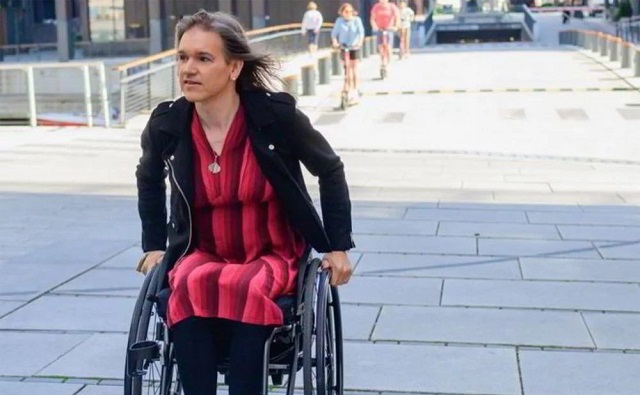
Jørund ‘Viktoria’ Alme, a Norwegian man who believes he is a paralyzed woman
From LifeSiteNews
Those who challenge the view that a person can identify as an amputee despite being healthy must also challenge the assertion that one can simply identify as the opposite sex.
Almost ten years ago, I wrote a column in this space on the phenomenon of the so-called “transabled” – people who identify as amputees or suffer from a mental illness that causes them to loathe one of their healthy limbs. In 2022, a high-profile (alleged) example of this emerged when a 53-year-old healthy, non-disabled Norwegian man began identifying as a woman paralyzed from the waist down and took to a wheelchair to give media interviews.
Those who found his claims to be somewhat suspect were in a bit of a bind – which of his assertions, after all, is more ridiculous – that he is a woman, or that he is paralyzed? Our culture has accepted that he can claim to be a woman, and that we must all nod solemnly in response. “How brave of her,” we must all say in unison as his loyal wife pushes him away from the cameras in his wheelchair. “No, not the wife. The other one.”
A grimmer but no less disturbing profile was published recently by the National Post titled “Quebec man has two healthy fingers amputated to relieve ‘body integrity dysphoria.’” It’s a sad story; the young man said he had “intrusive thoughts about his left hand’s fourth and fifth fingers, the sensation they weren’t his, that they didn’t belong to his body” since he was a child and would even have nightmares about them. He fantasized about cutting them off himself. From the Post:
Instead, a surgeon at his local hospital agreed to an elective amputation in what is being called the first described case of ‘digits amputation’ for body integrity dysphoria, or BID, a rare and complex condition characterized by an intense desire to amputate a perfectly healthy body part, such as an arm or a leg. The Quebec case involved an ambidextrous 20-year-old whose attempts at ‘non-invasive’ relief, including cognitive behavioural therapy, Prozac-like antidepressants and exposure therapy, only increased his distress.
What is significant about this case is the way it was described by Dr. Nadia Nadeau of the department of psychiatry at Université Laval in a case study published in the journal Clinical Case Reports. Nadeau describes the young man’s mental and emotional distress, and notes that this distress apparently ceased after the “elective amputation” and that “he was able to pursue the life he envisioned as a complete human being without those two fingers bothering him.” One month post surgery, he had no regrets.

The particularly significant conclusion came towards the end of the report. According to Nadeau: “He is now living a life free from distressing preoccupations about his fingers, with all his symptoms related to BID resolved. The amputation enabled him to live in alignment with his perceived identity.” This, of course, is precisely the argument used by transgender activists making the case for sex change surgeries, cross-sex hormones, and puberty blockers – that these “treatments” will help the recipient “live in alignment with his perceived identity.” Although they wouldn’t call it a “perceived” identity – they’d call it his real identity. This perceived identity, however, was considered real enough that a surgeon removed two of his fingers.
The justifications for these “treatments” that include bodily mutilation are similar, as well. The Post noted that “Nadeau’s patient, after doing some research, ‘related his condition to gender dysphoria’… People with BID often feel their physical body doesn’t align with the image of the body they have in their minds.”
Furthermore, although “cutting off healthy, functioning body parts for psychological distress raises ethical concerns, BID sufferers sometimes resort to self-mutilation or ‘black-market’ amputations, risking their lives.”
A similar argument is made for “transgender care”: if extreme medical intervention does make the mentally ill person’s body resemble the image of reality in their minds, they might harm themselves. That’s the catch-22, of course. Isn’t surgical mutilation also harm, by definition? Not if you redefine it – that’s why trans activists no longer refer to sex change surgeries, but “gender-affirming care.” According to Nadeau: “Recognizing and addressing the unique needs of (BID) patients can lead to a future where they can live with more dignity, respect and optimal well-being.”
Who can disagree with a campaign to increase understanding and dignity for the mentally ill? I wonder, however, what the limiting principle is here. If a young man who believes himself to be a woman can get himself legally castrated by a surgeon, why can’t a man who believes he is an amputee have a leg removed? Or an arm? If we have accepted that people’s self-perceptions are more important than actual reality, where does it stop?


From the Fraser Institute
By Ben Eisen, Milagros Palacios and Lawrence Schembri
Canada’s inflation-adjusted per-person annual economic growth rate (0.7 per cent) is meaningfully worse than the G7 average (1.0 per cent) over this same period. The gap with the U.S. (1.2 per cent) is even larger. Only Italy performed worse than Canada.
Growth in gross domestic product (GDP), the total value of all goods and services produced in the economy annually, is one of the most frequently cited indicators of Canada’s economic performance. Journalists, politicians and analysts often compare various measures of Canada’s total GDP growth to other countries, or to Canada’s past performance, to assess the health of the economy and living standards. However, this statistic is misleading as a measure of living standards when population growth rates vary greatly across countries or over time.
Federal Finance Minister Chrystia Freeland, for example, recently boasted that Canada had experienced the “strongest economic growth in the G7” in 2022. Although the Trudeau government often uses international comparisons on aggregate GDP growth as evidence of economic success, it’s not the first to do so. In 2015, then-prime minister Stephen Harper said Canada’s GDP growth was “head and shoulders above all our G7 partners over the long term.”
Unfortunately, such statements do more to obscure public understanding of Canada’s economic performance than enlighten it. In reality, aggregate GDP growth statistics are not driven by productivity improvements and do not reflect rising living standards. Instead, they’re primarily the result of differences in population and labour force growth. In other words, they aren’t primarily the result of Canadians becoming better at producing goods and services (i.e. productivity) and thus generating more income for their families. Instead, they primarily reflect the fact that there are simply more people working, which increases the total amount of goods and services produced but doesn’t necessarily translate into increased living standards.
Let’s look at the numbers. Canada’s annual average GDP growth (with no adjustment for population) from 2000 to 2023 was the second-highest in the G7 at 1.8 per cent, just behind the United States at 1.9 per cent. That sounds good, until you make a simple adjustment for population changes by comparing GDP per person. Then a completely different story emerges.

Canada’s inflation-adjusted per-person annual economic growth rate (0.7 per cent) is meaningfully worse than the G7 average (1.0 per cent) over this same period. The gap with the U.S. (1.2 per cent) is even larger. Only Italy performed worse than Canada.
Why the inversion of results from good to bad? Because Canada has had by far the fastest population growth rate in the G7, growing at an annualized rate of 1.1 per cent—more than twice the annual population growth rate of the G7 as a whole at 0.5 per cent. In aggregate, Canada’s population increased by 29.8 per cent during this time period compared to just 11.5 per cent in the entire G7.
Clearly, aggregate GDP growth is a poor tool for international comparisons. It’s also not a good way to assess changes in Canada’s performance over time because Canada’s rate of population growth has not been constant. Starting in 2016, sharply higher rates of immigration have led to a pronounced increase in population growth. This increase has effectively partially obscured historically weak economic growth per person over the same period.
Specifically, from 2015 to 2023, under the Trudeau government, inflation-adjusted per-person economic growth averaged just 0.3 per cent. For historical perspective, per-person economic growth was 0.8 per cent annually under Brian Mulroney, 2.4 per cent under Jean Chrétien and 2.0 per cent under Paul Martin.
Due to Canada’s sharp increase in population growth in recent years, aggregate GDP growth is a misleading indicator for comparing economic growth performance across countries or time periods. Canada is not leading the G7, or doing well in historical terms, when it comes to economic growth measures that make simple adjustments for our rapidly growing population. In reality, we’ve become a growth laggard and our living standards have largely stagnated for the better part of a decade.
Authors:


28-year-old Dutch woman to be killed by assisted suicide after doctors deem her autism ‘untreatable’
Jordan Peterson slams CBC for only interviewing pro-LGBT doctors about UK report on child ‘sex changes’

Quadriplegic man dies via euthanasia after developing bed sores waiting at Quebec hospital
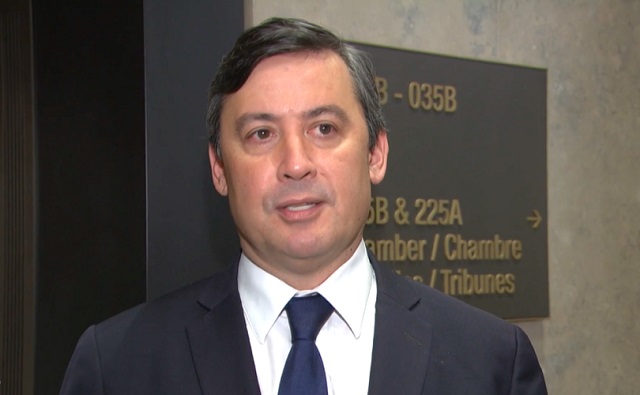
Conservative MP testifies that foreign agents could effectively elect Canada’s prime minister, premiers
-
Jordan Peterson1 day ago
Jordan Peterson slams CBC for only interviewing pro-LGBT doctors about UK report on child ‘sex changes’
-
 Addictions1 day ago
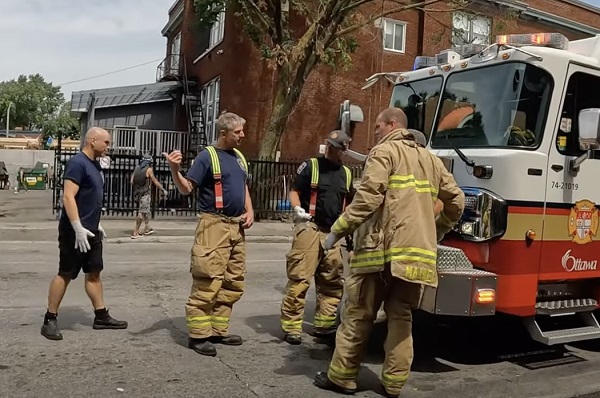
Liberal MP blasts Trudeau-backed ‘safe supply’ drug programs, linking them to ‘chaos’ in cities
-
 Economy2 days ago
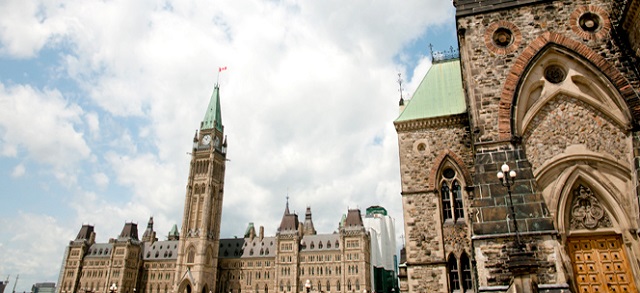
Massive deficits send debt interest charges soaring
-
 International1 day ago
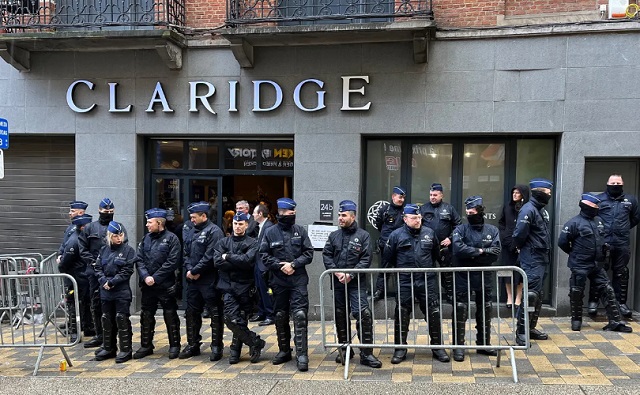
Brussels NatCon conference will continue freely after court overturns police barricade
-
 Economy2 days ago
Federal budget’s scale of spending and debt reveal a government lacking self-control
-
 Agriculture1 day ago
Bill C-282, now in the Senate, risks holding back other economic sectors and further burdening consumers
-
 Alberta21 hours ago
Danielle Smith warns arsonists who start wildfires in Alberta that they will be held accountable
-
 COVID-192 days ago
Pro-freedom Canadian nurse gets two years probation for protesting COVID restrictions