
Business
While “Team Canada” attacks Trump for election points, Premier Danielle Smith advocates for future trade relations

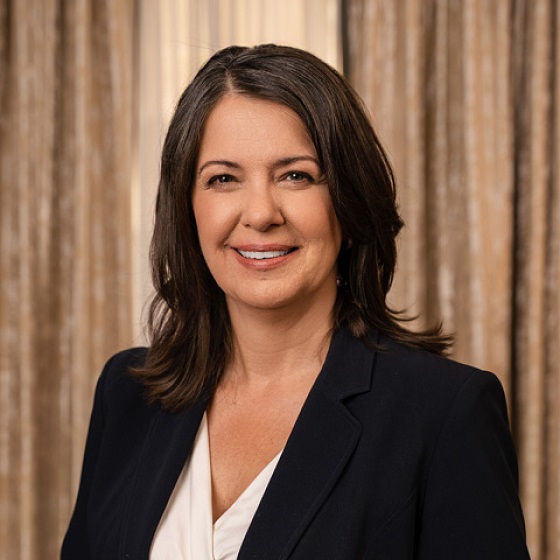
“Today, I addressed the Legislative Assembly and spoke to the actions that the Government of Alberta has taken and will continue to take to advocate for Alberta and Canada’s interests in the U.S. as we continue to face the threat and imposition of tariffs.”
Mr. Speaker,
When U.S. President Donald Trump first announced his threatened tariffs against Canada, and began musing about our country becoming the 51st state, many Canadians – and Albertans – feared for their futures.
Why? Because, regardless of our political stripe, we all knew the imposition of 25% tariffs on all Canadian goods to the U.S. would cost the jobs of hundreds of thousands of Canadians, would depress our economy, devastate our budget and damage the sovereignty of our country.
And in the roughly 4 months until just before last weekend’s federal election call, Premiers, party leaders and Canadians were united (other than perhaps the Alberta NDP) in working as hard as we could to convince the U.S. President and Congress to reconsider these unjustified actions against our country.
In fact, Premiers were all encouraged by each other as well as the former Prime Minister and his ministers, to visit the U.S., get on U.S. media, speak with every U.S. official and influencer we could find to convince the U.S. President to refrain from imposing these tariffs.
It was all about working as ‘Team Canada’ for the greater good.
Enter Liberal Prime Minister Mark Carney.
Now, all of a sudden, it is treason to talk to American media personalities that we disagree with. It is disloyal to try and persuade high-profile Republicans holding influence with the President to abandon his tariff policies on Canada. Indeed, it is a high crime to try and convince U.S. officials to refrain from imposing tariffs until after our country has an elected leader with a strong mandate.
Shame on all who dare to speak with the enemy, they say!
These are the Team Carney and Nenshi NDP talking points.
Their endgame is quite obvious. Frighten and divide Canadians. Try and make Canadians forget the utter incompetence of Liberal and NDP policies inflicted upon this country over the last 10 years. Associate conservatives with President Trump. And if they play their cards just right – and sprinkle in just enough anti-Alberta rhetoric – presto – Canada can elect another Liberal majority government.
Well – the Carney Liberals and Nenshi NDP are right about one thing…our country is indeed vulnerable right now.
And the reason why is as clear as a sunny Alberta day.
It is because for the last 10 years, Liberal and NDP leaders across this country – both federal and provincial – have repeatedly sold out Canada and Alberta with policies that have landlocked our immense natural resources, made nation building projects impossible to finance and build, and have made securing access to our ports an exercise in frustration and futility.
These Liberal and NDP leaders – from Trudeau to Singh and now to Prime Minister Mark Carney – have done everything in their power to sow investment uncertainty, add impossibly high costs on the development of our resources, and have disastrously weakened our security and military – and all in the name of their green extremist religion and its cult leaders named Guilbeault, Suzuki, Gore and Thunberg.
And the results are obvious – Canadians are poorer than Americans – overly-dependent on the Americans – and vulnerable to many nations including the Americans.
Canada has indeed been sold out – big time – and it’s been sold out by the utter incompetent, self-righteous and extreme policies of Liberal and NDP leadership across this country – including the Nenshi NDP here in Alberta. From C-69, to oil and gas production caps to tanker bans to a dozen other examples – the Liberals and their allies have attacked the Alberta and Saskatchewan economies mercilessly.
But despite all that – despite the 10 year attack on Alberta by our own federal government – when tariffs were threatened on our fellow Canadians and the federal Liberals realized they had no contacts or allies anywhere in the new U.S. administration…what did the Alberta Government do?
Did we cower in the corner madly texting our tweets about hating Donald Trump on X?
Did we turn into part time TikTok rage farmers to stir up as much fear and loathing of Americans as humanly possible?
Did we give up, throw our hands in the air, express righteous indignation – but do nothing to fight against the threat posed against our province and country?
No – that’s what the Nenshi NDP did of course – but we, Alberta’s UCP government, did not.
Instead, our government did exactly what Albertans expected us to do – we decided to fight tooth and nail for Albertan and Canadian jobs and sovereignty.
My ministers, officials and I have spent hundreds of hours over the last several months talking with, lobbying, educating, and persuading every U.S. lawmaker and media influencer that was willing to listen, about how damaging and wrongheaded imposing tariffs on Canada would be for Americans, and the millions of American jobs that would be lost because of them.
I’ve made this case repeatedly to the American people and their leaders – especially Republican leaders – from the President of the United States personally, to members of his Cabinet to Senators to governors to members of congress to podcasters to media personalities.
I’ve lost track of how many nights I have spent in uncomfortable hotel beds and in airports – doing everything humanly possible to stand up for Canadian and Alberta workers and families.
Convincing U.S. Officials to refrain from putting tariffs on any Canadian goods. Asking that they respect the current free trade agreement and not begin renegotiations until Canadians elect a new Prime Minister with a strong mandate.
Doing all we could in Alberta to secure the U.S. border and urging the Liberals to do the same across the country so we could further delay the implementation of tariffs.
And it hasn’t just been Alberta – several other Premiers – particularly conservative Premiers – from Premier Scott Moe to Premier Tim Houston to Premier Doug Ford – have been doing the same thing.
And the results – it has been almost 4 months since the President first threatened tariffs on Canada, and although steel and aluminum are being wrongfully tariffed at this time – the tariffs on remaining Canadian goods sit at zero today – rather than the threatened 25%.
And what has the Nenshi NDP done to contribute to this effort? Not a single thing other than raging against this government for every effort made to protect Albertans.
Needless to say, there is not a doubt in my mind that had the Nenshi NDP been in charge during this period, we would likely have long ago been hit with across the board 25% tariffs and lost thousands of Alberta jobs already.
Because the NDP have no idea what diplomacy is as they don’t know how to talk constructively and effectively with anyone they disagree with.
Glad we never need to find out.
Our government’s advocacy has made a massive difference for Albertans and Canadians.
That’s a fact.
But now, we have another tariff deadline looming on April 2nd – and I am off to the U.S. yet again to try and speak to Americans this time through the 2nd largest podcaster in the world whose audience is made up of exactly the people we need to persuade to convince their president to change course on tariffs against Canada.
And what does Team Carney want me to do?
They want me to abandon my post, remain in Alberta and do absolutely nothing to defend our province.
They want me to cower in the face of eastern media pundits and politicians who favour political grandstanding to effective diplomacy.
I’m fiercely criticized for going into the lion’s den to change the hearts and minds of the very Americans we need on Canada’s side to avoid a trade war with the most powerful economy on Earth.
They want this lady and Alberta to just sit down and shut up.
Well…here is my response to that.
I will not be silent. Alberta will not be silent.
We will not be pushed around and called traitors for merely having the courage to actually do something about our nation’s and province’s predicament other than merely indulging in self-righteous tantrums.
And I for one will never be silenced by the party in Ottawa that has sold out our beloved province for the last 10 years with the help of their NDP collaborators.
I have and will always put Albertans first.
And until this danger to Alberta and our economy is past, they’re going to have to roll me off in a stretcher before I stop fighting for this province and our people.
So call me and my caucus whatever name in the dictionary you want.
As long as Albertans know we’re fighting for them and their families – we could care less what the members opposite or Liberal politicians in Ottawa have to say about us.
Because Albertans expect their Premier and government to always put Albertans first and to lead them through this storm with fearless determination.
As Winston Churchill once said: “Fear is a reaction. Courage is a decision.”
We on this side of the house have made the decision to act with courage…So that Alberta may remain forever strong and free.
Thank-you, Mr. Speaker.
Danielle Smith
Danielle Smith was sworn in as Premier of Alberta and Minister of Intergovernmental Relations on October 11, 2022.


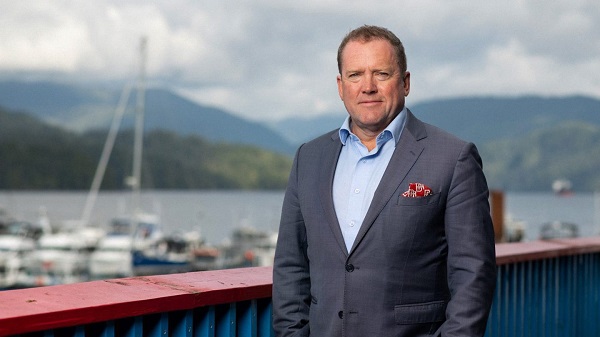
Prince Rupert Port Authority CEO Shaun Stevenson. Photo courtesy Prince Rupert Port Authority
From the Canadian Energy Centre
A strategic gateway to the world
Tucked into the north coast of B.C. is the deepest natural harbour in North America and the port with the shortest travel times to Asia.
With growing capacity for exports including agricultural products, lumber, plastic pellets, propane and butane, it’s no wonder the Port of Prince Rupert often comes up as a potential new global gateway for oil from Alberta, said CEO Shaun Stevenson.
Thanks to its location and natural advantages, the port can efficiently move a wide range of commodities, he said.
That could include oil, if not for the federal tanker ban in northern B.C.’s coastal waters.

The Port of Prince Rupert on the north coast of British Columbia. Photo courtesy Prince Rupert Port Authority
“Notwithstanding the moratorium that was put in place, when you look at the attributes of the Port of Prince Rupert, there’s arguably no safer place in Canada to do it,” Stevenson said.
“I think that speaks to the need to build trust and confidence that it can be done safely, with protection of environmental risks. You can’t talk about the economic opportunity before you address safety and environmental protection.”
Safe Transit at Prince Rupert
About a 16-hour drive from Vancouver, the Port of Prince Rupert’s terminals are one to two sailing days closer to Asia than other West Coast ports.
The entrance to the inner harbour is wider than the length of three Canadian football fields.
The water is 35 metres deep — about the height of a 10-storey building — compared to 22 metres at Los Angeles and 16 metres at Seattle.
Shipmasters spend two hours navigating into the port with local pilot guides, compared to four hours at Vancouver and eight at Seattle.
“We’ve got wide open, very simple shipping lanes. It’s not moving through complex navigational channels into the site,” Stevenson said.
A Port on the Rise
The Prince Rupert Port Authority says it has entered a new era of expansion, strengthening Canada’s economic security.
The port estimates it anchors about $60 billion of Canada’s annual global trade today. Even without adding oil exports, Stevenson said that figure could grow to $100 billion.
“We need better access to the huge and growing Asian market,” said Heather Exner-Pirot, director of energy, natural resources and environment at the Macdonald-Laurier Institute.
“Prince Rupert seems purpose-built for that.”
Roughly $3 billion in new infrastructure is already taking shape, including the $750 million rail-to-container CANXPORT transloading complex for bulk commodities like specialty agricultural products, lumber and plastic pellets.

The Ridley Island Propane Export Terminal, Canada’s first marine propane export terminal, started shipping in May 2019. Photo courtesy AltaGas Ltd.
Canadian Propane Goes Global
A centrepiece of new development is the $1.35-billion Ridley Energy Export Facility — the port’s third propane terminal since 2019.
“Prince Rupert is already emerging as a globally significant gateway for propane exports to Asia,” Exner-Pirot said.
Thanks to shipments from Prince Rupert, Canadian propane – primarily from Alberta – has gone global, no longer confined to U.S. markets.
More than 45 per cent of Canada’s propane exports now reach destinations outside the United States, according to the Canada Energy Regulator.
“Twenty-five per cent of Japan’s propane imports come through Prince Rupert, and just shy of 15 per cent of Korea’s imports. It’s created a lift on every barrel produced in Western Canada,” Stevenson said.
“When we look at natural gas liquids, propane and butane, we think there’s an opportunity for Canada via Prince Rupert becoming the trading benchmark for the Asia-Pacific region.”
That would give Canadian production an enduring competitive advantage when serving key markets in Asia, he said.
Deep Connection to Alberta
The Port of Prince Rupert has been a key export hub for Alberta commodities for more than four decades.
Through the Alberta Heritage Savings Trust Fund, the province invested $134 million — roughly half the total cost — to build the Prince Rupert Grain Terminal, which opened in 1985.
The largest grain terminal on the West Coast, it primarily handles wheat, barley, and canola from the prairies.

The Prince Rupert Grain Terminal. Photo courtesy Prince Rupert Port Authority
Today, the connection to Alberta remains strong.
In 2022, $3.8 billion worth of Alberta exports — mainly propane, agricultural products and wood pulp — were shipped through the Port of Prince Rupert, according to the province’s Ministry of Transportation and Economic Corridors.
In 2024, Alberta awarded a $250,000 grant to the Prince Rupert Port Authority to lead discussions on expanding transportation links with the province’s Industrial Heartland region near Edmonton.
Handling Some of the World’s Biggest Vessels
The Port of Prince Rupert could safely handle oil tankers, including Very Large Crude Carriers (VLCCs), Stevenson said.
“We would have the capacity both in water depth and access and egress to the port that could handle Aframax, Suezmax and even VLCCs,” he said.
“We don’t have terminal capacity to handle oil at this point, but there’s certainly terminal capacities within the port complex that could be either expanded or diversified in their capability.”
Market Access Lessons From TMX
Like propane, Canada’s oil exports have gained traction in Asia, thanks to the expanded Trans Mountain pipeline and the Westridge Marine Terminal near Vancouver — about 1,600 kilometres south of Prince Rupert, where there is no oil tanker ban.
The Trans Mountain expansion project included the largest expansion of ocean oil spill response in Canadian history, doubling capacity of the West Coast Marine Response Corporation.

The K.J. Gardner is the largest-ever spill response vessel in Canada. Photo courtesy Western Canada Marine Response Corporation
The Canada Energy Regulator (CER) reports that Canadian oil exports to Asia more than tripled after the expanded pipeline and terminal went into service in May 2024.
As a result, the price for Canadian oil has gone up.
The gap between Western Canadian Select (WCS) and West Texas Intermediate (WTI) has narrowed to about $12 per barrel this year, compared to $19 per barrel in 2023, according to GLJ Petroleum Consultants.
Each additional dollar earned per barrel adds about $280 million in annual government royalties and tax revenues, according to economist Peter Tertzakian.
The Road Ahead
There are likely several potential sites for a new West Coast oil terminal, Stevenson said.
“A pipeline is going to find its way to tidewater based upon the safest and most efficient route,” he said.
“The terminal part is relatively straightforward, whether it’s in Prince Rupert or somewhere else.”
Under Canada’s Marine Act, the Port of Prince Rupert’s mandate is to enable trade, Stevenson said.
“If Canada’s trade objectives include moving oil off the West Coast, we’re here to enable it, presuming that the project has a mandate,” he said.
“If we see the basis of a project like this, we would ensure that it’s done to the best possible standard.”
From the Fraser Institute
By Gary Mauser
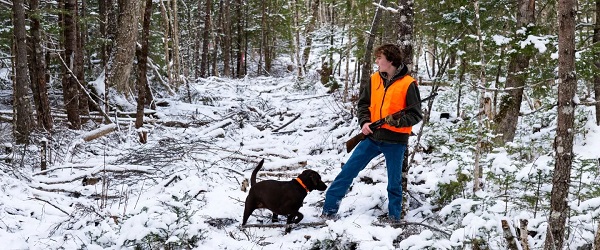
The government told Cape Bretoners they had two weeks to surrender their firearms to qualify for reimbursement or “buyback.” The pilot project netted a grand total of 22 firearms.
Five years after then-prime minister Justin Trudeau banned more than 100,000 types of so-called “assault-style firearms,” the federal government recently made the first attempt to force Canadians to surrender these firearms.
It didn’t go well.
The police chief in Cape Breton, Nova Scotia, volunteered to run a pilot “buyback” project, which began last month. The government told Cape Bretoners they had two weeks to surrender their firearms to qualify for reimbursement or “buyback.” The pilot project netted a grand total of 22 firearms.
This failure should surprise no one. Back in 2018, a survey of “stakeholders” warned the government that firearms owners wouldn’t support such a gun ban. According to Prime Minister Carney’s own Privy Council Office the “program faces a risk of non-compliance.” And federal Public Safety Minister Gary Anandasangaree was recently recorded admitting that the “buyback” is a partisan maneuver, and if it were up to him, he’d scrap it. What’s surprising is Ottawa’s persistence, particularly given the change in the government and the opportunity to discard ineffective policies.
So what’s really going on here?
One thing is for certain—this program is not, and never has been, about public safety. According to a report from the federal Department of Justice, almost all guns used in crimes in Canada, including in big cities such as Toronto, are possessed illegally by criminals, with many smuggled in from the United States. And according to Ontario’s solicitor general, more than 90 per cent of guns used in crimes in the province are illegally imported from the U.S. Obviously, the “buyback” program will have no effect on these guns possessed illegally by criminals.
Moreover, Canadian firearms owners are exceptionally law-abiding and less likely to commit murder than other Canadians. That also should not be surprising. To own a firearm in Canada, you must obtain a Possession and Acquisition Licence (PAL) from the RCMP after initial vetting and daily monitoring for possible criminal activity. Between 2000 and 2020, an average of 12 PAL-holders per year were accused of homicide, out of approximately two million PAL-holders. During that same 10-year period, the PAL-holder firearms homicide rate was 0.63 (per 100,000 PAL-holders) compared to 0.72 (per 100,000 adult Canadians)—that’s 14 per cent higher than the rate for PAL-holders.
In other words, neither the so-called “assault-style firearms” nor their owners pose a threat to the public.
And the government’s own actions belie its claims. If these firearms are such a threat to Canadians, why slow-roll the “buyback” program? If inaction increased the likelihood of criminality by law-abiding firearms owners, why wait five years before launching a pilot program in a small community such as Cape Breton? And why continue to extend the amnesty period for another year, which the government did last month at the same time its pilot project netted a mere 22 firearms?
To ask those questions is to answer them.
Another question—how much will the “buyback” program cost taxpayers?
The government continues to block any attempt to disclose the full financial costs (although the Canadian Taxpayers Federation has launched a lawsuit to try to force the government to honour its Access to Information Act request). But back in 2020 the Trudeau government said it would cost $200 million to compensate firearms owners (although the Parliamentary Budget Officer said compensation costs could reach $756 million). By 2024, the program had spent $67.2 million—remember, that’s before it collected a single gun. The government recently said the program’s administrative costs (safe storage, destruction of hundreds of thousands of firearms, etc.) would reach an estimated $1.8 billion. And according to Carney’s first budget released in November, his government will spend $364 million on the program this fiscal year—at a time of massive federal deficits and debt.
This is reminiscent of the Chretien government’s gun registry fiasco, which wound up costing more than $2 billion even after then-justice minister Allan Rock promised the registry program would “almost break even” after an $85 million initial cost. The Harper government finally scrapped the registry in 2012.
As the Carney government clings to the policies of its predecessor, Canadians should understand the true nature of Ottawa’s gun “buyback” program and its costs.

Gary Mauser
Professor Emeritus, Simon Fraser University


From Underdog to Top Broodmare
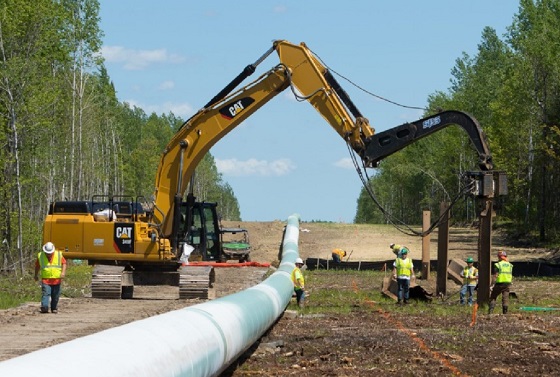
Ottawa and Alberta’s “MOU” a step in the right direction—but energy sector still faces high costs and weakened competitiveness

Canadians will soon be versed in massive West Coast LPG mega-project

‘No Critical Thinking’: Parents Sound Alarm As Tech Begins To ‘Replace The Teacher’
-
Energy2 days ago
Canadians will soon be versed in massive West Coast LPG mega-project
-
 Daily Caller2 days ago
Tom Homan Predicts Deportation Of Most Third World Migrants Over Risks From Screening Docs
-
 Daily Caller7 hours ago
Tech Mogul Gives $6 Billion To 25 Million Kids To Boost Trump Investment Accounts
-
 National1 day ago
Media bound to pay the price for selling their freedom to (selectively) offend
-
 Artificial Intelligence2 days ago
‘Trouble in Toyland’ report sounds alarm on AI toys
-
 Alberta1 day ago
New era of police accountability
-
 C2C Journal1 day ago
Learning the Truth about “Children’s Graves” and Residential Schools is More Important than Ever
-
 Bruce Dowbiggin1 day ago
Sometimes An Ingrate Nation Pt. 2: The Great One Makes His Choice