
Bruce Dowbiggin
What Happens When The West Runs Out of Willing Victims

The chicken said, “I’ve got it! We’ll provide bacon and eggs to feed the hungry.” The pig thought about the suggestion and said, “There’s only one thing wrong with your idea. For you, it only requires a contribution. But for me, it demands a commitment!”
Leaders of Western nations— minus quivering Carney’s Canada—gathered in Washington this week to thrash out Donald Trump’s proposals to end the war in Ukraine. There was considerable discussion of contributions and commitments from the assembled nations. There was also resistance from some to Trump calling the shots in the room. They agreed to disagree.
Underlying the posturing of the PMs and presidents is the supposition that, however they decide to face down Vladimir Putin, they have enough boots on the ground to counter Putin. The Russian leader is showing no signs of abating his supply of cannon fodder to the conflict. Current estimates show Russia has lost upwards of a million dead/ wounded/ missing. Sacrificing soldiers is a sacred Russian tradition in war that Putin’s hell-bent on perpetuating.

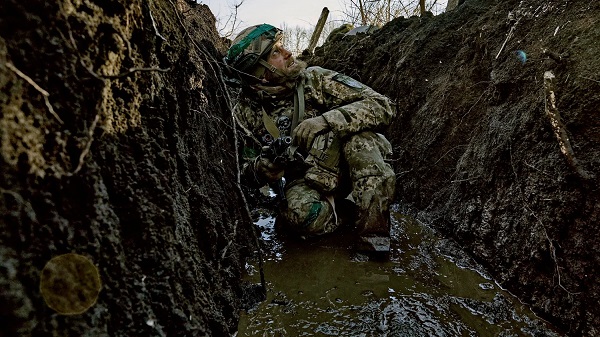
But Ukraine has no such well of the willing. For them it’s drones and the conscripted. “Drivers, artillerymen, and cooks” are holding the line”, says Bohdan Krotevich, an officer formerly with the Azov Brigade’s headquarters. “A maximum of 12 fighters hold sections 5-10 kilometres wide.” Russians regularly sneak through gaping holes in the line into Ukrainian cities and towns.
With no powerful ally sending soldiers, Ukraine has dredged up— at great cost— an entire generation of its young men to fight. Current estimates have Ukraine’s losses at over 100,000 dead and half a million civilians dead or wounded. The camouflage leader, Vladimir Zelenskyy, is desperate.

For perspective on their desperation look at the mysterious Ryan Routh, the man arrested in 2024 while stalking Trump with a rifle at his Jupiter golf club. Before his attempt on Trump Routh had mysteriously travelled the world trying to recruit mercenaries from Afghanistan, the Middle East and Asia to fight in Ukraine.
He was working with the U.S. State Department, collecting passports and having them processed through American embassies. Whether they were fighting for Ukraine or up to spy business is open to discussion. But they hardly filled the gap. For all the billions sent to Ukraine by Western Nations (absent Canada has sent an estimated $20 B.) you still need bodies to fight a war.

Israel is discovering the same about soldier shortages in its attenuated struggle in Gaza. Despite mandatory conscription, some soldiers are making a third or fourth return to military service since October. 7, 2023. The gap is widening with the exhausted army stating that it is facing a manpower shortage during the ongoing war, and currently needs some 12,000 new soldiers — 7,000 of them combat troops.
So the Israel Defense Forces announced last week that it would be giving draft dodgers — many of whom are members of the ultra-Orthodox community — a one-time opportunity to enlist in the military without facing punishment for desertion.
As opposed to Ukraine, Israel is no longer a puppy of Western democracies, many of whom— come on down, Canada— say they will recognize Palestine as a state in the near future. Tired of the bloodshed, Canada and others have stopped sending them military aid, leaving Israel isolated by all but the U.S. in its existential struggle to eradicate Hamas.
Which is ironic as Israel—like Ukraine— is fighting a proxy war on behalf on those nations, wiping out terrorist Hezbollah, the Houthis and the Iranian nuclear capability in recent months. In the analogy above, the EU and Canada are making a contribution. Ukraine and Israel are making a commitment in blood.

Not much has changed since we asked in our June 2022 column, “What Happens When The West Runs Out Of Ukrainians?”, “The entire fiasco is now as open-ended as the Stones Farewell Tour. Which is fine if the Ukrainians are, as advertised, willing to fight till the last man. America and the West can keep their hands clean. The media can play Plucky Little Belgium stories for their gullible viewers/ readers. “Experts” can war-game till the cows come home.
The fly in this ointment is that, with American prestige and profit invested so deeply now, what happens if they run out of Ukrainian patriots to throw into the fire against a seemingly unrepentant Putin? If the proxies are pushing up daisies what is Plan B? No one in the Western elites is sending their boys to die in Kiev or the Donbas region.”
This begs the question “what would compel the effete EU nations and Canada to commit soldiers on the ground in any NATO conflict?” Say Putin moves on the Baltic States, formerly Soviet possessions, under the guise of creating a buffer state? What if he decides to reclaim areas along the Finnish border?
Are Carney’s enervated Canadian progressives going to down their lattes and get killed in a foreign conflict? More to the point, can a bankrupt Canada obtain the weapons, materiél and logistics to meet their NATO obligations? If Putin or Xi are watching the current Elbows Up kabuki theatre in Ottawa do you think they’ll be dissuaded by Canada’s purity of thought from pursuing a new conflict in Europe or the Straits of Taiwan?
According to his spokesperson, Trump isn’t sending his boys/ girls/ other to the Dnieper River. “@PressSec: “The President has definitively stated U.S. boots will NOT be on the ground in Ukraine, but we can certainly help in the coordination and perhaps provide other means of security guarantees to our European allies.”
Ditto for the Woke West or the EU. Will Kier Starmer’s British or the Germans or French commit to the losses demanded for subduing Russia or China? Hard to see that sacrifice from peoples who’ve meekly accepted the immigrant wave the past decade. They don’t even have a motivating national cause besides free healthcare. Speaking of Allies with manpower issues, the South Koreans are also sending out warnings that their declining birth rate is cutting their military preparedness by 20 percent.
It doesn’t take much to see that the security blanket Western progressives count on to save them is, as Yeats said, “a paltry thing, a tattered coat upon a stick”. An equation based on keeping their hands clean. Only luck will tell if they finally make a commitment or skate by with mere contributions.
Bruce Dowbiggin @dowbboy is the editor of Not The Public Broadcaster A two-time winner of the Gemini Award as Canada’s top television sports broadcaster, his new book Deal With It: The Trades That Stunned The NHL And Changed hockey is now available on Amazon. Inexact Science: The Six Most Compelling Draft Years In NHL History, his previous book with his son Evan, was voted the seventh-best professional hockey book of all time by bookauthority.org . His 2004 book Money Players was voted sixth best on the same list, and is available via brucedowbigginbooks.ca.


Ottawa and Alberta have reached a memorandum of understanding that paves the way for, among other things,. a new oil pipeline in return for higher carbon taxes.. How’s it doing? B.C. and Quebec both reject the idea. The Liberals former Climate minister resigned his cabinet post.
The most amazing feature of the Mark Carney/Danielle Smith MOU is that both politicians feverishly hope that the deal fails. Carney can tell Quebec that he tried to reason with Smith, and Smith can say she tried to meet the federalists halfway. Failure suits their larger purposes. Carney to fold Canada into Euro climate insanity and Smith into a strong motive for separation.
We’ll have more in. our next column. In the meantime, another Alberta initiative on healthcare has stirred up the hornets of single payer.
To paraphrase Winston Churchill, “Canada’s health system is the worst in the world. Except for all the other systems.” If there is anything left that Canadians agree upon it’s that their provincial healthcare plan is a disaster that needs a boatload of new money and the same old class rhetoric about two-tier healthcare.
Both prescriptions have been tried multiple times since Tommy Douglas made single-payer healthcare a reality. As a result today’s delivery systems are constantly strained to breaking and the money poured in to support it evaporates in red tape and vested interests.
But suggest that Canada adopt the method of somewhere else and you get back stares. Who does it better? How can we copy that? Crickets. Then ask governments to cut back and create efficiencies. No one wants to tell the unions they are the first to move. As a result, operating rooms sit empty for lack of trained nurses and rationed doctors. The system is all dressed with nowhere to go.

There are many earnest people trying their best to fit the square peg in the round hole. But so far it has produced a Frankenstein quilt of private clinics in other provinces handling overflows and American hospitals taking tens of thousands of overflows or critical cases. Ontarians travelling to Quebec for knee surgery. Albertans heading to eastern B.C. for hips and shoulders. Nova Scotians going to Boston for back surgery.
To say nothing of the legions of Canadians on waiting lists for terminal cancer or heart problems who, in despair of dying before seeing a specialist in 18-24 months, voyage to Lithuania, India or Mexico to save their lives. Everyone knows a story of a family member or friend surgery shopping. Every Canadian health authority sympathizes. But little solves the problem.
Which has led to predictable grumbling. @Tablesalt13 if the Liberals hadn’t surged immigration over the last 4-5 years and if all of the money spent on refugees and foreign aid was redirected to health care how much shorter would Canada’s medical waitlists be?

And if any small progress is made the radical armies opposed to two-tiered healthcare raise a stink in the media, stopping that progress in its tracks. Suggesting public/ private healthcare systems is a quick trip to a Toronto Star editorial and losing your next election.
Into the impasse Alberta has introduced Bill 11 to create a parallel private–public surgery system that allows surgeons to perform non-urgent procedures privately under set conditions, moving ahead with the premier’s announcement last week. The government says the approach will shorten wait times and help recruit doctors, while critics argue it risks two-tier care.
The legislation marks a major shift in healthcare reform in Alberta and faces (shock) strong opposition from the NDP which is pairing these reforms with the province’s use of the notwithstanding clause in banning radical trans surgery and medication for minors in the province.
There are examples of two-tiered healthcare elsewhere in the West. France, Ireland, Denmark, Switzerland and Germany, among others, use a dual-tracked system mixing public and private coverages. Reports FHI, “In the most successful European healthcare systems, e.g., Germany and Switzerland, the federal government handles the PEC risk, via national pools and government subsidies, sparing the burden on individual insurers.” While not perfect it hasn’t produced class warfare.
The Americans, meanwhile learned to their chagrin with ObamaCare (the Affordable Care Act, that government healthcare is not the answer. The U.S. heath system replaces government accounting with health insurance rationers as the immoveable force. Many Americans were outside this traditional system, paying out-of-pocket. Under the Obama plan everyone would be forced into a plan, like it or not.
The AFI continues, “ACA has a flawed design. Its architects meant to appeal to the public, promising what the old system could not fully deliver – guaranteed access to affordable health cover and coverage for pre-existing conditions (PECs). But they were wrong about being able to keep your doctor or your old policy if you wanted.
Previously individual policies had to exclude PEC coverage to be financially viable. Yet employer group policies often covered it after a waiting period, but the extra costs were spread over their fellow workers – a real burden on medium and small-sized companies. Under Obamacare, the very high PEC costs are still spread too narrowly – on each of the very few insurers who have agreed to stay as exchange insurers.”
In other words getting a universal system that helps the needy while not degrading treatment is illusory. Alberta is willing to admit that fact. Like agreement on pipelines it will face nothing but headwinds from the diehards (pun intended) who still believe Michael Moore’s fairy tales about a free system in Canada. And will do nothing to bind Canada’s warring factions.
Bruce Dowbiggin @dowbboy is the editor of Not The Public Broadcaster A two-time winner of the Gemini Award as Canada’s top television sports broadcaster, his new book Deal With It: The Trades That Stunned The NHL And Changed hockey is now available on Amazon. Inexact Science: The Six Most Compelling Draft Years In NHL History, his previous book with his son Evan, was voted the seventh-best professional hockey book of all time by bookauthority.org . His 2004 book Money Players was voted sixth best on the same list, and is available via brucedowbigginbooks.ca.

The week after Grey Cup is always a good time to look in for our first serious analysis at how Canada’s NHL teams are doing. So let’s take a quick… WHOA… what’s happening here?
If the playoffs were to begin next week (we wish) then it would be a cold breakfast for teams in Elbows Up. Just two clubs—Winnipeg and Montreal— would even qualify for the postseason. And the Jets have just found out their star goalie Connor Hellybuyck is unlikely to play much before mid-January.
The two putative Canadian hopes for a first Stanley cup since 1993— Toronto and Edmonton— are sucking on vapour trails. After being raked 5-2 by Montreal, the Leafs have just a 24.9 percent chance of making the playoffs. Conor McDavid’s Oilers have a better percentage but their same old goaltending woes and a ticking clock on McDavid’s back.
Granted that, going into the weekend, no team in the East was more than four points out of the wild-card spot while all but three teams were within three points of a playoff spot in the West. But the Canadian teams are stuck behind some premium teams and need lotsa’ luck so they end up like Max Verstappen not Lance Stroll.
Maybe a Canadian men’s Olympic gold medal can reduce the sting of no Cup, no future for another season. But it won’t save the jobs of coaches in Calgary, Toronto and Vancouver unlikely to survive also-ran status. Let’s take a close look at the not-so-magnificent seven starting west to east.
Vancouver: The Nucks have a sterling 4 percent chance of making the postseason as of this writing. In the powerful Western Conference that’s still an insult to a franchise that hasn’t recovered from the hasty 2013 firing of GM Mike Gillis—who won… let us us see… two Presidents Trophies and six Western Conference titles in a row. Since then? Uh, bagel.
It’s nice that Elias Petterson has come back from the morgue this season. But it will come down to goalie Thatcher Demko staying healthy and whether ownership wants to go full tank or just a quarter-tank for a draft pick. Hard to see Adam Foote surviving as coach.
Calgary: Speaking of tanking, everyone in Calgary wants the Flames to do a teardown for the top picks in the 2026 Draft. Everyone, except, for the Flames absentee owner Murray Edwards and his robo-spokesman Don Maloney. They want the five percent chance at a playoff spot and a mid-round first draft pick. The Flames missed the chance to restructure in 2023 when Johnny Gaudreau and Matthew Tkachuk departed. But again, denialism in the management suite tried to make it an even trade with Florida, sign huge new contracts and keep pushing. Bad decision.
Only question here is when does the purge begin and what can they get to help Dustin Wolf— signed for seven more years— in net?
Edmonton: We’ve written at length here and here about the McDavid saga. He and the management team halved the baby with a short-term deal to pretend he’s staying in the Chuck. Their healthy chance of making the playoffs (75.5 percent) says one thing. Their play in the putrid Pacific— they’re given up six-goals-plus five times in just 24 games— says another. But as long as McDavid and Leon Draisaitl stay healthy they might still finesse a ticket to a their third straight Finals ride.
But if they get near the trading deadline and the postseason is a mirage the noise to trade McDavid will be deafening. And the offers staggering for a capped-out team.
Winnipeg: Last year was supposed to be the Jets big year. Okay, that didn’t work out so well. The Jets kept their core together for another chance at finally making a serious playoff run. So it will all come down, as it has in the past, to the health and playoff juju of Hellybuyck. Their ticket out of the Central Division lies in beating powerful Colorado and Dallas and, if that happens, staying healthy.
The Jets would probably just as well their stars didn’t go get beat up in the Olympics, but that’s unlikely. There’s always been a karma about Winnipeg breaking the Canada Cup jinx. Still a long shot.

EAST
Toronto: So you’re saying Mitch Marner wasn’t the problem with the highly rated Maple Leafs never getting as far as the Conference Finals? They’re 3-5-2 in their last ten, their captain is still a sulky figure— only now his output doesn’t make it worthwhile. And the Toronto media is trying to do the players’ will to get coach Craig Berube fired for them. The same problems remain from years previous: dubious goaltending and a shallow talent pool on defence.
The biggest problem for the Leafs is their closing window for success. They’re old, have few tradeable assets in the system and have traded top picks away for short-term gains that never appeared. Expect fireworks after the Olympics if this crate doesn’t get moving. New MLSE boss Keith Pelley has no ties to the current administration and will sweep clean.
Ottawa: The Sens have managed to survive the loss of captain Brad Tkachuck to a broken finger. How? Ottawa have gotten goals from 17 different players which means they have balance. And so far they are above average 5-on-5. All good. They’ve also taken advantage of the mediocrity of the Leafs and other Eastern teams to stay afloat.
Their Achilles heel? Between the pipes. Both goalies have a save percentage under .875 and that ain’t going to cut it come spring. As always finances will limit their trades and manoeuvrability.

Montreal: The Habs were the fashionable pick before the season as the Canadian team most likely to get to the Cup they last won in 1993. Defenceman Laine Hutson is all that he promised last year. The dynamic top line of Cole Caufield, Nick Suzuki and Juraj Slafkovsky have cast back to the days of the Flying Frenchmen. Managing expectations in Montreal’s rabid hockey culture— where a misplaced apostrophe can cause chaos—means never taking anything for granted.
Now if only goaltender Jacob Dobes can keep up his play long enough for Sam Montembault to regain his form the Habs could be a thing in the spring. At this rate they might be the only thing.
Bruce Dowbiggin @dowbboy is the editor of Not The Public Broadcaster A two-time winner of the Gemini Award as Canada’s top television sports broadcaster, his new book Deal With It: The Trades That Stunned The NHL And Changed hockey is now available on Amazon. Inexact Science: The Six Most Compelling Draft Years In NHL History, his previous book with his son Evan, was voted the seventh-best professional hockey book of all time by bookauthority.org . His 2004 book Money Players was voted sixth best on the same list, and is available via brucedowbigginbooks.ca.


From Underdog to Top Broodmare

Poilievre says West Coast Pipeline MOU is no guarantee

Will the New West Coast Pipeline MoU Lead to Results? Almost Certainly Not According to AI
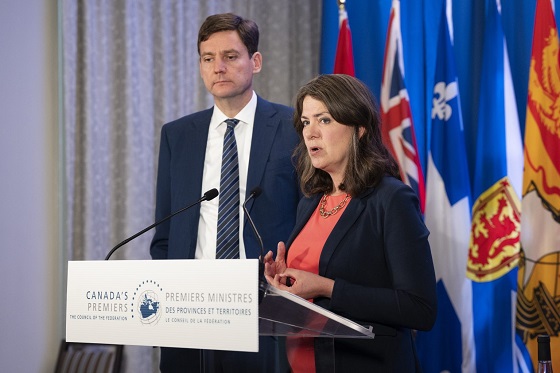
West Coast Pipeline MOU: A good first step, but project dead on arrival without Eby’s assent
-
 Daily Caller2 days ago
‘No Critical Thinking’: Parents Sound Alarm As Tech Begins To ‘Replace The Teacher’
-
 Daily Caller1 day ago
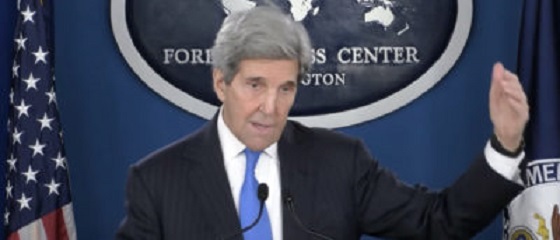
John Kerry Lurches Back Onto Global Stage For One Final Gasp
-
 Alberta2 days ago
Alberta can’t fix its deficits with oil money: Lennie Kaplan
-
 Food9 hours ago
Canada Still Serves Up Food Dyes The FDA Has Banned
-
 International2 days ago
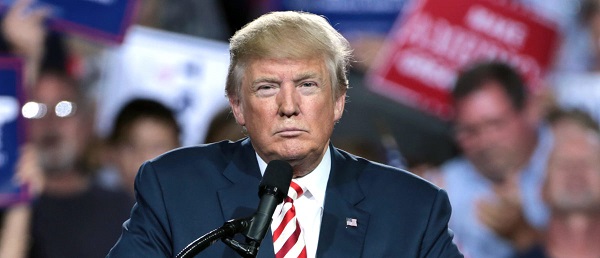
Trump vows to pause migration after D.C. shooting
-
 National19 hours ago
Eco-radical Canadian Cabinet minister resigns after oil deal approved
-
 Alberta10 hours ago
Net Zero goal is a fundamental flaw in the Ottawa-Alberta MOU
-
 Business2 days ago
Canadians love Nordic-style social programs as long as someone else pays for them