
Economy
We’re Getting Poorer: GDP per Capita in Canada and the OECD

From the Fraser Institute
By Alex Whalen and Milagros Palacios and Lawrence Schembri
Canada lost ground compared to key allies and trading partners such as the United States, United Kingdom, New Zealand, and Australia between 2014 and 2022.
Canada had the third-lowest growth in GDP per person from 2014 to 2022 among 30 advanced economies, finds a new study published by the Fraser Institute, an independent, non-partisan Canadian public policy think-tank.
“In terms of GDP per person, a broad measure of living standards, Canada’s performance has weakened substantially in recent years,” said Alex Whalen, director of the Fraser Institute’s Atlantic Canada Prosperity Initiative and co-author of We’re Getting Poorer: GDP per Capita in Canada and the OECD, 2002–2060.
The study, which examines Canada’s historic and projected GDP per capita growth compared to similar OECD countries, finds that from 2002 to 2014, Canadian income growth as measured by GDP per person roughly kept pace with the rest of the OECD, but from 2014 to 2022 Canada’s growth rate stagnated.
In 2002, Canada’s GDP per capita was higher than the OECD average by US$3,141. By 2022, it had fallen well below the OECD average by US$231. Canada lost ground compared to key allies and trading partners such as the United
States, United Kingdom, New Zealand, and Australia between 2014 and 2022.
For example, Canadian GDP per person in 2014 was $44,710 (80.4 per cent of the US total of $55,605) but by 2022, Canada was only at $46,035 versus $63,685 in the US. In other words, the gap had grown from $10,895 to $17,649 by 2022 (all measures in inflation-adjusted US dollars).

“Canada has been experiencing a collapse in investment, low productivity growth, and a large and growing government sector, all of which contribute to reduced growth in living standards compared to our peer countries in the OECD,” said Lawrence Schembri, a senior fellow with the Fraser Institute and co-author.
- This research bulletin examines historical and projected trends in the growth of Canada’s GDP per capita, and compares these trends to those in peer countries in the OECD.
- Canadians have been getting poorer relative to residents of other countries in the OECD. From 2002 to 2014, Canadian income growth as measured by GDP per capita roughly kept pace with the rest of the OECD. From 2014 to 2022, however, Canada’s position declined sharply, ranking third-lowest among 30 countries for average growth over the period.
- Between 2012 and 2022, Canada lost ground compared to key allies and trading partners such as the United States, United Kingdom, New Zealand, and Australia, with Canadian GDP per capita declining from 80.4% of the US level in 2012 to 72.3% in 2022.
- Looking forward to 2060, Canada’s projected average annual growth rate for GDP per capita (0.78%) is the lowest among 30 OECD countries.
- Canada’s GDP per capita (after adjusting by inflation), which exceeded the OECD average by US$3,141 in 2002 and was roughly equivalent to the OECD average in 2022, is projected to fall below the OECD average by US$8,617 in 2060.
- The root cause of Canada’s declining long-term growth in GDP per capita—recent and projected—is very low or negative growth in labour productivity reflecting weak investment in physical and human capital per worker.
Authors:




Quick Hit:
President Trump on Thursday confirmed a sweeping new 35% tariff on Canadian imports starting August 1, citing Canada’s failure to curb fentanyl trafficking and retaliatory trade actions.
Key Details:
- In a letter to Canadian Prime Minister Mark Carney, Trump said the new 35% levy is in response to Canada’s “financial retaliation” and its inability to stop fentanyl from reaching the U.S.
- Trump emphasized that Canadian businesses that relocate manufacturing to the U.S. will be exempt and promised expedited approvals for such moves.
- The administration has already notified 23 countries of impending tariffs following the expiration of a 90-day negotiation window under Trump’s “Liberation Day” trade policy.
Diving Deeper:
President Trump escalated his tariff strategy on Thursday, formally announcing a 35% duty on all Canadian imports effective August 1. The move follows what Trump described as a breakdown in trade cooperation and a failure by Canada to address its role in the U.S. fentanyl crisis.
“It is a Great Honor for me to send you this letter in that it demonstrates the strength and commitment of our Trading Relationship,” Trump wrote to Prime Minister Mark Carney. He added that the tariff response comes after Canada “financially retaliated” against the U.S. rather than working to resolve the flow of fentanyl across the northern border.
Trump’s letter made clear the tariff will apply broadly, separate from any existing sector-specific levies, and included a warning that “goods transshipped to evade this higher Tariff will be subject to that higher Tariff.” The president also hinted that further retaliation from Canada could push rates even higher.
However, Trump left the door open for possible revisions. “If Canada works with me to stop the flow of Fentanyl, we will, perhaps, consider an adjustment to this letter,” he said, adding that tariffs “may be modified, upward or downward, depending on our relationship.”
Canadian companies that move operations to the U.S. would be exempt, Trump said, noting his administration “will do everything possible to get approvals quickly, professionally, and routinely — In other words, in a matter of weeks.”
The U.S. traded over $762 billion in goods with Canada in 2024, with a trade deficit of $63.3 billion, a figure Trump called a “major threat” to both the economy and national security.
Speaking with NBC News on Thursday, Trump suggested even broader tariff hikes are coming, floating the idea of a 15% or 20% blanket rate on all imports. “We’re just going to say all of the remaining countries are going to pay,” he told Meet the Press moderator Kristen Welker, adding that “the tariffs have been very well-received” and noting that the stock market had hit new highs that day.
The Canadian announcement is part of a broader global tariff rollout. In recent days, Trump has notified at least 23 countries of new levies and revealed a separate 50% tariff on copper imports.
“Not everybody has to get a letter,” Trump said when asked if other leaders would be formally notified. “You know that. We’re just setting our tariffs.”

From the Daily Caller News Foundation
By Craig Rucker
According to a study in Science Advances, over 90% of ocean plastic comes from just 10 rivers, eight of which are in Asia. The United States, by contrast, contributes less than 1%. Yet Pew treats all nations as equally responsible, promoting one-size-fits-all policies that fail to address the real source of the issue.
Just as people were beginning to breathe a sigh of relief thanks to the Trump administration’s rollback of onerous climate policies, the United Nations is set to finalize a legally binding Global Plastics Treaty by the end of the year that will impose new regulations, and, ultimately higher costs, on one of the world’s most widely used products.
Plastics – derived from petroleum – are found in everything from water bottles, tea bags, and food packaging to syringes, IV tubes, prosthetics, and underground water pipes. In justifying the goal of its treaty to regulate “the entire life cycle of plastic – from upstream production to downstream waste,” the U.N. has put a bull’s eye on plastic waste. “An estimated 18 to 20 percent of global plastic waste ends up in the ocean,” the UN says.
As delegates from over 170 countries prepare for the final round of negotiations in Geneva next month, debate is intensifying over the future of plastic production, regulation, and innovation. With proposals ranging from sweeping bans on single-use plastics to caps on virgin plastic output, policymakers are increasingly citing the 2020 Pew Charitable Trusts report, Breaking the Plastic Wave, as one of the primary justifications.
But many of the dire warnings made in this report, if scrutinized, ring as hollow as an empty PET soda bottle. Indeed, a closer look reveals Pew’s report is less a roadmap to progress than a glossy piece of junk science propaganda—built on false assumptions and misguided solutions.
Pew’s core claim is dire: without urgent global action, plastic entering the oceans will triple by 2040. But this alarmist forecast glosses over a fundamental fact—plastic pollution is not a global problem in equal measure. According to a study in Science Advances, over 90% of ocean plastic comes from just 10 rivers, eight of which are in Asia. The United States, by contrast, contributes less than 1%. Yet Pew treats all nations as equally responsible, promoting one-size-fits-all policies that fail to address the real source of the issue.
This blind spot has serious consequences. Pew’s solutions—cutting plastic production, phasing out single-use items, and implementing rigid global regulations—miss the mark entirely. Banning straws in the U.S. or taxing packaging in Europe won’t stop waste from being dumped into rivers in countries with little or no waste infrastructure. Policies targeting Western consumption don’t solve the problem—they simply shift it or, worse, stifle useful innovation.
The real tragedy isn’t plastic itself, but the mismanagement of plastic waste—and the regulatory stranglehold that blocks better solutions. In many countries, recycling is a government-run monopoly with little incentive to innovate. Meanwhile, private-sector entrepreneurs working on advanced recycling, biodegradable materials, and AI-powered sorting systems face burdensome red tape and market distortion.
Pew pays lip service to innovation but ultimately favors centralized planning and control. That’s a mistake. Time and again, it’s been technology—not top-down mandates—that has delivered environmental breakthroughs.
What the world needs is not another top-down, bureaucratic report like Pew’s, but an open dialogue among experts, entrepreneurs, and the public where new ideas can flourish. Imagine small-scale pyrolysis units that convert waste into fuel in remote villages, or decentralized recycling centers that empower informal waste collectors. These ideas are already in development—but they’re being sidelined by policymakers fixated on bans and quotas.
Worse still, efforts to demonize plastic often ignore its benefits. Plastic is lightweight, durable, and often more environmentally efficient than alternatives like glass or aluminum. The problem isn’t the material—it’s how it has been managed after its use. That’s a “systems” failure, not a material flaw.
Breaking the Plastic Wave champions a top-down, bureaucratic vision that limits choice, discourages private innovation, and rewards entrenched interests under the guise of environmentalism. Many of the groups calling for bans are also lobbying for subsidies and regulatory frameworks that benefit their own agendas—while pushing out disruptive newcomers.
With the UN expected to finalize the treaty by early 2026, nations will have to face the question of ratification. Even if the Trump White House refuses to sign the treaty – which is likely – ordinary Americans could still feel the sting of this ill-advised scheme. Manufacturers of life-saving plastic medical devices, for example, are part of a network of global suppliers. Companies located in countries that ratify the treaty will have no choice but to pass the higher costs along, and Americans will not be spared.
Ultimately, the marketplace of ideas—not the offices of policy NGOs—will deliver the solutions we need. It’s time to break the wave of junk science—not ride it.
Craig Rucker is president of the Committee For A Constructive Tomorrow (www.CFACT.org).

COWBOY UP! Pierre Poilievre Promises to Fight for Oil and Gas, a Stronger Military and the Interests of Western Canada
USAID Quietly Sent Thousands Of Viruses To Chinese Military-Linked Biolab
Canada’s euthanasia regime is already killing the disabled. It’s about to get worse

‘Far too serious for such uninformed, careless journalism’: Complaint filed against Globe and Mail article challenging Alberta’s gender surgery law
-
 Bruce Dowbiggin2 days ago
The Covid 19 Disaster: When Do We Get The Apologies?
-
 Crime1 day ago
Sweeping Boston Indictment Points to Vast Chinese Narco-Smuggling and Illegal Alien Labor Plot via Mexican Border
-
 Alberta2 days ago
Alberta school boards required to meet new standards for school library materials with regard to sexual content
-
 International18 hours ago
Support for the Ukraine war continues because no one elected is actually in charge.
-
 Business18 hours ago
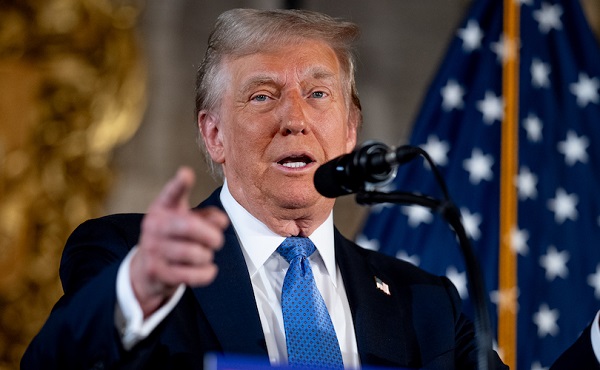
Trump slaps Brazil with tariffs over social media censorship
-
 Environment1 day ago
EPA releases report on chemtrails, climate manipulation
-
 Business22 hours ago
CBC six-figure salaries soar
-
 Addictions21 hours ago
Can addiction be predicted—and prevented?