
conflict
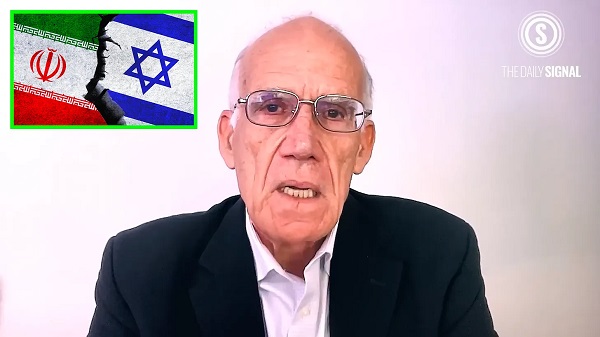
Victor Davis Hanson Makes a Disturbing Prediction About What Happens If Iran Survives


Amidst rough seas, you need a steady sailor.
Not just what’s happening, but what’s coming next.
“I think we’re going to see things that we haven’t seen in our lifetime in the Middle East,” he said.
This could go one of two ways, neither is small.
Victor Davis Hanson isn’t known for hyperbole. So when he opens with a warning like this, people pay attention:
“We are at an historic time in the Middle East,” he said.
“Never in our lifetimes have we been closer to a complete revolutionary fervor that gives promise of normalcy for the Middle East. And never have we been in more danger of seeing the entire region blow up.”
The paradox is striking.
Peace may be closer than ever, but so is total collapse.
And at the center of it all is the unfolding conflict between Iran and Israel, which Hanson called “surreal.”
Reflecting on the rapid collapse of Iran’s regional dominance, Hanson admitted that even a few years ago, this moment would have been unthinkable.
“If we had this conversation five years ago,” he said, “and I said to you, the Iranian nation that is huge compared to Israel, ten times the population, the Iranian nation has lost all control of the Houthi terrorists, and they are themselves neutered…”
He pointed to a chain reaction across the region: Iran’s proxy forces in Gaza and the West Bank have been neutralized. Hezbollah, once a feared military force, is now dormant.
“They’re gone as a Hamas, as a fighting force. The formidable, the terrifying Hezbollah cadres, they’re inert.”
The chaos in Syria, once a stronghold of Iranian influence, now seems to be working against Tehran.
“There is no more Syria, the Assad dynasty, the pro-Iranian, the Syria. It’s in chaos. But whatever the chaos is, seems to be anti-Iranian.”
The collapse is strategic, not just symbolic. Hanson noted that the so-called “Shia crescent” connecting Tehran to the Mediterranean is no longer intact.
“Lebanon is free of Iranian influence. So is Syria. Gaza, a de facto, will be.”
Even Russia, once a key ally, is no longer a player in the region.
“It’s tied down in Ukraine,” he said.
“Iran itself, the formidable powerhouse of the Middle East that evoked terror all over, has no defenses.”
Over the course of just five days, Israel has launched a targeted military campaign to dismantle Iran’s strategic infrastructure.
According to Hanson, the damage has been sweeping.
“They have dismantled all of the Iranian missile defenses. They have dismantled the terrorist hierarchy. They have dismantled the people who are responsible for the nuclear program.”
And yet, there’s risk.
“The Iranians have sent over 400 ballistic missiles and drones into Israel,” he said, “and 90 percent are stop. But that 10 percent gets through.”
Which brings us to the turning point.
All of this only matters if it ends with Iran’s theocracy on the brink of collapse.
If it doesn’t, everything that’s been gained could be erased.
“All of this chaos and all of this war will be for not if Iran’s theocracy emerges intact from this war.”
Even more dangerous, he added, would be a scenario in which the country’s nuclear infrastructure survives or can be quickly rebuilt.
That possibility has triggered one of the most urgent strategic questions on the table: Can Israel finish the job?
Or will it need help from the United States to strike Iran’s deeply buried nuclear facilities?
This is where things get complicated.
Under the “America First” foreign policy doctrine, Trump has been clear: no more forever wars, no more ground troops in the Middle East.
But Hanson argued that Trump’s actions tell a deeper story.
“I’m not an isolationist, I’m a Jacksonian,” he said, echoing what Trump might say.
“You should have known that when I took out Soleimani… when I took out Baghdadi… when I took out the Wagner Group.”
The message? Trump doesn’t go looking for wars. But when deterrence is at stake, he’s not afraid to act decisively.
Still, Hanson posed a chilling question: what if the Iranian regime survives?
“If this war should end with the Iranian regime intact and the elements of its nuclear program recoverable,” he warned, “then in some ways it will be all for naught.”
Despite Iran’s military losses, its media destruction and its isolated position, surviving such a coordinated strike could give it something even more powerful than weapons: perceived invincibility.
“It will be more like, oh my gosh, Iran survived everything that Israel, and by association the United States, threw at it.”
“It’s indestructible.”
And that, Hanson suggested, would be the real danger.
Not just a return to the status quo, but a shift in perception that emboldens the regime and reshapes the balance of power across the region.
Now the question hanging over the entire conflict is this: does the world play it safe and allow remnants of Iran’s nuclear infrastructure to survive?
Or risk a final strike that could eliminate the threat for good, but possibly trigger even greater instability?
“Do you risk more danger by taking out and eliminating the nuclear threat for good,” Hanson asked, “and by association, you humiliate the theocracy to the point it can be overthrown?”
That’s the gamble.
He didn’t shy away from his own discomfort with war.
“I don’t like forever wars,” he added.
“I don’t like preemptive wars. I do not like the United States intervening anywhere in that godforsaken area. But if the war ends with the regime intact and a recoverable nuclear program, it won’t just be back to square one. It will be a disaster.”
That’s when he dropped a bombshell prediction of the future in the area after the dust settles in the desert.
Whether this ends in collapse or resurgence, Hanson believes the next phase of the war could reshape the entire region and the world’s understanding of power in the Middle East.
“So we’ll see what happens,” he said.
“And hold on, everybody. I think we’re going to see things that we haven’t seen in our lifetime in the Middle East. And it could turn out very bad.”
“But it could also turn out to be quite revolutionary and remake the map of the entire region.”
This story was made possible with the help of Overton —I couldn’t have done it without him.
If you’d like to support his growing network, consider subscribing for the month or the year. Your support helps him expand his team and cover more stories like this one.
We both truly appreciate your support!
Subscribe to The Vigilant Fox

Artificial Intelligence
AI Drone ‘Swarms’ Unleashed On Ukraine Battlefields, Marking New Era Of Warfare

From the Daily Caller News Foundation
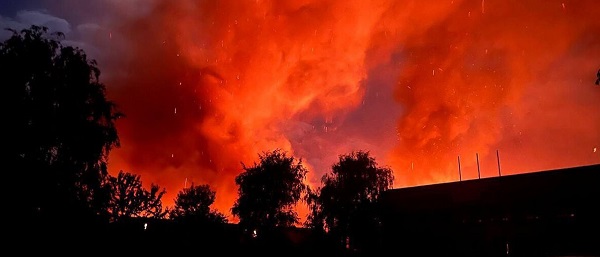
Artificial intelligence-powered drones are making their first appearances on the battlefield in the Russia-Ukraine war as warfare creeps closer to full automation.
In bombardments on Russian targets in the past year, Ukrainian drones acting in concert were able to independently determine where to strike without human input.
It’s the first battlefield use of AI “swarm” technology in a real-world environment, a senior Ukrainian official and Swarmer, the company who makes the software, told the Wall Street Journal in a Tuesday report. While drones have increasingly defined modern battlefields, swarms until now had been confined to testing rather than combat.
“You set the target and the drones do the rest,” Swarmer Chief Executive Serhii Kupriienko told the WSJ. “They work together, they adapt.”
So far, the Swarmer technology has been used hundreds of times to target Russia assets, but was first used a year ago to lay mines on the front, the Ukrainian official told the WSJ. The software has been tested with up to 25 drones at once, but is usually utilized with only three.
Kupriienko told the WSJ that he was preparing to test up to 100 drones at once with the linking software.
A common arrangement used on the battlefield includes one reconnaissance drone to scout out the target and two explosive drones delivering the payload on target, the official told the WSJ.
While Western nations such as the U.S., France and the United Kingdom are also pursuing drone swarm technology, they have not deployed swarm technology on the battlefield the way Ukraine has, according to the WSJ. Currently, autonomous weapons are not regulated by any international authority or binding agreement, but ethical concerns around the technology has led many to call for increased regulation of weapons like the Swarmer system.
The Ukrainian Ministry of Foreign Affairs did not immediately respond to the Daily Caller News Foundation’s request for comment.
From the Daily Caller News Foundation
The Department of Defense has spent months blocking the Ukrainian military from using American and British-made missiles to hit targets deep inside Russia, The Wall Street Journal reported Sunday, citing unnamed U.S. officials.
Undersecretary of Defense for Policy Eldridge Colby reportedly designed the procedure to review requests to carry out the long-range strikes with weapons that are either of U.S. origin or that require American intelligence or use components provided by the U.S., according to the WSJ. Secretary of Defense Pete Hegseth reportedly has the final say on whether Ukrainian forces can use the MGM-140 ATACMS (Army Tactical Missile System) to hit targets in Russia.
The reported blocks on missile strikes coincides with a Trump administration effort to broker a peace deal between Russia and Ukraine. A Pentagon spokesperson declined to comment further on the matter.
BREAKING: President Vladimir Putin reacts to B-2 Flyover pic.twitter.com/1mzVn7DxlW
— Jack Poso 🇺🇸 (@JackPosobiec) August 15, 2025
The Biden administration allowed Ukraine to carry out strikes with ATACMS in November, weeks after President Donald Trump won the 2024 election, the New York Times reported. Trump criticized the move during a December interview with Time magazine.
“It’s crazy what’s taking place. It’s crazy,” Trump said. “I disagree very vehemently with sending missiles hundreds of miles into Russia. Why are we doing that? We’re just escalating this war and making it worse. That should not have been allowed to be done.”
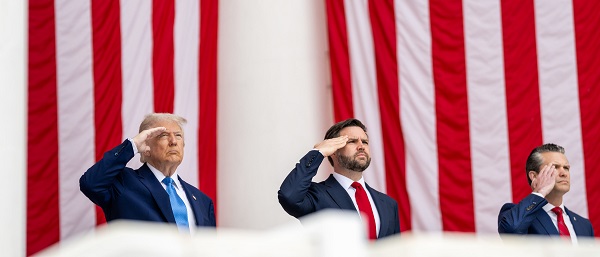
Trump and Russian President Vladimir Putin met in Alaska on Aug. 15 for a summit meeting during which Trump sought to secure a cease-fire in Russia’s war with Ukraine. As Trump greeted Putin, a B-2A Spirit stealth bomber and several fighters carried out a flyover of Elmendorf Air Force Base.
Trump met with Ukrainian President Volodymyr Zelensky and major European leaders on Aug. 18 to update them on the summit.
In July, Trump reached an agreement with NATO where members of the alliance would purchase weapons, including MIM-104 Patriot surface-to-air missiles, and donate them to Ukraine.


A look inside the ‘floatel’ housing B.C.’s LNG workforce

Trump Deals Biden’s EV Dreams A Death Blow

FBI may have finally nabbed the Jan. 6 pipe bomber

Alberta will use provincial laws to stop Canadian gov’t from trying to confiscate legal firearms
-
Automotive1 day ago
Trump Deals Biden’s EV Dreams A Death Blow
-
 Alberta1 day ago
Premier Smith: Canadians support agreement between Alberta and Ottawa and the major economic opportunities it could unlock for the benefit of all
-
 Focal Points1 day ago
Pharma Bombshell: President Trump Orders Complete Childhood Vaccine Schedule Review
-
 Censorship Industrial Complex2 days ago
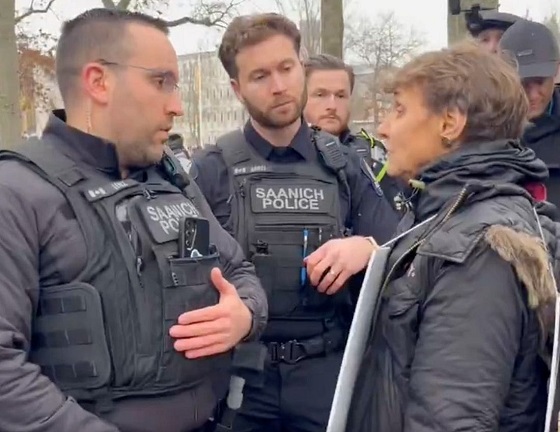
Frances Widdowson’s Arrest Should Alarm Every Canadian
-
 Opinion1 day ago
Country music star Paul Brandt asks Parliament to toughen laws against child porn
-
 Automotive1 day ago
Canada’s EV Mandate Is Running On Empty
-
 Business17 hours ago
Why Does Canada “Lead” the World in Funding Racist Indoctrination?
-
 Alberta2 days ago
A Memorandum of Understanding that no Canadian can understand