
Business
Trump’s Tariffs Have Not Caused Economy To Collapse


From the Daily Caller News Foundation
By Mark Simon
The APEC Summit in Korea last week marked a pivotal moment for U.S. trade policy, delivering tangible wins for American interests. Solid deals were struck with South Korea, while the U.S. and China de-escalated their long-simmering trade war—a clear positive for President Trump. In the chaotic world of Donald Trump, such normalcy disappointed the news media and foreign policy pundits, who grumbled that the event lacked the drama of a disaster.
Yet, as Trump departed Busan, a deeper transformation unfolded, largely overlooked by observers. In just two days, President Trump orchestrated the most significant shift in U.S. trade strategy since China’s 2001 entry into the World Trade Organization (WTO).
The real triumph? Widespread acceptance by Asian trading partners of U.S. tariffs as a cornerstone of a reimagined American economic model. This acceptance dismantles nearly a century of unwavering belief in low tariffs as the unassailable path to global prosperity.
Trump’s tariff approach disrupts the post-World War II global trading system, particularly the U.S.-championed free-trade orthodoxy embraced by both parties for over 50 years. By wielding tariffs effectively, Trump challenges the free-market gospel enshrined in the WTO and echoed by World Economic Forum elites and corporate-sponsored Washington think tanks like AEI and CATO, which decry tariffs as heresy.
At APEC, there was no fiery backlash—only quiet nods to moderate tariffs as fixtures in the evolving economic order. Leaders from across the Asia-Pacific assessed the tariffs’ impacts and moved forward without spectacle, signaling a pragmatic pivot toward Trump’s view of international commerce.
Historically, tariff reductions in Asia stemmed from U.S. pressure to open markets. Mercantilist instincts run deep in most Asian governments—except in freewheeling Hong Kong and Singapore. These nations, built on exports inside protected markets, grasp how tariffs can revitalize U.S. manufacturing and bolster federal revenue. Unlike America’s one-sided openness to Asian imports, Trump’s reciprocity feels like overdue fairness.
As a former free-market purist who once decried tariffs, I initially missed their nuance in Trump’s arsenal. Tariffs impose costs, but the genius lies in offsetting them strategically. Trump’s aggressive deregulation, sweeping tax reforms, and drive for rock-bottom domestic energy prices mitigate burdens and generate a net economic surge—one that Asian leaders implicitly endorsed.
This “internal free-market trio” forms the bedrock of the new U.S. paradigm: moderate tariffs generate revenue and incentivize factory repatriation; deregulation slashes red tape; tax cuts keep capital flowing competitively; and abundant, cheap energy undercuts foreign advantages.
Together, they magnetize global investment, upending a century of free-trade dogma. Energy dominance is key. Through promotion of domestic oil, gas, and renewables, Trump has driven U.S. energy costs 30–50% below those in Europe or much of Asia. For capital-intensive sectors like steel, semiconductors, and electric vehicles, this is structural superiority, not subsidy. Layer on the 2017 Tax Cuts and Jobs Act—slashing the corporate rate to 21% and allowing immediate capital expensing—and the math tilts toward U.S. production. Tariffs may raise import prices by 20–30%, but deregulation accelerates cost-cutting, while energy savings absorb part of the hit.
Critics claim tariffs ravaged the economy post-2018, but COVID-19, not tariffs, triggered the downturn. Trump’s initial round was a successful pilot, extended by Biden—yet without Trump’s deregulation and energy surge, the tariffs became un-offset weight. Blanket cost hikes under Biden stifled growth; Trump’s selective offsets ensure expansion.
America’s edge sharpens as rivals falter. Europe, shackled by leftist policies, environmental mandates, and the Ukraine quagmire, hemorrhages capital to the U.S. In North Asia—China, Korea, Japan, Taiwan—demographic headwinds make investments unappealing compared to North America’s burgeoning market. Aging populations and shrinking workforces amplify this disparity.
APEC underscored America as a vibrant, tariff-protected haven primed for onshoring. Amid Asia’s labor crunch, nations view the U.S. as an investment beacon, mirroring Japan’s model: a high-value exporter offloading low-end manufacturing while retaining competitiveness. Summit chatter revealed minimal tariff gripes. China voiced tepid concerns over escalations, but these seemed rhetorical—testing boundaries rather than igniting conflict.
To free-trade zealots, Trump’s heresy is demolishing sacred economic theory. Past protectionists erred by isolating tariffs without cost-lowering measures. Trump integrates them: selective duties paired with deregulation, technological leaps, and economic decentralization beyond urban centers.
In equilibrium, tariffs harvest revenue and reclaim jobs, capitalizing on America’s fiscal and regulatory advantages. Trump’s blueprint restores balance to free trade, honoring national sovereignty while exposing borderless markets’ perils. It proves moderated protectionism can ignite growth, spur innovation, and draw capital—heralding a bolder, self-reliant American century.
Mark Simon is former group director for Next Digital, parent company for Apple Daily, the leading pro-democracy newspaper in Hong Kong until it was forced to close in 2021.

From the Fraser Institute
By Nadeem Esmail and Mackenzie Moir
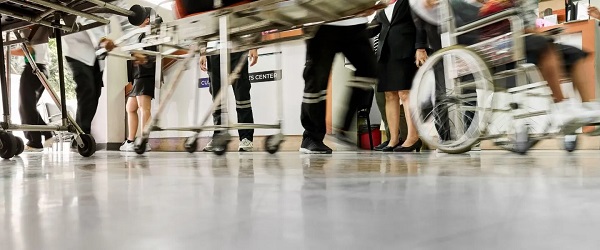
It’s an exciting time in Canadian health-care policy. But even the slew of new reforms in Alberta only go part of the way to using all the policy tools employed by high performing universal health-care systems.
For 2026, for the sake of Canadian patients, let’s hope Alberta stays the path on changes to how hospitals are paid and allowing some private purchases of health care, and that other provinces start to catch up.
While Alberta’s new reforms were welcome news this year, it’s clear Canada’s health-care system continued to struggle. Canadians were reminded by our annual comparison of health care systems that they pay for one of the developed world’s most expensive universal health-care systems, yet have some of the fewest physicians and hospital beds, while waiting in some of the longest queues.
And speaking of queues, wait times across Canada for non-emergency care reached the second-highest level ever measured at 28.6 weeks from general practitioner referral to actual treatment. That’s more than triple the wait of the early 1990s despite decades of government promises and spending commitments. Other work found that at least 23,746 patients died while waiting for care, and nearly 1.3 million Canadians left our overcrowded emergency rooms without being treated.
At least one province has shown a genuine willingness to do something about these problems.
The Smith government in Alberta announced early in the year that it would move towards paying hospitals per-patient treated as opposed to a fixed annual budget, a policy approach that Quebec has been working on for years. Albertans will also soon be able purchase, at least in a limited way, some diagnostic and surgical services for themselves, which is again already possible in Quebec. Alberta has also gone a step further by allowing physicians to work in both public and private settings.
While controversial in Canada, these approaches simply mirror what is being done in all of the developed world’s top-performing universal health-care systems. Australia, the Netherlands, Germany and Switzerland all pay their hospitals per patient treated, and allow patients the opportunity to purchase care privately if they wish. They all also have better and faster universally accessible health care than Canada’s provinces provide, while spending a little more (Switzerland) or less (Australia, Germany, the Netherlands) than we do.
While these reforms are clearly a step in the right direction, there’s more to be done.
Even if we include Alberta’s reforms, these countries still do some very important things differently.
Critically, all of these countries expect patients to pay a small amount for their universally accessible services. The reasoning is straightforward: we all spend our own money more carefully than we spend someone else’s, and patients will make more informed decisions about when and where it’s best to access the health-care system when they have to pay a little out of pocket.
The evidence around this policy is clear—with appropriate safeguards to protect the very ill and exemptions for lower-income and other vulnerable populations, the demand for outpatient healthcare services falls, reducing delays and freeing up resources for others.
Charging patients even small amounts for care would of course violate the Canada Health Act, but it would also emulate the approach of 100 per cent of the developed world’s top-performing health-care systems. In this case, violating outdated federal policy means better universal health care for Canadians.
These top-performing countries also see the private sector and innovative entrepreneurs as partners in delivering universal health care. A relationship that is far different from the limited individual contracts some provinces have with private clinics and surgical centres to provide care in Canada. In these other countries, even full-service hospitals are operated by private providers. Importantly, partnering with innovative private providers, even hospitals, to deliver universal health care does not violate the Canada Health Act.
So, while Alberta has made strides this past year moving towards the well-established higher performance policy approach followed elsewhere, the Smith government remains at least a couple steps short of truly adopting a more Australian or European approach for health care. And other provinces have yet to even get to where Alberta will soon be.
Let’s hope in 2026 that Alberta keeps moving towards a truly world class universal health-care experience for patients, and that the other provinces catch up.


If you think the CCP will treat foreigners better than its own people, when it extends its power over you, please think again: Dimon Liu’s warning to Canadian Parliament.
Editor’s Note: The Bureau is publishing the following testimony to Canada’s House of Commons committee on International Human Rights from Dimon Liu, a China-born, Washington, D.C.-based democracy advocate who testified in Parliament on December 8, 2025, about the human cost of China’s economic rise. Submitted to The Bureau as an op-ed, Liu’s testimony argues that the Canadian government should tighten scrutiny of high-risk trade and investment, and ensure Canada’s foreign policy does not inadvertently reward coercion. Liu also warns that the Chinese Communist Party could gain leverage over Canadians and treat them as it has done to its own subjugated population—an implied message to Prime Minister Mark Carney, who has pledged to engage China as a strategic partner without making that position clear to Canadians during his election campaign.
OTTAWA — It is an honor to speak before you at the Canadian Parliament.
My testimony will attempt to explain why China’s economic success is built on the backs of the largest number of displaced persons in human history.
It is estimated that these displaced individuals range between 300 to 400 million — it is equivalent to the total population of the United States being uprooted and forced to relocate. These displaced persons are invisible to the world, their sufferings unnoticed, their plights ignored.
In 1978, when economic reform began, China’s GDP was $150 billion USD.
In 2000, when China joined the WTO, it was approximately $1.2 trillion USD.
China’s current GDP is approximately $18 trillion USD.
In 2000 China’s manufacturing output was smaller than Italy’s.
Today it’s larger than America, Europe, Japan, and South Korea combined.
If you have ever wondered how China managed to grow so fast in such a short time, Charles Li, former CEO of the Hong Kong Stock Exchange, has the answers for you.
He listed 4 reasons: 1) cheapest land, 2) cheapest labor, 3) cheapest capital, and 4) disregard of environmental costs.

“The cheapest land” because the CCP government took the land from the farmers at little to no compensation.
“The cheapest labor,” because these farmers, without land to farm, were forced to find work in urban areas at very low wages.
The communist household registration system (hukou 戶口) ties them perpetually to the rural areas. This means they are not legal residents, and cannot receive social benefits that legal urban residents are entitled. They could be evicted at any time.
One well known incident of eviction occurred in November 2017. Cai Qi, now the second most powerful man in China after Xi Jinping, was a municipal official in Beijing. He evicted tens of thousands into Beijing’s harsh winter, with only days, or just moments of notice. Cai Qi made famous a term, “low-end population” (低端人口), and exposed CCP’s contempt of rural migrants it treats as second class citizens.
These displaced migrant workers have one tradition they hold dear — it is to reunite with their families during the Chinese Lunar New Year holiday, making this seasonal migration of 100 to 150 million people a spectacular event. In China’s economic winter of 2025 with waves of bankruptcies and factory closures, the tide of unemployed migrant workers returning home to where there is also no work, and no land to farm, has become a worrisome event.
Historically in the last 2,000 years, social instability has caused the collapse of many ruling regimes in China.
“The cheapest capital” is acquired through predatory banking practices, and through the stock markets, first to rake in the savings of the Chinese people; and later international investments by listing opaque, and state owned enterprises in leading stock markets around the world.
“A disregard of environmental costs” is a hallmark of China’s industrialization. The land is poisoned, so is the water; and China produces one-third of all global greenhouse gases.
Chinese Communist officials often laud their system as superior. The essayist Qin Hui has written that the Chinese communist government enjoys a human rights abuse advantage. This is true. By abusing its own people so brutally, the CCP regime has created an image of success, which will prove to be a mirage.
If you think the CCP will treat foreigners better than its own people, when it extends its power over you, please think again.
The Bureau is a reader-supported publication.
To receive new posts and support my work, consider becoming a free or paid subscriber.


Argentina’s Milei delivers results free-market critics said wouldn’t work

Australian PM booed at Bondi vigil as crowd screams “shame!”

‘Almost Sounds Made Up’: Jeffrey Epstein Was Bill Clinton Plus-One At Moroccan King’s Wedding, Per Report

There’s No Bias at CBC News, You Say? Well, OK…
-
 Alberta1 day ago
Alberta Next Panel calls to reform how Canada works
-
 Automotive2 days ago
Canada’s EV gamble is starting to backfire
-
 International7 hours ago
Georgia county admits illegally certifying 315k ballots in 2020 presidential election
-
 Digital ID24 hours ago
Canadian government launches trial version of digital ID for certain licenses, permits
-
 Business23 hours ago
The “Disruptor-in-Chief” places Canada in the crosshairs
-
 Agriculture1 day ago
End Supply Management—For the Sake of Canadian Consumers
-
 Alberta7 hours ago
Calgary’s new city council votes to ban foreign flags at government buildings
-
 Alberta10 hours ago
What are the odds of a pipeline through the American Pacific Northwest