
Business
Trump victory means Canada must get serious about tax reform

From the Fraser Institute
By Jake Fuss and Alex Whalen
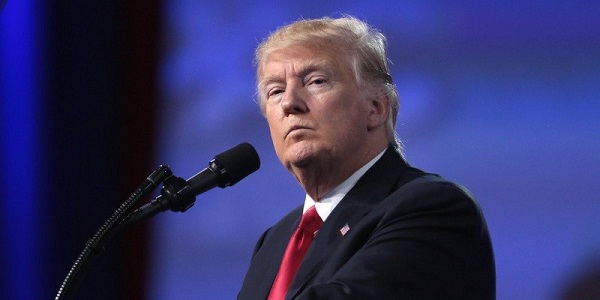
Following Donald Trump’s victory in Tuesday’s presidential election, lower taxes for both U.S. businesses and individuals will be at the top of his administration’s agenda. Meanwhile, Prime Minister Trudeau has raised taxes on businesses and individuals, including with his recent capital gains tax hike.
Clearly, Canada and the United States are now moving in opposite directions on tax policy. To prevent Canada from falling even further behind the U.S., policymakers in Ottawa and across Canada should swiftly increase our tax competitiveness.
Before the U.S. election, Canada was already considered a high-tax country that made it hard to do business. Canada’s top combined (federal and provincial) personal income tax rate (as represented by Ontario) ranked fifth-highest out of 38 high-income industrialized (OECD) countries in 2022 (the latest year of available data). And last year, Canadians in every province, across most of the income spectrum, faced higher personal income tax rates than Americans in nearly every U.S. state.
Our higher income tax rates make it harder to attract and retain high-skilled workers including doctors, engineers and entrepreneurs. High tax rates also reduce the incentives to save, invest and start a business—all key drivers of prosperity.
No doubt, we need reform now. To close the tax gap and increase our competitiveness, the federal government should reduce personal income tax rates. One option is to reduce the top rate from 33.0 per cent back down to 29.0 per cent (the rate before the Trudeau government increased it) and eliminate the three middle-income tax rates of 20.5 per cent, 26.0 per cent and 29.0 per cent.
These changes would establish a new personal income tax landscape with just two federal rates. Nearly all Canadians would face a personal income tax rate of 15.0 per cent, while top earners would pay a marginal tax rate of 29.0 per cent.
On business taxes, Canada’s rates are also higher than the global average and uncompetitive compared to the U.S., which makes it difficult to attract business investment and corporate headquarters that provide well-paid jobs and enhance living standards. According to Trump’s campaign promises, he plans to lower the federal business tax rate from 21 per cent to 20 per cent (and reduce the rate to 15 per cent for companies that make their products in the U.S.). Trump must work with congress to implement these changes, but barring any change in Canadian policy, business tax cuts in the U.S. will intensify Canada’s net outflow of business investment and corporate headquarters to the U.S.
The federal government should respond by lowering Canada’s business tax rate to match Trump’s plan. Moreover, Ottawa should (in coordination with the provinces) change tax policy to only tax business profits that are not reinvested in the company—that is, tax dividend payments, share buybacks and bonuses but don’t touch profits that are reinvested into the company (this type of business taxation has helped supercharge the economy in Estonia). These reforms would encourage greater business investment and ultimately raise living standards for Canadians. Finally, given Canada’s massive outflow of business investment, the government should (at a minimum) reverse the recent federal capital gains hike.
Of course, there’s much to quibble with in Trump’s policies. For example, his tariffs will hurt the U.S. economy (and likely Canada’s economy), and tax cuts without spending reductions and deficit-reduction will simply defer tax hikes into the future. But while policymakers in Ottawa can’t control U.S. policy, Trump’s tax plan will significantly exacerbate Canada’s competitiveness problem. We can’t afford to sit idle and do nothing. Ottawa should act swiftly in coordination with the provinces and pursue bold pro-growth tax reform for the benefit of Canadians.
Authors:


Business
Largest fraud in US history? Independent Journalist visits numerous daycare centres with no children, revealing massive scam


A young journalist has uncovered perhaps the largest fraud scheme in US history.
He certainly isn’t a polished reporter with many years of experience, but 23 year old independent journalist Nick Shirley seems to be getting the job done. Shirley has released an incredible video which appears to outline fraud after fraud after fraud in what appears to be a massive taxpayer funded scheme involving up to $9 Billion Dollars.
In one day of traveling around Minneapolis-St. Paul, Shirley appears to uncover over $100 million in fraudulent operations.
🚨 Here is the full 42 minutes of my crew and I exposing Minnesota fraud, this might be my most important work yet. We uncovered over $110,000,000 in ONE day. Like it and share it around like wildfire! Its time to hold these corrupt politicians and fraudsters accountable
We ALL… pic.twitter.com/E3Penx2o7a
— Nick shirley (@nickshirleyy) December 26, 2025


Federal prosecutors say Minnesota’s exploding social-services fraud scandal may now rival nearly the entire economy of Somalia, with as much as $9 billion allegedly stolen from taxpayer-funded programs in what authorities describe as industrial-scale abuse that unfolded largely under the watch of Democrat Gov. Tim Walz. The staggering new estimate is almost nine times higher than the roughly $1 billion figure previously suspected and amounts to about half of the $18 billion in federal funds routed through Minnesota-run social-services programs since 2018, according to prosecutors. “The magnitude cannot be overstated,” First Assistant U.S. Attorney Joe Thompson said Thursday, stressing that investigators are still uncovering massive schemes. “This is not a handful of bad actors. It’s staggering, industrial-scale fraud. Every day we look under a rock and find another $50 million fraud operation.”
Authorities say the alleged theft went far beyond routine overbilling. Dozens of defendants — the vast majority tied to Minnesota’s Somali community — are accused of creating sham businesses and nonprofits that claimed to provide housing assistance, food aid, or health-care services that never existed, then billing state programs backed by federal dollars. Thompson said the opportunity became so lucrative it attracted what he called “fraud tourism,” with out-of-state operators traveling to Minnesota to cash in. Charges announced Thursday against six more people bring the total number of defendants to 92.
BREAKING: First Assistant U.S. Attorney Joe Thompson revealed that 14 state Medicaid programs have cost Minnesota $18 billion since 2018, including more than $3.5 billion in 2024 alone.
Thompson stated, "Now, I'm sure everyone is wondering how much of this $18 billion was… pic.twitter.com/hCNDBuCTYH
— FOX 9 (@FOX9) December 18, 2025
Among the newly charged are Anthony Waddell Jefferson, 37, and Lester Brown, 53, who prosecutors say traveled from Philadelphia to Minnesota after spotting what they believed was easy money in the state’s housing assistance system. The pair allegedly embedded themselves in shelters and affordable-housing networks to pose as legitimate providers, then recruited relatives and associates to fabricate client notes. Prosecutors say they submitted about $3.5 million in false claims to the state’s Housing Stability Services Program for roughly 230 supposed clients.
Other cases show how deeply the alleged fraud penetrated Minnesota’s health-care programs. Abdinajib Hassan Yussuf, 27, is accused of setting up a bogus autism therapy nonprofit that paid parents to enroll children regardless of diagnosis, then billed the state for services never delivered, netting roughly $6 million. Another defendant, Asha Farhan Hassan, 28, allegedly participated in a separate autism scheme that generated $14 million in fraudulent reimbursements, while also pocketing nearly $500,000 through the notorious Feeding Our Future food-aid scandal. “Roughly two dozen Feeding Our Future defendants were getting money from autism clinics,” Thompson said. “That’s how we learned about the autism fraud.”
The broader scandal began to unravel in 2022 when Feeding Our Future collapsed under federal investigation, but prosecutors say only in recent months has the true scope of the alleged theft come into focus. Investigators allege large sums were wired overseas or spent on luxury vehicles and other high-end purchases. The revelations have fueled political fallout in Minnesota and prompted renewed federal scrutiny of immigration-linked fraud as well as criticism of state oversight failures. Walz, who is seeking re-election in 2026 after serving as Kamala Harris’ running mate in 2024, defended his administration Thursday, saying, “We will not tolerate fraud, and we will continue to work with federal partners to ensure fraud is stopped and fraudsters are caught.” Prosecutors, however, made clear the investigation is far from finished — and warned the final tally could climb even higher.


Georgia county admits illegally certifying 315k ballots in 2020 presidential election

Communist China arrests hundreds of Christians just days before Christmas

Be Careful What You Wish For In 2026: Mark Carney With A Majority
The Top News Stories That Shaped Canadian Energy in 2025 and Will Continue to Shape Canadian Energy in 2026
-
Bruce Dowbiggin2 days ago
Be Careful What You Wish For In 2026: Mark Carney With A Majority
-
Business14 hours ago
Largest fraud in US history? Independent Journalist visits numerous daycare centres with no children, revealing massive scam
-
 Energy2 days ago
New Poll Shows Ontarians See Oil & Gas as Key to Jobs, Economy, and Trade
-
 International2 days ago
No peace on earth for ISIS: Trump orders Christmas strikes after Christian massacres
-
Business15 hours ago
“Magnitude cannot be overstated”: Minnesota aid scam may reach $9 billion
-
 Alberta2 days ago
Alberta project would be “the biggest carbon capture and storage project in the world”
-
 Business1 day ago
Socialism vs. Capitalism
-
 Daily Caller2 days ago
US Halts Construction of Five Offshore Wind Projects Due To National Security