According to the Secretary of State’s office, Trump leads Harris by 184,935 in a 53%-46% split.
Former President Donald Trump was declared the winner Saturday night in Arizona, marking the final swing state for the Republican to collect in his landslide victory.
Arizona was the seventh and final swing state to be decided, securing Trump 312 Electoral College votes.
All but Coconino, Apache, Santa Cruz, and Pima counties favored Trump over Vice President Kamala Harris. Maricopa County, the source of dozens of electoral challenges including a partisan ballot review of the 2020 election, is currently favoring Trump by more than 78,000 votes. Trump lost the state to President Joe Biden in 2020 by little more than 10,000 votes.
According to the Secretary of State’s office, Trump leads Harris by 184,935 in a 53%-46% split.
Complete election results aren’t expected for at least another week, which is no different from previous cycles. Two-page ballots with dozens of judicial retention races and ballot propositions led to slower results in the days after polls closed. A new election integrity law enacted this year requiring polling stations to count envelopes before they can send off ballots added to the lag in results.
Both the Trump and Harris campaigns made Arizona a priority throughout the election cycle, either hosting rallies themselves or sending big-name surrogates.
Campaign volunteers descended on Maricopa County to join local activists who knocked on thousands of doors in the days before the election. Many residents complained about the barrage of phone calls, texts, emails, and flyers from numerous organizations.
Todayville is a digital media and technology company. We profile unique stories and events in our community. Register and promote your community event for free.
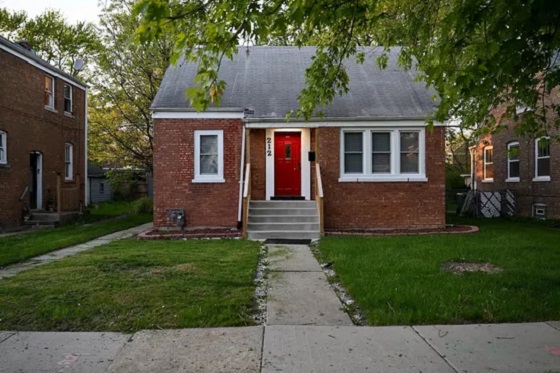
Village officials in Dolton, Illinois, have purchased the boyhood home of Pope Leo XIV, calling it a “once-in-a-lifetime opportunity” to bring pride, attention, and tourism to the community. The historic acquisition comes just weeks after Robert Prevost was elected pope.
Key Details:
The three-bedroom, 1,050-square-foot home was purchased by the Pope’s parents in 1949 and remained in the family for nearly 50 years.
Initially listed for $245,957, the home was removed from the market after Prevost’s election and later sold directly to the Dolton Village Board at a “significantly lower” price.
Dolton Mayor Jason House called the deal a major win for the community, with board members and residents already seeing increased interest and tour bus traffic.
Diving Deeper:
The childhood home of Pope Leo XIV has officially been purchased by the village of Dolton, Illinois, after a unanimous vote by the Village Board on Monday night. Local officials are celebrating the move as a historic acquisition that could serve as a source of civic pride and new economic opportunity.
As reported by the New York Post, the modest 1,050-square-foot home—located just south of Chicago—was originally purchased by the Pope’s parents in 1949 for a $49 monthly mortgage. It stayed in the Prevost family for nearly half a century.
After Robert Prevost was elected pope, the home—initially listed on May 5 for $245,957—was pulled from the market and briefly entered into an auction process. That plan was ultimately scrapped in favor of a direct sale to the village. While the final purchase price hasn’t been disclosed, attorney Burt Odelson, who handled the deal, said it was “significantly lower than what they thought they would get.”
Mayor Jason House praised the acquisition as a unique chance to put Dolton on the map. “This is a once-in-a-lifetime opportunity,” House said. “We can either seize this moment and move it forward, or we can let that moment go to an investor. I would like our community to get the benefits of this opportunity.”
Tourism has already begun. Within hours of Pope Leo XIV’s election, visitors started arriving at the home. Officials say that momentum has only grown. Trustee Edward Steave said the traffic in the area speaks for itself: “If you ever see the traffic over there, the constant busloads in and out of our town, this is a great opportunity for us. This is a historical thing.”
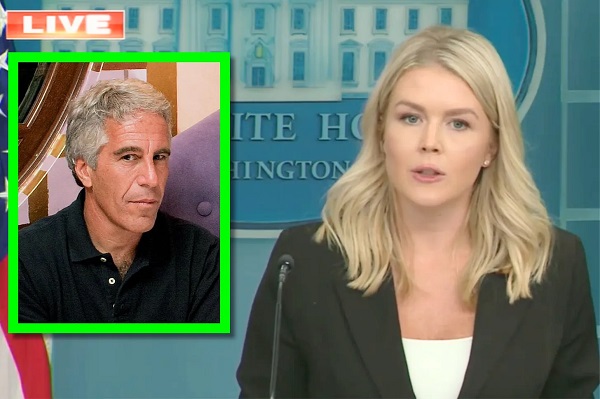
Peter Doocy asked directly, “What happened to the Epstein client list that the Attorney General said she had on her desk?” Here’s how Leavitt tried to explain it.
The Epstein client list was supposed to be SITTING on Pam Bondi’s desk for review.
But months later, the DOJ says no such list even exists.
Karoline Leavitt was just asked why there was such a reversal in so little time.
Her responses today are raising eyebrows.
On February 21st, Pam Bondi told the world the Epstein client list was “sitting on [her] desk right now to review,” explaining it was part of a directive ordered by President Trump.
Shortly afterward, she and Kash Patel pledged to end the Epstein cover-up, promising to fully disclose the Epstein files to the public, hold accountable any government officials who withheld key evidence, and investigate why critical documents had been hidden in the first place.
But ever since late February, it seems the cover-up wasn’t exposed but buried even deeper by those who promised transparency.
First, they handed out the so-called “Epstein files” to influencers like golden Willy Wanka tickets, only for everyone to discover that almost all of the contents inside were already public and contained no new revelations.
Fast-forward to May, and suddenly Kash Patel and Dan Bongino are declaring firmly that Epstein killed himself.
“I’ve seen the whole file. He killed himself,” Bongino stated bluntly to Fox News’s Maria Bartiromo.
Today, the Trump-appointed DOJ and FBI released a new report that’s turning heads and raising plenty of questions.
They concluded that Epstein had no clients, didn’t blackmail anyone, and definitely killed himself.
FBI Concludes Epstein Had No Clients, Didn’t Blackmail Anyone, and Definitely Killed Himself
This article originally appeared on Infowars and was republished with permission.
They also released surveillance footage and claimed it showed no one entered Epstein’s cell area, supporting the suicide ruling.
But people aren’t convinced. Some allege the video cuts off, with a minute of footage missing between 11:59 PM and midnight.
Monday, White House Press Secretary Karoline Leavitt responded to questions about the Epstein client list in light of these new DOJ and FBI statements.
A reporter asked, “Karoline, the DOJ and FBI have now concluded there was no Jeffrey Epstein client list. What do you tell MAGA supporters who say they want anyone involved in Epstein’s alleged crimes held accountable?”
Leavitt replied, “This administration wants anyone who has ever committed a crime to be accountable, and I would argue this administration has done more to lock up bad guys than certainly the previous administration.”
She continued, “The Trump administration is committed to truth and transparency. That’s why the Attorney General and the FBI Director pledged, at the president’s direction, to do an exhaustive review of all the files related to Jeffrey Epstein’s crimes and his death. They put out a memo in conclusion of that review.”
“There was material they did not release because frankly it was incredibly graphic and contained child pornography, which is not something that is appropriate for public consumption,” she added.
“But they committed to an exhaustive investigation. That’s what they did and they provided the results of that.”
“That’s transparency,” Leavitt said.
Leavitt was also pressed about Attorney General Pam Bondi’s comments in February when she claimed she had the Epstein list “on [her] desk.”
Peter Doocy asked, “Okay, so the FBI looks at the circumstances surrounding the death of Jeffrey Epstein. According to the report, this systematic review revealed no incriminating client list. So what happened to the Epstein client list that the Attorney General said she had on her desk?”
Leavitt responded, “I think if you go back and look at what the Attorney General said in that interview, which was on your network, on Fox News—”
Doocy pushed back, “I have the quote. John Roberts said: ‘DOJ may release the list of Jeffrey Epstein’s clients, will that really happen?’ And she said, ‘It’s sitting on my desk right now to review.’”
Leavitt explained, “Yes. She was saying the entirety of all of the paperwork, all of the paper in relation to Jeffrey Epstein’s crimes, that’s what the Attorney General was referring to. And I will let her speak for that.”
“But when it comes to the FBI and the Department of Justice, they are more than committed to ensuring that bad people are put behind bars.”
So, after months of patiently waiting, the American people get a nothing burger that simply repeats the same old claims we heard under Bill Barr.
Even worse, it’s purported that this is what “transparency” and “accountability” look like.
The story went from saying the Epstein client list was “on my desk” to “actually, there is no client list.”
And the newly released video footage raises questions and, in the age of AI, proves nothing.
If there’s really nothing to hide, why does it still feel like they’re hiding everything?
And most importantly—who’s still being protected?
Thanks for reading to the end. I hope you found this timeline of events and recap helpful.
Get more from The Vigilant Fox in the Substack app
Available for iOS and Android
Subscribe to The Vigilant Fox
The stories that matter the media hopes you’ll never hear. Subscribe now to stay sharp and informed.