Connect with us
[bsa_pro_ad_space id=12]

Business

Trump on Canada tariff deadline: ‘We can do whatever we want’

Published

7 minute read

From The Center Square

By 

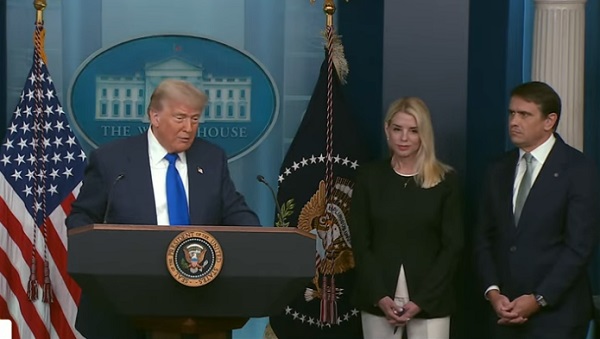
President Donald Trump appears unconcerned about an upcoming tariff deal deadline after abruptly ending all trade talks with Canada as his bid to overhaul world trade continues.

Trump is nearing the end of a self-imposed 90-day deadline to strike deals with nearly every U.S. trading partner as he works to reorder global trade by giving America a competitive advantage through tariffs on foreign goods.

Trump now says that the deadline could be extended past July 9 or even accelerated.

“We can do whatever we want. We could extend it, we could make it shorter. I’d like to make it shorter,” Trump said Friday at the Oval Office. “I’d like to just send letters out to everyone ‘Congratulations, you’re paying 25%.'”

On April 2, Trump announced reciprocal tariffs on nearly every nation that trades with the U.S. Seven days later, he paused those higher tariff rates for 90 days to give his trade team time to cut deals with key trading partners. That 90-day deadline ends July 9 and thus far Trump has brought home two deals: A limited trade pact with the United Kingdom and a trade truce with China.

Commerce Secretary Howard Lutnick told Bloomberg that new deals are on the way, and those could serve as models for others. 

“We’re going to do top 10 deals, put them in the right category, and then these other countries will fit behind,” Lutnick said.

He said the U.S. was “close to the finish line” with India. Lutnick also said he had made an offer to the European Union. 

Trump’s decision to suspend trade talks with Canada with just days left before the deadline underscored the flexibility of the president’s trade deadline.

“These are very complex negotiations and we are going to continue them in the best interests of Canadians,” Candian Prime Minister Mark Carney said Friday while leaving his office, according to local reports.

Canada has invariably been one of the top two trading partners for the United States for years. In 2024, Canada was the top destination for U.S. exports and the third-largest source of U.S. imports. On the other side, Canada exported 75% of its goods to the United States and imported almost half of its goods from the United States.

U.S. total goods trade with Canada was an estimated $762.1 billion in 2024, according to the Office of the U.S. Trade Representative. U.S. goods exports to Canada in 2024 were $349.4 billion. U.S. imports from Canada in 2024 totaled $412.7 billion. The U.S. goods trade deficit with Canada was $63.3 billion in 2024.

Services trade with Canada, exports and imports, totaled an estimated $140.3 billion in 2023. Services exports were $86.0 billion, and services imports were $54.3 billion. The U.S. services trade surplus with Canada was $31.7 billion in 2023, according to the Office of the U.S. Trade Representative.

Shortly after taking office in January, Trump hit Canada and Mexico with 25% tariffs for allowing fentanyl and migrants to cross their borders into the U.S. Trump later applied those 25% tariffs only to goods that fall outside the free-trade agreement between the three nations, called the United States-Mexico-Canada Agreement.

Trump put a stop to the talks on Friday.

“We have just been informed that Canada, a very difficult Country to TRADE with, including the fact that they have charged our Farmers as much as 400% Tariffs, for years, on Dairy Products, has just announced that they are putting a Digital Services Tax on our American Technology Companies, which is a direct and blatant attack on our Country,” Trump wrote on Truth Social.

Trump said the digital services tax was a copy of a European Union proposal.

“Based on this egregious Tax, we are hereby terminating ALL discussions on Trade with Canada, effective immediately,” the president said. “We will let Canada know the Tariff that they will be paying to do business with the United States of America within the next seven day period.”

Earlier this month, the two nations seemed close to striking a deal.

Trump said he and Canada Prime Minister Mark Carney had different trade concepts between the two neighboring countries during a meeting at the G7 Summit in Kananaskis, in the Canadian Rockies. 

Asked what was holding up a trade deal between the two nations at that time, Trump said they had different concepts for what that would look like.

“It’s not so much holding up, I think we have different concepts, I have a tariff concept, Mark has a different concept, which is something that some people like, but we’re going to see if we can get to the bottom of it today.”

Trump put a 10% tariff on non-USMCA compliant potash and energy products. A 50% tariff on aluminum and steel imports from all countries into the U.S. has been in effect since June 4. Trump also put a 25% tariff on all cars and trucks not built in the U.S.

The tariffs have frustrated Canadian leaders and residents. Tensions between the two neighboring countries have been high. And cities on both sides of the U.S.-Canada border have been affected.

Trump has repeatedly suggested that Canada join the U.S. as its 51st state. He previously called former Canadian Prime Minister Justin Trudeau “governor” regularly.

Todayville is a digital media and technology company. We profile unique stories and events in our community. Register and promote your community event for free.

Follow Author

Business

What Do Loyalty Rewards Programs Cost Us?

Published on

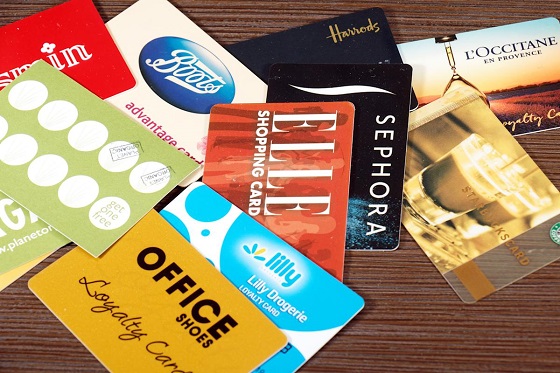
You’ve certainly been asked (begged!) to join up for at least one loyalty “points” program – like PC Optimum, Aeroplan, or Hilton Honors – over the years. And the odds are that you’re currently signed up for at least one of them. In fact, the average person apparently belongs to at no less than 14 programs. Although, ironically, you’ll need to sign up to an online equivalent of a loyalty program to read the source for that number.

Well all that warm, fuzzy “belonging” comes with some serious down sides. Let’s see how much they might cost us.

To be sure, there’s real money involved here. Canadians redeem at least two billion dollars in program rewards each year, and payouts will often represent between one and ten percent of the original purchase value.

At the same time, it’s estimated that there could be tens of billions of unredeemed dollars due to expirations, shifting program terms, and simple neglect. So getting your goodies isn’t automatic.

The Audit is a reader-supported publication.

To receive new posts and support my work, consider becoming a free or paid subscriber.

Just why do consumer-facing corporations agree to give away so much money in the fist place?

As you probably already know, it’s about your data. Businesses are willing to pay cold, hard cash in exchange for detailed descriptions of your age, sex, ethnicity, wealth, location, employment status, hobbies, preferences, medical conditions, political leanings, and, of course, shopping habits.

Don’t believe it works? So then why, after all these years, are points programs still giving away billions of dollars?

Every time you participate in such a program, the data associated with that activity will be collected and aggregated along with everything else known about you. It’s more than likely that points-based data is being combined with everything connected to your mobile phone account, email addresses, credit cards, provincial health card, and – possibly – your Social Insurance number. The depth and accuracy of your digital profile improves daily.

What happens to all that data? A lot of it is shared with – or sold to – partners or affiliates for marketing purposes. Some of it is accidentally (or intentionally) leaked to organized criminal gangs driving call center-related scams. But it’s all about getting to know you better in ways that maximize someone’s profits.

One truly scary way this data is used involves surveillance pricing (also known as price discrimination) – particularly as it’s described in a recent post by Professor Sylvain Charlebois.

The idea is that retailers will use your digital profile to adjust the prices you pay at the cash register or when you’re shopping online. The more loyal you are as a customer, the more you’ll pay. That’s because regular (“loyal”) customers are already reliable revenue sources. Companies don’t need to spend anything to build a relationship with you. But they’re more than willing to give up a few percentage points to gain new friends.

I’m not talking about the kind of price discrimination that might lead to higher prices for sales in, say, urban locations to account for higher real estate and transportation costs. Those are just normal business decisions.

What Professor Charlebois described is two customers paying different prices for the same items in the same stores. In fact, a recent Consumer Reports experiment in the U.S. involving 437 shoppers in four cities found the practice to be quite common.

But the nasty bit here is that there’s growing evidence that retailers are using surveillance pricing in grocery stores for basic food items. Extrapolating from the Consumer Reports study, such pricing could be adding $1,200 annually to a typical family’s spending on basic groceries.

I’m not sure what the solution is. It’s way too late to “unenroll” from our loyalty accounts. And government intervention would probably just end up making things worse.

But perhaps getting the word out about what’s happening could spark justified mistrust in the big retailers. No retailer enjoys dealing with grumpy customers.

Be grumpy.

The Audit is a reader-supported publication.

To receive new posts and support my work, consider becoming a free or paid subscriber.

Continue Reading

Business

Largest fraud in US history? Independent Journalist visits numerous daycare centres with no children, revealing massive scam

Published on

A young journalist has uncovered perhaps the largest fraud scheme in US history. 

He certainly isn’t a polished reporter with many years of experience, but 23 year old independent journalist Nick Shirley seems to be getting the job done. Shirley has released an incredible video which appears to outline fraud after fraud after fraud in what appears to be a massive taxpayer funded scheme involving up to $9 Billion Dollars.

In one day of traveling around Minneapolis-St. Paul, Shirley appears to uncover over $100 million in fraudulent operations.

Continue Reading

Trending

X