
International
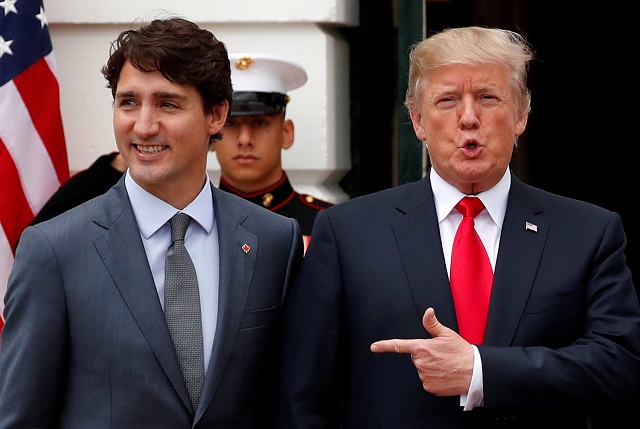
Trump ignites tensions with Trudeau after joking Canada should become 51st US state

From LifeSiteNews
Trump’s previous statements about Trudeau as ‘weak’ and a ‘far-left lunatic’ place his recent jibe about Canada becoming the 51st US state into context, thus appearing more like a deliberate humiliation of the Canadian leader.
President-Elect Donald Trump’s second term has not yet begun, but he has already inaugurated hostilities with Justin Trudeau.
In a bid to head off Trump’s threat of massive tariffs, Trudeau flew to Mar-a-Lago last month to kiss the ring; during their dinner, Trump reportedly joked that Canada should become America’s 51st state. He was apparently taken with the jibe – and, in all likelihood, the Canada press reaction to it – and reiterated as much during a Sunday interview on NBC, as well as in a social media post.
“It was a pleasure to have dinner the other night with Governor Justin Trudeau of the Great State of Canada,” Trump wrote. “I look forward to seeing the Governor again soon so that we may continue our in depth talks on Tariffs and Trade, the results of which will be truly spectacular for all!”
This is signature Trump trolling – an obvious joke with a sting in the tail. There are several likely reasons for it. First, this is simply how Trump does business: he throws his weight around, and he intimidates. It is a power play. Trudeau showed up at Mar-a-Lago, hat in hand, and Trump unsubtly reminded him that he holds most of the cards.
No doubt the jibe was (and is) aggravating, and it is intended to be – more so because Trudeau and his team have to publicly pretend that it is not. Many Canadians see it as a put-down; Trudeau’s team has to insist that it is evidence of “mutual respect and warmth.”
There is probably an element of revenge to this, as well. One of Trudeau’s signature smears when attacking socially conservative Canadians – such as parental rights protestors – is to insist that they are either bigots, or victims of “far-right American disinformation.” Trudeau has also gone to great lengths to label federal Conservative leader Pierre Poilievre and Conservative MPs as “MAGA conservatives” – and he doesn’t mean it as a compliment. Using Trump’s signature phrase as an insult likely did not endear Trudeau to the MAGA team heading to the White House.
Indeed, in the context of Trump’s previous statements about Trudeau, his jokes seem like a deliberate humiliation. He has previously referred to Trudeau – respectfully and warmly, his team will no doubt insist – as “weak” and a “far-left lunatic.” Trump was also likely unenthused by Trudeau’s comment that he and other world leaders had “managed Mr. Trump” during his first term. There will be no “managing” him in his second term, which is likely to outlast Trudeau’s tenure in 24 Sussex. Fortunately for everyone – Canadians especially – we are likely to have a new prime minister sometime next year.
This tense relationship puts conservative Canadians in an interesting position. Some, of course, are experiencing some schadenfreude at seeing Trudeau being put in his place, especially after the prime minister tactfully used “MAGA conservative” as a pejorative for the past several years. Watching him eat his words and swallow hard is amusing.
Trudeau’s unearned arrogance is famously iron-clad, and watching Trump push him around is satisfying for some. At the same time, the threatened tariffs would be devastating for Canada, and patriotic Canadians are fully justified in finding Trump’s jokes about a “51st state” demeaning and distasteful. Calling Trudeau a “far-left lunatic” is one thing. Threatening to tank the Canadian economy is another.
Reactionary anti-Americanism is a longstanding and politically-cultivated Canadian trait, borne mostly of the insecurity that comes from living alongside the world’s reigning military and cultural superpower. Thus, there are some conservatives who may feel that Trudeau deserves their support simply for standing up for Canada. This may seem like an obvious point to make, but we must remember that Justin Trudeau is the problem here, not the solution.
Trudeau is uniquely unfit to defend Canadian interests in Washington, D.C., and not only because he has deliberately created a toxic relationship with the incoming president by essentially campaigning against him north of the border and attempting to constantly tie his ideological opponents to Trump’s MAGA movement. He is also unfit because he has denied that Canada has any core identity whatsoever: in 2015, he insisted that Canada is the first “post-national state.”
Trudeau created this looming crisis, and he did so deliberately. Patriotic Canadians owe him no loyalty whatsoever.


From the Daily Caller News Foundation
During the latest marathon cabinet meeting on Dec. 2, Energy Secretary Chris Wright made news when he told President Donald Trump that “The biggest determinant of the price of energy is politicians, political leaders, and polices — that’s what drives energy prices.”
He’s right about that, and it is why the back-and-forth struggle over federal energy and climate policy plays such a key role in America’s economy and society. Just 10 months into this second Trump presidency, the administration’s policies are already having a profound impact, both at home and abroad.
While the rapid expansion of AI datacenters over the past year is currently being blamed by many for driving up electric costs, power bills were skyrocketing long before that big tech boom began, driven in large part by the policies of the Obama and Biden administration designed to regulate and subsidize an energy transition into reality. As I’ve pointed out here in the past, driving up the costs of all forms of energy to encourage conservation is a central objective of the climate alarm-driven transition, and that part of the green agenda has been highly effective.
Dear Readers:
As a nonprofit, we are dependent on the generosity of our readers.
Please consider making a small donation of any amount here.
Thank you!
President Trump, Wright, and other key appointees like Interior Secretary Doug Burgum and EPA Administrator Lee Zeldin have moved aggressively throughout 2025 to repeal much of that onerous regulatory agenda. The GOP congressional majorities succeeded in phasing out Biden’s costly green energy subsidies as part of the One Big Beautiful Bill Act, which Trump signed into law on July 4. As the federal regulatory structure eases and subsidy costs diminish, it is reasonable to expect a gradual easing of electricity and other energy prices.
This year’s fading out of public fear over climate change and its attendant fright narrative spells bad news for the climate alarm movement. The resulting cracks in the green facade have manifested rapidly in recent weeks.
Climate-focused conflict groups that rely on public fears to drive donations have fallen on hard times. According to a report in the New York Times, the Sierra Club has lost 60 percent of the membership it reported in 2019 and the group’s management team has fallen into infighting over elements of the group’s agenda. Greenpeace is struggling just to stay afloat after losing a huge court judgment for defaming pipeline company Energy Transfer during its efforts to stop the building of the Dakota Access Pipeline.
350.org, an advocacy group founded by Bill McKibben, shut down its U.S. operations in November amid funding woes that had forced planned 25 percent budget cuts for 2025 and 2026. Employees at EDF voted to form their own union after the group went through several rounds of budget cuts and layoffs in recent months.
The fading of climate fears in turn caused the ESG management and investing fad to also fall out of favor, leading to a flood of companies backtracking on green investments and climate commitments. The Net Zero Banking Alliance disbanded after most of America’s big banks – Goldman Sachs, J.P. Morgan Chase, Citigroup, Wells Fargo and others – chose to drop out of its membership.
The EV industry is also struggling. As the Trump White House moves to repeal Biden-era auto mileage requirements, Ford Motor Company is preparing to shut down production of its vaunted F-150 Lightning electric pickup, and Stellantis cancelled plans to roll out a full-size EV truck of its own. Overall EV sales in the U.S. collapsed in October and November following the repeal of the $7,500 per car IRA subsidy effective Sept 30.
The administration’s policy actions have already ended any new leasing for costly and unneeded offshore wind projects in federal waters and have forced the suspension or abandonment of several projects that were already moving ahead. Capital has continued to flow into the solar industry, but even that industry’s ability to expand seems likely to fade once the federal subsidies are fully repealed at the end of 2027.
Truly, public policy matters where energy is concerned. It drives corporate strategies, capital investments, resource development and movement, and ultimately influences the cost of energy in all its forms and products. The speed at which Trump and his key appointees have driven this principle home since Jan. 20 has been truly stunning.
David Blackmon is an energy writer and consultant based in Texas. He spent 40 years in the oil and gas business, where he specialized in public policy and communications.


After years of dead ends, public frustration, and pointed questions from Congress, federal agents on Thursday finally took a suspect into custody for allegedly planting the pipe bombs outside the Democratic and Republican National Committee headquarters on the eve of Jan. 6. The arrest — confirmed by law enforcement officials and first reported by CNN and the Associated Press — lands just weeks before the five-year mark of the Capitol breach and brings long-awaited movement in a case that had become an embarrassment for the bureau.
A law-enforcement source told the AP the male suspect was arrested Thursday morning, though the charges remain under seal. For years, investigators had only grainy surveillance footage to work with: an individual in a gray hoodie, mask, gloves, and Nike Air Max Speed Turf sneakers, carrying a backpack as they placed what the FBI described as “viable explosive devices” outside both national party headquarters on the night of Jan. 5, 2021. Those bombs went unnoticed for roughly 17 hours, discovered only as Congress met the next day to certify the 2020 election results.
The timeline placed then–Vice President-elect Kamala Harris and former House Speaker Nancy Pelosi within mere feet of the devices that Wednesday as their motorcades traveled in and out of the DNC’s South Capitol Street headquarters. A House Administration Committee review earlier this year blasted federal authorities for allowing Pelosi’s motorcade to pass directly by one of the bombs after it had already been spotted, chalking up the lapse to a broader failure to secure the area.
That same review — authored by Reps. Barry Loudermilk of Georgia and Thomas Massie of Kentucky — accused federal investigators of letting the trail go cold far too early. Despite what they called “a promising array of data” and “numerous persons of interest,” the lawmakers said the FBI had, by late February 2021, already begun shifting resources away from the bombing probe and stonewalling congressional requests for updates. Their report lamented that “little meaningful progress” had been made and pressed the bureau to release more information. Hours later, investigators unveiled new details, including additional surveillance video and an estimate that the suspect is roughly 5-foot-7.
The years-long vacuum of answers fueled widespread speculation — particularly among conservatives — that the bomber may have been a politically inconvenient figure for the Biden-era Justice Department, which aggressively pursued hundreds of Trump supporters tied to the Capitol breach while offering no clarity on who planted the explosives. Now-FBI Deputy Director Dan Bongino, who took office in March after years of publicly criticizing the investigation, had repeatedly questioned whether the case was being slow-rolled. Before joining the bureau, he suggested on his podcast that the operation had the hallmarks of an “inside job” and accused prior leadership of a “massive cover-up.”
🚨BREAKING: The FBI has just made an arrest in the 2021 RNC and DNC pipe bomb investigation.
“We don’t have an ID of that person yet from the FBI or from the Justice Department but from everything we know it seems to indicate this is not someone who is an insider.” pic.twitter.com/Oh5OLl5E1e
— Andrew Kolvet (@AndrewKolvet) December 4, 2025
Once inside the FBI, Bongino moved the dormant investigation to the top of his priority list. In a post last month, he said the bureau brought in new investigators, flew in outside officers assigned as task-force partners, re-examined past work product, and dramatically increased both manpower and the reward for information. “We brought in new personnel to take a look at the case… we dramatically increased investigative resources,” he wrote on X.
Neither the FBI nor the Justice Department has commented on the arrest. For now, nearly five years after pipe bombs were quietly placed outside both major political parties’ headquarters, the country is finally one step closer to answers that should have come much sooner.


Canadians will soon be versed in massive West Coast LPG mega-project
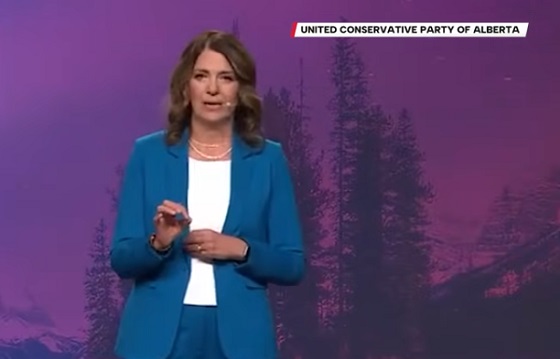
Keynote address of Premier Danielle Smith at 2025 UCP AGM
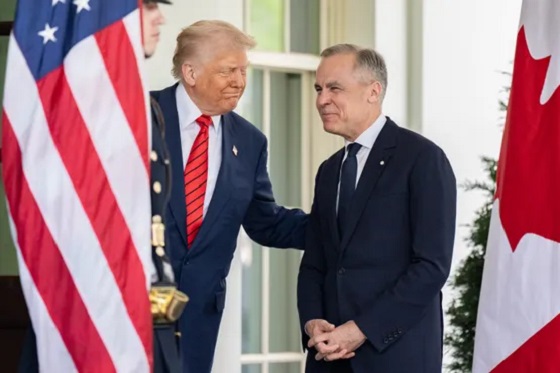
Canada Needs an Alternative to Carney’s One Man Show

Net Zero goal is a fundamental flaw in the Ottawa-Alberta MOU
-
International19 hours ago
FBI may have finally nabbed the Jan. 6 pipe bomber
-
 Energy2 days ago
Canada following Europe’s stumble by ignoring energy reality
-
 COVID-1913 hours ago
University of Colorado will pay $10 million to staff, students for trying to force them to take COVID shots
-
 Energy5 hours ago
A look inside the ‘floatel’ housing B.C.’s LNG workforce
-
 Business1 day ago
Canada’s climate agenda hit business hard but barely cut emissions
-
 espionage19 hours ago
Digital messages reportedly allege Chinese police targeted dissident who died suspiciously near Vancouver
-
 MAiD2 days ago
From Exception to Routine. Why Canada’s State-Assisted Suicide Regime Demands a Human-Rights Review
-
 Business2 days ago
Carney government should privatize airports—then open airline industry to competition