Connect with us
[bsa_pro_ad_space id=12]

Business

Trump eyes ‘reciprocal’ trade deals over flat fee tariffs

Published

3 minute read

From The Center Square

By 

“We’re going to have tariffs, mostly reciprocal tariffs … probably reciprocal tariffs where a country pays so much or charges us so much and we do the same, so very reciprocal because I think that’s the only fair way to do it. That way no one is hurt. They charge us, we charge them”

President Donald Trump said Friday he was considering reciprocal trade deals with countries rather than flat fee tariffs on imported goods from other countries.

Trump touted tariffs throughout his campaign and during his inauguration said tariff revenue would make the U.S. “rich as hell.” He also said that tariff revenue would lower the tax burden on American taxpayers.

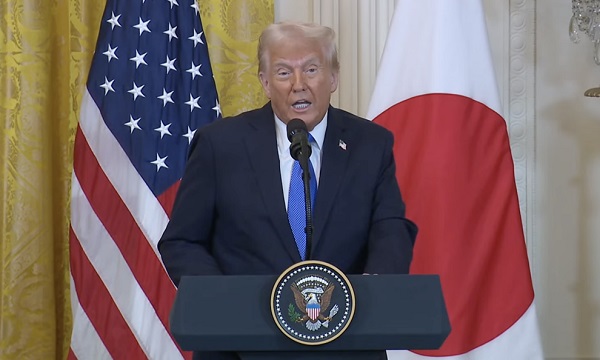
On Friday, the president said he would announce reciprocal trade agreements next week with multiple countries. His remarks came during a news conference with Japan Prime Minister Shigeru Ishiba.

“The United States will be conducting trade with all countries based on the principle of fairness and reciprocity,” Trump said.

The president said that chronic trade deficits undermine the U.S. economy.

“We’re going to have tariffs, mostly reciprocal tariffs … probably reciprocal tariffs where a country pays so much or charges us so much and we do the same, so very reciprocal because I think that’s the only fair way to do it. That way no one is hurt. They charge us, we charge them,” Trump said.

Trump said the reciprocal trade deals seem to be the path forward rather than flat fee tariffs. He said he would be announcing trade deals as early as Monday or Tuesday.

On Feb. 1, Trump hit Mexico and Canada with 25% tariffs and levied an additional 10% tariff on China. Two days later, Trump suspended tariffs on the U.S. neighbors for 30 days after reaching preliminary deals with both Mexico and Canada. The leaders of both neighboring countries promised to strengthen border security. China responded with limited tariffs on U.S. goods and filed a complaint about Trump’s unilateral trade move with the World Trade Organization.

Most economists have panned Trump’s tariff plans. On Thursday, S&P Global, a credit-rating agency, reported the potential effects of Trump’s tariffs were “overwhelmingly negative.” S&P analysts said the tariffs could slow gross domestic product growth, boost unemployment and inflation. It noted that “the effects on the U.S. are smaller than for trading partners.” Gross domestic product, or GDP, is a measure of economic output. S&P noted the uncertainty around Trump’s tariff plans creates problems for businesses and U.S. families.

“Uncertainty around the path of U.S. policy and its objectives is high, and confidence bands around our forecasts are correspondingly wide,” according to the S&P report. “Moreover, the ongoing deal-making mode of the new administration risks complicating long-term decision making by both firms and households.”

Todayville is a digital media and technology company. We profile unique stories and events in our community. Register and promote your community event for free.

Follow Author

Business

Major tax changes in 2026: Report

Published on

By Franco Terrazzano 

The Canadian Taxpayers Federation released its annual New Year’s Tax Changes report today to highlight the major tax changes in 2026.

“There’s some good news and bad news for taxpayers in 2026,” said Franco Terrazzano, CTF Federal Director. “The federal government cut income taxes, but it’s hiking payroll taxes. The government cancelled the consumer carbon tax, but it’s hammering Canadian businesses with a higher industrial carbon tax.”

Payroll taxes: The federal government is raising the maximum mandatory Canada Pension Plan and Employment Insurance contributions in 2026. These payroll tax increases will cost a worker up to an additional $262 next year.

For workers making $85,000 or more, federal payroll taxes (CPP and EI tax) will cost $5,770 in 2026. Their employers will also be forced to pay $6,219.

Income tax: The federal government cut the lowest income tax rate from 15 to 14 per cent. This will save the average taxpayer $190 in 2026, according to the Parliamentary Budget Officer.

Carbon taxes: The government cancelled its consumer carbon tax effective April 1, 2025. However, the government still charges carbon taxes through its industrial carbon tax and a hidden carbon tax embedded in fuel regulations.

The industrial carbon tax will increase to $110 per tonne in 2026. While the government hasn’t provided further details on how much the industrial carbon tax will cost Canadians, 70 per cent of Canadians believe businesses pass on most or some of the cost of the tax to consumers, according to a Leger poll.

Alcohol taxes: Federal alcohol taxes are expected to increase by two per cent on April 1, 2026. This alcohol tax hike will cost taxpayers about $41 million in 2026-27, according to industry estimates.

First passed in the 2017 federal budget, the alcohol escalator tax automatically increases excise taxes on beer, wine and spirits every year without a vote in Parliament. Since being imposed, the alcohol escalator tax has cost taxpayers about $1.6 billion, according to industry estimates.

“Canadians pay too much tax because the government wastes too much money,” Terrazzano said. “Canadians are overtaxed and need serious tax cuts to help make life more affordable and our economy more competitive.

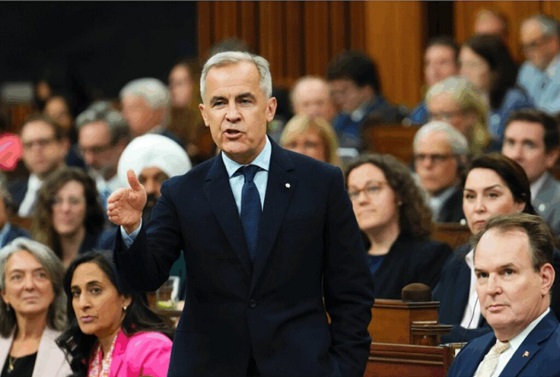
“Prime Minister Mark Carney needs to significantly cut spending, provide major tax relief and scrap all carbon taxes.”

You can read the CTF’s New Year’s Tax Changes report here.

Continue Reading

Business

Inflation Reduction Act, Green New Deal Causing America’s Energy Crisis

Published on


From the Daily Caller News Foundation

By Greg Blackie

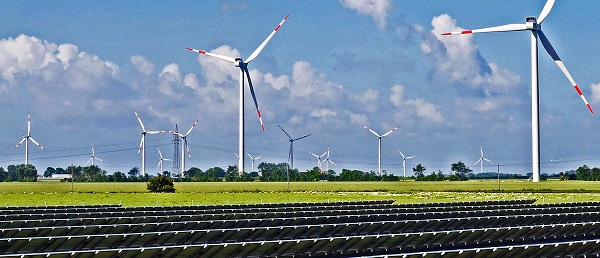
Our country is facing an energy crisis. No, not because of new demand from data centers or AI. Instead, it’s because utilities in nearly every state, due to government imposed “renewable” mandates, self-imposed mandates, and the supercharging of the Green New Scam under the so-called “Inflation Reduction Act,” have been shutting down vital coal resources and building out almost exclusively intermittent and costly resources like solar, wind, and battery storage.

President Donald Trump understands this, and that is why on day one of his administration he declared an Energy Emergency. Then, a few months later, the President signed a trio of Executive Orders designed to keep our “beautiful, clean coal” burning and providing the reliable, baseload, and affordable electricity Americans have benefitted from for generations.

Those orders have been used to keep coal generation online that was slated to shut down in Michigan and will potentially keep two units operating that were scheduled to shut down in Colorado this December. In Arizona, however, the Cholla Power Plant in Navajo County was shuttered by the utility just weeks after Trump explicitly called out the plant for saving in a press conference.

Dear Readers:

As a nonprofit, we are dependent on the generosity of our readers.

Please consider making a small donation of any amount here.

Thank you!

Unlike states with green mandates, Arizona essentially has none. Instead, our utilities, like many around the country, have self-imposed commitments to go “Net Zero” by 2050. To meet that target, they have planned to shut down all coal generation in the state by 2032 and plan to build out almost exclusively solar, wind, and battery storage to meet an expected explosive growth in demand, at a cost of tens of billions of dollars. So it is no surprise that like much of the rest of the country, Arizona is facing an energy crisis.

Taking a look at our largest regulated utilities (APS, TEP, and UNS) and the largest nonprofit utility, SRP, future plans paint an alarming picture. Combined, over the next 15 years, these utilities expect to see demand increase from 19,200 MW to 28,000 MW. For reference, 1,000 MW of electricity is enough to power roughly 250,000 homes. To meet that growth in demand, however, Arizonans will only get a net increase of 989 MW of reliable generation (coal, natural gas, and nuclear) compared to 22,543 MW (or nearly 23 times as much) of intermittent solar, wind, and battery storage.

But what about all of the new natural gas coming into the state? The vast majority of it will be eaten up just to replace existing coal resources, not to bring additional affordable energy to the grid. For example, the SRP board recently voted to approve the conversion of their Springerville coal plant to natural gas by 2030, which follows an earlier vote to convert another of their coal plants, Coronado, to natural gas by 2029. This coal conversion trap leaves ratepayers with the same amount of energy as before, eating up new natural gas capacity, without the benefit of more electricity.

So, while the Arizona utilities plan to collectively build an additional 4,538 MW of natural gas capacity over the next 15 years, at the same time they will be removing -3,549 MW (all of what is left on the grid today) of coal. And there are no plans for more nuclear capacity anytime soon. Instead, to meet their voluntary climate commitments, utilities plan to saddle ratepayers with the cost and resultant blackouts of the green new scam.

It’s no surprise then that Arizona’s largest regulated utilities, APS and TEP, are seeking double digit rate hikes next year. It’s not just Arizona. Excel customers in Colorado (with a 100% clean energy commitment) and in Minnesota (also with a 100% clean energy commitment) are facing nearly double-digit rate hikes. The day before Thanksgiving, PPL customers in Rhode Island (with a state mandate of 100% renewable by 2033) found out they may see rate hikes next year. Dominion (who has a Net Zero by 2050 commitmentwanted to raise rates for customers in Virginia by 15%. Just last month, regulators approved a 9% increase. Importantly, these rate increases are to recover costs for expenses incurred years ago, meaning they are clearly to cover the costs of the energy “transition” supercharged under the Biden administration, not from increased demand from data centers and AI.

It’s the same story around the country. Electricity rates are rising. Reliability is crumbling. We know the cause. For generations, we’ve been able to provide reliable energy at an affordable cost. The only variable that has changed has been what we are choosing to build. Then, it was reliable, dispatchable power. Now, it is intermittent sources that we know cost more, and that we know cause blackouts, all to meet absurd goals of going 100% renewable – something that no utility, state, or country has been able to achieve. And we know the result when they try.

This crisis can be avoided. Trump has laid out the plan to unleash American Energy. Now, it’s time for utilities to drop their costly green new scam commitments and go back to building reliable and affordable power that generations to come will benefit from.

Greg Blackie, Deputy Director of Policy at the Arizona Free Enterprise Club. Greg graduated summa cum laude from Arizona State University with a B.S. in Political Science in 2019. He served as a policy intern with the Republican caucus at the Arizona House of Representatives and covered Arizona political campaigns for America Rising during the 2020 election cycle.

Continue Reading

Trending

X