
Media
Trudeau’s ‘online harms’ legislation includes life imprisonment for ‘hate speech’

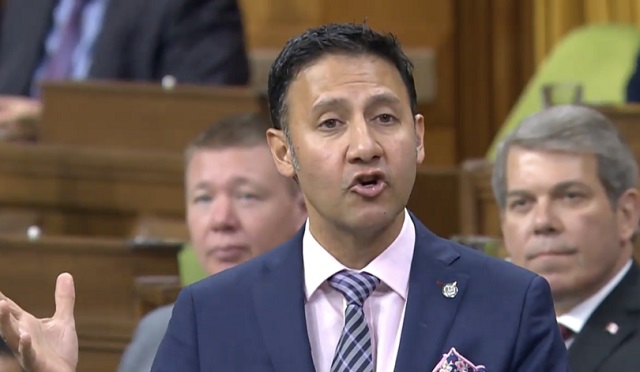
Justice Minister Arif Virani
From LifeSiteNews
While the government claims the bill is intended to protect kids, Conservative Party of Canada leader Pierre Poilievre said Liberals are looking for clever ways to enact internet censorship laws.
Details of new “online harms” legislation to regulate the internet have emerged, revealing that the bill could lead to more people jailed for life or fined $20,000 for posts that the government defines as “hate speech” based on gender, race, or other categories.
Bill C-63 is titled “An Act to enact the Online Harms Act, to amend the Criminal Code, the Canadian Human Rights Act and An Act respecting the mandatory reporting of Internet child pornography by persons who provide an Internet service and to make consequential and related amendments to other Acts.”
It was introduced by Justice Minister Arif Virani in the House of Commons today and passed its first reading in the afternoon.
The new bill will create the Online Harms Act and modify existing laws, amending the Criminal Code as well as the Canadian Human Rights Act, in what the Liberals under Prime Minister Justin Trudeau claim will target certain cases of internet content removal, notably those involving child sexual abuse and pornography.
According to the Trudeau government, Bill C-63 aims to protect kids from online harms and crack down on non-consensual deep-fake pornography involving children and will target seven types of online harms, such as hate speech, terrorist content, incitement to violence, the sharing of non-consensual intimate images, child exploitation, cyberbullying and inciting self-harm.
Virani had many times last year hinted a new Online Harms Act bill would be forthcoming.
While the Trudeau government claims the bill is being created to protect kids, Conservative Party of Canada (CPC) leader Pierre Poilievre said the federal government is looking for clever ways to enact internet censorship laws.
During a February 21, press conference, Poilievre said that Trudeau is looking to in effect criminalize speech with he does not like.
“What does Justin Trudeau mean when he says the word ‘hate speech?’ He means speech he hates,” Poilievre said.
Thus far, Poilievre has not commented on the full text of Bill C-63.
As part of the new bill, the Trudeau Liberals are looking to increase punishments for existing hate propaganda offenses in a substantial manner.
The Online Harms Act will also amend Canada’s Human Rights Act to put back in place a hate speech provision, specifically Section 13 of the Act, that the previous Conservative government under Stephen Harper had repealed in 2013 after it was found to have violated one’s freedom of expression.
The text of the bill, released Monday afternoon, reads that the Canadian Human Rights Act will be amended to add a section “13” to it.
This section reads, “It is a discriminatory practice to communicate or cause to be communicated hate speech by means of the Internet or any other means of telecommunication in a context in which the hate speech is likely to foment detestation or vilification of an individual or group of individuals on the basis of a prohibited ground of discrimination.”
“In this section, hate speech means the content of a communication that expresses detestation or vilification of an individual or group of individuals on the basis of a prohibited ground of discrimination,” the bill reads.
A “Clarification – hate speech” in the bill reads, “For greater certainty, the content of a communication does not express detestation or vilification, for the purposes of subsection (8), solely because it expresses disdain or dislike or it discredits, humiliates, hurts or offends.”
Earlier Monday, details of the bill were released to the media in a technical briefing.
“New standalone hate crime offence that would apply to every offence in the Criminal Code and in any other Act of Parliament, allowing penalties up to life imprisonment to denounce and deter this hateful conduct as a crime in itself,” the technical briefing reads.
“The maximum punishments for the four hate propaganda offences from 5 years to life imprisonment for advocating genocide and from 2 years to 5 years for the others when persecuted by way of indictment.”
For now, the law will affect all social media platforms as well as live-streamed video services, notably Meta and Google (YouTube).
Bill creates three ‘Digital Safety’ positions to enforce rules and let anyone file ‘complaints’
Bill C-63 mandates the creation of the Digital Safety Commission, a digital safety ombudsperson, and the Digital Safety Office.
The ombudsperson along with the other offices will be charged with dealing with public complaints regarding online content as well as put forth a regulatory function in a five-person panel “appointed by the government.” This panel will be charged with monitoring internet platform behaviors to hold people “accountable.”
Bill C-63 also includes text to amend Canada’s Criminal Code and Human Rights Act to define “hatred” as “Content that expresses detestation or vilification of an individual or group of individuals on the basis of a prohibited ground of discrimination, within the meaning of the Canadian Human Rights Act, and that, given the context in which it is communicated, is likely to foment detestation or vilification of an individual or group of individuals on the basis of such a prohibited ground. (contenu fomentant la haine).”
Most worryingly, the new bill will allow it so that anyone can file a complaint against another person with the Canadian Human Rights Commission for “posting hate speech online” that is deemed “discriminatory” against a wide range of so-called protected categories, notably gender, race, those, or other areas.
If a person is found guilty of violating the Human Rights Act by going against what the government deems to be hate speech, they face fines of $20,000 along with being mandated to take down any postings online, notably on social media.
Many aspects of Bill C-63 come from a lapsed bill from 2021.
In June 2021, then-Justice Minister David Lametti introduced Bill 36, “An Act to amend the Criminal Code and the Canadian Human Rights Act and to make related amendments to another Act (hate propaganda, hate crimes and hate speech).”
It was blasted as a controversial “hate speech” law that would give police the power to “do something” about online “hate.”
It was feared that it would target bloggers and social media users for speaking their minds.
Bill C-36 included text to amend Canada’s Criminal Code and Human Rights Act to define “hatred” as “the emotion that involves detestation or vilification and that is stronger than dislike or disdain (haine).”
If passed, the bill would theoretically allow a tribunal to judge anyone who has a complaint of online “hate” leveled against them, even if he has not committed a crime. If found guilty, the person would be in violation of the new law and could face fines of $70,000 as well as house arrest.
Two other Trudeau bills dealing with freedom as it relates to the internet have become law, the first being Bill C-11, or the Online Streaming Act, that mandates Canada’s broadcast regulator, the Canadian Radio-television and Telecommunications Commission (CRTC), oversee regulating online content on platforms such as YouTube and Netflix to ensure that such platforms are promoting content in accordance with a variety of its guidelines.
Trudeau’s other internet censorship law, the Online News Act, was passed by the Senate in June 2023.
The law mandates that Big Tech companies pay to publish Canadian content on their platforms. As a result, Meta, the parent company of Facebook and Instagram, blocked all access to news content in Canada. Google has promised to do the same rather than pay the fees laid out in the new legislation.
Critics of recent laws such as tech mogul Elon Musk have said it shows “Trudeau is trying to crush free speech in Canada.”

Censorship Industrial Complex
How Wikipedia Got Captured: Leftist Editors & Foreign Influence On Internet’s Biggest Source of Info

Fr0m Stossel TV
I once reported how great Wikipedia is. But now, it’s manipulated by leftists. That’s a big problem because its bad information corrupts AI and search results. Even c0-founder Larry Sanger agrees.
But that’s just the beginning of the problem because “Wikipedia’s information spreads into everything online,” says @ashleyrindsbergmedia of @NPOVmedia .
That means when your ask ChatGPT, Google, or your phone a question, it’ll likely to take leftist spin straight from Wikipedia. Wikipedia bans most right-wing news sources and suggests Donald Trump is an authoritarian fascist (but they don’t even call Fidel Castro’s successor authoritarian).
They’ve turned my Wikipedia page into a smear against me.
I explain in this video.
_ _ _ _ _ _
To make sure you receive the weekly video from Stossel TV, sign up here:
https://www.johnstossel.com/#subscrib…
_ _ _ _ _ _
Media
Reporters determined to drive their industry and its reputation into the abyss one Tweet at a time


Last week, my column for The Hub was about why journalists, for the sake of journalism, should avoid posting on Twitter/X.
It took mere hours for my advice to be wrapped up in a ball and shoved right back at me when Robert Fife, a reporter of many years experience (he’s even older than I am) and the Globe and Mail’s Ottawa bureau chief, posted in response to the House of Commons’ vote on a Conservative motion to approve pipelines that:
“Conservatives persist with cute legislative tricks, while the government tries to run a country.”
The Rewrite is a reader-supported publication.
To receive new posts and support my work, consider becoming a free or paid subscriber.
While he’s free to do so and obviously views things differently, it is quite beyond me why the bureau chief of a distinguished journalism organization would expose himself so casually to accusations of bearing a bias – particularly given public concern about government funding of media – and so I responded by sharing Fife’s post with the comment:
“I’m old-fashioned enough to think reporters shouldn’t be blatantly stating biases. Not a great way to retain public trust.”
Now, I was aware that Fife was sharing a headlined opinion column by a colleague, Robyn Urback. But Urback is perfectly capable of promoting her own work and if Fife’s sole motivation was to neutrally share her column, it would’ve been fine if he had posted something like: “Here’s one perspective on yesterday’s House of Commons vote.”
Some people suggested the post was OK because it was only sharing someone else’s viewpoint and a headline. But Fife’s appearance on CBCNN’s Power and Politics – in which he enthusiastically described the Opposition as “childish” and criticized it for criticizing the government – made it appear the Tweet was otherwise motivated. Not everyone in today’s newsrooms shares my view that reporters should do everything in their power to be viewed as objective. Fair enough. While the aspiration remains popular with the public, it is no longer favoured by many, maybe even most, modern journalists.
Fife’s been a good reporter for decades going back to long before Twitter. He’s been announced as the 2026 recipient of the Public Policy Forum’s Hy Solomon award for excellence in public policy journalism. There are also some exceptionally good reporters at the Globe and Mail such as Grant Robertson, who has won nine National Newspaper Awards – more than anyone, ever, and eight more than me. There is no evidence I can find that Robertson, like a lot of other very good journalists, even has an account on X/Twitter. I have absolutely no idea or suspicions concerning what he thinks about anything going on in the world and I think that is how journalists should aspire to be perceived. But when social media posts by other reporters bring into question journalists’ reputations as fair brokers of the events of the day, his prudent behaviour isn’t enough to keep the entire craft from suffering reputational damage. As the old saying goes, newspapers don’t report when airplanes land safely – a phrase that applies equally to reporters, of which, according to the latest Global Media and Internet Concentration Project report, there were 1,600 fewer in Canada last year.
All that said, I don’t think anyone cares enough to do anything about it. Despite considerable evidence detailing journalism’s decline as a trusted institution, the overwhelming majority of its practitioners appear to me to have no intention whatsoever of altering course.
It looks like time has passed me by. As Leonard Cohen sang, “I’m old and the mirrors don’t lie.” So I will just continue to tilt at windmills for a little longer and then decide if there aren’t more rewarding things to do.
So Tweet away, journos, Tweet away. Tweet all the way into the abyss.
The colloquial nature of many newsrooms continues to fascinate, the latest example being treatment of Bill C-9, which expands the powers of Canada’s hate criminal speech legislation. Already problematic from a free speech perspective, the deal Justice Minister Sean Fraser struck with the Bloc Quebecois to ensure its passage has alarmed both the Canadian Conference of Catholic Bishops and the National Council of Canadian Muslims.
That’s because in exchange for the Bloc’s support, Fraser will amend C-9 so that it removes the exemption given to statements made based on sincerely held religious beliefs. The exemption states: “if, in good faith, the person expressed or attempted to establish by an argument an opinion on a religious subject or an opinion based on a belief in a religious text.”
But, just as our media refuse to acknowledge developments beyond our borders on trans issues and health care models, they remain rube-ishly reluctant to look at what happens when quoting from the Bible becomes a police matter. I wrote about it elsewhere and, given that I am planning a Christmas break, will re-post that piece next week. In the meantime it will be interesting to see if any Canadian media or commentators pick up on the case of Päivi Räsänen, a medical doctor and Member of the Finnish Parliament. She and Bishop Juhana Pohjola of the Evangelical Lutheran Mission Diocese of Finland, twice acquitted, are awaiting the outcome of their third trial on allegations of criminal hate for quoting passages of the Bible regarding a church Pride event. If found guilty, they will face up to two years in prison, the same as in Canada.
The bad news for journalists working within traditional media structures continues.
The Nieman Lab predictions for 2026 forecast that Artificial Intelligence will continue to grow as a source of information for the public.
The good news?
“Tech companies will face pressure in the year ahead to bolster the information ecosystem.”
The bad news?
“Tech companies will realize they don’t need journalism to give people the answers they need.”
The conclusion?
“The threats we (journalists) face are existential, but we can reframe them as opportunities.”
Postmedia columnist Brian Lilley is definitely playing journalism with his elbows up these days.
Last week, he challenged his colleagues in the industry to question the activist group Coastal First Nations on its funding by US interests.
“Here’s an open challenge to the Parliamentary Press Gallery who will be covering the CEO of Coastal First Nations appearing in Ottawa,” he posted on Twitter. “Ask them what rights and title they hold to any of the land in question.
“Ask them about American funding.”
Near as I could tell, he didn’t get any takers and the industry will continue to present the anti-pipeline group as organic. But, just in case, I checked and Lilley’s response was “Hahahahahahhaha!”
Earlier, he firmly put CBCNN Power and Politics host David Cochrane in his place with a Facebook post stating “I’ve never seen an anchor in any country, on any network, push left-wing Liberal talking points as hard as Cochrane.”
Whew! Brian won’t be popular at parties.
Finally, a bouquet to Peter Mazereeuw of The Hill Times for the literary flourish with which he described the anonymous sources so routinely used by press gallery journalists who pretend they aren’t authorized to speak.
Justice Minister Sean “Fraser is currently in a bit of hot water with the PMO, which sent forth some of its anonymous flying monkeys yesterday to tell the CBC that he had not gotten its approval for his deal with the Bloc Québécois ….”
Remember that term.
Happy Hannukah. May your candles burn bright.
Readers will notice a new DONATE button has been added. Please consider making use of it and help us save journalism from bad journalism.
(Peter Menzies is a commentator and consultant on media, Macdonald-Laurier Institute Senior Fellow, a past publisher of the Calgary Herald, a former vice chair of the CRTC and a National Newspaper Award winner.)
The Rewrite is a reader-supported publication.
To receive new posts and support my work, consider becoming a free or paid subscriber.


Terror in Australia: 12 killed after gunmen open fire on Hanukkah celebration

Death by a thousand clicks – government censorship of Canada’s internet

Hero bystander disarms shooter in Australian terror attack
Inflation Reduction Act, Green New Deal Causing America’s Energy Crisis
-
 Alberta17 hours ago
Danielle Smith slams Skate Canada for stopping events in Alberta over ban on men in women’s sports
-
 Health1 day ago
Saskatchewan woman approved for euthanasia urged to seek medical help in Canada rather than US
-
 Indigenous1 day ago
Residential school burials controversy continues to fuel wave of church arsons, new data suggests
-
 International1 day ago
FBI didn’t think it had cause to raid Trump but DOJ did it anyway
-
 Health2 days ago
Canadian gov’t considers sharing census data on gender-confused children
-
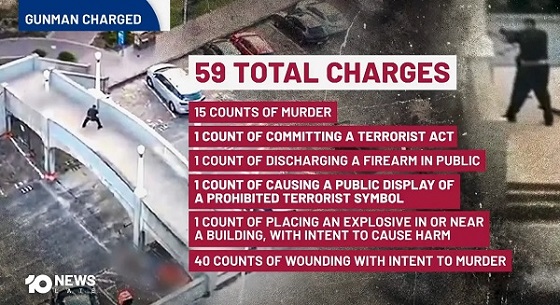 Crime19 hours ago
The Uncomfortable Demographics of Islamist Bloodshed—and Why “Islamophobia” Deflection Increases the Threat
-
 Energy22 hours ago
Liberals Twisted Themselves Into Pretzels Over Their Own Pipeline MOU
-
 Business2 days ago
COP30 finally admits what resource workers already knew: prosperity and lower emissions must go hand in hand