
Censorship Industrial Complex
Trudeau government abandoning long-threatened ‘hate speech’ bill after backlash

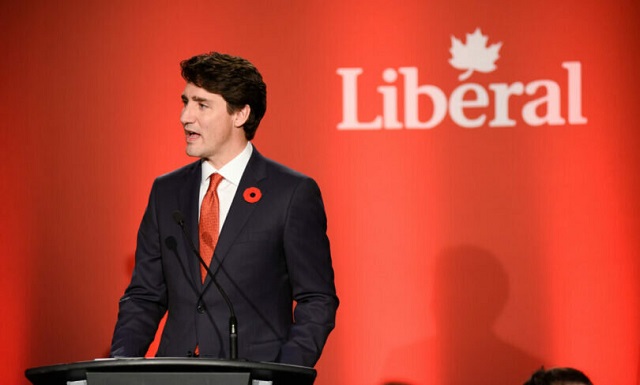
From LifeSiteNews
Conservative Party Leader Pierre Poilievre has warned that Trudeau’s desire to censor online ‘hate speech’ is nothing more than a ‘woke authoritarian’ tool to silence views that Trudeau dislikes.
The Liberal government is shelving its long-threatened bill to regulate truth and “disinformation” on the internet.
According to information obtained on February 21 by Blacklock’s Reporter, the Liberal government, under the leadership of Prime Minister Justin Trudeau, is abandoning legislation to regulate “hate speech” on the internet following feedback from Canadians that they consider the measure unconstitutional.
“The government heard from Canadians and stakeholders that while false and misleading information online can carry significant consequences, creating legislation and policies that restrict or otherwise limit speech based on the veracity of information would undermine freedom of expression to an unacceptable degree,” Public Safety Minister Dominic LeBlanc wrote the Commons ethics committee.
The committee had previously recommended legislation to “hold online platforms accountable for publishing false or misleading information”; however, LeBlanc replied that internet literacy programs were sufficient to regulate Canadians internet use.
“Legislation is not the only tool in the government’s toolbox to combat false or misleading information,” he said.
Additionally, most of 9,218 petitioners to the Canadian Heritage Department condemned the proposed legislation as unconstitutional.
Likewise, according to Privy Council research in 2023, most Canadians opposed the measure, saying that “it was of critical importance for Canadians to be able to leave comments and have their voices heard regarding initiatives and policies important to them.”
“While most believed harmful content online represented a growing concern few felt it to be a major issue at present,” the report said. “Several were of the view that individuals were typically able to avoid harmful content by blocking it or not utilizing platforms on which it was present.”
The legislation was first proposed in 2021, when the Trudeau government suggested that a “Digital Safety Commissioner” should police “content moderation” on the internet. Those who violated the “content moderation” would face up to $25 million in fines.
Then-Heritage Minister Steven Guilbeault argued the forbidden content should include anything that disparaged government institutions, saying, “Canada has a world-renowned public service, and it’s integral that we don’t attack them.”
“I think everybody in this country, and especially elected officials, have, I think, a responsibility, a duty to ensure that we protect our institutions and that the last thing we should try to do is to somehow diminish them just in the hope we can score points,” he added.
While Liberals support the measure, Conservative Party Leader Pierre Poilievre recently declared that Trudeau’s desire to censor online “hate speech” is nothing more than a “woke authoritarian” tool to silence views that Trudeau dislikes.
“What does Justin Trudeau mean when he says the worst hate speech?” he questioned during a press conference earlier this week. “He means speech he hates.”
Poilievre warned that Liberals would label anything they disagree with as “hate speech,” referencing former adviser Gerald Butts said that it was “hate speech” to criticize Trudeau for using the term “peoplekind,” labelling those who made fun of Trudeau as “Nazis.”
Poilievre also reminded Canadians that Trudeau branded Canadians who protested COVID regulations in the Freedom Convoy as “a small fringe minority” with “unacceptable views.”
“I point out the irony that someone who spent the first half of his adult life as a practicing racist, who dressed up in hideous racist costumes so many times he says he can’t remember them all, should then be the arbiter on what constitutes hate,” said Poilievre.
“What he should actually do is look into his own heart and ask himself why he was such a hateful racist… And maybe in that way, rather than through coercion, he could help us all in the fight against real hate,” he added.
“What does Justin Trudeau mean when he says the word hate speech? He means speech he hates.”
True North’s @AndrewLawton asks Pierre Poilievre whether the Conservatives will oppose the Trudeau government’s reintroduction of the online harms bill. pic.twitter.com/7PM9iJ5rzs
— True North (@TrueNorthCentre) February 21, 2024
While the bill regulating “hate speech” seems to have been abandoned for now, since taking office, Trudeau managed to pass bills C-11 and C-18, both of which restrict free speech over the internet.
Bill C-11, or the Online Streaming Act, became law last year and now mandates that Canada’s broadcast regulator, the Canadian Radio-television and Telecommunications Commission (CRTC), oversee regulating online content on platforms such as YouTube and Netflix to ensure that such platforms are promoting content in accordance with a variety of its guidelines.
Recently, Canadian law professor Dr. Michael Geist warned that new powers granted to Canada’s broadcast regulator via Bill C-11 will not stop at “Web Giants” but will lead to the government going after “news sites” and other “online” video sites as well.
Trudeau’s other internet censorship law, Bill C-18, the Online News Act, was passed by the Senate in June.
This law mandates that Big Tech companies pay to publish Canadians content on their platforms.
As a result, Meta, the parent company of Facebook and Instagram, blocked all access to news content in Canada.
Critics of Trudeau’s recent laws, such as tech mogul Elon Musk, have said it shows that “Trudeau is trying to crush free speech in Canada.”

Censorship Industrial Complex
How Wikipedia Got Captured: Leftist Editors & Foreign Influence On Internet’s Biggest Source of Info

Fr0m Stossel TV
I once reported how great Wikipedia is. But now, it’s manipulated by leftists. That’s a big problem because its bad information corrupts AI and search results. Even c0-founder Larry Sanger agrees.
But that’s just the beginning of the problem because “Wikipedia’s information spreads into everything online,” says @ashleyrindsbergmedia of @NPOVmedia .
That means when your ask ChatGPT, Google, or your phone a question, it’ll likely to take leftist spin straight from Wikipedia. Wikipedia bans most right-wing news sources and suggests Donald Trump is an authoritarian fascist (but they don’t even call Fidel Castro’s successor authoritarian).
They’ve turned my Wikipedia page into a smear against me.
I explain in this video.
_ _ _ _ _ _
To make sure you receive the weekly video from Stossel TV, sign up here:
https://www.johnstossel.com/#subscrib…
_ _ _ _ _ _
Censorship Industrial Complex
Death by a thousand clicks – government censorship of Canada’s internet


The Justice Centre for Constitutional Freedoms announces its latest publication, Death by a thousand clicks: The rise of internet censorship and control in Canada, authored by veteran journalist and researcher Nigel Hannaford. The report outlines how recommendations from the Broadcasting and Telecommunications Legislative Review Panel in 2020 set the stage for a series of federal bills that have collectively transformed Canada’s once open internet into a state-managed digital environment that restricts what Canadians may access, share, and say online.
The report highlights the following federal legislation:
Online Streaming Act (C-11): Passed in 2023, this Bill gives the CRTC power to regulate online videos and other content, including material created by everyday Canadians. It also lets the government influence online “discoverability,” meaning it can push certain content to the top of your feeds while making other content harder to find.
Online News Act (C-18): Also passed in 2023, this Bill forces platforms to pay approved news outlets, a measure that led to increased dependence of media organizations on the government and widespread blocking of Canadian news as a result of Meta’s news ban on Facebook and Instagram.
Online Harms Act (C-63): Although this Bill was halted by the 2025 election, it would have empowered a new “Digital Safety Commission” to order content removals, demand platform data, levy severe financial penalties on service providers for non-compliance with regulations created by the federal cabinet, and impose house arrest on Canadians who had not been charged with or convicted of any crime. It also would have allowed the Canadian Human Rights Commission to pursue Canadians over non-criminal “discriminatory” speech, together creating a sweeping censorship regime under the guise of addressing so-called “harms” that were already illegal.
Strong Borders Act (C-2): Introduced in June 2025 and currently at second reading, this Bill authorizes law enforcement to obtain subscriber information and metadata without a warrant, chilling anonymous online expression and eroding digital privacy.
An Act respecting cyber security, amending the Telecommunications Act and making consequential amendments to other Acts (C-8): Introduced in April 2025 and now before committee, this Bill expands government access to private networks and enables federal officials to direct telecommunications providers to kick individual Canadians off the internet without due process or appeal.
Combatting Hate Act (C-9): Introduced in September 2025 and currently before Parliament, this Bill broadens “hate-propaganda” offences, removes Attorney General oversight for prosecutions, encourages widespread self-censorship, and makes Canada more like the United Kingdom, where thousands of citizens are arrested over their social media commentary.
Report author Nigel Hannaford said, “It is important for Canadians to know that these bills are not isolated technical updates. Together they form a coordinated shift toward state-managed digital speech.”
“If we value open debate, privacy, and democratic accountability, we need to repeal the laws already passed and stop the ones now before Parliament,” he added.
Benjamin Klassen, Research and Education Coordinator for the Justice Centre, said, “It is important Canadians stay informed about these important issues. An informed public is essential to a free society.”
“Through research reports like this one, our Education team works to explain complex legislation in a way that empowers Canadians to participate in the national debate around important policies and defend their rights and freedoms,” he added.
To protect free expression online, Canadians should demand the repeal of Bills C-11 and C-18, insist that MPs vote against Bills C-2, C-8, and C-9, and elect representatives committed to restoring a free and open internet.


Terror in Australia: 12 killed after gunmen open fire on Hanukkah celebration
Death by a thousand clicks – government censorship of Canada’s internet

Hero bystander disarms shooter in Australian terror attack

Inflation Reduction Act, Green New Deal Causing America’s Energy Crisis
-
 Health22 hours ago
Saskatchewan woman approved for euthanasia urged to seek medical help in Canada rather than US
-
 Indigenous22 hours ago
Residential school burials controversy continues to fuel wave of church arsons, new data suggests
-
 Alberta5 hours ago
Danielle Smith slams Skate Canada for stopping events in Alberta over ban on men in women’s sports
-
 Health1 day ago
Canadian gov’t considers sharing census data on gender-confused children
-
 International21 hours ago
FBI didn’t think it had cause to raid Trump but DOJ did it anyway
-
 Crime2 days ago
Trump designates fentanyl a ‘weapon of mass destruction’
-
 Digital ID2 days ago
Canada releases new digital ID app for personal documents despite privacy concerns
-
 Energy10 hours ago
Liberals Twisted Themselves Into Pretzels Over Their Own Pipeline MOU