
illegal immigration
TODD BENSMAN: What I discovered inside teeming Mexican migrant camps that proves Trump’s hardline policy is already working

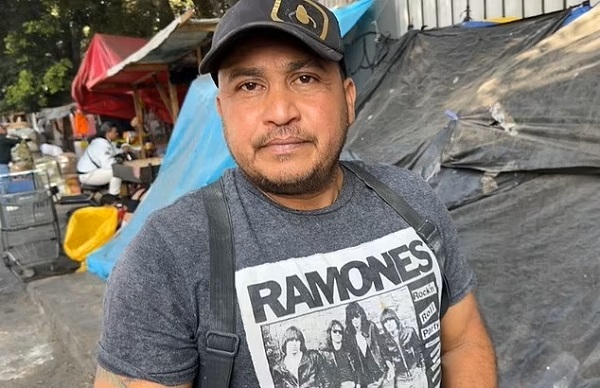
From ToddBensman.com
I’m thinking right now of returning to Venezuela,’ said a man, who has been living in a makeshift tent of streets of Mexico City for eight months. ‘I’m just staying here until January 20 to see if I get [a CBP One appointment] and, if not, go back home.’
MEXICO CITY — President-elect Donald Trump won’t take office for another five weeks, but his election is already causing a sea change in America’s illegal immigration crisis.
In sprawling migrant camps across Mexico City, people are giving up their plans to cross into the United States and are instead planning to settle in Mexico or begin the long trek back home.
‘I’m just going to give up and go back to Venezuela,’ said a woman in one of the squalid encampments, where thousands of migrants have constructed tents with tarps and scrap material.
‘I have children to take care of,’ she added. ‘I’ll just go back because, with Donald Trump, it’s going to be too hard.’
This is a cruel reality for millions of people drawn to Mexico by the Biden administration’s indulgent border policies – only to find that Americans overwhelmingly rejected the misguided approach in the 2024 election.
The young mother of two had hoped to have already entered the US through President Joe Biden‘s ‘humanitarian parole’ program known as CBP One.
U.S. Customs and Border Protection has reported that, since January 2023, the federal initiative has allowed entry into the US for 771,000 migrants, at a rate of about 1,600 people a day. But that program was also quickly overwhelmed by the volume of requests resulting in a massive backlog.
Now, the Trump transition team says the program will end on Day One of the new administration.
In sprawling migrant camps across Mexico City, people are giving up their plans to cross into the United States and are instead planning to settle in Mexico or begin the long trek back home.
‘I think they’re eliminating CBP One, so I’m thinking right now of returning to Venezuela,’ said a man, who has been living in a makeshift tent of streets of Mexico City for eight months. ‘I’m just staying here until January 20 to see if I get [a CBP One appointment] and, if not, go back home.’
To the Trump team, these prospective ‘self-deportation’ cases offer some proof that the President-elect’s border security plan may already be working as intended.
Now, they hope word of this deterrent effect will spread to the home cities, towns and villages of potential future migrants and dissuade them from making the dangerous trip.
Others interviewed said they plan to find work and live inside Mexico rather than return to their even more impoverished home countries.
‘I’m going to stay here,’ said a young Colombian man wearing a red, yellow and white shirt who’d travelled with his wife through the perilous jungle between Colombia and Panama.
He says he is loath to give up now after spending thousands of dollars to smugglers to get him this far. His wife agrees.
‘We went through the trouble and expense of traveling through the Darien Gap. I’ll look for asylum here in Mexico,’ she said. ‘As soon as I have a job with work to do, it’ll be fine.’
A migrant from Angola in central Africa said there’s no turning back for him either; the journey home would be too difficult and expensive.

‘I’m going to stay here,’ said a young Colombian man wearing a red, yellow and white shirt who’d travelled with his wife through the perilous jungle between Colombia and Panama.

A migrant from Angola (above) in Central Africa said there’s no turning back for him either; the journey home would be too difficult and expensive.
‘It is not my main goal to stay here in Mexico,’ he said in broken Spanish. ‘But if it just happens, you know, I’m going to stay here.’
Trump has also threatened Mexico’s new president, Claudia Sheinbaum, that the U.S. will impose debilitating 25 percent trade tariffs on her country if she does not dispatch Mexican military and immigration services to end the flow of migrants north.
The Mexicans now routinely capture migrants and transport them south to the Mexican cities of Tapachula and Villahermosa along the Guatemalan border.
The US currently estimates about 1,600 illegal border crossings daily. That’s down from the peak of 14,000 in a single day just one year ago.
Indeed, Mexico began this program earlier in 2024 at the urging of the Biden administration, but the Trump tariff threat has reenergized the operation in some regions.
‘The Mexicans don’t want us to go farther. They want us to go back. That’s why I’m staying in Mexico City,’ a migrant named Josmer told me.
A third anticipated Trump policy also appears to be having a deterrent effect – the President-elect’s promise to begin the ‘greatest mass deportation in American history.’
Trump reiterated those plans in an interview with NBC News this weekend.
‘We’re starting with the criminals and we’ve got to do it,’ Trump told NBC’s Kristen Welker. ‘And then we’re starting with the others and we’re going to see how it goes.’

‘The Mexicans don’t want us to go farther. They want us to go back. That’s why I’m staying in Mexico City,’ a migrant named Josmer told me.
That message is apparently being received loud and clear in Mexico City.
‘He says he’s going to kick all the illegal people out of the country,’ another young mother said, as she prepared a pot of pulled chicken for dinner. She conceded, there’s ‘no point’ in trying to enter the U.S. illegally.
Not all of the migrants that I spoke to said they’d leave immediately.
At least one young Venezuelan told me that he’ll never stop trying to sneak into the US after working for six months as a barber in one of the camps.
‘We’re going to keep trying, you know, just climb the walls,’ he said. ‘[Trump] says that we’re going to get deported, but we’re going to try it again.’
By Todd Bensman as published by The Daily Mail

Daily Caller
Tom Homan Predicts Deportation Of Most Third World Migrants Over Risks From Screening Docs


From the Daily Caller News Foundation
White House border czar Tom Homan predicted Sunday the Trump administration will deport the majority of Third World migrants due to vetting challenges.
Two National Guardsmen were shot Wednesday, allegedly by an Afghan national brought into the U.S. under the Biden administration. The attack prompted President Donald Trump to announce in a Thursday post on Truth Social that his administration would “permanently pause migration from all Third World Countries.” Homan said on Fox News’s “Sunday Morning Futures” that Third World nations could not be relied upon to provide accurate information for vetting migrants.
Dear Readers:
As a nonprofit, we are dependent on the generosity of our readers.
Please consider making a small donation of any amount here.
Thank you!
“[T]hese Third World nations, they don’t have systems like we do. So, a lot of these Afghanistans, when they did get here and get vetted, they had no identification at all. Not a single travel document, not one piece of identification,” Homan said. “And we’re going to count on the people that run Afghanistan, the Taliban, to provide us any information [on] who the bad guys were or who the good guys are? Certainly not. And many people need to understand that most terrorists in this world, most of ’em, aren’t in any database.”
“And the same thing with illegal aliens, the over 10 million that came across the border under Joe Biden. There’s no way to vet these people. You think El Salvador or Turkey or Sudan or any of these countries have the databases or system checks that we have?” he added. “Do you think the government[s] of China, Russia, Turkey, do you think they’re going to share that data with us even if they did have it? There’s no way to clearly vet these people 100% that they’re safe to come to this country from these Third World nations.”
The president also wrote in his Thursday post he would “terminate all of the millions of Biden illegal admissions,” along with deporting those who do not offer value to the United States. Homan said Trump is correct to evaluate all migrants who entered under Biden.
“I really, truly think that most of ’em are [going to] end up being deported ’cause we’re not going to be able to properly vet them,” he said.
Similarly, Homeland Security Secretary Kristi Noem asserted Sunday on NBC News’s “Meet the Press” the Trump administration would deport individuals with pending asylum claims.
West Virginia Army National Guard Specialist Sarah Beckstrom, 20, perished Thursday from wounds sustained in Wednesday’s shooting. The other victim, Air Force Staff Sgt. Andrew Wolfe, remains in critical condition at the time of publication.
The shooting was allegedly carried out by Rahmanullah Lakanwal, who entered the country in September 2021 after the U.S. military’s withdrawal from Afghanistan. Lakanwal previously worked with the U.S. government, including the CIA, and was admitted into the U.S. under the Biden administration’s Operation Allies Welcome, which resettled Afghans who had helped American forces.
Lakanwal applied for asylum in 2024, which the Trump administration granted in April 2025, according to Reuters. The alleged gunman shouted, “Allahu akbar!” before opening fire with a revolver, independent journalist Julio Rojas reported.
As of December 2024, over 180,000 Afghans were resettled in the U.S. following its August 2021 withdrawal, according to the State Department. After the shooting, the U.S. Citizenship and Immigration Services (USCIS) announced that the “processing of all immigration requests relating to Afghan nationals” would be paused “indefinitely.”
USCIS also asserted Thursday it would conduct a full-scale reexamination of all green cards granted to individuals from 19 countries “of concern” at Trump’s direction. The agency added in a later statement that, when vetting migrants from those nations, it would weigh “negative, country specific factors,” such as whether the country was able to “issue secure identity documents.”
Crime
CBSA Bust Uncovers Mexican Cartel Network in Montreal High-Rise, Moving Hundreds Across Canada-U.S. Border
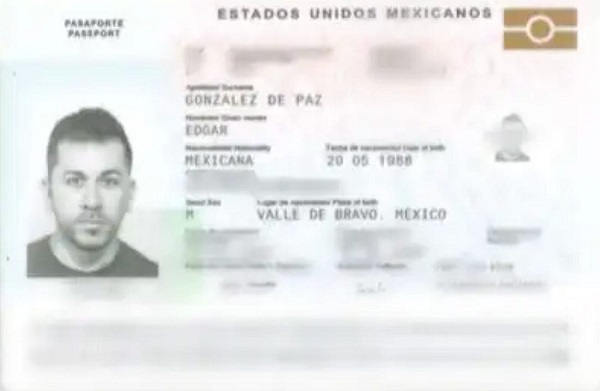
A court document cited by La Presse in prior reporting on the case.

The conviction targets Edgar Gonzalez de Paz, 37, a Mexican national identified in court evidence as a key organizer in a Montreal-based smuggling network that La Presse documented in March through numerous legal filings.
According to the Canada Border Services Agency, Gonzalez de Paz’s guilty plea acknowledges that he arranged a clandestine crossing for seven migrants on January 27–28, 2024, in exchange for money. He had earlier been arrested and charged with avoiding examination and returning to Canada without authorization.
Breaking the story in March, La Presse reported: “A Mexican criminal organization has established itself in Montreal, where it is making a fortune by illegally smuggling hundreds of migrants across the Canada-U.S. border. Thanks to the seizure of two accounting ledgers, Canadian authorities have gained unprecedented access to the group’s secrets, which they hope to dismantle in the coming months.”
La Presse said the Mexico-based organization ran crossings in both directions — Quebec to the United States and vice versa — through roughly ten collaborators, some family-linked, charging $5,000 to $6,000 per trip and generating at least $1 million in seven months.
The notebooks seized by CBSA listed clients, guarantors, recruiters in Mexico, and accomplices on the U.S. side. In one April 20, 2024 interception near the border, police stopped a vehicle registered to Gonzalez de Paz and, according to evidence cited by La Presse, identified him as one of the “main organizers,” operating without legal status from a René-Lévesque Boulevard condo that served as headquarters.
Seizures included cellphones, a black notebook, and cocaine. A roommate’s second notebook helped authorities tally about 200 migrants and more than $1 million in receipts.
“This type of criminal organization is ruthless and often threatens customers if they do not pay, or places them in a vulnerable situation,” a CBSA report filed as evidence stated, according to La Presse.
The Montreal-based organization first appeared on the radar in a rural community of about 400 inhabitants in the southern Montérégie region bordering New York State, La Presse reported, citing court documents.
On the U.S. side of the line, in the Swanton Sector (Vermont and adjoining northern New York and New Hampshire), authorities reported an exceptional surge in 2022–2023 — driven largely by Mexican nationals rerouting via Canada — foreshadowing the Mexican-cartel smuggling described in the CBSA case.
Gonzalez de Paz had entered Canada illegally in 2023, according to La Presse. When officers arrested him, CBSA agents seized 30 grams of cocaine, two cellphones, and a black notebook filled with handwritten notes. In his apartment, they found clothing by Balenciaga, a luxury brand whose T-shirts retail for roughly $1,000 each.
Investigators have linked this case to another incident at the same address involving a man named Mario Alberto Perez Gutierrez, a resident of the same condo as early as 2023.
Perez Gutierrez was accompanied by several men known to Canadian authorities for cocaine trafficking, receiving stolen goods, armed robbery, or loitering in the woods near the American border, according to a Montreal Police Service (SPVM) report filed as evidence.
The CBSA argued before the immigration tribunal that Gonzalez de Paz belonged to a group active in human and drug trafficking — “activities usually orchestrated by Mexican cartels.”
As The Bureau has previously reported, Justin Trudeau’s Liberal Cabinet was warned in 2016 that lifting visa requirements for Mexican visitors would “facilitate travel to Canada by Mexicans with criminal records,” potentially including “drug smugglers, human smugglers, recruiters, money launderers and foot soldiers.”
CBSA “serious-crime” flags tied to Mexican nationals rose sharply after the December 2016 visa change. Former CBSA officer Luc Sabourin, in a sworn affidavit cited by The Bureau, alleged that hundreds of cartel-linked operatives entered Canada following the visa lift.
The closure of Roxham Road in 2023 altered migrant flows and increased reliance on organized smugglers — a shift reflected in the ledger-mapped Montreal network and a spike in U.S. northern-border encounters.
The Bureau is a reader-supported publication.
To receive new posts and support my work, consider becoming a free or paid subscriber.


Canadians will soon be versed in massive West Coast LPG mega-project

Keynote address of Premier Danielle Smith at 2025 UCP AGM

Canada Needs an Alternative to Carney’s One Man Show

Net Zero goal is a fundamental flaw in the Ottawa-Alberta MOU
-
 International20 hours ago
FBI may have finally nabbed the Jan. 6 pipe bomber
-
 Energy2 days ago
Canada following Europe’s stumble by ignoring energy reality
-
 Energy6 hours ago
A look inside the ‘floatel’ housing B.C.’s LNG workforce
-
 COVID-1914 hours ago
University of Colorado will pay $10 million to staff, students for trying to force them to take COVID shots
-
 Business1 day ago
Canada’s climate agenda hit business hard but barely cut emissions
-
 espionage20 hours ago
Digital messages reportedly allege Chinese police targeted dissident who died suspiciously near Vancouver
-
 MAiD2 days ago
From Exception to Routine. Why Canada’s State-Assisted Suicide Regime Demands a Human-Rights Review
-
 Business2 days ago
Carney government should privatize airports—then open airline industry to competition