
Travel
Todayville Travel: Home-Swapping and Hard-Falling In Whistler


I was navigating a black-diamond run at the end of our last day in Whistler. The path dropped through a steep mogul-field then narrowed to a single track in thick forest. I veered hard right through a tiny opening between two Douglas fir trees. I emerged blindly from the dark boughs. Terra firma vanished. I was hurtling off a ten-meter cliff, in free fall.
What was I doing here?
My date with this Whistler precipice had its genesis in – of all places – a golf course in New Zealand. We were teeing it up last March in Nelson, on the South Island, when a fellow-duffer approached us on the first tee. He was solo so Florence and I asked him to join us. He introduced himself as Russ, from Vancouver. We played a pleasant nine holes together, shook hands and parted ways.
“This is just too weird,” said our fellow Canuck. “Let’s have lunch.”
Two weeks later –and a thousand kilometers distant – we were hiking Mount Maunganui, on the North Island. As we arrived huffing and puffing to the summit, there stood Russ and his wife Barb, chatting affably with a fit young Kiwi. We laughed at the coincidence, commented on the fine Austral weather, and moseyed off.
Two weeks distant– and another thousand kilometers removed – we were examining a cross-section of New Zealand’s biggest and oldest tree – a 3000 year-old Kauri – at the aptly named Kauri Museum in the tiny west coast village of Matakohe, when who to my wondering eyes should appear but good old Russ.
“This is just too weird,” said our fellow Canuck. “Let’s have lunch.”

So, over flat-white coffee and whitebait (a hideous Kiwi delicacy consisting of fried egg and a worm-like fish), the four of us sat, laughed and marvelled at the wonders of New Zealand – and our trifecta of coincidental encounters.
The Feehans were – as usual – travelling without reservation, flying by the seat of their pants and scrambling daily for nightly accommodation. Russ and Barb were at the other end of the organizational spectrum. They were happily bunked in just two spots during their entire two-month sojourn to New Zealand. As members of www.homelink.com/ they had exchanged their house in Vancouver for accommodation Down Under.
Russ and Barb travel in a sphere of gratis lodging, swapping their Vancouver abode – and Whistler condo – for digs the world over.
I pondered the merits of our pleasant home in Red Deer and looked at Russ, wondering whether he and Barb might enjoy a holiday in frozen, flat central Alberta. But Russ didn’t look like he’d been born yesterday.
Then I remembered our condo in Kimberley. It’s a great spot in B.C’s lovely Purcell mountains.
And that’s how we ended up in a quaint ski chalet for a week on Nita Lake, in Whistler. In return, Barb and Russ will be golfing and biking the Kootenays for a week in September chez Feehan.

Preparing for a day of skiing at Chez Russ and Barb
We haven’t signed up for Homelink yet – but what a great concept: why leave your home vacant and idle, spending a whack on hotels, when you can swap for free domicile across the pond (or at Whistler)?
My only previous Whistler experience occurred in 1984, and although the 80’s weren’t exactly the 60’s, still I recall very little of that trip. I do remember a wild and crazy Doug and the Slugs concert, performed al fresco in the Whistler Village common. And I recollect that Bill Johnson won the World Cup downhill in 1 minute 54 seconds. (Billy was the quintessential American bad-boy. The great Franz Klammer derisively referred to him as a “nasen-borer”.)
We skied that same downhill run with our friends from Saskatoon in January. It took me just under nine minutes top to bottom – and I cheated, stopping the clock each time I paused to rest my weary legs – or discreetly probe my proboscis.
Whistler is slightly more sophisticated than sleepy Kimberley. Kimberley’s Northstar Mountain has five chairlifts. Whistler and her sister mountain Blackcomb have 37, including the incredible Peak 2 Peak gondola that spans 4.4 kilometers and whisks skiers between the two resorts in a matter of minutes. When completed a few years ago it was the longest and highest lift in the world.

Peak 2 Peak Gondola
The lift capacity at Whistler/Blackcomb is an unimaginable 65,507 skiers per hour. At that rate the entire population of Red Deer could be boosted to the top of the mountain in about an hour and a half.

Gerry’s Volkls (front right) stacked amongst hundreds of other skis
Snow conditions throughout B.C. have been great this year. Each day tens of thousands of stoked skiers shared Whistler’s terrain with us. The 2010 Olympics ended nearly 9 years ago, but the party carries on. The hills and streets echo with languages and accents from around the globe.

The Olympics ended almost nine years ago but the Whistler party carries on
Our Saskatchewan friends, Joe and Carla, are gung ho: first in line for the 8:30 a.m. gondola opening and last down the hill for après ski festivities. They frequent the blue runs (easily logging over 20,000 vertical feet in a day). I enjoy these cruising runs but find I lack speed restraint – and my aging bones aren’t up for a high-velocity crash. My new passion is tree skiing, a slower but more rewarding, methodical way of descending the hill.
And that’s how my encounter with the Whistler precipice happened.
Arcing headfirst, I careened down the snowy cliff-face, employed an unintended somersault and landed flat in the middle of a cat track. I lay still, a puddled mess, piecing together the previous few moments of existence.
Miraculously, I was unscathed. My skis and poles were jammed part way up the cliff, deeply scathed. I climbed up, retrieved my battered equipment and tentatively skied down to the chairlift where my Saskatoon acquaintances awaited. It was they who had suggested I might enjoy that treacherous black trail.
“How was the run?” asked Joe.
“I wouldn’t recommend it,” I said, emptying snow from inside my goggles.
That night we relaxed in front of a roaring fire, enjoying the view across Nita Lake and the glowing mansions fronting Whistler.

The foggy daytime view across Nita Lake
In the morning we bid adieu to our prairie friends and our Whistler digs, packed the Subaru and, avoiding the congested Vancouver corridor, took an alternate route home, north up Hwy 99 through Pemberton and down the narrow, perilous pass into Lillooet and thence back onto Hwy 1 at Kamloops. En route I had a rather close call with a cliff. But that’s another story.

Hwy 99 North through Pemberton and Lillooet is spectacular and avoids busy Vancouver
Gerry Feehan QC practised law in Red Deer for 27 years before starting his second life as a freelance travel writer and photographer. He says that, while being a lawyer is more remunerative than travel writing, it isn’t nearly as much fun. When not on the road, Gerry and his wife Florence live in Red Deer and Kimberley, BC. Todayville is proud to work with Gerry to re-publish some of his most compelling stories from his vast catalogue developed over more than a decade of travel.

Gerry Feehan
Thanks to these great partners for making this series possible. Click on their ads and support local businesses.


Click to read an excellent story about the Turks and Caicos or Hana Hawaii


From the Fraser Institute
By Alex Whalen and Jake Fuss
This holiday season, many Canadians will fly to spend time to with family and friends. But air travellers in Canada consistently report frustration with service, cost and choice. In its recent budget, the Carney government announced it will consider “options for the privatization of airports.” What does this mean for Canadians?
Up until the 1990s, the federal government served as both the owner and operator of Canada’s major airports. The Chrétien government partially privatized and transferred the operation of major airports to not-for-profit airport authorities, while the federal government remained the owner of the land. Since then, the federal government has effectively been the landlord for Canada’s airports, collecting rent each year from the not-for-profit operating authorities.
What would full privatization of airports look like?
If the government allows private for-profit businesses to own Canada’s major airports, their incentives would be to operate as efficiently as possible, serve customers and generate profits. Currently, there’s little incentive to compete as the operating authorities are largely unaccountable because they only report to government officials in a limited form, rather than reporting directly to shareholders as they would under privatization. Private for-profit airports exist in many other countries, and research has shown they are often less costly for passengers and more innovative.
Yet, privatization of airports should be only the first step in a broader package of reforms to improve air travel in Canada. The federal government should also open up competition by creating the conditions for new airports, new airlines and new investment. Currently, Canada restricts foreign ownership of Canadian airlines, while also restricting foreign airlines from flying within Canada. Consequently, Canadians are left with little choice when booking air travel. Opening up the industry by reversing these policies would force incumbent airlines to compete with a greater number of airlines, generating greater choice and likely lower costs for consumers.
Moreover, the federal government should reduce the taxes and fees on air travel that contribute to the cost of airline tickets. Indeed, according to our recent research, among peer countries, Canada has among the most expensive air travel taxes and fees. These costs get passed on to consumers, so it’s no surprise that Canada consistently ranks as a very expensive country for air travel.
If the Carney government actually privatizes Canada’s airports, this would be a good first step to introducing greater competition in an industry where it’s badly needed. But to truly deliver for Canadians, the government must go much further and overhaul the numerous policies, taxes and fees that limit competition and drive up costs.

Alex Whalen
Director, Atlantic Canada Prosperity, Fraser Institute

Jake Fuss
Director, Fiscal Studies, Fraser Institute
International
America first at the national parks: Trump hits Canadians and other foreign visitors with $100 fee
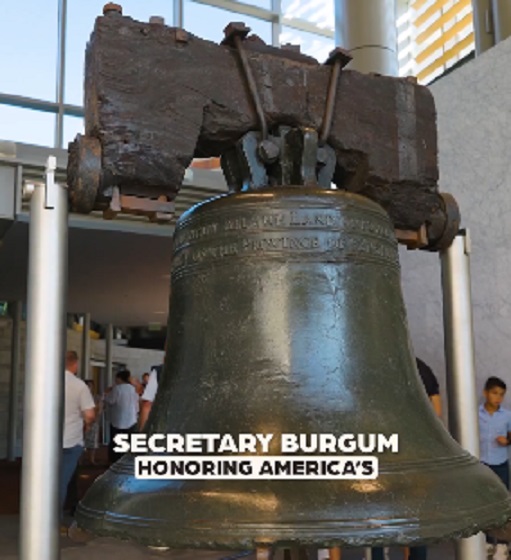

Foreign visitors heading to America’s crown-jewel national parks will soon face a steeper bill, as the Trump administration moves to prioritize U.S. taxpayers who already bankroll the system. The Department of the Interior announced Tuesday that starting in 2026, non-residents will be charged an additional $100 at 11 of the country’s busiest parks — a list that includes the Grand Canyon, Yellowstone, Yosemite, Acadia, Everglades, and other iconic destinations. The change accompanies a sharp increase in the cost of an annual all-parks pass for foreign tourists, which will jump to $250, more than triple the current rate. Americans and permanent residents will continue paying $80.
Interior Secretary Doug Burgum framed the policy as a straightforward matter of fairness. “President Trump’s leadership always puts American families first,” he said, arguing that U.S. households already subsidize the National Park System and deserve affordable access while international tourists contribute “their fair share” to the upkeep and expansion of the park network. It’s a pitch that aligns with Trump’s broader push to restore what he calls a sense of ownership and pride in the country’s natural treasures, and to make sure the burden of maintaining them doesn’t fall solely on American families.
We’re making it easier & more affordable for Americans to experience the beauty & freedom of our public lands!
In 2026, we’re launching:
– America-first pricing 💵
– Digital passes 📱
– Patriotic pass designs 🇺🇸
– Expanded motorcycle access 🏍️
– 5 additional fee-free days 🗓️ pic.twitter.com/a2SvHNBdSP— Secretary Doug Burgum (@SecretaryBurgum) November 25, 2025
The National Park Service recorded nearly 332 million visits in 2024 across its 63 designated national parks — a staggering figure that has placed heavy pressure on trails, facilities, and staff. While some parks charge per-vehicle fees and others by the individual, the $80 “America the Beautiful” pass covers the holder and all passengers or up to four adults. Under the new rules, foreign visitors who purchase the $250 annual pass will avoid the extra $100 at the 11 high-traffic parks, but all other overseas travelers will pay the surcharge at the gate.
The administration says the approach follows a July executive order from President Trump, aimed at preserving parkland “for American families” by ensuring those who don’t support the system through taxes help shoulder the cost of its growing maintenance needs. Burgum’s department also highlighted that U.S. visitors will continue to enjoy “patriotic fee-free days” tied to national observances — including President’s Day, Veterans Day, and Flag Day, which coincides with Trump’s birthday — while foreign visitors will pay full freight.
The move is expected to generate significant revenue from international tourism while reinforcing a message that has become central to Trump’s agenda: America’s natural wonders belong first to the taxpayers who fund them, and protecting access for those families comes before subsidizing the travel of visitors from abroad.


Canadians will soon be versed in massive West Coast LPG mega-project
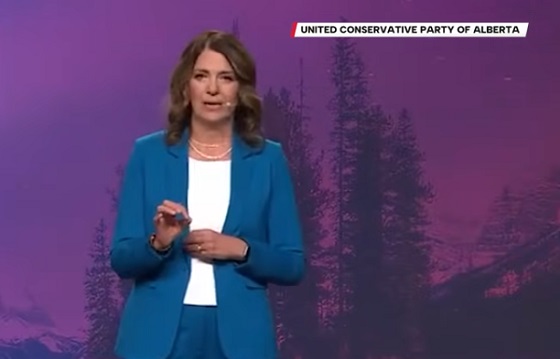
Keynote address of Premier Danielle Smith at 2025 UCP AGM

Canada Needs an Alternative to Carney’s One Man Show

Net Zero goal is a fundamental flaw in the Ottawa-Alberta MOU
-
National2 days ago
Canada Needs an Alternative to Carney’s One Man Show
-
 Alberta1 day ago
This new Canada–Alberta pipeline agreement will cost you more than you think
-
 Daily Caller2 days ago
Tech Mogul Gives $6 Billion To 25 Million Kids To Boost Trump Investment Accounts
-
 Business2 days ago
Recent price declines don’t solve Toronto’s housing affordability crisis
-
 Automotive1 day ago
Power Struggle: Governments start quietly backing away from EV mandates
-
 Energy1 day ago
Unceded is uncertain
-
 Business2 days ago
Canada’s future prosperity runs through the northwest coast
-
 Business10 hours ago
Canada’s climate agenda hit business hard but barely cut emissions