
DEI
TMU Medical School Sacrifices Academic Merit to Pursue Intolerance


From the Frontier Centre for Public Policy
Race- (and other-) based admissions will inevitably pave the way to race- (and other-) based medical practices, which will only further the divisions that exist in society. You can’t fight discrimination with more discrimination.
Perhaps it should be expected that a so-obviously ‘woke’ institution as the Toronto Metropolitan University (TMU) would toss aside such antiquated concepts as academic merit as it prepares to open its new medical school in the fall of 2025.
After all, until recently, TMU was more widely known as Ryerson University. But it underwent a rapid period of self-flagellation, statue-tipping and, ultimately, a name change when its namesake, Edgerton Ryerson, was linked (however indirectly) to Canada’s residential school system.
Now that it has sufficiently cleansed itself of any association with past intolerance, it is going forward with a more modern form of intolerance and institutional bias by mandating a huge 80% diversity quota for its inaugural cohort of medical students.
TMU plans to fill 75 of its 94 available seats via three pathways for “equity-deserving groups” in an effort to counter systemic bias and eliminate barriers to success for certain groups. Consequently, there are distinct admission pathways for “Indigenous, Black and Equity-Deserving” groups.
What exactly is an equity-deserving group? It’s almost any identity group you can imagine – that is, except those who identify as white, straight, cisgender, straight-A, middle- and/or upper-class males.
To further facilitate this grand plan, TMU has eliminated the need to write the traditional MCAT exam (often used to assess aptitude, but apparently TMU views it as a barrier to accessing medical education). Further, it has set the minimum grade point average at a rather average 3.3 and, “in order to attract a diverse range of applicants,” it is accepting students with a four-year undergrad degree from any field.
It’s difficult to imagine how such a heterogenous group can begin learning medicine at the same level. Someone with an advanced degree in physiology or anatomy will be light years ahead of a classmate who gained a degree by dissecting Dostoyevsky.
Finally, it should be noted that in “exceptional circumstances” any of these requirements can be reconsidered for, you guessed it, black, indigenous or other equity-deserving groups.
As for the curriculum itself, it promises to be “rooted in community-driven care and cultural respect and safety, with ECA, decolonization and reconciliation woven throughout” which will “help students become a new kind of physician.”
Whether or not this “new kind of physician” will be perceived as fully credible, however, is yet to be seen. Because of its ‘woke’ application process, all TMU medical graduates will be judged differently no matter how skilled they may be and even when physicians are in short supply. Life and death decisions are literally in their hands, and in such cases, one would think that medical expertise is far more important than sharing the same pronouns.
Frankly, if students need a falsely inclusive environment where all minds think alike to feel safe and a part of society, then maybe they aren’t cut out to become doctors who will treat all people equally. After all, race- (and other-) based admissions will inevitably pave the way to race- (and other-) based medical practices, which will only further the divisions that exist in society. You can’t fight discrimination with more discrimination.
It’s ridiculous to use medical school enrollments as a means of resolving issues of social injustice. However, from a broader perspective, this social experiment echoes what is already happening in universities across Canada. The academic merit of individuals is increasingly being pushed aside to fulfill quotas based on gender or even race.
One year ago, the University of Victoria made headlines when it posted a position for an assistant professor in the music department. The catch is that the selection process was limited to black people. Education professor Dr. Patrick Keeney points out that diversity, equity and inclusion policies are reshaping core operations at universities. Grants and prestigious research chair positions are increasingly available only to visible minorities or other identity groups.
Non-academic considerations are given priority, and funding is contingent on meeting minority quotas.
Consequently, Keeney states that the quality of education is falling and universities that were once committed to academic excellence are now perceived as institutions to pursue social justice.
Diversity is a legitimate goal, but it cannot – and should not — be achieved by subjugating academic merit to social experimentation.
Susan Martinuk is a Senior Fellow with the Frontier Centre for Public Policy and author of Patients at Risk: Exposing Canada’s Health-care Crisis.



AT&T’s retreat from the diversity, equity, and inclusion playbook marks one of the most significant corporate course corrections of the year — and it didn’t happen by accident. After months of pressure from FCC Chairman Brendan Carr, the telecom giant has confirmed it will unwind its DEI programs top to bottom, ending everything from race-based training modules to staff positions dedicated to enforcing ideological compliance.
The move follows years of controversy, much of it fueled by revelations that AT&T’s internal training materials pushed the notion that racism was a “uniquely white trait” and urged white employees to accept blame as part of a broader critical-race-theory framework. Those claims first surfaced in 2021 through documents obtained by researcher Christopher Rufo, who reported that the company’s curriculum told white staffers they “are the problem.” The backlash never fully subsided — and with Carr signaling that companies seeking key FCC licenses would need to demonstrate they are not running discriminatory programs, the pressure point became impossible for AT&T to ignore.
In a letter sent Monday to Carr, AT&T Senior Executive Vice President and General Counsel David McAtee said the company has overhauled its employment and business practices “to ensure compliance with all applicable laws,” emphasizing that the changes would be substantive, not cosmetic. According to AT&T, that means no hiring quotas, no supplier-contract quotas, no race-based training, and no positions devoted to policing identity-based metrics. DEI courses have been stripped from employee requirements, and the company says it will not resurrect them.
AT&T’s announcement mirrors what has become a growing trend in the corporate world as the regulatory environment shifts. In May, Verizon made a similar pledge, informing the FCC that it, too, would dissolve its DEI department and reassign staff to conventional HR roles. Carr praised that decision at the time as “a good step forward for equal opportunity, nondiscrimination, and the public interest.”
The broader message coming out of Washington is unmistakable: the days of federally regulated industries running ideological experiments under the guise of “equity” are coming to an end. Companies that want federal approval for major licenses are being told to stick to the law, treat employees equally, and drop programs that sort workers by skin color or political theory. AT&T is the latest to fall in line — and almost certainly not the last.
Agriculture
Federal cabinet calls for Canadian bank used primarily by white farmers to be more diverse

From LifeSiteNews
A finance department review suggested women, youth, Indigenous, LGBTQ, Black and racialized entrepreneurs are underserved by Farm Credit Canada.
The Cabinet of Prime Minister Mark Carney said in a note that a Canadian Crown bank mostly used by farmers is too “white” and not diverse enough in its lending to “traditionally underrepresented groups” such as LGBT minorities.
Farm Credit Canada Regina, in Saskatchewan, is used by thousands of farmers, yet federal cabinet overseers claim its loan portfolio needs greater diversity.
The finance department note, which aims to make amendments to the Farm Credit Canada Act, claims that agriculture is “predominantly older white men.”
Proposed changes to the Act mean the government will mandate “regular legislative reviews to ensure alignment with the needs of the agriculture and agri-food sector.”
“Farm operators are predominantly older white men and farm families tend to have higher average incomes compared to all Canadians,” the note reads.
“Traditionally underrepresented groups such as women, youth, Indigenous, LGBTQ, and Black and racialized entrepreneurs may particularly benefit from regular legislative reviews to better enable Farm Credit Canada to align its activities with their specific needs.”
The text includes no legal amendment, and the finance department did not say why it was brought forward or who asked for the changes.
Canadian census data shows that there are only 590,710 farmers and their families, a number that keeps going down. The average farmer is a 55-year-old male and predominantly Christian, either Catholic or from the United Church.
Data shows that 6.9 percent of farmers are immigrants, with about 3.7 percent being “from racialized groups.”
National census data from 2021 indicates that about four percent of Canadians say they are LGBT; however, those who are farmers is not stated.
Historically, most farmers in Canada are multi-generational descendants of Christian/Catholic Europeans who came to Canada in the mid to late 1800s, mainly from the United Kingdom, Ireland, Ukraine, Russia, Italy, Poland, the Netherlands, Germany, and France.


Largest fraud in US history? Independent Journalist visits numerous daycare centres with no children, revealing massive scam
Why Japan wants Western Canadian LNG

“Magnitude cannot be overstated”: Minnesota aid scam may reach $9 billion

Be Careful What You Wish For In 2026: Mark Carney With A Majority
-
 Business2 days ago
Mainstream media missing in action as YouTuber blows lid off massive taxpayer fraud
-
 International2 days ago
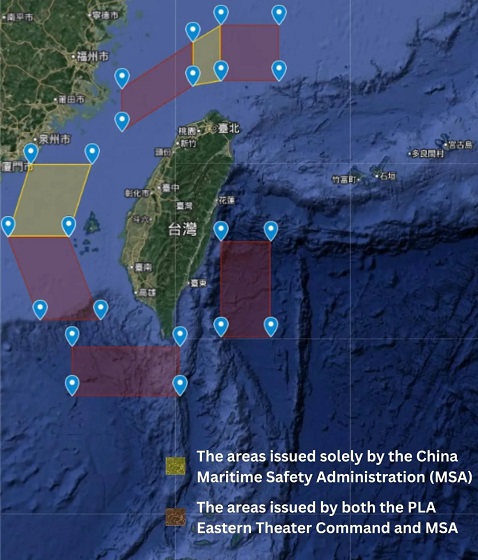
China Stages Massive Live-Fire Encirclement Drill Around Taiwan as Washington and Japan Fortify
-
 Energy2 days ago
Rulings could affect energy prices everywhere: Climate activists v. the energy industry in 2026
-
 Digital ID2 days ago
The Global Push for Government Mandated Digital IDs And Why You Should Worry
-
 Business11 hours ago
Disclosures reveal Minnesota politician’s husband’s companies surged thousands-fold amid Somali fraud crisis
-
 Business24 hours ago
DOOR TO DOOR: Feds descend on Minneapolis day cares tied to massive fraud
-
 Alberta11 hours ago
The Canadian Energy Centre’s biggest stories of 2025
-
 Business23 hours ago
Canada needs serious tax cuts in 2026