“In our country, the lie has become not just a moral category but a pillar of the State. Anyone who wishes to preserve a career, a degree, or merely their daily bread must live by the lie.”
So wrote Aleksandr Solzhenitsyn about life in the Soviet Union in the 1960s.
Three decades after his words were smuggled out of Russia and published in the West, Bill Kovach and Tom Rosenstiel wrote their seminal work, The Elements of Journalism. In that, they made it clear that the craft’s first obligation is to the truth that eluded Solzhenitsyn’s life and its first loyalty is to citizens. Everything else flows from there.
As I have noted ad nauseum, too many titles continue to mask government sources feeding them strategic information and excuse the practice by claiming the sources are “not authorized.” This suspension of disbelief not only undermines trust in the craft, it stirs further memories of Solzhenitsyn, a Nobel Prize winner and perhaps the most famous of Soviet dissidents, who was exiled to the West in 1974. As he once famously said:
“We know that they are lying, they know that they are lying, they even know that we know they are lying, we also know that they know we know they are lying too, they of course know that we certainly know they know we know they are lying too as well, but they are still lying. In our country, the lie has become not just a moral category, but the pillar industry of this country.”
Which is why, if journalism is to fulfill its loyalty to citizens, it needs to diligently apply itself to its first obligation and expose political lies – which Solzhenitsyn denounced as a tool of state control – and misrepresentation in all its forms at every opportunity.
Recently, we saw some encouraging examples of journalists doing just that.
Brian Passifiume of the Toronto Sun noticed there was something off about Prime Minister Mark Carney’s Sept. 14 Build Canada Homes announcement in Ottawa
Canadian Press photo of Sept. 14 Build Canada announcement..
To him, it had the scent of a movie set. He wasn’t the only one to wonder but many of his cohorts either ignored that angle or, exposing a corrosive sense of moral and professional ennui, shrugged and accepted the performance as routine political misrepresentation, as if that makes it OK. Canadian Press even went so far as to publish a “fact check” that defended Carney and stated “Claims government built fake homes for photo op misleading.”
Late in November, following inquiries by a Tory MP, Passifiume was able to report that “The Privy Council Office has finally admitted what I originally reported back in September — the Nepean construction site used by the PM for his Sept. 14 Build Canada Homes announcement was all for show, and cost $32K.”
I get that some will argue this ruse is a justifiable use of taxpayers’ money. Others won’t. Which is probably the way it should be. On the upside, the government now knows there are reporters still willing to fulfill their obligation to the truth and their loyalty to citizens.
The downside is that, at the time of writing, Canadian Press’s fact check remained unchanged and still insisted no added costs were involved.
Felice Chin of The Hub (I am a contributor) also fired a shot across the bows of politicians and their too frequent dysfunctional relationships with the truth.
In her “Fact check: Elizabeth May’s tanker claims don’t add up” piece she not only corrected the Green Party leader on west coast marine geography and tanker traffic, she outed Conservative Andrew Scheer for his, ahem, embellishments on the same file.
While on the topic of unnamed sources, at least one reporter recently got badly burned by someone he protected while another was pushed into explanation mode.
Going with a single, unnamed government source, Global News’s Mackenzie Gray informed Canadians that “Steven Guilbeault won’t resign from Mark Carney’s cabinet over the upcoming pipeline agreement” with Alberta.
Hours later, Guilbeault did just that.
The Toronto Sun’s Brian Lilley went with multiple unnamed sources to announce “Canada’s embassy and official residence in Paris is lovely. It’s no wonder Melanie Joly wants to be appointed Ambassador to France and leave Carney’s cabinet.”
Joly unequivocally rejected that idea, forcing Lilley to play some defence while sticking to his guns. We’ll wait and see how this one turns out.
Meanwhile, CBC pretty much took the bar below ground last week when reporter Darren Major explained that:
“CBC News has agreed to not name the source because they weren’t authorized to speak publicly about the proposed amendment.”
We are left to assume that this gibberish means they were authorized to speak, but only privately. More on this in the weeks ahead.
Dave Rich is a contributor to The Guardian, an author, and an expert on left wing antisemitism which, based on my life experience, is far more widespread and embedded in our institutions than the right wing version of the same cancerous prejudice ever got close to. His Nov. 10 Substack post via Everyday Hate points out that the Prescott Report embroiling the BBC contains “a litany of jaw-dropping editorial and journalistic failings.”
Rich writes as a fan of the BBC but points out, sadly, that the details of the report suggest “that these errors are not random, but a product of an internal culture of bias and a particular political mindset.”
Of noteworthy concern is BBC Arabic.
“The Telegraph has since reported that BBCArabic had to make 215 corrections in two years to its coverage of Israel and Gaza – that’s two per week,” Rich writes. “It’s staggering.”
Sound like anyone you know? Don’t expect Canadian news organizations to be hiring Michael Prescott to study their entrails any time soon.
Rick Bell of the Calgary Herald/Sun/whatever was the first to report that Prime Minister Mark Carney and Alberta Premier Danielle Smith had reached an agreement and would be signing a Memorandum of Understanding on pipeline development in Calgary on Nov. 27. A couple of days after Bell, aka The Dinger, let the cat out of the bag, others started breathlessly quoting “sources” as if they were breaking the story. This prompted Bell, who prematurely entered curmudgeonhood decades ago, to say.
“News isn’t really news, even if it is about Alberta, until the self-styled smart set in Toronto and Ottawa say it’s news.”
Amen, brother.
Readers will notice a new DONATE button has been added. Please consider making use of it and help us save journalism from bad journalism.
(Peter Menzies is a commentator and consultant on media, Macdonald-Laurier Institute Senior Fellow, a past publisher of the Calgary Herald, a former vice chair of the CRTC and a National Newspaper Award winner.)
Todayville is a digital media and technology company. We profile unique stories and events in our community. Register and promote your community event for free.
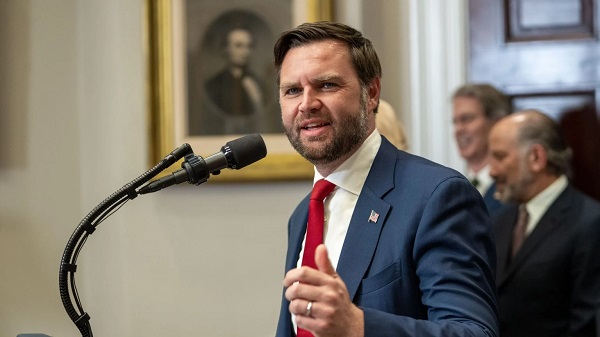
US Vice President JD Vance criticized the European Union this week after rumors reportedly surfaced that Brussels may seek to punish X for refusing to remove certain online speech.
In a post on X, Vance wrote, “Rumors swirling that the EU commission will fine X hundreds of millions of dollars for not engaging in censorship. The EU should be supporting free speech not attacking American companies over garbage.”
His remarks reflect growing tension between the United States and the EU over the future of online speech and the expanding role of governments in dictating what can be said on global digital platforms.
Vance was likely referring to rumors that Brussels intends to impose massive penalties under the bloc’s Digital Services Act (DSA), a censorship framework that requires major platforms to delete what regulators define as “illegal” or “harmful” speech, with violations punishable by fines up to six percent of global annual revenue.
For Vance, this development fits a pattern he’s been warning about since the spring.
In a May 2025 interview, he cautioned that “The kind of social media censorship that we’ve seen in Western Europe, it will and in some ways, it already has, made its way to the United States. That was the story of the Biden administration silencing people on social media.”
He added, “We’re going to be very protective of American interests when it comes to things like social media regulation. We want to promote free speech. We don’t want our European friends telling social media companies that they have to silence Christians or silence conservatives.”
Yet while the Vice President points to Europe as the source of the problem, a similar agenda is also advancing in Washington under the banner of “protecting children online.”
This week’s congressional hearing on that subject opened in the usual way: familiar talking points, bipartisan outrage, and the recurring claim that online censorship is necessary for safety.
The House Subcommittee on Commerce, Manufacturing, and Trade convened to promote a bundle of bills collectively branded as the “Kids Online Safety Package.”
The session, titled “Legislative Solutions to Protect Children and Teens Online,” quickly turned into a competition over who could endorse broader surveillance and moderation powers with the most moral conviction.
Rep. Gus Bilirakis (R-FL) opened the hearing by pledging that the bills were “mindful of the Constitution’s protections for free speech,” before conceding that “laws with good intentions have been struck down for violating the First Amendment.”
Despite that admission, lawmakers from both parties pressed ahead with proposals requiring digital ID age verification systems, platform-level content filters, and expanded government authority to police online spaces; all similar to the EU’s DSA censorship law.
Vance has cautioned that these measures, however well-intentioned, mark a deeper ideological divide. “It’s not that we are not friends,” he said earlier this year, “but there’re gonna have some disagreements you didn’t see 10 years ago.”
That divide is now visible on both sides of the Atlantic: a shared willingness among policymakers to restrict speech for perceived social benefit, and a shrinking space for those who argue that freedom itself is the safeguard worth protecting.
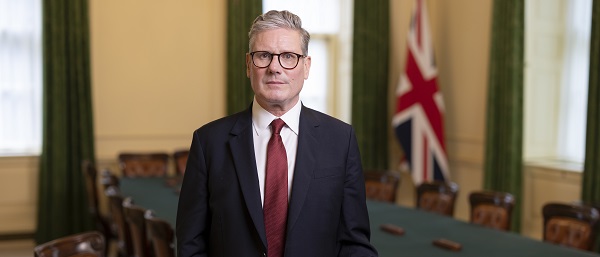
Labour Party files — including internal documents never before released — reveal a coordinated series of maneuvers, strategic deceptions and covert operations that helped deliver U.K. Prime Minister Keir Starmer to Downing Street, according to the book by investigative journalist Paul Holden. The campaign operated largely behind the scenes that mirrored the same tactics a corporate, pro-Israel faction inside the Labour Party used to crush dissent during Jeremy Corbyn’s rise, a strategy that dismantled the party’s left flank and reshaped British politics.
Holden’s reporting shows that these operatives built an array of anti-disinformation groups that presented themselves as neutral fact-checkers while aggressively targeting conservative outlets for demonetization, deplatforming and reputational damage. Internal documents and interviews indicate these organizations were never independent; they worked in lockstep with senior Labour figures who sought to contain populist movements on both sides of the Atlantic.
Dear Readers:
As a nonprofit, we are dependent on the generosity of our readers.
Labour officials celebrated an unexpected election surge in 2017, unaware that a faction inside their own party had been covertly diverting resources to undermine Jeremy Corbyn’s leadership. Holden’s investigation reveals that senior Labour bureaucrats secretly operated a parallel campaign from Ergon House, funneling money and support to anti-Corbyn candidates while starving the official operation of crucial funds.
A 2020 leaked internal report (860-page dossier) revealed deep factional divisions inside the Labour Party and showed that senior staff privately opposed Corbyn’s leadership and expressed hope that Labour would underperform in the 2017 election.
The book shows that the misuse of donations was far more extensive than previously known and may have breached election spending laws, especially in constituencies where diverted money was reported incorrectly. The party’s refusal to release campaign materials tied to this funding has intensified criticism of its transparency and raised questions about Starmer’s promise to restore trust in government.
After the 2017 election, strategist Morgan McSweeney began shaping Labour Together into an anti-Corbyn vehicle, using wealthy donors and newly created advocacy groups to amplify allegations that would weaken Corbyn’s support. Holden documents that McSweeney failed to report more than £700,000 (approximately $885,000 to $900,000) in donations despite being legally obligated to disclose them, a violation that later resulted in fines.
BBC News reported in 2022 that Labour Together was fined £14,250 (approximately $18,000) for failing to declare more than £730,000 in donations, confirming that key figures in Starmer’s political orbit had already breached U.K. election transparency laws.
By 2019, McSweeney had aligned himself with Starmer’s leadership ambitions, helping him run as a continuity candidate despite planning a sharp ideological shift once in power. Holden concludes that this project ultimately hollowed out Labour’s credibility, leaving the party mired in collapsing public confidence and confronting mounting questions about the integrity of its top advisers.
(Featured Image Media Credit: UK Prime Minister Keir Starmer/picture by Simon Dawson/Flickr)