
Great Reset
The US government’s ‘psychopathic’ record on bioweapons should give us pause about ‘bird flu’ claims

From LifeSiteNews
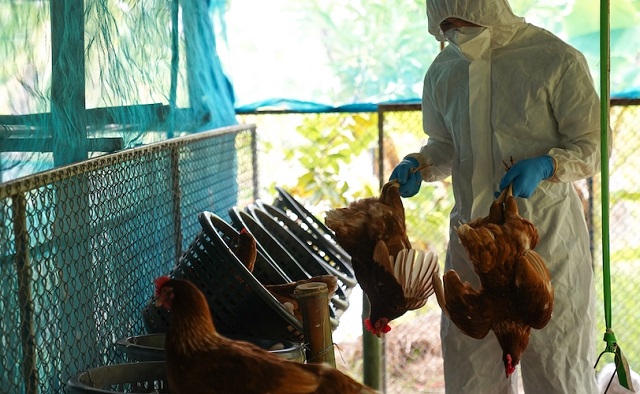
Farmers and citizens around the world must resist dangerous animal cullings and put governments on the defensive about the new ‘bird flu’ scare, given what we know about the abuse of bioweapons and gain-of-function research.
In a recent interview with Tucker Carlson, medical science author Kris Newby told the story of how she learned that what is known as Lyme disease is likely the product of a bioweapon. She dropped fascinating discoveries that helped lead her to this conclusion: The admissions of a CIA “black ops guy” to dropping poison ticks on Cubans and of a bioweapons contractor to mass producing fleas, ticks, and mosquitoes “weaponized” with “deadly or incapacitating” diseases.
The importance of this interview goes far beyond the question of whether Lyme disease is a bioweapon, for which she provided hard-to-ignore evidence. By giving a disturbing glimpse into U.S. military involvement in disease bioweapons, it steers even the “conspiracy skeptic” to admit to the possibility, or likelihood, that governments, including our own, continue to test and deploy such bioweapons.
One who is unafraid of facing facts and reason will come to the same conclusion as Stanford professor Jay Bhattacharya upon reviewing Newby’s research: That the “mid-20th century US biomedical research establishment was psychopathic,” as shown by its knowingly “deadly investigations in the name of developing vaccines and bioweapons.”
But human nature doesn’t change, and if the biomedical establishment had psychopathic tendencies less than a century ago, there will be people within it with those same tendencies today, as Bhattacharya concludes, pointing out that this “may help explain many things about the COVID pandemic.”
This question of government involvement in bioweapons production is taking on fresh and urgent relevance as the WHO redoubles its efforts to pass a freedom-restricting, national sovereignty-overriding Pandemic Treaty and as a bird flu scare is emerging.
Despite the fact that evidence overwhelmingly shows COVID-19 was a gain-of-function bioweapon used as an excuse to push harmful “vaccinations” around the world, the public is expected to unquestioningly swallow the idea that there is no agenda or deliberation behind a bird flu outbreak. Moreover, we are to believe bird flu is such a threat that it necessitates the mass culling of millions of chickens, severely restricting our food supply.
Already, there are plans to kill over four million chickens in Iowa after the avian influenza was reportedly detected among a flock in Sioux County. A leaked Zoom meeting involving Canada’s chief public health officer, Theresa Tam, shows a government team discussing measures it can take to curb or prevent potential outbreaks in Canada: searching farms for positive bird flu cases in animals and quarantining those farms; surveillance and tracking of infection cases; honing in on the production of raw milk; and even searching for infection in “farm cats,” which they acknowledged is a delicate endeavor, since they are cherished as pets.
In a recent interview with Alex Jones, Dr. Peter McCullough warned that PCR testing animals for bird flu is only going to “create a false case count” as well as “orders for mass culling.”
“I don’t think this is a threat to mankind. I think this is a giant threat to the food supply because of this elective mass destruction of livestock,” said Dr. McCullough, who went on to suggest that the animals ride out the infections without being killed by the masses. He also called for an investigation into gain-of-function research, suggesting that this bird flu, like COVID-19, may be the result of such research.
Remarkably, the scientist Dr. Michael Gregor, a vegan who once once testified on behalf of Oprah Winfrey in her “meat defamation” trial, has repeatedly claimed that chicken farms will trigger an apocalyptic virus that will threaten half of humankind. In 2006, he published a book called Bird Flu: A Virus of Our Own Hatching, in which he warns that “leading public health authorities now predict as inevitable a pandemic of influenza, triggered by bird flu and expected to lead to millions of deaths around the globe.”
In his 2020 book “How to Survive a Pandemic,” he recommends that humans eventually not eat poultry at all, asserting, “As long as there is poultry, there will be pandemics. In the end, it may be us or them.”
In fact, one Amazon book reviewer believes his title is a misnomer and should be replaced with the following: “How Raising and Consuming Animal Flesh Causes Pandemics, and (By the Way) How to Survive One.”
In other words, in order to avoid total apocalypse, humanity must face economic devastation as well as likely malnutrition and health deficits from the inability to consume animal flesh. Globalists including the World Economic Forum (WEF) and Bill Gates already want the world to transition to synthetic beef “for the climate.” Are we to believe that eliminating animal flesh, a staple of human diets going back thousands of years, is genuinely good for the welfare of mankind?
Targeting chickens also conveniently aims a blow at those who are seeking to opt out of the globalist system by producing their own food, especially since the most accessible source of animal protein is chicken eggs and meat, available even to non-farmers.
The globalists, however – pardon the pun – prefer to kill two birds with one stone. A bird flu outbreak could accomplish another major destructive goal of the globalists: Dr. McCullough thinks that the “end game” of this bird flu is “mass vaccination.” He pointed out that the military contractor Biomedical Advanced Research and Development Authority (BARDA) has already helped develop a bird flu vaccine which has been cleared by the FDA, and on Thursday, it was reported that the U.S. government is close to an “agreement to fund a late-stage trial of Moderna’s mRNA bird flu vaccine.”
Farmers and citizens around the world must resist mass animal cullings and put governments on the defensive, in light of what we know about the abuse of bioweapons and gain-of-function research. We have every right to question the origins and true danger of a new “pandemic,” considering what we’ve learned and witnessed during the COVID-19 outbreak. We cannot let globalists destroy lives in the name of saving them.


Fr0m LifeSiteNews
The Department of Immigration has had research done to investigate digital passports as an identity document, but MPs have soundly rejected the idea as dangerous and costly.
Without oversight from elected federal MPs, Canada’s Department of Immigration had research done to investigate a national ID system using digital passports for domestic use and how such a system would be enforced.
According to Access to Information documents, a senior analyst wrote in a staff email, “One of the things that came up in our discussions with Canadian Digital Services is the assumption the passport would be used within Canada as an identity document.”
“This warrants a policy discussion,” the staff email added.
MPs have soundly rejected any national ID system as both dangerous and costly.
According to internal records, managers at the immigration department put a new question regarding national ID into a 2024 voluntary Passport Client Experience Survey.
The files do not say who requested the new question to be added, and no MPs, Senators, or even Canada’s own Privacy Commissioner were told about this question.
Liberal MP Marc Miller, who is now Prime Minister Mark Carney’s Minister of Canadian Identity and Culture but was then the Immigration Minister, offered no comment to the media when asked early this year about why the new question was inserted in the passport survey.
The question was asked, “How comfortable would you be sharing a secure digital version of the passport within Canada as an identity document?”
Responses were given as “very comfortable,” “comfortable,” “neutral,” “not comfortable,” or “not comfortable at all.”
The results of the questionnaire in general showed that only a fifth of Canadians would consider their passport to serve as a form of ID, with about the same amount rejecting the idea of using one’s passport for domestic ID purposes.
One of Canada’s most staunchly pro-life MPs, Leslyn Lewis, recently warned Canadians to be “on guard” against a push by the ruling Liberal Party to bring forth Digital IDs, saying they should be voluntary.
As reported by LifeSiteNews, the Canadian government hired outside consultants tasked with looking into whether or not officials should proceed with creating a digital ID system for all citizens and residents.
Per a May 20 Digital Credentials Issue memo, and as noted by Blacklock’s Reporter, the “adoption” of such a digital ID system may be difficult.
Canada’s Privy Council research from 2023 noted that there is strong public resistance to the use of digital IDs to access government services.
As reported by LifeSiteNews, the Carney federal government plans to move ahead with digital identification for anyone seeking federal benefits, including seniors on Old Age Security.
Conservative leader Pierre Poilievre sounded the alarm by promising to introduce a bill that would “expressly prohibit” digital IDs in Canada.
Digital IDs and similar systems have long been pushed by globalist groups like the World Economic Forum, an organization with which Carney has extensive ties, under the guise of ease of access and security.

From the Frontier Centre for Public Policy
By Lee Harding
Ottawa says Bill C-9 fights hate. Critics say it turns ordinary disagreement into a potential crime.
Discriminatory hate is not a good thing. Neither, however, is the latest bill by the federal Liberal government meant to fight it. Civil liberties organizations and conservative commentators warn that Bill C-9 could do more to chill legitimate speech than curb actual hate.
Bill C-9 creates a new offence allowing up to life imprisonment for acts motivated by hatred against identifiable groups. It also creates new crimes for intimidation or obstruction near places of worship or community buildings used by identifiable groups. The bill adds a new hate propaganda offence for displaying terrorism or hate symbols.
The Canadian Civil Liberties Association (CCLA) warns the legislation “risks criminalizing some forms of protected speech and peaceful protest—two cornerstones of a free and democratic society—around tens of thousands of community gathering spaces in Canada.” The CCLA sees no need to add to existing hate laws.
Bill C-9 also removes the requirement that the Attorney General consent to lay charges for existing hate propaganda offences. The Canadian Constitution Foundation (CCF) calls this a major flaw, noting it removes “an important safeguard for freedom of expression that has been part of Canada’s law for decades.” Without that safeguard, decisions to prosecute may depend more on local political pressures and less on consistent national standards.
Strange as it sounds, hatred just will not be what it used to be if this legislation passes. The core problem begins with how the bill redefines the term itself.
Previously, the Supreme Court of Canada said hatred requires “extreme manifestations” of detestation or vilification that involve destruction, abhorrence or portraying groups as subhuman or innately evil. Instead, Bill C-9 defines hatred as “detestation or vilification,” stronger than “disdain or dislike.” That is a notably lower threshold. This shift means that ordinary political disagreement or sharp criticism could now be treated as criminal hatred, putting a wide range of protected expression at real risk.
The bill also punishes a hateful motivation more than the underlying crime. For example, if a criminal conviction prompted a sentence of two years to less than five years, a hateful motivation would add as much as an additional five years of jail time.
On paper, most Canadians may assume they will never be affected by these offences. In practice, the definition of “hate” is already stretched far beyond genuine threats or violence.
Two years ago, the 1 Million March for Children took place across Canada to protest the teaching of transgender concepts to schoolchildren, especially the very young. Although such opposition is a valid position, unions, LGBT advocates and even Newfoundland and Labrador Conservatives adopted the “No Space For Hate” slogan in response to the march. That label now gets applied far beyond real extremism.
Public pressure also shapes how police respond to protests. If citizens with traditional values protest a drag queen story hour near a public library, attendees may demand that police lay charges and accuse officers of implicit hatred if they refuse. The practical result is clear: officers may feel institutional pressure to lay charges to avoid being accused of bias, regardless of whether any genuine threat or harm occurred.
Police, some of whom take part in Pride week or work in stations decorated with rainbow colours in June, may be wary of appearing insensitive or intolerant. There have also been cases where residents involved in home invasion incidents were charged, and courts later determined whether excessive force was used. In a similar way, officers may lay charges first and allow the courts to sort out whether a protest crossed a line. Identity-related considerations are included in many workplace “sensitivity training” programs, and these broader cultural trends may influence how such situations are viewed. In practice, this could mean that protests viewed as ideologically unfashionable face a higher risk of criminal sanction than those aligned with current political priorities.
If a demonstrator is charged and convicted for hate, the Liberal government could present the prosecution as a matter for the justice system rather than political discretion. It may say, “It was never our choice to charge or convict these people. The system is doing its job. We must fight hate everywhere.”
Provincial governments that support prosecution will be shielded by the inability to show discretion, while those that would prefer to let matters drop will be unable to intervene. Either way, the bill could increase tensions between Ottawa and the provinces. This could effectively centralize political authority over hate-related prosecutions in Ottawa, regardless of regional differences in values or enforcement priorities.
The bill also raises concerns about how symbols are interpreted. While most Canadians would associate the term “hate symbol” with a swastika, some have linked Canada’s former flag to extremism. The Canadian Anti-Hate Network did so in 2022 in an educational resource entitled “Confronting and preventing hate in Canadian schools.”
The flag, last used nationally in 1965, was listed under “hate-promoting symbols” for its alleged use by the “alt-right/Canada First movement” to recall when Canada was predominantly white. “Its usage in modern times is an indicator of hate-promoting beliefs,” the resource insisted. If a historic Canadian symbol can be reclassified this easily, it shows how subjective and unstable the definition of a “hate symbol” could become under this bill.
These trends suggest the legislation jeopardizes not only symbols associated with Canada’s past, but also the values that supported open debate and free expression. Taken together, these changes do not merely target hateful behaviour. They create a legal framework that can be stretched to police dissent and suppress unpopular viewpoints. Rest in peace, free speech.
Lee Harding is a research fellow for the Frontier Centre for Public Policy.


Wisdom of Our Elders: The Contempt for Memory in Canadian Indigenous Policy

Liberal bill “targets Christians” by removing religious exemption in hate-speech law

Canada invests $34 million in Chinese drones now considered to be ‘high security risks’

The EU Insists Its X Fine Isn’t About Censorship. Here’s Why It Is.
-
C2C Journal2 days ago
Wisdom of Our Elders: The Contempt for Memory in Canadian Indigenous Policy
-
 Sports2 days ago
Egypt, Iran ‘completely reject’ World Cup ‘Pride Match’ plan
-
 National14 hours ago
Canada’s free speech record is cracking under pressure
-
 Alberta2 days ago
Alberta introducing three “all-season resort areas” to provide more summer activities in Alberta’s mountain parks
-
 Business17 hours ago
Taxpayers Federation calls on politicians to reject funding for new Ottawa Senators arena
-
 Energy6 hours ago
Meet REEF — the massive new export engine Canadians have never heard of
-
 Business17 hours ago
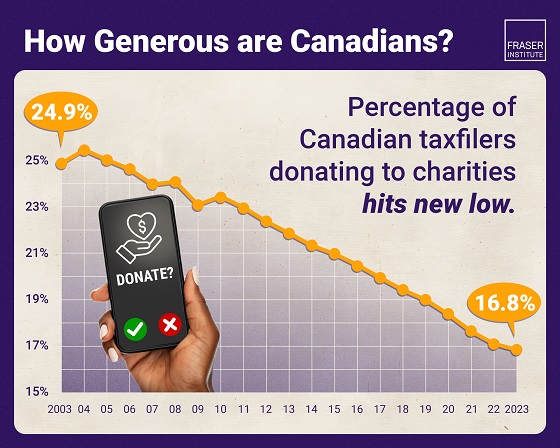
Albertans give most on average but Canadian generosity hits lowest point in 20 years
-
 Automotive2 days ago
The $50 Billion Question: EVs Never Delivered What Ottawa Promised