
Digital ID
The End of Online Anonymity? Australia’s New Law Pushes Digital ID for Everyone To Ban Kids From Social Media



|
Australia is gearing up to roll out some of the world’s strictest social media rules, with Parliament having pushed through legislation to bar anyone under 16 from creating accounts on platforms like Facebook, Instagram, Snapchat, and TikTok. It’s a sweeping measure but, as the ink dries, the questions are piling up.
Prime Minister Anthony Albanese’s Labor government and the opposition teamed up on Thursday to pass the new restrictions with bipartisan enthusiasm. And why not? Opinion polls show a whopping 77% of Australians are behind the idea. Protecting kids online is an easy sell which is why it’s often used to usher in the most draconian of laws. Still, the devil—as always—is in the details. Proof of Age, But at What Cost? |
 |
|
Here’s the crux of the new law: to use social media, Australians will need to prove they’re old enough. That means showing ID, effectively ending the anonymity that’s long been a feature (or flaw, depending on your perspective) of the online experience. In theory, this makes sense—keeping kids out of online spaces designed for adults is hardly controversial. But in practice, it’s like using a sledgehammer to crack a walnut.
For one, there’s no clear blueprint for how this will work. Will social media platforms require passports and birth certificates at sign-up? Who’s going to handle and secure this flood of personal information? The government hasn’t offered much clarity and, until it does, the logistics look shaky. And then there’s the matter of enforcement. Teenagers are famously tech-savvy, and history has shown that banning them from a platform is more of a speed bump than a roadblock. With VPNs, fake IDs, and alternate accounts already standard fare for navigating internet restrictions, how effective can this law really be? The Hasty Debate |
 |
|
Critics on both sides of Parliament flagged concerns about the speed with which this legislation moved forward. But the Albanese government pressed ahead, arguing that urgent action was needed to protect young people. Their opponents in the Liberal-National coalition, not wanting to appear soft on tech regulation, fell in line. The result? A law that feels more like a political statement than a well-thought-out policy.
There’s no denying the appeal of bold action on Big Tech. Headlines about online predators and harmful content make it easy to rally public support. But there’s a fine line between decisive governance and reactionary policymaking. Big Questions, Few Answers The most glaring issue is privacy. Forcing users to hand over ID to access social media opens up a Pandora’s box of security concerns. Centralizing sensitive personal data creates a tempting target for hackers, and Australia’s track record with large-scale data breaches isn’t exactly reassuring. There’s also the question of what happens when kids inevitably find workarounds. Locking them out of mainstream platforms doesn’t mean they’ll stop using the internet—it just pushes them into less regulated, potentially more harmful digital spaces. Is that really a win for online safety? A Global Watch Party Australia’s bold move is already drawing attention from abroad. Governments worldwide are grappling with how to regulate social media, and this legislation could set a precedent. But whether it becomes a model for others or a cautionary tale remains to be seen. For now, the Albanese government has delivered a strong message: protecting children online is a priority. But the lack of clear answers about enforcement and privacy leaves the impression that this is a solution in search of a strategy. All on the Platforms Under the new social media law, the responsibility for enforcement doesn’t rest with the government, but with the very companies it targets. Platforms like Facebook, TikTok, and Instagram will be tasked with ensuring no Australian under 16 manages to slip through the digital gates. If they fail? They’ll face fines of up to A$50 million (about $32.4 million USD). That’s a steep price for failing to solve a problem the government itself hasn’t figured out how to address. The legislation offers little in the way of specifics, leaving tech giants to essentially guess how they’re supposed to pull off this feat. The law vaguely mentions taking “reasonable steps” to verify age but skips the critical part: defining what “reasonable” means. The Industry Pushback Tech companies, predictably, are not thrilled. Meta, in its submission to a Senate inquiry, called the law “rushed” and out of touch with the current limitations of age-verification technology. “The social media ban overlooks the practical reality of age assurance technology,” Meta argued. Translation? The tools to make this work either don’t exist or aren’t reliable enough to enforce at scale. X didn’t hold back either. The platform warned of potential misuse of the sweeping powers the legislation grants to the minister for communications. X CEO Linda Yaccarino’s team even raised concerns that these powers could be used to curb free speech — another way of saying that regulating who gets to log on could quickly evolve into regulating what they’re allowed to say. And it’s not just the tech companies pushing back. The Human Rights Law Centre questioned the lawfulness of the bill, highlighting how it opens the door to intrusive data collection while offering no safeguards against abuse. Promises, Assurances, and Ambiguities The government insists it won’t force people to hand over passports, licenses, or tap into the contentious new digital ID system to prove their age. But here’s the catch: there’s nothing in the current law explicitly preventing that, either. The government is effectively asking Australians to trust that these measures won’t lead to broader surveillance—even as the legislation creates the infrastructure to make it possible. This uncertainty was laid bare during the bill’s rushed four-hour review. Liberal National Senator Matt Canavan pressed for clarity, and while the Coalition managed to extract a promise for amendments preventing platforms from demanding IDs outright, it still feels like a band-aid on an otherwise sprawling mess. A Law in Search of a Strategy Part of the problem is that the government itself doesn’t seem entirely sure how this law will work. A trial of age-assurance technology is planned for mid-2025—long after the law is expected to take effect. The communications minister, Michelle Rowland, will ultimately decide what enforcement methods apply to which platforms, wielding what critics describe as “expansive” and potentially unchecked authority. It’s a power dynamic that brings to mind a comment from Rowland’s predecessor, Stephen Conroy, who once bragged about his ability to make telecommunications companies “wear red underpants on [their] head” if he so desired. Tech companies now face the unenviable task of interpreting a vague law while bracing for whatever decisions the minister might make in the future. The list of platforms affected by the law is another moving target. Government officials have dropped hints in interviews—YouTube, for example, might not make the cut—but these decisions will ultimately be left to the minister. This pick-and-choose approach adds another layer of uncertainty, leaving tech companies and users alike guessing at what’s coming next. The Bigger Picture The debate around this legislation is as much about philosophy as it is about enforcement. On one hand, the government is trying to address legitimate concerns about children’s safety online. On the other, it’s doing so in a way that raises serious questions about privacy, free speech, and the limits of state power over the digital realm. Australia’s experiment could become a model for other countries grappling with the same challenges—or a cautionary tale of what happens when governments legislate without a clear plan. For now, the only certainty is uncertainty. In a year’s time, Australians might find themselves proving their age every time they try to log in—or watching the system collapse under the weight of its own contradictions. |


From LifeSiteNews
Bill C-2 has raised concerns from legal organizations that warn it could lead to a cashless economy in Canada by banning cash payments over $10,000.
The Liberals’ proposed border legislation may quietly usher in a cashless economy by banning cash payments.
On June 3, the Liberal Party introduced Bill C-2 to strengthen border security and outlaw cash payments over $10,000. Legal organizations have since warned that this is the first step to a cashless economy and digital ID system in Canada.
“Part 11 amends the Proceeds of Crime (Money Laundering) and Terrorist Financing Act to prohibit certain entities from accepting cash deposits from third parties and certain persons or entities from accepting cash payments, donations or deposits of $10,000 or more,” the legislation proposes.
While the bill purports to strengthen border security and restore Canada-U.S. relations, many have warned that government regulation of cash payments is a slippery slope.
In a June 4 X post, the Justice Centre for Constitutional Freedoms (JCCF) warned that “If Bill C-2 passes, it will become a Criminal Code offence for businesses, professionals, and charities to accept cash donations, deposits, or payments of $10,000 or more. Even if the $10,000 payment or donation is broken down into several smaller cash transactions, it will still be a crime for a business or charity to receive it.”
The JCCF pointed out that while cash payments of $10,000 are not common for Canadians, the government can easily reduce “the legal amount to $5,000, then $1,000, then $100, and eventually nothing.”
“Restricting the use of cash is a dangerous step towards tyranny and totalitarianism,” the organization warned. “Cash gives citizens privacy, autonomy, and freedom from surveillance by government and by banks, credit card companies, and other corporations.”
“If we cherish our privacy, we need to defend our freedom to choose cash, in the amount of our choosing,” it continued. “This includes, for example, our right to pay $10,000 cash for a car, or to donate $10,000 (or more) to a charity.”
“Law enforcement already has the tools to fight crime,” JCCF declared. “Perhaps they need a bigger budget to hire more people, or perhaps they need to use existing tools more effectively. In a free society, violating our right to use cash is not the answer.”
A move to restrict Canadians’ use of cash is especially concerning as citizens already saw what a Liberal government will do to those who oppose its narrative during the 2022 Freedom Convoy.
In winter 2022, the Liberal government, under former Prime Minister Justin Trudeau, froze the bank accounts of those who donated to the Freedom Convoy, which featured thousands of Canadians camping in front of Parliament to protest COVID mandates.
Similarly, Liberal Prime Minister Mark Carney’s move to restrict Canadians is hardly surprising considering his close ties to the World Economic Forum and push for digital currency.
In a 2021 article, the National Post noted that “since the advent of the COVID pandemic, Carney has been front and centre in the promotion of a political agenda known as the ‘Great Reset,’ or the ‘Green New Deal,’ or ‘Building Back Better.’
“Carney’s Brave New World will be one of severely constrained choice, less flying, less meat, more inconvenience and more poverty,” the outlet continued.
In light of Carney’s new leadership over Canadians, many are sounding alarm over his distinctly anti-freedom ideas.
Exposing Mark Carney:
“Should sex be up for sale” 😮
“Should there be a market for the right to have children?” 🤯 pic.twitter.com/Q4hftgGIMc
— Mario Zelaya (@mario4thenorth) March 21, 2025
Carney, whose ties to globalist groups have had Conservative Party leader Pierre Poilievre call him the World Economic Forum’s “golden boy”. He has also previously endorsed the carbon tax and even criticized Trudeau when the tax was exempted from home heating oil in an effort to reduce costs for some Canadians.
Carney, who as reported by LifeSiteNews, has admitted he is an “elitist” and a “globalist.” Just recently, he criticized U.S. President Donald Trump for targeting woke ideology and has vowed to promote “inclusiveness” in Canada.
Carney also said that he is willing to use all government powers, including “emergency powers,” to enforce his energy plan.
Brownstone Institute
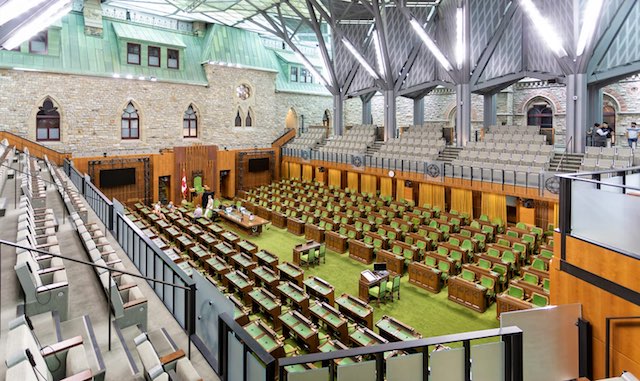
RCMP seem more interested in House of Commons Pages than MP’s suspected of colluding with China
From the Brownstone Institute

Canadians shouldn’t have information about their wayward MPs, but the RCMP can’t have too much biometric information about regular people. It’s always a good time for a little fishing. Let’s run those prints, shall we?
Forget the members of Parliament who may have colluded with foreign governments. The real menace, the RCMP seem to think, are House of Commons pages. MPs suspected of foreign election interference should not be identified, the Mounties have insisted, but House of Commons staff must be fingerprinted. Serious threats to the country are hidden away, while innocent people are subjected to state surveillance. If you want to see how the managerial state (dys)functions, Canada is the place to be.
In June, the National Security and Intelligence Committee of Parliamentarians (NSICOP) tabled its redacted report that suggested at least 11 sitting MPs may have benefitted from foreign election interference. RCMP Commissioner Mike Duheme cautioned against releasing their identities. Canadians remained in the dark until Oct. 28 when Kevin Vuong, a former Liberal MP now sitting as an Independent, hosted a news conference to suggest who some of the parliamentarians may be. Like the RCMP, most of the country’s media didn’t seem interested.
But the RCMP are very interested in certain other things. For years, they have pushed for the federal civil service to be fingerprinted. Not just high security clearance for top-secret stuff, but across government departments. The Treasury Board adopted the standard in 2014 and the House of Commons currently requires fingerprinting for staff hired since 2017. The Senate implemented fingerprinting this year. The RCMP have claimed that the old policy of doing criminal background checks by name is obsolete and too expensive.
But stated rationales are rarely the real ones. Name-based background checks are not obsolete or expensive. Numerous police departments continue to use them. They do so, in part, because name checks do not compromise biometric privacy. Fingerprints are a form of biometric data, as unique as your DNA. Under the federal Identification of Criminals Act, you must be in custody and charged with a serious offence before law enforcement can take your prints. Canadians shouldn’t have information about their wayward MPs, but the RCMP can’t have too much biometric information about regular people. It’s always a good time for a little fishing. Let’s run those prints, shall we?
It’s designed to seem like a small deal. If House of Commons staff must give their fingerprints, that’s just a requirement of the job. Managerial bureaucracies prefer not to coerce directly but to create requirements that are “choices.” Fingerprints aren’t mandatory. You can choose to provide them or choose not to work on the Hill.
Sound familiar? That’s the way Covid vaccine mandates worked too. Vaccines were never mandatory. There were no fines or prison terms. But the alternative was to lose your job, social life, or ability to visit a dying parent. When the state controls everything, it doesn’t always need to dictate. Instead, it provides unpalatable choices and raises the stakes so that people choose correctly.
Government intrudes incrementally. Digital ID, for instance, will be offered as a convenient choice. You can, if you wish, carry your papers in the form of a QR code on your phone. Voluntary, of course. But later there will be extra hoops to jump through to apply for a driver’s licence or health card in the old form.
Eventually, analogue ID will cost more, because, after all, digital ID is more automated and cheaper to run. Some outlets will not recognize plastic identification. Eventually, the government will offer only digital ID. The old way will be discarded as antiquated and too expensive to maintain. The new regime will provide the capacity to keep tabs on people like never before. Privacy will be compromised without debate. The bureaucracy will change the landscape in the guise of practicality, convenience, and cost.
Each new round of procedures and requirements is only slightly more invasive than the last. But turn around and find you have travelled a long way from where you began. Eventually, people will need digital ID, fingerprints, DNA, vaccine records, and social credit scores to be employed. It’s not coercive, just required for the job.
Occasionally the curtain is pulled back. The federal government unleashed the Emergencies Act on the truckers and their supporters in February 2022. Jackboots in riot gear took down peaceful protesters for objecting to government policy. Authorities revealed their contempt for law-abiding but argumentative citizens. For an honest moment, the government was not incremental and insidious, but enraged and direct. When they come after you in the streets with batons, at least you can see what’s happening.
We still don’t know who colluded with China. But we can be confident that House of Commons staffers aren’t wanted for murder. The RCMP has fingerprints to prove it. Controlling the people and shielding the powerful are mandates of the modern managerial state.
Republished from the Epoch Times
USAID Quietly Sent Thousands Of Viruses To Chinese Military-Linked Biolab

Canada’s euthanasia regime is already killing the disabled. It’s about to get worse

‘Far too serious for such uninformed, careless journalism’: Complaint filed against Globe and Mail article challenging Alberta’s gender surgery law
Canadian pro-freedom group sounds alarm over Liberal plans to revive internet censorship bill
-
 Business18 hours ago
Most Canadians say retaliatory tariffs on American goods contribute to raising the price of essential goods at home
-
 National1 day ago
Women and girls beauty pageant urges dismissal of transgender human rights complaint
-
 Alberta18 hours ago
Cross-Canada NGL corridor will stretch from B.C. to Ontario
-
 International2 days ago
Support for the Ukraine war continues because no one elected is actually in charge.
-
 Business2 days ago
Trump slaps Brazil with tariffs over social media censorship
-
 Business2 days ago
CBC six-figure salaries soar
-
 Business19 hours ago
B.C. premier wants a private pipeline—here’s how you make that happen
-
 Addictions2 days ago
Can addiction be predicted—and prevented?