
Digital ID
The End of Online Anonymity? Australia’s New Law Pushes Digital ID for Everyone To Ban Kids From Social Media



|
Australia is gearing up to roll out some of the world’s strictest social media rules, with Parliament having pushed through legislation to bar anyone under 16 from creating accounts on platforms like Facebook, Instagram, Snapchat, and TikTok. It’s a sweeping measure but, as the ink dries, the questions are piling up.
Prime Minister Anthony Albanese’s Labor government and the opposition teamed up on Thursday to pass the new restrictions with bipartisan enthusiasm. And why not? Opinion polls show a whopping 77% of Australians are behind the idea. Protecting kids online is an easy sell which is why it’s often used to usher in the most draconian of laws. Still, the devil—as always—is in the details. Proof of Age, But at What Cost? |
 |
|
Here’s the crux of the new law: to use social media, Australians will need to prove they’re old enough. That means showing ID, effectively ending the anonymity that’s long been a feature (or flaw, depending on your perspective) of the online experience. In theory, this makes sense—keeping kids out of online spaces designed for adults is hardly controversial. But in practice, it’s like using a sledgehammer to crack a walnut.
For one, there’s no clear blueprint for how this will work. Will social media platforms require passports and birth certificates at sign-up? Who’s going to handle and secure this flood of personal information? The government hasn’t offered much clarity and, until it does, the logistics look shaky. And then there’s the matter of enforcement. Teenagers are famously tech-savvy, and history has shown that banning them from a platform is more of a speed bump than a roadblock. With VPNs, fake IDs, and alternate accounts already standard fare for navigating internet restrictions, how effective can this law really be? The Hasty Debate |
 |
|
Critics on both sides of Parliament flagged concerns about the speed with which this legislation moved forward. But the Albanese government pressed ahead, arguing that urgent action was needed to protect young people. Their opponents in the Liberal-National coalition, not wanting to appear soft on tech regulation, fell in line. The result? A law that feels more like a political statement than a well-thought-out policy.
There’s no denying the appeal of bold action on Big Tech. Headlines about online predators and harmful content make it easy to rally public support. But there’s a fine line between decisive governance and reactionary policymaking. Big Questions, Few Answers The most glaring issue is privacy. Forcing users to hand over ID to access social media opens up a Pandora’s box of security concerns. Centralizing sensitive personal data creates a tempting target for hackers, and Australia’s track record with large-scale data breaches isn’t exactly reassuring. There’s also the question of what happens when kids inevitably find workarounds. Locking them out of mainstream platforms doesn’t mean they’ll stop using the internet—it just pushes them into less regulated, potentially more harmful digital spaces. Is that really a win for online safety? A Global Watch Party Australia’s bold move is already drawing attention from abroad. Governments worldwide are grappling with how to regulate social media, and this legislation could set a precedent. But whether it becomes a model for others or a cautionary tale remains to be seen. For now, the Albanese government has delivered a strong message: protecting children online is a priority. But the lack of clear answers about enforcement and privacy leaves the impression that this is a solution in search of a strategy. All on the Platforms Under the new social media law, the responsibility for enforcement doesn’t rest with the government, but with the very companies it targets. Platforms like Facebook, TikTok, and Instagram will be tasked with ensuring no Australian under 16 manages to slip through the digital gates. If they fail? They’ll face fines of up to A$50 million (about $32.4 million USD). That’s a steep price for failing to solve a problem the government itself hasn’t figured out how to address. The legislation offers little in the way of specifics, leaving tech giants to essentially guess how they’re supposed to pull off this feat. The law vaguely mentions taking “reasonable steps” to verify age but skips the critical part: defining what “reasonable” means. The Industry Pushback Tech companies, predictably, are not thrilled. Meta, in its submission to a Senate inquiry, called the law “rushed” and out of touch with the current limitations of age-verification technology. “The social media ban overlooks the practical reality of age assurance technology,” Meta argued. Translation? The tools to make this work either don’t exist or aren’t reliable enough to enforce at scale. X didn’t hold back either. The platform warned of potential misuse of the sweeping powers the legislation grants to the minister for communications. X CEO Linda Yaccarino’s team even raised concerns that these powers could be used to curb free speech — another way of saying that regulating who gets to log on could quickly evolve into regulating what they’re allowed to say. And it’s not just the tech companies pushing back. The Human Rights Law Centre questioned the lawfulness of the bill, highlighting how it opens the door to intrusive data collection while offering no safeguards against abuse. Promises, Assurances, and Ambiguities The government insists it won’t force people to hand over passports, licenses, or tap into the contentious new digital ID system to prove their age. But here’s the catch: there’s nothing in the current law explicitly preventing that, either. The government is effectively asking Australians to trust that these measures won’t lead to broader surveillance—even as the legislation creates the infrastructure to make it possible. This uncertainty was laid bare during the bill’s rushed four-hour review. Liberal National Senator Matt Canavan pressed for clarity, and while the Coalition managed to extract a promise for amendments preventing platforms from demanding IDs outright, it still feels like a band-aid on an otherwise sprawling mess. A Law in Search of a Strategy Part of the problem is that the government itself doesn’t seem entirely sure how this law will work. A trial of age-assurance technology is planned for mid-2025—long after the law is expected to take effect. The communications minister, Michelle Rowland, will ultimately decide what enforcement methods apply to which platforms, wielding what critics describe as “expansive” and potentially unchecked authority. It’s a power dynamic that brings to mind a comment from Rowland’s predecessor, Stephen Conroy, who once bragged about his ability to make telecommunications companies “wear red underpants on [their] head” if he so desired. Tech companies now face the unenviable task of interpreting a vague law while bracing for whatever decisions the minister might make in the future. The list of platforms affected by the law is another moving target. Government officials have dropped hints in interviews—YouTube, for example, might not make the cut—but these decisions will ultimately be left to the minister. This pick-and-choose approach adds another layer of uncertainty, leaving tech companies and users alike guessing at what’s coming next. The Bigger Picture The debate around this legislation is as much about philosophy as it is about enforcement. On one hand, the government is trying to address legitimate concerns about children’s safety online. On the other, it’s doing so in a way that raises serious questions about privacy, free speech, and the limits of state power over the digital realm. Australia’s experiment could become a model for other countries grappling with the same challenges—or a cautionary tale of what happens when governments legislate without a clear plan. For now, the only certainty is uncertainty. In a year’s time, Australians might find themselves proving their age every time they try to log in—or watching the system collapse under the weight of its own contradictions. |


From StosselTV
Countries all over the world are imposing digital IDs. They tie your identity to everything you do. Spain’s Prime Minister wants “An end to anonymity online!”
Tech privacy expert Naomi Brockwell @NaomiBrockwellTV warns that’s dangerous. “Privacy is not about hiding,” she tells Stossel TV producer Kristin Tokarev. “It’s about an individual’s right to decide for themselves who gets access to their data. A Digital ID… will strip individuals of that choice.”
The new government mandated digital IDs aren’t just a digital version of your driver’s license or passport. “It connects everything,” Brockwell explains. “Your financial decisions, to your social media posts, your likes, the things that you’re watching, places that you’re going… Everything you say will be tied back to who you are.”
And once everything runs through a single government ID, access to services becomes something you need permission for. That’s already a reality in China where citizens are tracked, scored, and punished for “bad” behavior.
Brockwell warns the western world is “skyrocketing in that direction.” She says Americans need to push back now.
———
To make sure you receive the weekly video from Stossel TV, sign up here: https://www.johnstossel.com/#subscrib...
———
From LifeSiteNews
The Employment and Social Development Canada (ESDC) department has officially confirmed it is developing a digital ID for certain licenses and permits.
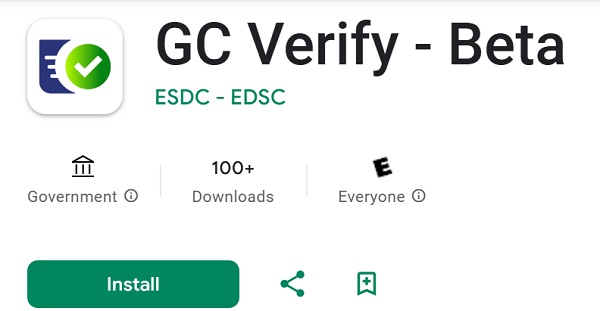
The Employment and Social Development Canada (ESDC) department has officially confirmed it is developing a digital ID for certain licenses and permits, called “GC Issue and Verify,” which has already been listed on the Google Play store, as a trial-only app for certain users.
The digital ID claims the government can replace and be full “digital versions” of the “physical credentials they already provide today, like work permits and boating licenses.”
“Instead of only having physical credentials in their wallets, people will also be able to securely store their digital credentials on their mobile devices,” says the government.
According to ESDC officials, the digital IDs can be shared online or in-person “when needed, making it easy for departments, organizations, and businesses to validate their information.”
The government argued that since many Canadians already use “digital credentials without realizing it,” such as a digital ticket “stored on our mobile device instead of using a printed ticket,” this would be the same for IDs such as licenses.
ESDC said that “digital options” will be voluntary and that people can still use “traditional physical methods of verification,” instead.
READ: Canada releases new digital ID app for personal documents despite privacy concerns
The reality is that digital IDs and similar systems have long been pushed by globalist groups like the World Economic Forum, an organization with which Canadian Prime Minister Mark Carney has extensive ties, under the guise of ease of access and security.
Also, Canadians do not want digital IDs, as noted by Canada’s Privy Council research from 2023, which said there is strong public resistance to the use of digital IDs to access government services.
GC Issue and Verify is one of two digital ID projects on the go. As reported by LifeSiteNews, the Liberal government under Carney recently quietly released a new type of digital ID app on Google’s Play Store called GC Wallet.
Both GC Wallet and GC Issue and Verify are now being tested with federal partners, those being Transport Canada and Immigration, Refugees and Citizenship Canada.
During COVID, the Canadian federal government released a digital-type app called ArriveCAN app for travel that was a form of digital ID. The app was riddled with technical glitches along with privacy concerns from users.
As reported by LifeSiteNews, the Canadian government hired outside consultants tasked with looking into whether or not officials should proceed with creating a digital ID system for all citizens and residents.
Opp0sition MP Leslyn Lewis, recently warned Canadians to be “on guard” against a push by the ruling Liberal Party to bring forth digital IDs, saying they should be voluntary.


Trump confirms first American land strike against Venezuelan narco networks

Disclosures reveal Minnesota politician’s husband’s companies surged thousands-fold amid Somali fraud crisis

Rulings could affect energy prices everywhere: Climate activists v. the energy industry in 2026
The Canadian Energy Centre’s biggest stories of 2025
-
International2 days ago
Trump confirms first American land strike against Venezuelan narco networks
-
 International24 hours ago
Maduro says he’s “ready” to talk
-
 Business2 days ago
How convenient: Minnesota day care reports break-in, records gone
-
 Business2 days ago
The great policy challenge for governments in Canada in 2026
-
 Bruce Dowbiggin24 hours ago
The Rise Of The System Engineer: Has Canada Got A Prayer in 2026?
-
 Business1 hour ago
Vacant Somali Daycares In Viral Videos Are Also Linked To $300 Million ‘Feeding Our Future’ Fraud
-
 International23 hours ago
LOCKED AND LOADED: Trump threatens U.S. response if Iran slaughters protesters
-
 International1 hour ago
Trump Says U.S. Strike Captured Nicolás Maduro and Wife Cilia Flores; Bondi Says Couple Possessed Machine Guns