
armed forces
The Case for Peter Hegseth — Time To Try Something Different


By S.L. Nelson
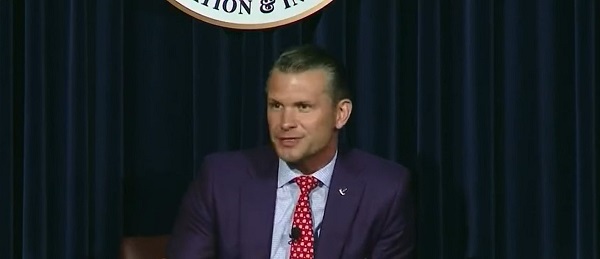
Success in today’s world favors smart, creative leaders who can quickly adapt and make decisions that benefit their organizations. President-elect Donald Trump’s choice of Pete Hegseth to lead the Department of Defense marks a significant shift from his first administration.
Hegseth, with fewer ties to the traditional defense establishment, is expected to transform the department in two vital areas: First, he will expose generals and admirals who act out of self-interest; second, he will refocus the military on its core function of lethality — the use or threat of deadly force to win wars and deter enemies.
Hegseth’s appointment threatens senior military officers who are more concerned with their legacy than with mission accomplishment. These officers feel susceptible to changes that will threaten their carefully curated norms. Many current leaders have avidly promoted DEI (Diversity, Equity and Inclusion) and CRT (Critical Race Theory), and Hegseth’s threat to remove these programs stokes their fears. These leaders have promoted subordinates who share their views, creating a cycle of making leaders in their own image. To break this cycle, Hegseth will also need to ensure that general officers are held accountable for the officers they promote. These actions will ensure that his and President Trump’s ‘Warrior Boards’ achieve their desired effect and weed out the right leaders.
Civilian leaders and politicians should also scrutinize the retired officers who placed these generals in their positions in the first place. If multiple legacies are at risk, flag officers will develop and implement more objective metrics for recommending general officer positions.
Hegseth’s leadership will refocus the Department of Defense on its core purpose. By removing ineffective leaders who prioritize social theories over military effectiveness, he will eliminate a major obstacle. These changes will encourage accountability and forward-thinking approaches. A clear message will echo from the top down that adapting to change means manning, training, and equipping the military to win wars, rather than allowing military officers to succumb to the self-loathing which places individual egos above selfless service to the country.
Adapting to change is also the responsibility of military commanders. Officers command Army organizations. It is significant that in some branches of the United States Army, up to half the officers do not desire to compete for Battalion Command. Many reasons include burnout and the threat of investigations that are launched ad nauseam in a zero-defect environment. The Army cannot be effective if officers do not want to command. Commanders hesitate to enforce standards in this environment because an unhappy subordinate can ruin their career with a retaliatory allegation. If an investigation is launched, commanders worry that general officers will dispose of these allegations negatively rather than appear lenient. Secretary Hegseth will support his commanders because his commander in chief supports him.
Not supporting your subordinate commanders has vital consequences for national security. A glaring example of a lack of support for the Department of Defense is demonstrated by the contempt of the Chinese in answering Defense Secretary Lloyd Austin’s phone calls and his apparent indifference to it. “I think we’ll continue … to stress how important it is, and hopefully Minister Wei will schedule that call,” Austin told CNN.
One can hardly imagine Hegseth having the same attitude as Secretary Austin. Trump proved during his first term, with sanctions and recently renewed threats of another trade war with China, that his government will support its Defense Department by imposing harsh sanctions and other measures. This whole-of-government approach will allow Hegseth to focus on the military and make its interactions with foreign militaries more effective.
In fact, the Trump transition team is already laying the groundwork for forward-leaning tariff plans through legislation. Because legislation will make it harder to have subsequent administrations revoke these actions, the Defense Department will benefit from a more permanent government position when it comes to the exercise of economic power. Hegseth will, thus, occupy an even stronger position to engage with military threats to the United States with supporting economic policies that are not just unilateral executive actions by the Trump administration.
President-elect Trump’s selection of Pete Hegseth frees the Department of Defense from being anchored in the change dynamics of the past. Current and future change undercurrents cannot be managed with legacy processes. Leaders must adapt and be free to act outside of institutional norms, especially those tied to a selfish cycle of self-promotion and government social experiments rather than the effectiveness of the Department of Defense.
This article was originally published by RealClearDefense and made available via RealClearWire.
S.L. Nelson has served from the tactical to strategic level as a military officer. His views are his own and do not represent the position of the U.S. DoD.


From the Frontier Centre for Public Policy
By Lt. Gen. (Ret.) Michel Maisonneuve
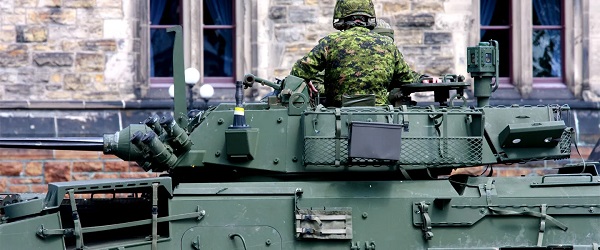
Canada’s military is broken, and unless Ottawa backs its spending with real reform, we’re just playing politics with national security
Prime Minister Mark Carney’s surprise pledge to meet NATO’s defence spending target is long overdue, but without real reform, leadership and a shift away from bureaucracy and social experimentation, it risks falling short of what the moment demands.
Canada committed in 2014 to spend two per cent of its gross national product on defence—a NATO target meant to ensure collective security and more equitable burden-sharing. We never made it past 1.37 per cent, drawing criticism from allies and, in my view, breaching our obligation. Now, the prime minister says we’ll hit the target by the end of fiscal year 2025-26. That’s welcome news, but it comes with serious challenges.
Reaching the two per cent was always possible. It just required political courage. The announced $9 billion in new defence spending shows intent, and Carney’s remarks about protecting Canadians are encouraging. But the reality is our military readiness is at a breaking point. With global instability rising—including conflicts in Ukraine and the Middle East—Canada’s ability to defend its territory or contribute meaningfully to NATO is under scrutiny. Less than half of our army vehicles, ships and aircraft are currently operational.
I’m told the Treasury Board has already approved the new funds, making this more than just political spin. Much of the money appears to be going where it’s most needed: personnel. Pay and benefit increases for serving members should help with retention, and bonuses for re-enlistment are reportedly being considered. Recruiting and civilian staffing will also get a boost, though I question adding more to an already bloated public service. Reserves and cadet programs weren’t mentioned but they also need attention.
Equipment upgrades are just as urgent. A new procurement agency is planned, overseen by a secretary of state—hopefully with members in uniform involved. In the meantime, accelerating existing projects is a good way to ensure the money flows quickly. Restocking ammunition is a priority. Buying Canadian and diversifying suppliers makes sense. The Business Council of Canada has signalled its support for a national defence industrial strategy. That’s encouraging, but none of it will matter without follow-through.
Infrastructure is also in dire shape. Bases, housing, training facilities and armouries are in disrepair. Rebuilding these will not only help operations but also improve recruitment and retention. So will improved training, including more sea days, flying hours and field operations.
All of this looks promising on paper, but if the Department of National Defence can’t spend funds effectively, it won’t matter. Around $1 billion a year typically lapses due to missing project staff and excessive bureaucracy. As one colleague warned, “implementation [of the program] … must occur as a whole-of-government activity, with trust-based partnerships across industry and academe, or else it will fail.”
The defence budget also remains discretionary. Unlike health transfers or old age security, which are legally entrenched, defence funding can be cut at will. That creates instability for military suppliers and risks turning long-term procurement into a political football. The new funds must be protected from short-term fiscal pressure and partisan meddling.
One more concern: culture. If Canada is serious about rebuilding its military, we must move past performative diversity policies and return to a warrior ethos. That means recruiting the best men and women based on merit, instilling discipline and honour, and giving them the tools to fight and, if necessary, make the ultimate sacrifice. The military must reflect Canadian values, but it is not a place for social experimentation or reduced standards.
Finally, the announcement came without a federal budget or fiscal roadmap. Canada’s deficits continue to grow. Taxpayers deserve transparency. What trade-offs will be required to fund this? If this plan is just a last-minute attempt to appease U.S. President Donald Trump ahead of the G7 or our NATO allies at next month’s summit, it won’t stand the test of time.
Canada has the resources, talent and standing to be a serious middle power. But only action—not announcements—will prove whether we truly intend to be one.
The NATO summit is over, and Canada was barely at the table. With global threats rising, Lt. Gen. (Ret.) Michel Maisonneuve joins David Leis to ask: How do we rebuild our national defence—and why does it matter to every Canadian? Because this isn’t just about security. It’s about our economy, our identity, and whether Canada remains sovereign—or becomes the 51st state.
Michel Maisonneuve is a retired lieutenant-general who served 45 years in uniform. He is a senior fellow at the Frontier Centre for Public Policy and author of In Defence of Canada: Reflections of a Patriot (2024).

And we all pay when the dancing ends
How to explain Mark Carney’s obsession with Europe and his lack of attention to Canada’s economy and an actual budget?
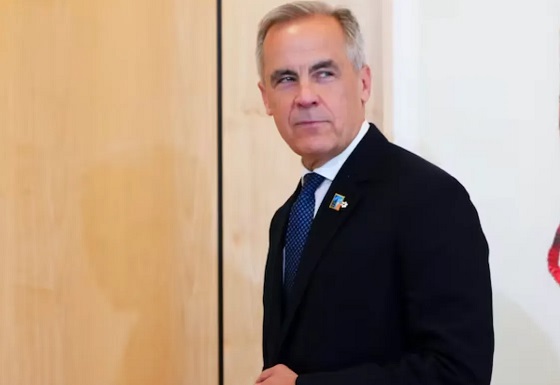
Carney’s pirouette through NATO meetings, always in his custom-tailored navy blue power suits, carries the desperate whiff of an insecure, small-town outsider who has made it big but will always yearn for old-money credibility. Canada is too young a country, too dynamic and at times a bit too vulgar to claim equal status with Europe’s formerly magnificent and ancient cultures — now failed under the yoke of globalism.
Hysterical foreign policy, unchecked immigration, burgeoning censorship and massive income disparity have conquered much of the continent that many of us used to admire and were even somewhat intimidated by. But we’ve moved on. And yet Carney seems stuck, seeking approval and direction from modern Europe — a place where, for most countries, the glory days are long gone.
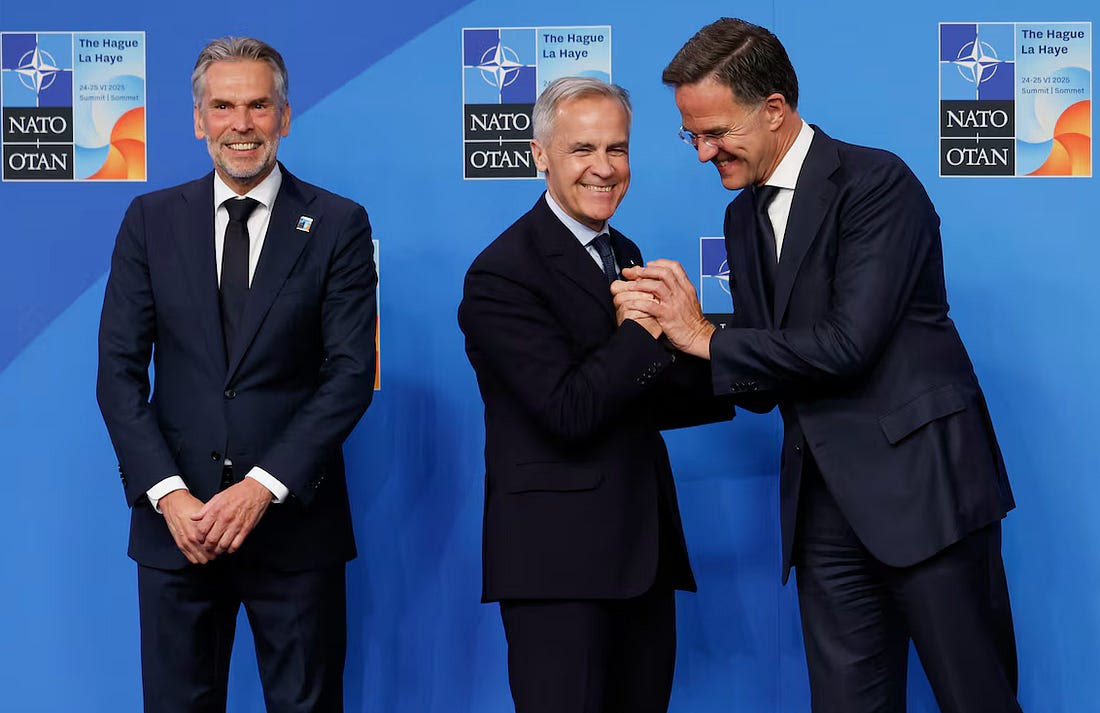
Carney’s irresponsible financial commitment to NATO is a reckless and unnecessary expenditure, given that many Canadians are hurting. But it allowed Carney to pick up another photo of himself glad-handing global elites to whom he just sold out his struggling citizens.
 |
From the Globe and Mail
“Prime Minister Mark Carney has committed Canada to the biggest increase in military spending since the Second World War, part of a NATO pledge designed to address the threat of Russian expansionism and to keep Donald Trump from quitting the Western alliance.
Mr. Carney and the leaders of the 31 other member countries issued a joint statement Wednesday at The Hague saying they would raise defence-related spending to the equivalent of 5 per cent of their gross domestic product by 2035.
NATO Secretary-General Mark Rutte said the commitment means “European allies and Canada will do more of the heavy lifting” and take “greater responsibility for our shared security.”
For Canada, this will require spending an additional $50-billion to $90-billion a year – more than doubling the existing defence budget to between $110-billion and $150-billion by 2035, depending on how much the economy grows. This year Ottawa’s defence-related spending is due to top $62-billion.”
You’ll note that spending money we don’t have in order to keep President Trump happy is hardly an elbows up moment, especially given that the pledge followed Carney’s embarrassing interactions with Trump at the G7. I’m all for diplomacy but sick to my teeth of Carney’s two-faced approach to everything. There is no objective truth to anything our prime minister touches. Watch the first few minutes of the video below.
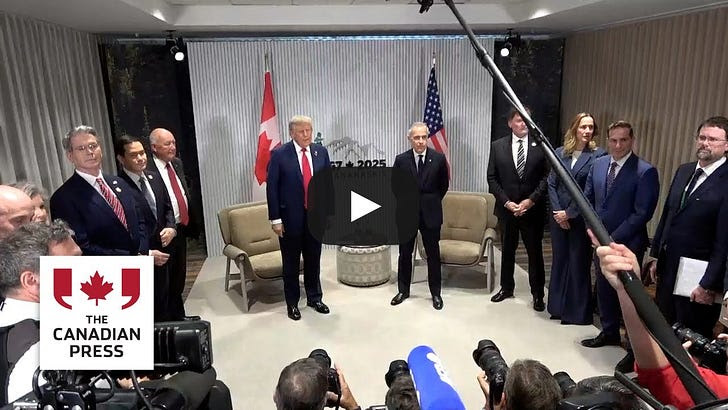
The portents are bad. This from the Globe:
We are poorer than we think. Canadians running their retirement numbers are shining light in the dark corners of household finances in this country. The sums leave many “anxious, fearful and sad about their finances,” according to a Healthcare of Ontario Pension Plan survey recently reported in these pages.
Fifty-two per cent of us worry a lot about our personal finances. Fifty per cent feel frustrated, 47 per cent feel emotionally drained and 43 per cent feel depressed. There is not one survey indicator to suggest Canadians have made financial progress in 2025 compared with 2024.
The video below is a basic “F”- you to Canadians from a Prime Minister who smirks and roles his eyes when questioned about his inept money management.
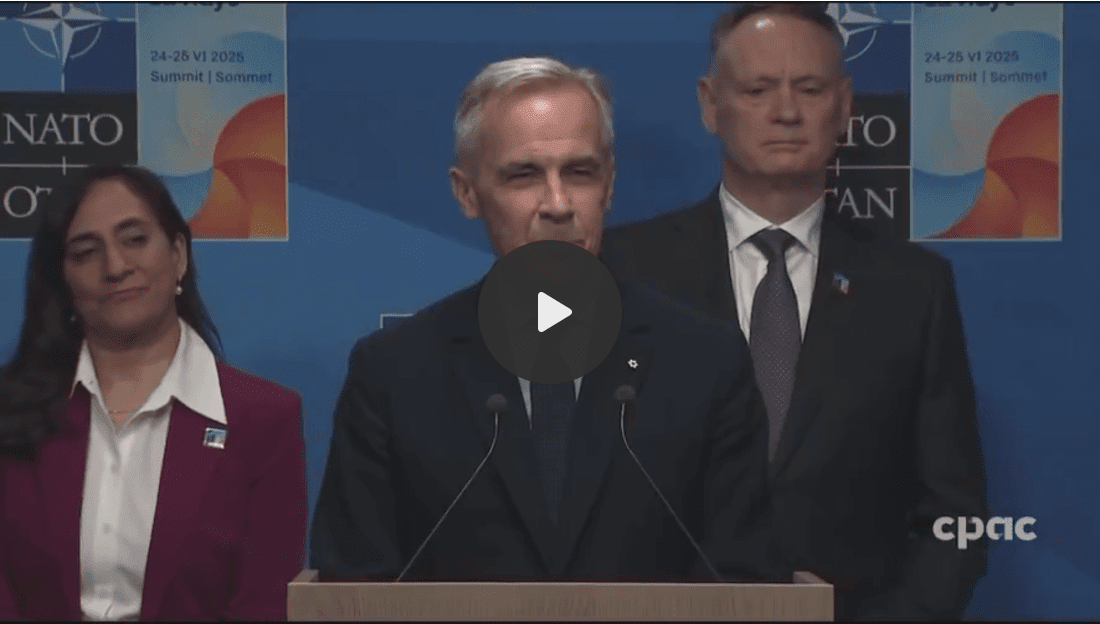
He did spill the beans to CNN with this unsettling revelation about the staggering numbers we are talking about:
Signing on to NATO’s new defence spending target could cost the federal treasury up to $150 billion a year, Prime Minister Mark Carney said Tuesday in advance of the Western military alliance’s annual summit.
The prime minister made the comments in an interview with CNN International.
“It is a lot of money,” Carney said.
This guy was a banker?
We are witnessing the political equivalent of a vain woman who blows her entire paycheque to look good for an aspirational event even though she can’t afford food or rent. Yes, she sparkled for a moment, but in reality her domaine is crumbling. All she has left are the photographs of her glittery night. Our Prime Minister is collecting his own album of power-proximity photos he can use to wallpaper over his failures as our economy collapses.
The glass slipper doesn’t fit.
Trish Wood is Critical is a reader-supported publication.
To receive new posts and support my work, consider becoming a free or paid subscriber.
Invite your friends and earn rewards
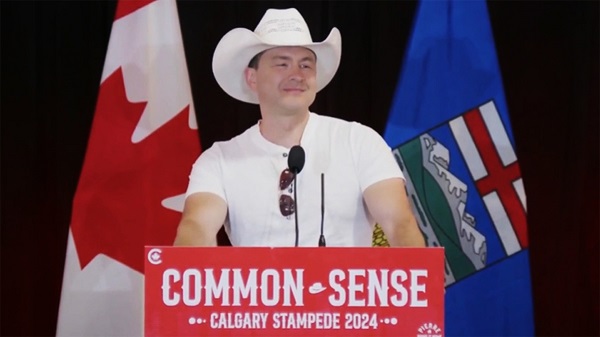
COWBOY UP! Pierre Poilievre Promises to Fight for Oil and Gas, a Stronger Military and the Interests of Western Canada
Court compels RCMP and TD Bank to hand over records related to freezing of peaceful protestor’s bank accounts

B.C. Residents File Competition Bureau Complaint Against David Suzuki Foundation for Use of False Imagery in Anti-Energy Campaigns

Canada’s euthanasia regime is already killing the disabled. It’s about to get worse
-
Alberta2 days ago
COWBOY UP! Pierre Poilievre Promises to Fight for Oil and Gas, a Stronger Military and the Interests of Western Canada
-
MAiD1 day ago
Canada’s euthanasia regime is already killing the disabled. It’s about to get worse
-
 Crime2 days ago
Eyebrows Raise as Karoline Leavitt Answers Tough Questions About Epstein
-
 Alberta2 days ago
Alberta and Ontario sign agreements to drive oil and gas pipelines, energy corridors, and repeal investment blocking federal policies
-
 Fraser Institute23 hours ago
Before Trudeau average annual immigration was 617,800. Under Trudeau number skyrocketted to 1.4 million from 2016 to 2024
-
 Censorship Industrial Complex13 hours ago
Canadian pro-freedom group sounds alarm over Liberal plans to revive internet censorship bill
-
 Daily Caller1 day ago
‘I Know How These People Operate’: Fmr CIA Officer Calls BS On FBI’s New Epstein Intel
-
 International2 days ago
Chicago suburb purchases childhood home of Pope Leo XIV