
Alberta
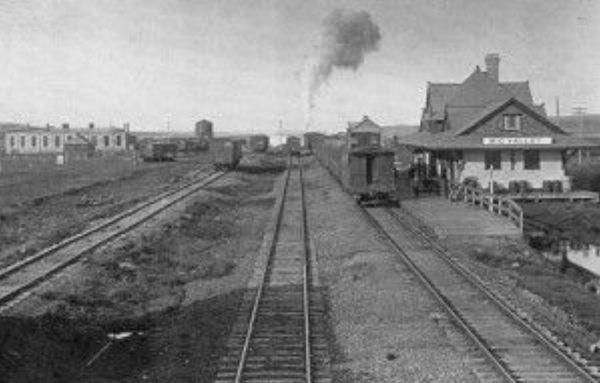
The Canadian Northern Railway’s legacy at Big Valley, Alberta.

By Shawn I. Smith, Canadian Northern Society

“The newly constructed train station circa 1913, Big Valley. Photo- Canadian Northern Society Archives

“Visitors explore the Big Valley Roundhouse Ruins” Photo- Canadian Northern Society Archives
While not obvious to the guests who have enjoyed the 21-mile excursion train ride from Stettler aboard the Alberta Prairie Railway, the scene that unfolds on summer days in Big Valley is part of a legacy left by two dynamic railroaders who over a century earlier had an ambitious and grand vision for Western Canada. Today, both active and abandoned rail lines in central Alberta, related historic structures and sites, and indeed the communities that owe their existence to the Canadian Northern Railway (CNoR) share this common heritage.
Energy, Enterprise, and Ability

“The Canadian Northern Railway lines map, 1916” Map- Atlas of Alberta Railways

“Bustling Big Valley railroad yard, roundhouse, 1920’s” Photo- Canadian Northern Society Archives

“Train time at Big Valley. A Southbound train at Big Valley, 1920’s.” Photo- Canadian Northern Society Archives
The National

“The end of daily passenger train service between Edmonton – Drumheller. VIA Rail’s Dayliner at Big Valley, 1981” Photo-Charles Bohi


Alberta
Emissions Reduction Alberta offering financial boost for the next transformative drilling idea
From the Canadian Energy Centre
$35-million Alberta challenge targets next-gen drilling opportunities
‘All transformative ideas are really eligible’
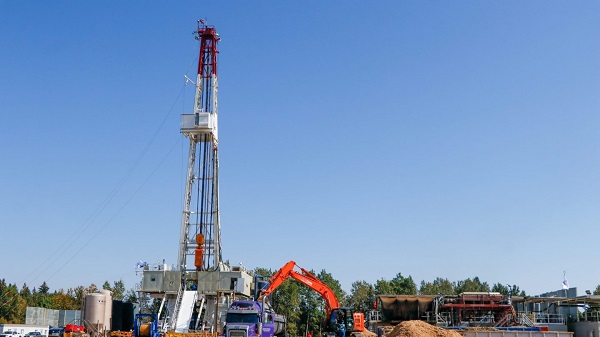
Forget the old image of a straight vertical oil and gas well.
In Western Canada, engineers now steer wells for kilometres underground with remarkable precision, tapping vast energy resources from a single spot on the surface.
The sector is continually evolving as operators pursue next-generation drilling technologies that lower costs while opening new opportunities and reducing environmental impacts.
But many promising innovations never reach the market because of high development costs and limited opportunities for real-world testing, according to Emissions Reduction Alberta (ERA).
That’s why ERA is launching the Drilling Technology Challenge, which will invest up to $35 million to advance new drilling and subsurface technologies.
“The focus isn’t just on drilling, it’s about building our future economy, helping reduce emissions, creating new industries and making sure we remain a responsible leader in energy development for decades to come,” said ERA CEO Justin Riemer.
And it’s not just about oil and gas. ERA says emerging technologies can unlock new resource opportunities such as geothermal energy, deep geological CO₂ storage and critical minerals extraction.
“Alberta’s wealth comes from our natural resources, most of which are extracted through drilling and other subsurface technologies,” said Gurpreet Lail, CEO of Enserva, which represents energy service companies.
ERA funding for the challenge will range from $250,000 to $8 million per project.
Eligible technologies include advanced drilling systems, downhole tools and sensors; AI-enabled automation and optimization; low-impact rigs and fluids; geothermal and critical mineral drilling applications; and supporting infrastructure like mobile labs and simulation platforms.
“All transformative ideas are really eligible for this call,” Riemer said, noting that AI-based technologies are likely to play a growing role.
“I think what we’re seeing is that the wells of the future are going to be guided by smart sensors and real-time data. You’re going to have a lot of AI-driven controls that help operators make instant decisions and avoid problems.”
Applications for the Drilling Technology Challenge close January 29, 2026.


The Police Review Commission (PRC) is now fully operational, giving Albertans a single, independent process to file policing complaints and ensure accountability.
Alberta’s government is putting the province at the forefront of police oversight in Canada with the creation of the PRC. This new commission replaces the current patchwork of police investigating police with one independent body responsible for receiving complaints, conducting investigations and overseeing disciplinary hearings. By centralizing these functions within a single, independent agency, Alberta is ensuring complaints are handled fairly and consistently.
“The Police Review Commission represents a new era in how Alberta addresses policing complaints. These changes are part of a broader paradigm shift where police are no longer seen as an arm of the state, but rather an extension and a reflection of the community they serve. As an independent agency, it is committed to fairness, accountability and public trust, ensuring every complaint is investigated impartially and resolved openly.”
The Police Amendment Act, 2022 laid the groundwork for this new model, establishing a modern approach to oversight built on accountability, consistency and public confidence. The PRC will manage the full complaints process from receiving and assessing, to investigating and resolving complaints related to police conduct, including serious incidents and statutory offences.
“The Alberta Association of Chiefs of Police welcomes the launch of the Police Review Commission as a meaningful step toward enhanced oversight and greater transparency in policing. By ensuring complaints are reviewed fairly and impartially, the Commission will help strengthen accountability and reinforce public trust in Alberta’s police agencies. Police leaders across the province are committed to working with the Commission and our communities to ensure every Albertan has confidence in the integrity of our police services.”
A timely and transparent complaint resolution process is essential for both the public and police. That is why the PRC must complete investigations within 180 days, and if more time is needed, the chief executive officer must publicly report on delays and provide justification. This ensures clarity, predictability and accountability throughout the process. The commission will be arm’s length from government and police services, meaning people can have greater confidence that their complaints will be investigated and resolved impartially.
“Our goal is to build trust in policing by delivering timely resolutions and fair, consistent outcomes that put people first. Every complaint will be reviewed thoroughly and handled with the transparency and respect Albertans expect and deserve.”
The PRC can also initiate systemic reviews related to police conduct or emerging trends without the need for a public complaint, and these reviews must be made public. Together, these measures create a clear, accountable process that strengthens transparency, supports continuous improvement and enhances trust in how police oversight is carried out across Alberta.
“Public safety and the confidence the public has in our police services and service members are incumbent for effective and responsible service delivery. The PRC has been developed so that Albertans may have a responsible and impartial mechanism to voice concerns regarding delivery of policing services in Alberta. I am confident that the PRC will be an inclusive and diverse representation of the communities, so we may better understand the most appropriate and effective way to respond to concerns regarding police services. I look forward to the positive outcomes for the community.”
The commission’s design was informed by engagement with Indigenous communities, law enforcement partners, municipal officials and community organizations, ensuring its structure and training reflect Alberta’s diversity and values.
Quick facts
- The PRC will handle complaints in three categories:
- Level 1: Death, serious injury and serious or sensitive allegations involving all police services in Alberta, as well as peace officer agencies.
- Level 2: Allegations of criminal and other statutory offences involving all police services in Alberta.
- Level 3: Complaints about non-criminal misconduct involving officers employed by municipal and First Nations police services.
- Complaints that fall outside the three categories will be referred to the appropriate bodies or agencies for review.
- The Alberta Serious Incident Response Team (ASIRT) will now operate under the PRC.


From Underdog to Top Broodmare

Poilievre says West Coast Pipeline MOU is no guarantee
Will the New West Coast Pipeline MoU Lead to Results? Almost Certainly Not According to AI
Carney forces Alberta to pay a steep price for the West Coast Pipeline MOU
-
 Energy1 day ago
Canadians will soon be versed in massive West Coast LPG mega-project
-
 Alberta2 days ago
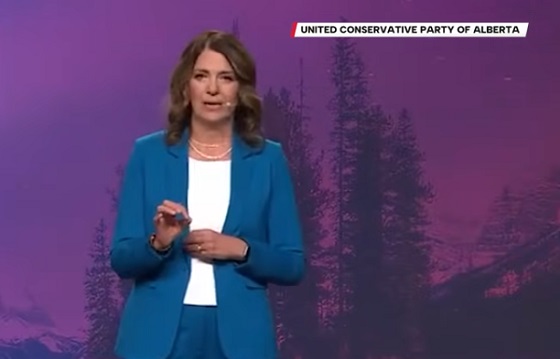
Keynote address of Premier Danielle Smith at 2025 UCP AGM
-
 Food2 days ago
Canada Still Serves Up Food Dyes The FDA Has Banned
-
 Addictions2 days ago
Manitoba Is Doubling Down On A Failed Drug Policy
-
 Daily Caller1 day ago
Tom Homan Predicts Deportation Of Most Third World Migrants Over Risks From Screening Docs
-
 C2C Journal22 hours ago
Learning the Truth about “Children’s Graves” and Residential Schools is More Important than Ever
-
 National24 hours ago
Media bound to pay the price for selling their freedom to (selectively) offend
-
Alberta23 hours ago
New era of police accountability