
Business
Taxpayers Federation urging Ontario to join Alberta’s carbon tax court fight

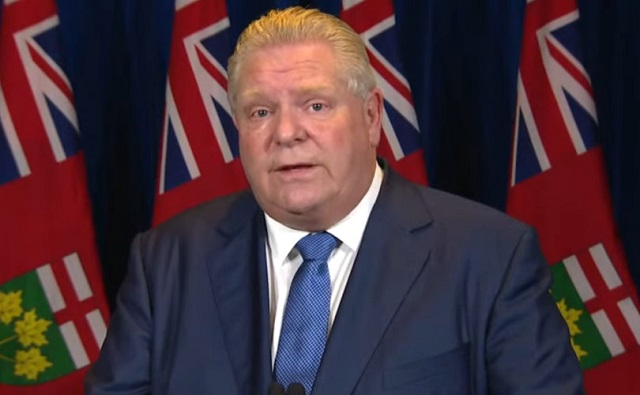
From the Canadian Taxpayers Federation
By Jay Goldberg
The Canadian Taxpayers Federation is calling on Ontario Premier Doug Ford to join the Alberta government and constitutionally challenge against the federal carbon tax.
“Ford has rightly opposed the federal carbon tax for years, but now he has a new chance to beat it in court,” said Jay Goldberg, CTF Ontario Director. “Last time the carbon tax fight went to the Supreme Court, the federal government argued it needed a national carbon tax to deal with a national problem. But then it undercut its own argument for a national carbon tax by making an exception for furnace oil, which clearly favours Atlantic Canada.
“Trudeau torpedoed his own constitutional argument for imposing a carbon tax so it’s time to challenge it in court again.”
Today, the Alberta government announced it has filed an application at the federal court challenging the constitutionality of the carbon tax in the wake of the federal government’s heating oil carbon tax exemption.
Last year, the federal government announced it is removing the carbon tax from heating oil for three years, but did not exempt other forms of home heating energy.
The carve-out disproportionately helps Atlantic Canadians. Only two per cent of Ontario households use furnace oil to heat their homes.
The average Ontario home uses 2,497 cubic metres of natural gas per year. That means removing the current federal carbon tax would save the average home about $381 this year.
“When Trudeau announced his heating oil carve out, he admitted the carbon tax makes life more expensive, he admitted the carbon tax is all about politics and he left the vast majority of Canadians out in the cold,” Goldberg said. “Ford needs to take this new opportunity to join other provinces and fight the carbon tax in court.”
A recent Leger poll commissioned by the CTF shows 60 per cent of Ontarians want the federal government to remove the carbon tax from all heating fuels.
Smith right to fight carbon tax in court
The Canadian Taxpayers Federation applauds Alberta Premier Danielle Smith for launching a renewed constitutional challenge against the federal carbon tax.
“The carbon tax is making the necessities of life in Alberta more expensive and that’s why Smith is right to take Prime Minister Justin Trudeau’s carbon tax back to court,” said Franco Terrazzano, CTF Federal Director. “Last time the carbon tax fight went to the Supreme Court, the federal government argued it needed a national carbon tax to deal with a national problem. But then it undercut its own argument for a national carbon tax by making an exception for furnace oil, which clearly favours Atlantic Canada.
“Trudeau torpedoed his own constitutional argument for imposing a carbon tax so it’s time to challenge it in court again.”
Today, the Alberta government announced it has filed an application at the federal court challenging the constitutionality of the carbon tax in the wake of the federal government’s home heating oil exemption.
Writing in the National Post, the CTF called on all premiers to launch a new legal challenge against the federal carbon tax.
Last year, the federal government announced it is removing the carbon tax from furnace oil for three years, but did not exempt other forms of home heating energy. Less than one per cent of Alberta households use heating oil.
The average Alberta home uses about 2,935 cubic metres of natural gas per year, according to Statistics Canada. That means scrapping the current federal carbon tax would save the average Alberta home about $440 this year.
“Taxpayers are taking it on the chin every time we pay our heating bills and Trudeau is torpedoing constitutional accountability with his unequal application of the carbon tax,” Terrazzano said. “When Trudeau announced his heating oil carve out, he admitted the carbon tax makes life more expensive, he admitted the carbon tax is all about politics and he left the vast majority of Canadians out in the cold.”
A recent Leger poll commissioned by the CTF shows 70 per cent of Albertans want the federal government to remove the carbon tax from all heating fuels.


This is a special preview article from the:

U.S. President Donald Trump’s trade policy is often chaotic and punitive. But on one point, he is right: Canada’s agricultural supply management system has to go. Not because it is unfair to the United States, though it clearly is, but because it punishes Canadians. Supply management is a government-enforced price-fixing scheme that limits consumer choice, inflates grocery bills, wastes food, and shields a small, politically powerful group of producers from competition—at the direct expense of millions of households.
And yet Ottawa continues to support this socialist shakedown. Last week, Prime Minister Mark Carney told reporters supply management was “not on the table” in negotiations for a renewed United States-Mexico-Canada Trade Agreement, despite U.S. negotiators citing it as a roadblock to a new deal.
Supply management relies on a web of production quotas, fixed farmgate prices, strict import limits, and punitive tariffs that can approach 300 percent. Bureaucrats decide how much milk, chicken, eggs, and poultry Canadians farmers produce and which farmers can produce how much. When officials misjudge demand—as they recently did with chicken and eggs—farmers are legally barred from responding. The result is predictable: shortages, soaring prices, and frustrated consumers staring at emptier shelves and higher bills.
This is not a theoretical problem. Canada’s most recent chicken production cycle, ending in May 2025, produced one of the worst supply shortfalls in decades. Demand rose unexpectedly, but quotas froze supply in place. Canadian farmers could not increase production. Instead, consumers paid more for scarce domestic poultry while last-minute imports filled the gap at premium prices. Eggs followed a similar pattern, with shortages triggering a convoluted “allocation” system that opened the door to massive foreign imports rather than empowering Canadian farmers to respond.
Over a century of global experience has shown that central economic planning fails. Governments are simply not good at “matching” supply with demand. There is no reason to believe Ottawa’s attempts to manage a handful of food categories should fare any better. And yet supply management persists, even as its costs mount.
Those costs fall squarely on consumers. According to a Fraser Institute estimate, supply management adds roughly $375 a year to the average Canadian household’s grocery bill. Because lower-income families spend a much higher proportion of their income on food, the burden falls most heavily on them.
The system also strangles consumer choice. European countries produce thousands of varieties of high-quality cheeses at prices far below what Canadians pay for largely industrial domestic products. But our import quotas are tiny, and anything above them is hit with tariffs exceeding 245 percent. As a result, imported cheeses can cost $60 per kilogram or more in Canadian grocery stores. In Switzerland, one of the world’s most eye-poppingly expensive countries, where a thimble-sized coffee will set you back $9, premium cheeses are barely half the price you’ll find at Loblaw or Safeway.
Canada’s supply-managed farmers defend their monopoly by insisting it provides a “fair return” for famers, guarantees Canadians have access to “homegrown food” and assures the “right amount of food is produced to meet Canadian needs.” Is there a shred of evidence Canadians are being denied the “right amount” of bread, tuna, asparagus or applesauce? Of course not; the market readily supplies all these and many thousands of other non-supply-managed foods.
Like all price-fixing systems, Canada’s supply management provides only the illusion of stability and security. We’ve seen above what happens when production falls short. But perversely, if a farmer manages to get more milk out of his cows than his quota, there’s no reward: the excess must be
dumped. Last year alone, enough milk was discarded to feed 4.2 million people.
Over time, supply management has become less about farming and more about quota ownership. Artificial scarcity has turned quotas into highly valuable assets, locking out young farmers and rewarding incumbents.
Why does such a dysfunctional system persist? The answer is politics. Supply management is of outsized importance in Quebec, where producers hold a disproportionate share of quotas and are numerous enough to swing election results in key ridings. Federal parties of all stripes have learned the cost of crossing this lobby. That political cowardice now collides with reality. The USMCA is heading toward mandatory renegotiation, and supply management is squarely in Washington’s sights. Canada depends on tariff-free access to the U.S. market for hundreds of billions of dollars in exports. Trading away a deeply-flawed system to secure that access would make economic sense.
Instead, Ottawa has doubled down. Not just with Carney’s remarks last week but with Bill C-202, which makes it illegal for Canadian ministers to reduce tariffs or expand quotas on supply-managed goods in future trade talks. Formally signalling that Canada’s negotiating position is hostage to a tiny domestic lobby group is reckless, and weakens Canada’s hand before talks even begin.
Food prices continue to rise faster than inflation. Forecasts suggest the average family will spend $1,000 more on groceries next year alone. Supply management is not the only cause, but it remains a major one. Ending it would lower prices, expand choice, reduce waste, and reward entrepreneurial farmers willing to compete.
If Donald Trump can succeed in forcing supply management onto the negotiating table, he will be doing Canadian consumers—and Canadian agriculture—a favour our own political class has long refused to deliver.
The original, full-length version of this article was recently published in C2C Journal. Gwyn Morgan is a retired business leader who was a director of five global corporations.

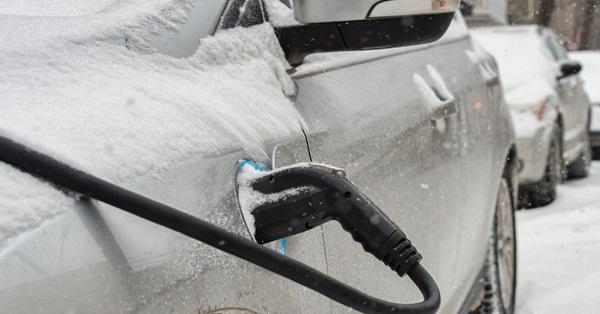

Things have only gone from bad to worse for the global Electric Vehicle industry. And that’s a problem for Canada, because successive Liberal governments have done everything in their power to hitch our cart to that horse.
Earlier this month, the Trump Administration rolled back more Biden-era regulations that effectively served as a back-door EV mandate in the United States. These rules mandated that all passenger cars be able to travel at least 65.1 miles (and for light trucks, 45.2 miles) per gallon of gasoline or diesel, by the year 2031. Since no Internal Combustion Engine (ICE) vehicle could realistically conform to those standards, that would have essentially boxed them out of the market.
Trump’s rolling them back was a fulfillment of his campaign promise to end the Biden Administration’s stealth EV mandates. But it was also a simple recognition of the reality that EVs can’t compete on their own merits.
For proof of that, look no further than our second bit of bad news for EVs: Ford Motor Company has just announced a massive $19.5 billion write-down, almost entirely linked to its aggressive push into EVs. They’ve lost $13 billion on EVs in the past two years alone.
The company invested tens of billions on these go-carts, and lost their shirt when it turned out the market for them was miniscule.
Ford’s EV division president Andrew Frick explained, “Ford is following the customer. We are looking at the market as it is today, not just as everyone predicted it to be five years ago.”
Of course, five years ago, the market was assuming that government subsidies-plus-mandates would create a market for EVs at scale, which hasn’t happened.
As to what this portends for the market, the Wall Street Journal argued, “The company’s pivot from all-electric vehicles is a fresh sign that America’s roadways – after a push to remake them – will continue to look in the near future much like they do today, with a large number of gas-powered cars and trucks and growing use of hybrids.”
And that’s not just true in the U.S. Across the Atlantic, reports suggest the European Union is preparing to delay their own EV mandates to 2040. And the U.K.’s Labour government is considering postponing their own 2030 ICE vehicle ban to align with any EU change in policy.
It’s looking like fewer people around the world will be forced by their governments to buy EVs. Which means that fewer people will be buying EVs.
Now, that is a headache for Canada. Our leaders, at both the federal and provincial levels, have bet big on the success of EVs, investing billions in taxpayer dollars in the hopes of making Canada a major player in the global EV supply chain.
To bolster those investments, Ottawa introduced its Electric Vehicle mandate, requiring 100 per cent of new light-duty vehicle sales to be electric by 2035. This, despite the fact that EVs remain significantly more expensive than gas-and-diesel driven vehicles, they’re poorly suited to Canada’s vast distances and cold climate, and our charging infrastructure is wholly inadequate for a total transition to EVs.
But even if these things weren’t true, there still aren’t enough of us to make the government’s investment make sense. Their entire strategy depends on exporting to foreign markets that are rapidly cooling on EVs.
Collapsing demand south of the border – where the vast majority of the autos we build are sent – means that Canadian EVs will be left without buyers. And postponed (perhaps eventually canceled) mandates in Europe mean that we will be left without a fallback market.
Canadian industry voices are growing louder in their concern. Meanwhile, plants are already idling, scaling back production, or even closing, leaving workers out in the cold.
As GM Canada’s president, Kristian Aquilina, said when announcing her company’s cancellation of the BrightDrop Electric delivery van, “Quite simply, we just have not seen demand for these vehicles climb to the levels that we initially anticipated…. It’s simply a demand and a market-driven response.”
Prime Minister Mark Carney, while sharing much of the same environmental outlook as his predecessor, has already been compelled by economic realities to make a small adjustment – delaying the enforcement of the 2026 EV sales quotas by one year.
But a one-year pause doesn’t solve the problem. It kicks the can down the road.
Mr. Carney must now make a choice. He can double down on this troubled policy, continuing to throw good money after bad, endangering a lot of jobs in our automotive sector, while making transportation more expensive and less reliable for Canadians. Or he can change course: scrap the mandates, end the subsidies, and start putting people and prosperity ahead of ideology.
Here’s hoping he chooses the latter.
The writing is on the wall. Around the world, the forced transition to EVs is crashing into economic reality. If Canada doesn’t wake up soon, we’ll be left holding the bag.


Argentina’s Milei delivers results free-market critics said wouldn’t work

‘Almost Sounds Made Up’: Jeffrey Epstein Was Bill Clinton Plus-One At Moroccan King’s Wedding, Per Report

Danielle Smith slams Skate Canada for stopping events in Alberta over ban on men in women’s sports

TOTAL AND COMPLETE BLOCKADE: Trump cuts off Venezuela’s oil lifeline
-
 Health2 days ago
FDA warns ‘breast binder’ manufacturers to stop marketing to gender-confused girls
-
 Daily Caller2 days ago
Trump Reportedly Escalates Pressure On Venezuela With Another Oil Tanker Seizure
-
 International18 hours ago
Australian PM booed at Bondi vigil as crowd screams “shame!”
-
 Business1 day ago
There’s No Bias at CBC News, You Say? Well, OK…
-
 Uncategorized18 hours ago
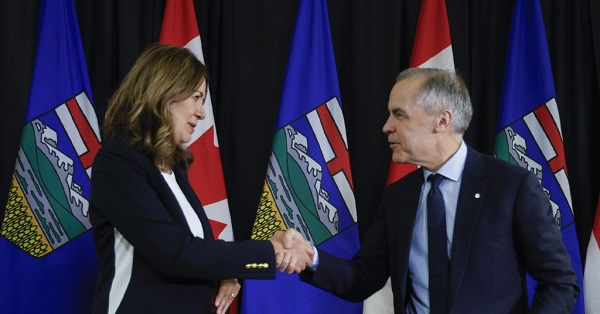
Mortgaging Canada’s energy future — the hidden costs of the Carney-Smith pipeline deal
-
 Business2 days ago
Taxing food is like slapping a surcharge on hunger. It needs to end
-
 Health2 days ago
All 12 Vaccinated vs. Unvaccinated Studies Found the Same Thing: Unvaccinated Children Are Far Healthier
-
 Opinion1 day ago
Religion on trial: what could happen if Canada passes its new hate speech legislation