
Business
Sluggish homebuilding will have far-reaching effects on Canada’s economy


From the Fraser Institute
At a time when Canadians are grappling with epic housing supply and affordability challenges, the data show that homebuilding continues to come up short in some parts of the country including in several metro regions where most newcomers to Canada settle.
In both the Greater Toronto area and Metro Vancouver, housing starts have languished below levels needed to close the supply gaps that have opened up since 2019. In fact, the last 12-18 months have seen many planned development projects in Ontario and British Columbia delayed or cancelled outright amid a glut of new unsold condominium units and a sharp drop in population growth stemming from shifts in federal immigration policy.
At the same time, residential real estate sales have also been sluggish in some parts of the country. A fall-off in real estate transactions tends to have a lagged negative effect on construction investment—declining home sales today translate into fewer housing starts in the future.
While Prime Minister Carney’s Liberal government has pledged to double the pace of homebuilding, the on-the-ground reality points to stagnant or dwindling housing starts in many communities, particularly in Ontario and B.C. In July, the Canada Mortgage and Housing Corporation (CMHC) revised down its national forecast for housing starts over 2025/26, notwithstanding the intense political focus on boosting supply.
A slowdown in residential construction not only affects demand for services provided by homebuilders, it also has wider economic consequences owing to the size and reach of residential construction and the closely linked real estate sector. Overall, construction represents almost 8 per cent of Canada’s economy. If we exclude government-driven industries such as education, health care and social services, construction provides employment for more than one in 10 private-sector workers. Most of these jobs involve homebuilding, home renovation, and real estate sales and development.
As such, the economic consequences of declining housing starts are far-reaching and include reduced demand for goods and services produced by suppliers to the homebuilding industry, lower tax revenues for all levels of government, and slower economic growth. The weakness in residential investment has been a key factor pushing the Canadian economy close to recession in 2025.
Moreover, according to Statistics Canada, the value of GDP (in current dollars) directly attributable to housing reached $238 billion last year, up slightly from 2023 but less than in 2021 and 2022. Among the provinces, Ontario and B.C. have seen significant declines in residential construction GDP since 2022. This pattern is likely to persist into 2026.
Statistics Canada also estimates housing-related activity supported some 1.2 million jobs in 2024. This figure captures both the direct and indirect employment effects of residential construction and housing-related real estate activity. Approximately three-fifths of jobs tied to housing are “direct,” with the rest found in sectors—such as architecture, engineering, hardware and furniture stores, and lumber manufacturing—which supply the construction business or are otherwise affected by activity in the residential building and real estate industries.
Spending on homebuilding, home renovation and residential real estate transactions (added together) represents a substantial slice of Canada’s $3.3 trillion economy. This important sector sustains more than one million jobs, a figure that partly reflects the relatively labour-intensive nature of construction and some of the other industries related to homebuilding. Clearly, Canada’s economy will struggle to rebound from the doldrums of 2025 without a meaningful turnaround in homebuilding.

Jock Finlayson

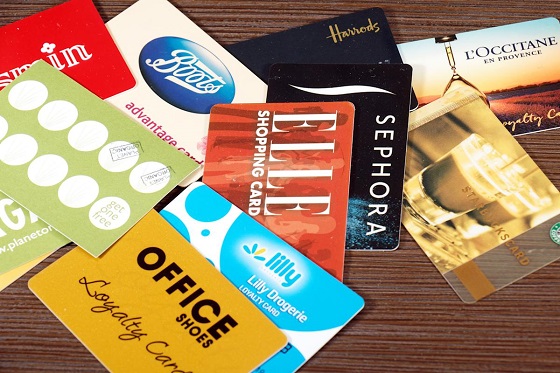

You’ve certainly been asked (begged!) to join up for at least one loyalty “points” program – like PC Optimum, Aeroplan, or Hilton Honors – over the years. And the odds are that you’re currently signed up for at least one of them. In fact, the average person apparently belongs to at no less than 14 programs. Although, ironically, you’ll need to sign up to an online equivalent of a loyalty program to read the source for that number.
Well all that warm, fuzzy “belonging” comes with some serious down sides. Let’s see how much they might cost us.
To be sure, there’s real money involved here. Canadians redeem at least two billion dollars in program rewards each year, and payouts will often represent between one and ten percent of the original purchase value.
At the same time, it’s estimated that there could be tens of billions of unredeemed dollars due to expirations, shifting program terms, and simple neglect. So getting your goodies isn’t automatic.
The Audit is a reader-supported publication.
To receive new posts and support my work, consider becoming a free or paid subscriber.
Just why do consumer-facing corporations agree to give away so much money in the fist place?
As you probably already know, it’s about your data. Businesses are willing to pay cold, hard cash in exchange for detailed descriptions of your age, sex, ethnicity, wealth, location, employment status, hobbies, preferences, medical conditions, political leanings, and, of course, shopping habits.
Don’t believe it works? So then why, after all these years, are points programs still giving away billions of dollars?
Every time you participate in such a program, the data associated with that activity will be collected and aggregated along with everything else known about you. It’s more than likely that points-based data is being combined with everything connected to your mobile phone account, email addresses, credit cards, provincial health card, and – possibly – your Social Insurance number. The depth and accuracy of your digital profile improves daily.
What happens to all that data? A lot of it is shared with – or sold to – partners or affiliates for marketing purposes. Some of it is accidentally (or intentionally) leaked to organized criminal gangs driving call center-related scams. But it’s all about getting to know you better in ways that maximize someone’s profits.
One truly scary way this data is used involves surveillance pricing (also known as price discrimination) – particularly as it’s described in a recent post by Professor Sylvain Charlebois.
The idea is that retailers will use your digital profile to adjust the prices you pay at the cash register or when you’re shopping online. The more loyal you are as a customer, the more you’ll pay. That’s because regular (“loyal”) customers are already reliable revenue sources. Companies don’t need to spend anything to build a relationship with you. But they’re more than willing to give up a few percentage points to gain new friends.
I’m not talking about the kind of price discrimination that might lead to higher prices for sales in, say, urban locations to account for higher real estate and transportation costs. Those are just normal business decisions.
What Professor Charlebois described is two customers paying different prices for the same items in the same stores. In fact, a recent Consumer Reports experiment in the U.S. involving 437 shoppers in four cities found the practice to be quite common.
But the nasty bit here is that there’s growing evidence that retailers are using surveillance pricing in grocery stores for basic food items. Extrapolating from the Consumer Reports study, such pricing could be adding $1,200 annually to a typical family’s spending on basic groceries.
I’m not sure what the solution is. It’s way too late to “unenroll” from our loyalty accounts. And government intervention would probably just end up making things worse.
But perhaps getting the word out about what’s happening could spark justified mistrust in the big retailers. No retailer enjoys dealing with grumpy customers.
Be grumpy.
The Audit is a reader-supported publication.
To receive new posts and support my work, consider becoming a free or paid subscriber.
Business
Largest fraud in US history? Independent Journalist visits numerous daycare centres with no children, revealing massive scam


A young journalist has uncovered perhaps the largest fraud scheme in US history.
He certainly isn’t a polished reporter with many years of experience, but 23 year old independent journalist Nick Shirley seems to be getting the job done. Shirley has released an incredible video which appears to outline fraud after fraud after fraud in what appears to be a massive taxpayer funded scheme involving up to $9 Billion Dollars.
In one day of traveling around Minneapolis-St. Paul, Shirley appears to uncover over $100 million in fraudulent operations.
🚨 Here is the full 42 minutes of my crew and I exposing Minnesota fraud, this might be my most important work yet. We uncovered over $110,000,000 in ONE day. Like it and share it around like wildfire! Its time to hold these corrupt politicians and fraudsters accountable
We ALL… pic.twitter.com/E3Penx2o7a
— Nick shirley (@nickshirleyy) December 26, 2025


Georgia county admits illegally certifying 315k ballots in 2020 presidential election
Largest fraud in US history? Independent Journalist visits numerous daycare centres with no children, revealing massive scam

Communist China arrests hundreds of Christians just days before Christmas

Be Careful What You Wish For In 2026: Mark Carney With A Majority
-
Business1 day ago
Largest fraud in US history? Independent Journalist visits numerous daycare centres with no children, revealing massive scam
-
 Business1 day ago
“Magnitude cannot be overstated”: Minnesota aid scam may reach $9 billion
-
 Censorship Industrial Complex1 day ago
US Under Secretary of State Slams UK and EU Over Online Speech Regulation, Announces Release of Files on Past Censorship Efforts
-
 Daily Caller2 days ago
Is Ukraine Peace Deal Doomed Before Zelenskyy And Trump Even Meet At Mar-A-Lago?
-
 Energy2 days ago
Canada’s debate on energy levelled up in 2025
-
 Haultain Research5 hours ago
Sweden Fixed What Canada Won’t Even Name
-
Business5 hours ago
What Do Loyalty Rewards Programs Cost Us?