Connect with us
[bsa_pro_ad_space id=12]

International

Seattle Police Department investigating attack on journalist during Antifa protests

Published

9 minute read

From The Center Square

By 

“I turned around and somebody pulled him back and he kicked me in the face. I pulled out pepper spray and I nailed him in the face, and then I retreated and called 911 and then the police never showed up.” Higby said he waited for police for about 45 minutes but they never came.

Seattle Police are investigating an attack on an independent conservative journalist last weekend during anti-Trump and anti-ICE rallies in Seattle.

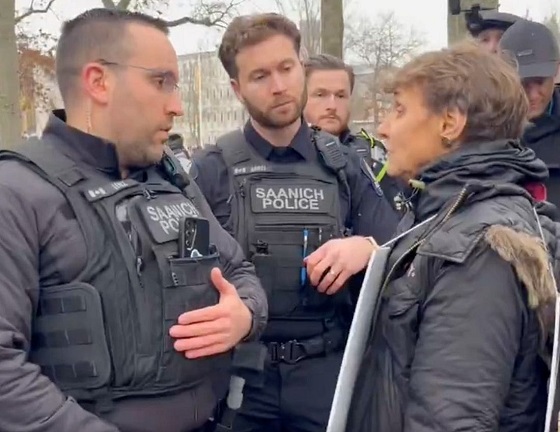
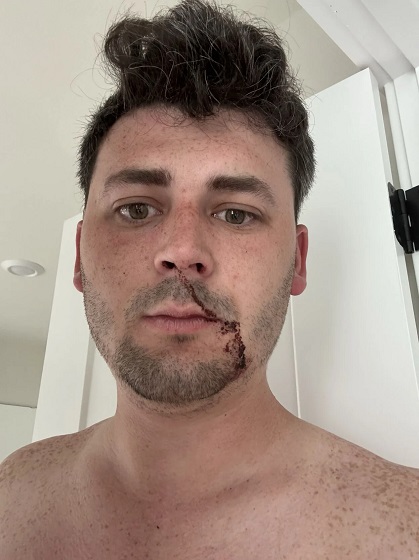
Cam Higby says he was assaulted by Antifa members as he attended the sometimes violent “No Kings Day” protests in Seattle at a Department of Homeland Security Building (DHS) on June 14.

Separately, independent journalist Brandi Kruse says she also was assaulted by Antifa members in Tukwila, just south of Seattle. Both attacks were captured on video posted to social media.

“It was out of nowhere, completely out of nowhere that they got violent,” said Higby, whose attack was captured on vide and posted to X. The attack left him bloodied, bruised and with a concussion that is still causing headaches, vision impairment and memory issues nearly a week later, he said.

In a Friday interview, Higby told The Center Square he had been covering the protests in Seattle all day and took a seat on the ground near the federal building by himself when the assailants came out of nowhere.

“They took over the streets, they lit fires to cars, they shot fireworks at cars. Then it’s out of nowhere where this guy yells, ‘Hey Cam, it’s time for you to leave,’ and they charged me and I knew one of them and I’d identified him earlier in the night because he threatened to kill me three weeks earlier,” Higby. told The Center Square

The attacker he was referring threatened to kill Higby in an Instagram post, he said, which was reported to police.

“They crossed the street to get to me and charged me and before I could stand up, I was pinned up against the wall,” said Higby. “They were grabbing at my gas mask and my helmet and just keeping me in place and one of them picked me up and choked me out from the rear. And then he released me, punched me twice in the head with SAP gloves which were filled with steal or lead shot. I turned around and somebody pulled him back and he kicked me in the face. I pulled out pepper spray and I nailed him in the face, and then I retreated and called 911 and then the police never showed up.”

Higby said he waited for police for about 45 minutes but they never came.

Video journalist Jonathan Cho, who was also covering protests, picked him up and took him back to his car across town, Highboy said.

Higby said he went to urgent care the next morning and then to the emergency room when his symptoms related to the concussion were getting worse.

“They said if I had a brain bleed, I’d already be dead. I think it’s very likely that if I wasn’t wearing a helmet, that I would have been either killed or critical,” Higby said.

Kruse, host of the unDivided video podcast, told The Center Square she had only been at the Tukwila protest scene for 30 seconds when she was attacked.

“I didn’t even get a chance to cover it. Within 30 seconds of walking up, I heard a couple of people shout, ‘that’s Brandi Kruse.’ And then they started to form around me, and initially it was they were blocking my camera with their umbrellas because they don’t want you to document their criminal conduct. And then they started spraying water at me, and then they got a little more aggressive,” Kruse said. “They were dumping full bottles of water and hurling bottles of water and it hit me a couple of times from behind.”

Kruse said she tried to walk away but was followed with protesters pushing signs into her face and continuing to hurl things at her.

“But the thing is they won’t let you walk away, and they don’t want you to walk away. I’m just sort of looking over my shoulder and then I see this individual coming from behind me to the right who had something that they were starting to spray. And you know, your mind goes in a million different places, and you don’t know what it could be, but as soon as it hit my eyes and I got the smell, I knew it was some sort of bug spray because it had that distinctive smell. We found out later it was this hornet and wasp killer that can spray like up to 20 feet,” said Kruse, who posted to social media video of the attack and security escort pouring water into her eyes to flush out the spray which she shared burned painfully for days.

In the assault on Higby, police say they know who the assailant is but have yet to make an arrest. Higby said he’s “10 thousand percent sure” it’s the same person who threatened him weeks before.

Higby told The Center Square he’s been informed that despite the seriousness of the assault, prosecutors may not be inclined to pursue charges.

Seattle Police responded to an email from The Center Square on Friday requesting details on the case and received the following response: “This case is an open and active investigation assigned to SPD’s homicide & Assault Unit. SPD policy prevents me from releasing suspect details or ‘leads,’” wrote Eric Munoz, detective in SPD media and public affairs.

Seattle Police Guild President Mike Solantold The Center Square in a Friday interview that he was skeptical as to whether prosecutors would pursue charges, despite the serious nature of the attack on Higby. He also condemned the lack of coverage in the mainstream media of the assaults on journalists.

“I think the bigger conversation here is why isn’t corporate media drawing attention to this political violence as they’re watching journalists get assaulted and it doesn’t appear to be covered by corporate media at all. My question is why, and the fact that that’s not happening is a major problem with what’s unfolding in our nation,” said Solan.

Kruse said she was also disappointed that members of the mainstream media have ignored the attack.

“I was getting text messages from former colleagues in television news in Seattle asking if I was OK, saying they saw the video, but then never reporting on it. So it’s not as if they’re oblivious…..if these were the proud boys, or if these were right-wing extremists and they assaulted journalists, there’s no way that it wouldn’t be covered,” said Kruse.

Kruse said she’s been in contact with officials in the Trump administration who are paying attention to the case, but has also filed a police report with Tukwila PD.

Todayville is a digital media and technology company. We profile unique stories and events in our community. Register and promote your community event for free.

Follow Author

Focal Points

Common Vaccines Linked to 38-50% Increased Risk of Dementia and Alzheimer’s

Published on

By Nicolas Hulscher, MPH

The single largest vaccine–dementia study ever conducted (n=13.3 million) finds risk intensifies with more doses, remains elevated for a full decade, and is strongest after flu and pneumococcal shots.

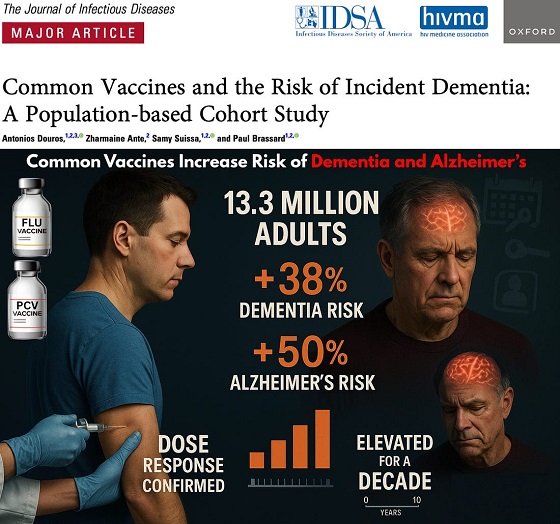
The single largest and most rigorous study ever conducted on vaccines and dementia — spanning 13.3 million UK adults — has uncovered a deeply troubling pattern: those who received common adult vaccines faced a significantly higher risk of both dementia and Alzheimer’s disease.

The risk intensifies with more dosesremains elevated for a full decade, and is strongest after influenza and pneumococcal vaccination. With each layer of statistical adjustment, the signal doesn’t fade — it becomes sharper, more consistent, and increasingly difficult to explain away.

And critically, these associations persisted even after adjusting for an unusually wide range of potential confounders, including age, sex, socioeconomic status, BMI, smoking, alcohol-related disorders, hypertension, atrial fibrillation, heart failure, coronary artery disease, stroke/TIA, peripheral vascular disease, diabetes, chronic kidney and liver disease, depression, epilepsy, Parkinson’s disease, cancer, traumatic brain injury, hypothyroidism, osteoporosis, and dozens of medications ranging from NSAIDs and opioids to statins, antiplatelets, immunosuppressants, and antidepressants.

Even after controlling for this extensive list, the elevated risks remained strong and remarkably stable.


Vaccinated Adults Had a 38% Higher Risk of Dementia

The primary adjusted model showed that adults receiving common adult vaccines (influenza, pneumococcal, shingles, tetanus, diphtheria, pertussis) had a:

38% increased risk of developing dementia (OR 1.38)

This alone dismantles the narrative of “vaccines protect the brain,” but the deeper findings are far worse.


Alzheimer’s Disease Risk Is Even Higher — 50% Increased Risk

Buried in the supplemental tables is a more shocking result: when the authors restricted analyses to Alzheimer’s disease specifically, the association grew even stronger.

50% increased risk of Alzheimer’s (Adjusted OR 1.50)

This indicates the effect is not random. The association intensifies for the most devastating subtype of dementia.


Clear Dose–Response Pattern: More Vaccines = Higher Risk

The authors ran multiple dose–response models, and every one of them shows the same pattern:

Dementia (all types)

From eTable 2:

  • 1 vaccine dose → Adjusted OR 1.26 (26% higher risk)
  • 2–3 doses → Adjusted OR 1.32 (32% higher risk)
  • 4–7 doses → Adjusted OR 1.42 (42% higher risk)
  • 8–12 doses → Adjusted OR 1.50 (50% higher risk)
  • ≥13 doses → Adjusted OR 1.55 (55% higher risk)

Alzheimer’s Disease (AD) Shows the Same—and Even Stronger—Trend

From eTable 7:

  • 1 dose → Adjusted OR 1.32 (32% higher risk)
  • 2–3 doses → Adjusted OR 1.41 (41% higher risk)
  • ≥4 doses → Adjusted OR 1.61 (61% higher risk)

This is one of the most powerful and unmistakable signals in epidemiology.


Time–Response Curve: Risk Peaks Soon After Vaccination and Remains Elevated for Years

Another signal strongly inconsistent with mere bias: a time-response relationship.

The highest dementia risk occurs 2–4.9 years after vaccination (Adjusted OR 1.56). The risk then slowly attenuates but never returns to baseline, remaining elevated across all time windows.

After 12.5 years, the risk is still meaningfully elevated (Adjusted OR 1.28) — a persistence incompatible with short-term “detection bias” and suggestive of a long-lasting biological impact.

This pattern is what you expect from a biological trigger with long-latency neuroinflammatory or neurodegenerative consequences.


Even After a 10-Year Lag, the Increased Risk Does Not Disappear

When the authors apply a long 10-year lag — meant to eliminate early detection bias — the elevated risk persists:

  • Dementia: OR 1.20
  • Alzheimer’s: OR 1.26

If this were simply “people who see doctors more often get diagnosed earlier,” the association should disappear under long lag correction.


Influenza and Pneumococcal Vaccines Drive the Signal

Two vaccines show particularly strong associations:

Influenza vaccine

  • Dementia: OR 1.39 → 39% higher risk
  • Alzheimer’s: OR 1.49 → 49% higher risk

Pneumococcal vaccine

  • Dementia: OR 1.12 → 12% higher risk
  • Alzheimer’s: OR 1.15 → 15% higher risk

And again, both exhibit dose–response escalation — the hallmark pattern of a genuine exposure–outcome relationship.


Taken together, the findings across primary, supplemental, dose–response, time–response, stratified, and sensitivity analyses paint the same picture:

• A consistent association between cumulative vaccination and increased dementia risk

• A stronger association for Alzheimer’s than for general dementia

• A dose–response effect — more vaccines, higher risk

• A time–response effect — risk peaks after exposure and persists long-term

• Influenza and pneumococcal vaccines strongly drive the signal

• The association remains after 10-year lag correction and active comparator controls

This is what a robust epidemiologic signal looks like.


In the largest single study ever conducted on vaccines and dementia, common adult vaccinations were associated with a 38% higher risk of dementia and a 50% higher risk of Alzheimer’s disease. The risk increases with more doses, persists for a decade, and is strongest for influenza and pneumococcal vaccines.


Nicolas Hulscher, MPH

Epidemiologist and Foundation Administrator, McCullough Foundation

Support our mission: mcculloughfnd.org

Please consider following both the McCullough Foundation and my personal account on X (formerly Twitter) for further content.

FOCAL POINTS (Courageous Discourse) is a reader-supported publication.

To receive new posts and support my work, consider becoming a free or paid subscriber.

Continue Reading

Censorship Industrial Complex

US Condemns EU Censorship Pressure, Defends X

Published on

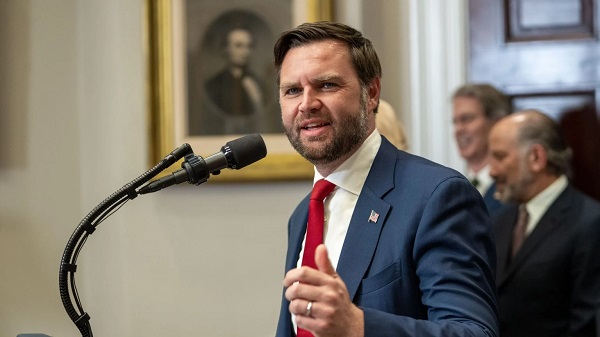
US Vice President JD Vance criticized the European Union this week after rumors reportedly surfaced that Brussels may seek to punish X for refusing to remove certain online speech.

In a post on X, Vance wrote, “Rumors swirling that the EU commission will fine X hundreds of millions of dollars for not engaging in censorship. The EU should be supporting free speech not attacking American companies over garbage.”

His remarks reflect growing tension between the United States and the EU over the future of online speech and the expanding role of governments in dictating what can be said on global digital platforms.

Screenshot of a verified social-media post with a profile photo, reading: "Rumors swirling that the EU commission will fine X hundreds of millions of dollars for not engaging in censorship. The EU should be supporting free speech not attacking American companies over garbage." Timestamp Dec 4, 2025, 5:03 PM and "1.1M Views" shown.

Vance was likely referring to rumors that Brussels intends to impose massive penalties under the bloc’s Digital Services Act (DSA), a censorship framework that requires major platforms to delete what regulators define as “illegal” or “harmful” speech, with violations punishable by fines up to six percent of global annual revenue.

For Vance, this development fits a pattern he’s been warning about since the spring.

In a May 2025 interview, he cautioned that “The kind of social media censorship that we’ve seen in Western Europe, it will and in some ways, it already has, made its way to the United States. That was the story of the Biden administration silencing people on social media.”

He added, “We’re going to be very protective of American interests when it comes to things like social media regulation. We want to promote free speech. We don’t want our European friends telling social media companies that they have to silence Christians or silence conservatives.”

Yet while the Vice President points to Europe as the source of the problem, a similar agenda is also advancing in Washington under the banner of “protecting children online.”

This week’s congressional hearing on that subject opened in the usual way: familiar talking points, bipartisan outrage, and the recurring claim that online censorship is necessary for safety.

The House Subcommittee on Commerce, Manufacturing, and Trade convened to promote a bundle of bills collectively branded as the “Kids Online Safety Package.”

The session, titled “Legislative Solutions to Protect Children and Teens Online,” quickly turned into a competition over who could endorse broader surveillance and moderation powers with the most moral conviction.

Rep. Gus Bilirakis (R-FL) opened the hearing by pledging that the bills were “mindful of the Constitution’s protections for free speech,” before conceding that “laws with good intentions have been struck down for violating the First Amendment.”

Despite that admission, lawmakers from both parties pressed ahead with proposals requiring digital ID age verification systems, platform-level content filters, and expanded government authority to police online spaces; all similar to the EU’s DSA censorship law.

Vance has cautioned that these measures, however well-intentioned, mark a deeper ideological divide. “It’s not that we are not friends,” he said earlier this year, “but there’re gonna have some disagreements you didn’t see 10 years ago.”

That divide is now visible on both sides of the Atlantic: a shared willingness among policymakers to restrict speech for perceived social benefit, and a shrinking space for those who argue that freedom itself is the safeguard worth protecting.

If you’re tired of censorship and surveillance, join Reclaim The Net.

Fight censorship and surveillance. Reclaim your digital freedom.

Get news updates, features, and alternative tech explorations to defend your digital rights.

Continue Reading

Trending

X