
Opinion
Saanich BC mother outraged after man in bikini used same change room as daughter: report


From LifeSiteNews
She observed how the man was muscular with a hairy chest and back, and was wearing a tight-fitting bikini complete with sparkles, frills, and a princess tiara.
A Canadian mother is outraged after she was reportedly told she had to be more “inclusive” after reporting that a man wearing a bikini used the same women’s change room as her daughter and other young girls at a local swimming pool.
The mother, Angie Tyrrell, of Saanich, British Columbia, according to a Reduxx report, said the incident happened in July, at a recreation center called Commonwealth Place.
Tyrrell noted how she had brought her then 10-year-old daughter and her friend, who was 11, on a swimming trip to the pool. When the girls were done swimming, they went to the bathroom area in the women’s changing room.
“But what should have been a peaceful end to a fun–filled day quickly turned to panic after the young girls ran out of the shower room. Approaching Tyrrell, the two whispered, ‘There was a man in the shower with us.’ Terrified, Tyrrell instructed the girls to get changed out of their bathing suits inside of the nearby toilet stalls so that the man would not see them undress,” recounted the Reduxx report.
According to Tyrrell, she saw a teenage girl with no top on immediately cover herself and run from the change room to a toilet stall. She noted how there were many other women and kids in the room at the time of the incident. She observed how the man was muscular with a hairy chest and back, and was wearing a tight-fitting bikini complete with sparkles, frills, and a princess tiara.
Tyrrell’s complaints to the pool staff were reportedly met with a lackluster response. After she contacted the management of the swimming pool, the assistant manager of the facility, Bree Dobler, reportedly responded in an email signed with “she/her” pronouns.
Tyrrell in a subsequent email wrote that she did not think “it’s right that a man’s wish to ‘feel most safe’ in women’s only spaces should be deemed a higher priority than the legitimate physical and emotional need for women and girls to actually be safe.”
“You say if we are concerned that we should use the universal change room. But why should all of the women—who the women’s change facility is for—have to leave to accommodate a man?” she wrote.
In reply, Dobler reportedly said that “everyone’s gender identity and expressions are valid,” and that “everyone is welcome in our centres in the changeroom where they feel most safe.”
“Gender expression and identity is protected under BC’s Human Rights Code and we are proud to have a Diversity in Changerooms Policy in our centres,” she added, according to Reduxx. “Our goal is to create an inclusive environment where everyone feels respected and valued.”
BC Conservative leader says ‘grown men’ should not be allowed to ‘shower with 10-year-old girls’
Leader of British Columbia’s opposition Conservative Party John Rustad, who almost won the latest provincial election, blasted news of the bikini-clad man in the women’s change room, saying this should never be acceptable or allowed.
“In British Columbia, grown men should not be allowed to shower with 10-year-old girls in the change room of a local public pool,” he wrote on X last week.
“This should not be a controversial statement — frankly, it’s unsettling that people are defending this creepy behaviour.”
Rustad made the comments after hearing about the incident from world-renowned author J.K. Rowling, who of late has made headlines for her opposition to extreme forms of transgender activism impacting women.
“Quite something to watch people who were keen to hitch their wagons to #MeToo a few years ago defend this kind of thing, isn’t it? Then: ‘male sexual predation is far more widespread than society admits!’ Now: ‘of course strange men should be able to shower with little girls,’” wrote Rowling on X regarding the incident at the pool.
The Canadian Women’s Sex-Based Rights (CAWSBR) has raised the alarm that the removal of women’s only washrooms could lead to an increase in sexual violence against women.
Over the past few years, there has been an noticeable push in Western nations to actively promote gender ideology to young people, particularly in the United States and Canada.
This has led to governments at all levels to have feminine hygiene products mandated in men’s bathrooms.
In 2017, the Senate passed a pro-transgender bill that adds “gender expression” and “gender identity” to Canada’s Human Rights Code and to the Criminal Code’s hate crime section.

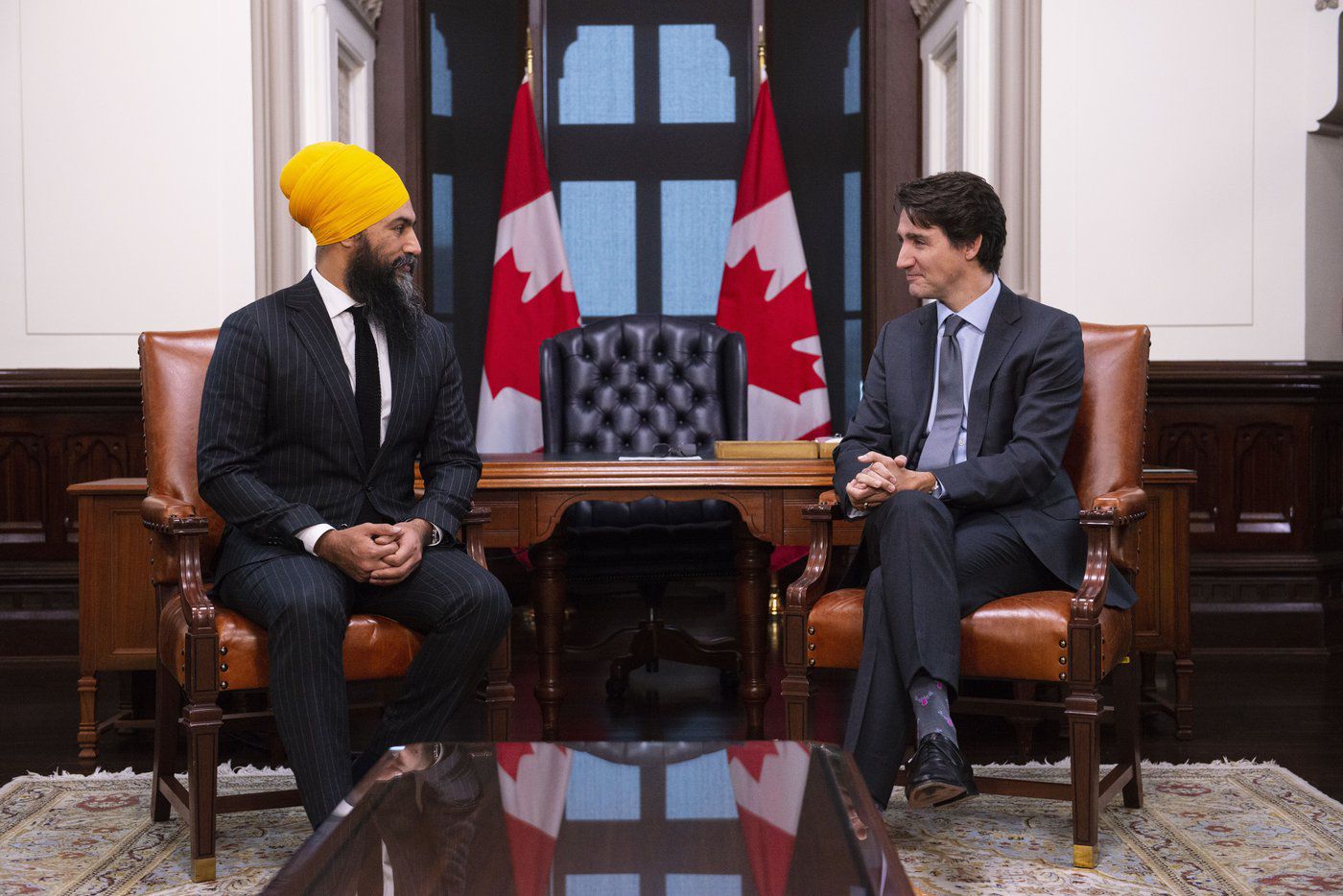
From the Frontier Centre for Public Policy
By Jay Goldberg
Losing seats has consequences. Bending the rules after the fact isn’t one of them
Are the present rules in Canada’s Parliament grotesquely unfair? The New Democratic Party wants Canadians to think so.
The NDP suffered a crushing blow in April’s federal election, losing more than two-thirds of its seats and official party status to boot.
Ever since, the party’s leaders have been trying to convince Prime Minister Mark Carney to bend the rules and allow the party to regain what is called official party status.
As of today, a party in the House of Commons needs at least 12 seats to qualify as an official party. The NDP’s interim leader, Don Davies, wants to see Carney lower the threshold so the NDP’s seven-member caucus can qualify.
“If he wants this Parliament to work and he wants to do anything progressive, he’s going to have to reach out to New Democrats,” said Davies. “It’s up to the Liberals.”
“Reaching out” means more than just a phone call. For Davies, it means granting the NDP official party status, which comes with millions of dollars of operational funding, paid for by taxpayers, as well as the right to participate as a party in Question Period and sit on parliamentary committees.
Changing the rules simply because the NDP failed to connect with voters last spring would be an insult to Canadian taxpayers.
But Davies’ plea does raise some questions. Why is the number 12? Why not 10, or 20 for that matter? And is the 12-seat threshold high by national standards?
The Westminster system of government, which Canada adheres to, is clear about many things. For example, in order to form a majority government, a party needs to hold at least 50 per cent plus one of the seats in the legislative chamber.
But in Canada, the threshold to qualify for official party status is all over the map. In the House of Commons, it is 12. In the Senate, it is nine. And in provincial legislatures across the country, it ranges from one seat in Prince Edward Island to two in British Columbia to five in New Brunswick and 10 per cent of the total seats in Ontario.
The federal NDP may have a point that the 12-seat threshold at the federal level is an arbitrary number. But does it fall outside the national range? Is it at the upper end of the spectrum, and thus perhaps genuinely unfair?
At the lowest end of the range among Canada’s provinces is British Columbia. In that province, a party needs to hold just two of 93 seats in the legislature, or 2.15 per cent, to gain official party status. At the upper end of the range is New Brunswick. In that province, a party needs to hold five of 49 seats, or 10.2 per cent, to gain official party status.
At the federal level, the NDP holds just two per cent of the seats in the House of Commons.
That means that even if British Columbia’s rules, the most liberal in the country, were applied at the federal level, the NDP would not qualify for official party status.
In other words, not only would today’s federal NDP fail to qualify for official party status in British Columbia, but it would also fail to qualify for official party status in province after province across the country.
Relatively speaking, the current House of Commons rules, which require a party to hold 12 seats, or 3.5 per cent of the total seats in the chamber, to gain official party status, are at the liberal end of the spectrum.
So the NDP’s argument does not stand up to the facts. Across the country, based on the size of its caucus, the NDP would not qualify as an official party. The present rules in the House of Commons are well within the normal bounds of rules in legislatures from coast to coast.
Canadian taxpayers should not be on the hook just because the NDP did not receive more support at the polls.
Jay Goldberg is a fellow with the Frontier Centre for Public Policy.



CDC Cuts Total Doses in Alignment with the rest of most of Western Civilization. I suspect we found evidence within CDC supporting.
The CDC’s January 2026 childhood vaccine schedule realignment is not a retreat from science—it is its restoration. By aligning the U.S. with international norms, reclassifying low-benefit vaccines, and preserving universal access, the policy reasserts informed consent, parsimony, and scientific integrity as central to public health. This editorial evaluates the evidence, clarifies common misinterpretations, and outlines the stakes of institutional credibility in the era of collapsing trust.
Ending the Era of Maximalism
In January 2026, the CDC issued a long-overdue correction to the American childhood vaccine schedule. Despite headlines framing this move as a rollback or retreat, not a single vaccine was removed from access or coverage. The change was not reductive—it was clarifying. It replaced one-size-fits-all mandates with a proportional, transparent structure based on international norms, current evidence, and a sobering admission of what science does not yet know. This was not a political maneuver. It was a governance correction, rooted in the principles of informed consent and institutional legitimacy.
The real story is not what was removed, but what was realigned—and why. The revised architecture reflects a basic truth: trust cannot be coerced. It must be earned. That is the starting point of science. And the endpoint of policy.
The CDC Recognizes Its Schedule as a Coercive Instrument
For decades, the CDC’s “routine recommendation” has operated less as guidance and more as soft mandate. Once a vaccine was recommended for all children, it cascaded through state school-entry requirements, insurance policies, quality metric scoring, and pediatrician compliance programs. Families who opted out often faced dismissal from care. Physicians faced insurer incentives tied to vaccination quotas. In this ecosystem, choice was technically permitted—but penalized.
The CDC’s own assessment acknowledges this explicitly: “Instead of implementing vaccination mandates, most peer nations maintain high childhood vaccination rates through public trust and education” (CDC, 2026, p.3). The updated policy aims to dismantle this coercive scaffolding—not by withdrawing vaccines, but by restoring clarity to what is essential, what is conditional, and what is contextual.
Comparative Overreach: America as an Outlier
The United States was not just a global leader in pediatric vaccination. It was a statistical outlier. According to the CDC’s comparative review (2026, Table 2), the U.S. schedule in 2024 recommended vaccines against 17 diseases, requiring 84 to 88 total doses delivered across 57 to 71 injections. By contrast:
- Denmark covers 10 diseases with 30 doses and only 11 injections.
- UK uses fewer doses but retains near-universal MMR uptake.
- Canada varies by province but aligns closely with European practice.
Importantly, many peer nations refrain from recommending routine use of hepatitis A, influenza, meningococcal B, and rotavirus for all children. These are not poor or negligent countries. They are scientifically robust, and they achieve high uptake by preserving credibility, not enforcing compliance.
The report introduces the ethical principle of clinical equipoise—the acknowledgment of uncertainty in the face of professional disagreement. When peer nations with equivalent disease burdens and health infrastructures diverge in recommendations, it signals unresolved evidence gaps, not ignorance.
Trust Collapse and Its Operational Consequences
Trust in U.S. health authorities fell precipitously between 2020 and 2024—from 71.5% to 40.1% (CDC, p.3). This collapse had measurable consequences. Uptake of the MMR vaccine, one of the most effective vaccines in the consensus schedule, dropped from 95.2% to 92.7% nationally. Sixteen states fell below the 90% threshold, increasing the risk of outbreaks.
Indeed, in 2025, the U.S. experienced 49 measles outbreaks—88% of the 2,065 reported cases were outbreak-associated (CDC, 2026). This wasn’t due to vaccine rejection. It was due to trust rejection. The report directly links trust erosion to coercive COVID-era policies, including mask mandates, school closures, disregard for natural immunity, and overstated claims about sterilizing immunity. The CDC writes, “The distrust of public health agencies during the pandemic has spilled over to other recommendations, including those with respect to vaccines” (p.3).
This trust decay wasn’t isolated. Countries like Denmark explicitly warned against adding low-benefit vaccines to their schedules, citing risks of degrading public confidence. Their prediction came true here. The U.S. attempted to do more—and got less.
Schedule-Level Science: Gaps Finally Acknowledged
The most important admission in the report may be this: “The effects of the overall schedule have never been fully evaluated” (CDC, p.12). That sentence should haunt anyone who defends the status quo. Despite decades of schedule expansion, there has been no comprehensive evaluation of the long-term safety, synergy, or cumulative immunologic impact of the entire pediatric vaccine regimen.
While individual vaccines like MMR, Hib, and IPV have robust pre-licensure data, many others were approved without large-scale placebo-controlled trials. Post-marketing systems such as VAERS, VSD, and BEST have identified acute risks—e.g., intussusception with rotavirus, febrile seizures with MMRV, myocarditis with mRNA vaccines—but are underpowered for delayed or systemic effects.
A 2023 VSD study found a dose-dependent association between cumulative aluminum exposure from vaccines and persistent asthma (HR = 2.0) (Daley et al., Academic Pediatrics, 2023). This is not conclusive proof of harm—but it is definitive proof of the need to study schedule-level interactions.
The CDC now calls for exactly that: randomized timing trials, long-term cohort studies comparing health outcomes across exposure strata, and formal evaluation of interaction effects, adjuvant loads, and timing differentials.
A New Ethical Architecture
The revised schedule distinguishes three recommendation types:
1. Recommended for all children — reserved for vaccines with demonstrated benefit across the population and international consensus.
2. High-risk group recommendations — for children with defined medical or exposure risks.
3. Shared clinical decision-making — for vaccines where the population-level benefit is uncertain, or where individual risk–benefit may vary.
This framework already exists in CDC language, but it had been underutilized and obscured by the dominance of routine recommendations. The new policy makes it operational.
Crucially, no vaccines are removed from coverage. The document reiterates: “All immunizations recommended by the CDC at the end of 2025—and covered by insurance at that time—should remain covered without cost sharing” (CDC, p.3). Denmark, the UK, and Switzerland use similar stratified systems. The U.S. has now caught up—not by doing less, but by doing what works.
HPV One-Dose: An Evidence-Based Pivot
The decision to shift from two doses of HPV vaccine to one is a model for evidence-responsive policy. The CDC cites multiple studies demonstrating non-inferiority of a single dose:
– Kreimer et al., NEJM 2025
– Watson-Jones et al., Lancet Global Health 2025
– Basu et al., Lancet Oncology 2021
Peer nations including the UK, Ireland, Australia, and Canada had already adopted this strategy. One dose achieves near-identical protection against vaccine-targeted HPVs with lower burden and fewer adverse events. The CDC’s alignment here is not a retreat—it’s a data-driven upgrade.
 |
Refined “Recommended for All” List
The CDC now limits routine universal recommendations to vaccines with:
– Strong international consensus
– High demonstrated public health value
– Well-characterized safety and efficacy profiles.
These are:
– Measles, mumps, rubella (MMR)
– Diphtheria, tetanus, pertussis (DTaP/Tdap)
– Polio (IPV) – Haemophilus influenzae type B (Hib)
– Pneumococcal conjugate (PCV)
– Human papillomavirus (HPV), now reduced to a single-dose schedule
– Varicella (chickenpox), retained due to U.S.-specific epidemiology
Many parents have questions about the efficacy of the measles and mumps portions of the MMR given that asymptomatic transmission of measles is an established but little-discussed fact, and before COVID-19, mumps outbreaks in fully vaccinated schools in the US was well-documented.
What changed: HPV was reduced from 2–3 doses to 1. Several vaccines previously listed as universal are now reclassified. The new universal list more closely mirrors countries like Denmark, the UK, and Ireland.
Reclassification of Non-Consensus Vaccines
Vaccines such as:
– Hepatitis A
– Hepatitis B (birth dose only if mother is HBsAg-negative)
– Rotavirus
– Influenza
– COVID-19
– Meningococcal B and ACWY
– RSV monoclonal antibody (not a vaccine)
have all been moved to either:
– High-risk group recommendations (e.g., Hep A for travelers, Hep B for infants of positive/unknown mothers)
– or Shared clinical decision-making pathways
This model mirrors European governance practices, where vaccines with uncertain population-wide benefit are discussed individually between provider and parent/guardian.
What changed: These vaccines are no longer recommended for universal administration but remain fully covered and available to all families through Medicaid, CHIP, VFC, and private insurance.
Policy Emphasis on Schedule-Level Science
For the first time, the CDC acknowledges:
– The full schedule has never been rigorously studied for cumulative, synergistic, or long-term effects
– Many vaccines were approved without randomized placebo-controlled trials in children
– Post-licensure surveillance (e.g., VAERS, VSD) is underpowered to detect long-latency effects or rare but serious chronic sequelae
The CDC now explicitly calls for:
– Randomized trials using timing-based designs
– Long-term cohort studies comparing vaccinated vs unvaccinated children
– Safety studies on combined vaccine administration, adjuvants, and spacing.
This is a seachange: Scientific uncertainty is now acknowledged and embedded into the policy framework, triggering a new research mandate.
Elimination of Implicit Coercion via Schedule
While the policy does not change state-level school mandates, it removes the federal “routine” label from lower-priority vaccines, reducing pressure on providers to dismiss non-compliant families or tie insurer bonuses to rigid adherence.
In its place: a structured, choice-respecting pathway that centers parental informed consent.
What changed: The policy restores consent as a governing principle, removes schedule inflation, and distinguishes between access and recommendation.
This is a systemic reform, not a minor tweak. The policy shift restores proportionality, science-based prioritization, and institutional humility—while safeguarding coverage and access. It is a reassertion of legitimacy in the aftermath of a trust crisis.
What the Policy Rejects
This policy formally rejects several assumptions that had ossified into doctrine:
– That more vaccines necessarily equal better health.
– That mandates are required to ensure compliance.
– That high-volume schedules are scientifically complete.
– That dissent is misinformation.
– That informed consent is a formality, not a right.
The CDC explicitly names coercion as a failed tool and calls for its replacement with personalized, risk-aligned care.
What the Policy Preserves and Strengthens
This is not a deregulation agenda. It is a realignment. The policy preserves:
– Universal access to all covered vaccines.
– Full coverage under Medicaid, CHIP, and VFC.
– Trust-based compliance mechanisms.
– Ethical clarity: recommendations reflect both evidence and respect for autonomy.
– Institutional epistemic humility: public health must now justify, not presume.
The result? Less friction, more uptake—of the right vaccines, in the right populations, for the right reasons.
Anticipating and Answering the Critics
No, the liability protections were not removed. This policy does not increase vaccine risk—it increases institutional honesty.
No, measles will not surge because of this schedule. MMR remains fully recommended. The drop in uptake happened under maximalist policy.
No, international comparison is not cherry-picking. It is the standard for identifying clinical equipoise. Denmark, Germany, Ireland, and Switzerland offer leaner schedules, fewer mandates, and stronger vaccine trust.
Those who call this “anti-science” misunderstand science. This is science doing what it must: confronting uncertainty, not denying it.
The Schedule Is the Signal
The CDC’s January 2026 reform is not the dismantling of public health. It is its restoration. Trust cannot be coerced. Compliance must be earned. And scientific legitimacy must be updated to reflect both what we know—and what we still don’t.
The vaccine schedule is not just a list. It is a social contract. And for the first time in decades, it has been revised to reflect mutual respect, rather than managerial force.
The signal has changed. And for the health of children and the credibility of science, that is exactly what was needed.
Thanks for reading Popular Rationalism! This post is public so feel free to share it.


The U.S. Just Removed a Dictator and Canada is Collateral Damage

Scathing Indictment Claims Nicolás Maduro Orchestrated Drug-Fueled ‘Culture Of Corruption’ Which Plagued Entire Region

US Justice Department Accusing Maduro’s Inner Circle of a Narco-State Conspiracy
Trump Says U.S. Strike Captured Nicolás Maduro and Wife Cilia Flores; Bondi Says Couple Possessed Machine Guns
-
 Environment22 hours ago
Left-wing terrorists sabotage German power plant, causing massive power outage
-
 Daily Caller21 hours ago
Minnesota Governor resigns from re-election campaign as massive government frauds revealed
-
 International14 hours ago
Poilievre, Carney show support for Maduro capture as NDP’s interim leader denounces it
-
 Energy21 hours ago
Trump’s Venezuela Move: A $17 Trillion Reset of Global Geopolitics and a Pivotal Shift in US Energy Strategy
-
 International20 hours ago
Maduro, wife plead not guilty in first court appearance
-
 Frontier Centre for Public Policy1 day ago
Is Canada still worth the sacrifice for immigrants?
-
 Education22 hours ago
Mother petitions Supreme Court after school hid daughter’s ‘gender transition’
-
 Business19 hours ago
Chrystia Freeland Didn’t Leave Power. She Just Took It Somewhere Else