
Frontier Centre for Public Policy
Richmond Mayor Warns Property Owners That The Cowichan Case Puts Their Titles At Risk

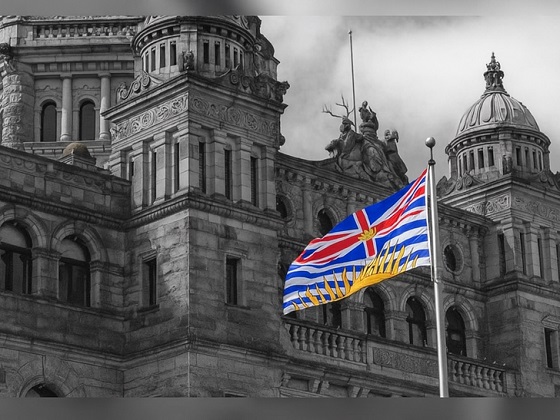
From the Frontier Centre for Public Policy
“For those whose property is in the area outlined in black, the court has declared Aboriginal title to your property which may compromise the status and validity of your ownership — this was mandated without any prior notice to the landowners,” said the letter to Richmond residents.
These are the words of the mayor of Richmond, BC, to Richmond property owners. In a Canadian first — and what might be the first of many such warnings to frightened property owners — the mayor is telling them that the titles to homes and businesses that they had purchased by dint of hard work and faithfully making mortgage payments over decades might be invalidated because an indigenous claimant, relying in part on ancient hearsay evidence, managed to convince a judge that equally ancient ancestors had once built crude structures and fished there.
The warning comes because of the Cowichan case.
In an alarming decision, a judge granted 2,000 Cowichan claimants Aboriginal title (AT) to part of the City of Richmond — worth an estimated $100 billion, or about $12.5 million per claimant. The decision is being appealed. However, it is based on the equally alarming case of Delgamuukw and the line of cases that followed it. Consequently, unless the Supreme Court of Canada (SCC) is prepared to reverse that decision, Canadian property owners can never again enjoy the certainty of property ownership that was bequeathed to us before Canada even became a nation. At best, Canadian property owners can only hope that their “junior” property rights will not come under attack by someone claiming a “senior” constitutionally protected AT, based on something that might or might not have happened before Canada even became a nation.
Because the 1997 Delgamuukw decision changed property rights forever in Canada. Senior Ontario lawyer, Peter Best, describes what the SCC did in that case as a “revolution.”
Another way to describe what the unelected SCC Justices chose to do in 1997 is that they chose to sacrifice the certainty of Canadian property rights on the altar of “reconciliation.” From that point on, a Canadian property owner could no longer be certain that their title to property was permanent.
Henceforth, if an indigenous claimant, relying on ancient hearsay evidence no less, could satisfy a judge that their ancestors had the exclusive use of hunting or fishing lands in the distant past, an AT could be placed upon the title of a property owner today. In short, the property owner would be told that their “title” was not the permanent ownership they thought it was.
Few Canadians noticed this astounding decision, in large part because it concerned lands in a remote area of BC. But when the Delgamuukw-based Cowichan decision, which involved city land, was announced, property owners certainly took notice. They suddenly woke up to find that their property rights could be taken from them at the stroke of a judge’s pen.
They aren’t imagining the threat. In fact, they are alarmed to find themselves alone, fighting against a provincial government, a federal government, and the courts — all of which appear to be willing to sacrifice Canadians’ property rights to the apparent requirements of “reconciliation.”
Here’s an example. These Pender Harbour residents are not just alarmed. They are scared.
This brief article discusses the threat and what went wrong.
Those who live in dictatorships and own property can never be certain that homes and businesses they worked hard to buy won’t be suddenly taken from them. That’s exactly what happened in Cuba in 1959, when Fidel Castro seized power from Fulgencio Batista. I was reminded of this the other day when I rewatched Francis Ford Coppola’s masterful movie, Godfather II, and saw that revolution depicted on the screen.
Pandemonium reigned as most of Cuba’s once vibrant middle class was forced out of their own country. Their houses and businesses were simply confiscated by the Castro “revolutionaries.” Families who had acquired property by dint of generations of hard work suddenly found themselves with nothing. While many of the dispossessed rebuilt good lives in Miami and elsewhere, they will never regain their haciendas and businesses back home. The sad mess that is today’s Cuba is what a country, stripped of its middle class and property rights, looks like. That’s because the certainty of property rights is the backbone of any successful nation.
But none of what happened in Cuba could happen in a liberal democracy, like Canada, could it? We Canadians have always been sure that if we do all of the work and saving necessary to earn the down payment needed to buy a house; work hard to meet our mortgage, property taxes, and other fees; and spend the money necessary to maintain our property over the years — we will own “our” property forever. We can sell it, pass it on to our children, or live there until we die. Property ownership is forever in a country like Canada. No one — not even the government or the courts — can take it away from us. Right?
At least that’s what we thought. If you are one of those Canadians who still think that “ownership” means what you think it means, you need to start paying attention to what is playing out right now in British Columbia. Because the Cowichan case — directly based on Delgumuukw — decides otherwise. The trial judge concluded that property rights can indeed be taken away from a rightful owner. A court can do that — on a claim based on hearsay evidence, no less. And not just hearsay evidence. Hearsay evidence that is seventh generation hearsay. In one fell swoop, Canada became the first (and only) common law nation where a court can take away your title to your property based on a claim by someone in 2025 that a claimed ancestor of theirs told someone else something in 1846. But only if all the “someones” are indigenous.
Cowichan claimants convinced a judge that what some claimed ancient ancestor told another ancient ancestor in a blueberry patch, and all the way up to the present, was reliable enough to slap a constitutionally senior AT on top of the inferior “junior title” that everyone who had lawfully acquired the property from the previous owner thought they owned. So, if you own property in Richmond, BC, you are not being paranoid if you are alarmed by the decision. The mayor is quite right to warn scared residents that their titles are under threat.
And if you are a property owner — or rather thought you were a property owner — anywhere in what were formerly the Queen Charlotte Islands, but has now suddenly become the new nation, or tribal nation, of Haida Gwaii, you might also want to know that an indigenous claimant and their lawyers can meet with one judge in private — with absolutely no notice to you — and have their newly acquired AT — courtesy of the courts and the Eby government — made into a constitutional right that is now “senior” to your “junior” unprotected right that you thought was your inviolable title to your property. A title that might have taken a lifetime of work to acquire.
So, if you are a BC resident, you should be alarmed. And what starts in BC doesn’t necessarily stay in BC. It is assumed by many that AT will have no effect in the areas of Canada covered by treaties. However, the signing of those treaties only started in 1870. What about tribes, such as the Assiniboine, who had been displaced by treaty signing tribes, such as the Ojibway, before 1870? This and other creative AT claims will undoubtedly be argued before judges as receptive to radical indigenous claims as the Cowichan trial judge.
This is obviously a simplified description of a very complicated topic. Volumes have been written by lawyers and others about the Delgamuukw case where AT and the line of cases built on it originated. Brilliant lawyers, like Dwight Newman, Geoffrey Moyse, Barry Kirkham, and Peter Best, as well as many writers, have already written reams about the Cowichan case.
But don’t be fooled by politicians or Indian chiefs telling you that they are not claiming private property at this time.
Because if their claims are accepted, that means the government had a defective title from the outset, that means your title is just as defective. They can go after your title any time they care to. As mentioned, the City of Richmond is warning residents that the Cowichan case puts their ownership in doubt. They are not being paranoid — they are letting residents know the truth — the courts are playing fast and loose with property rights in their single-minded pursuit of “reconciliation.”
Richmond and Haida Gwaii are most likely just the beginning of what is going to happen throughout BC, and eventually all of Canada. BC has hundreds of Indian bands that all want variations of what has been awarded to the Cowichan band in the Cowichan case, and to the Haida, by the double-teaming of the Eby government and our courts. This appears to be “Land back” at work. The Eby government and BC courts now appear to be actively working together — engineering “constitutional” declarations privately, for example — in the dismantling of rights to private property to fit their vision of reconciliation. Here is an article on the subject by the David Suzuki Foundation. To them, it makes perfect sense that huge parts of Canada should simply be “handed back” to claimants, simply because they are indigenous. The Eby government, with the courts’ cooperation, appears to be doing exactly that.
As mentioned, it all began with the Delgamuukw case in 1997 — decided by a SC determined to put “reconciliation” ahead of every other consideration. That is the case that decided — against all logic, common sense, and case law that had been built up for a thousand years — that ancient hearsay evidence can be reliable enough to remove title from a property owner and give it to an indigenous claimant. And that indigenous hearsay evidence is somehow reliable, while all other hearsay is not.
To quote senior BC lawyer, Barry Kirkham:
“In the entire history of the common law first hand hearsay evidence is deemed inadmissible because hearsay is unreliable. Delgamuukw held that in support of a claim for Aboriginal title, the courts must allow Indian witnesses to give seventh generation hearsay evidence to establish facts as to land they occupied in 1846. There is no basis in law, logic, or justice to justify this astounding claim, and there is no reason why hearsay evidence from Indians should be an exception to a rule that governs every other litigant. The SC justified this singular exception to the rule against hearsay evidence by reasoning, “There is no other means by which the Indians can prove their case.” A clear instance of a court inventing a rule to produce a particular result, which is the exact opposite of what a court should be doing and is doing in virtually all other cases.”
So, how can seventh generation indigenous hearsay be reliable when even first generation non-indigenous hearsay is considered inadmissible because it is unreliable?
The answer is clear: It can’t be.
To Kirkham again:
“The Indians had no written language and created no documents or records and had no formal education system. How can hearsay evidence from such a system be so much more reliable than non-Indian hearsay, which is inadmissible, despite facts being recorded in documents and taught through a highly developed educational system, where students are a captive audience for several hours a day for many years.”
The truth is that indigenous oral histories are no more or less reliable than the oral history of any other pre-literate people. There might have been a Moses, who led his people from ancient Egypt. Perhaps there was something that happened at the Red Sea that helped them escape. But any judge who stripped a property owner of their titles in 2025, based on their belief that Moses parted the Red Sea that day, would be considered quite mad. Similarly, anyone who believes that every detail of a story supposedly told in a blueberry patch long before Canada even became a country can be accurately recounted by a self-interested claimant today many generations later is deluded.
Proof of what I am saying can be found in the Cowichan case itself. The Cowichan claimants recited their oral history in court, but so did the two opposing tribes, the Musqueam and Tsawwassen. Not surprisingly, all three oral histories differed. All three favoured the groups claiming them to be true. Of course, they did. It was “their” oral history. There is simply no such thing as an oral history, or fable, that doesn’t favour the group that believes it.
The Cowichan trial judge made the arbitrary decision that the Cowichan oral history was accurate, and the two other conflicting indigenous oral histories were not accurate. The correct decision was to find that none of the oral histories were reliable enough to decide something as precise as title.
That’s because oral histories — including indigenous oral histories — are inherently unreliable. They are just stories that have been told and retold — and subtly changed with each retelling. The fact that they are told by indigenous people is neither here nor there.
In both Delgamuukw and Cowichan, we see judges trying to rectify what they see as historical errors made by our forefathers. While these instincts might be well-intentioned, the fact is that remaking Canada is not the courts’ job. Elected representatives and/or constitutional discussions might remedy these perceived injustices, but playing fast and loose with both the clear rules of evidence and what is supposed to be the certainty of property rights are clear examples of judicial overreach.
This problem of judicial overreach is made exponentially worse by the fact that some of the most expensive law firms in the country are actively working on these AT and “duty to consult” claims all across the country. Perversely, the enormous fees come from the very property owners — the taxpayers — targeted by these increasingly creative legal claims.
Many of the very lawyers doing this work eventually become judges hearing those claims. This unholy alliance of chiefs, lawyers, and activist judges is rapidly depleting Canada’s embattled treasury and destabilizing the country. All this is made worse by crusading politicians, like former Prime Minister Justin Trudeau and Premier David Eby.
Attempting to appease the unappeasable 1-2% of the Canadian population who live on Indian reserves by impoverishing and stripping property from the productive 98% in the name of “reconciliation” is a fool’s errand. Decades of enormous public expenditure and “reconciliation” have certainly made many people rich but have done nothing to move the dependent indigenous underclass up the ladder.
There are many other reasons as well why the Delgamuukw and Cowichan are wrongly decided, including the obvious fact that the concept of “title” was foreign to a warrior culture, where stronger tribes had displaced weaker tribes for thousands of years. But the decision to use seventh generation hearsay, only because it comes from indigenous claimants, is the fundamental flaw that must be corrected. The SCC has put property rights in peril and must restore the sanctity of property rights in Canada. It must fix the mess it has created.
The SCC in Delgamuukw set off the multiple claims for AT all over BC and now in other parts of Canada. It is largely responsible for starting what looks like the carving up of that province into racial enclaves, beginning with Haida Gwaii. It incentivized Indians to think of themselves first as members of their “First Nation” and only second as Canadians. In their pursuit of reconciliation, the SCC inadvertently promoted indigenous separatism — the exact opposite of what our highest court should do. And now it is putting in peril a system of property rights that originated in 1066. It would be hyperbolic to say that the justices initiated the unravelling of Canada, but a Canada without certainty of title is not a Canada worth saving. Quebec and Alberta sovereignists have taken note.
The tragedy is that none of this was supposed to happen. In 1982, when constitutional talks were underway, our senior premiers campaigned to have property rights constitutionally protected. That didn’t happen because of the intervention of NDP leaders, like Ed Broadbent, who insisted for their own ideological reasons that Section 35 (which recognizes existing Aboriginal and treaty rights) must be included, but property rights must remain out of the document.
Because originally there was no such thing as Section 35 in the original draft of what the premiers were asked to sign. It was rather suddenly inserted into the mix by some of the same clever people who managed to nix constitutionally protecting property rights.
But even then, the senior premiers, such as Alberta’s Peter Lougheed and Manitoba’s Sterling Lyon, refused to sign — fearing exactly the type of judicial activism that gave rise to Delgamuukw and Cowichan. Only when they were assured by Trudeau and Chretien personally that if the word “existing” was placed before “Aboriginal rights” future Supreme Courts would not even think of expanding aboriginal rights as they existed in 1982 did they sign.
But those senior premiers came to regret what they had done. The assurances given by Trudeau and Chretien turned out to be worthless. They had been snookered. In Delgamuukw, the SCC blatantly disregarded the clear intent of the senior premiers and invented brand new law — AT — by declaring that ancient hearsay evidence could be used by indigenous claimants to establish title to property.
But those senior premiers, like the Fathers of Confederation before them, would have been positively horrified to see what an activist SCC and feckless politicians, like Eby, are doing to the country as a whole. Carving up the country into racial enclaves, like Haida Gwaii, encouraging Indians to think of themselves as members of a tribe, instead of as Canadians, is exactly what Canada was not supposed to be. Our forefathers envisioned a Canada rid of tribalism, where everyone was equal in law, not the “patchwork of tiny Bantustans” — maybe better called UNDRIPia — that is emerging today.
It will be years before the SCC will rule on the Cowichan appeal, and hopefully do a major rethink of what their predecessors launched in 1997 with Delgamuukw. In the meantime, the uncertainty that the courts have created with AT (and their equally damaging creation — “duty to consult”) will cost Canadians dearly. The Canada that was known will continue to unravel.
But Canadians who have worked hard to buy their homes and businesses will not sit idly by while their titles are taken from them. The SCC must reverse what Peter Best calls their “revolution” or they will foment a revolution of a different kind.
Brian Giesbrecht is a retired judge and a senior fellow at the Frontier Centre for Public Policy.

From the Frontier Centre for Public Policy
Canada’s homelessness crisis has intensified dramatically, with about 60,000 people homeless this Christmas and chronic homelessness becoming entrenched as shelters overflow and encampments spread. Policy failures in immigration, housing, monetary policy, shelters, harm reduction, and Indigenous governance have driven the crisis. Only reversing these policies can meaningfully address it.
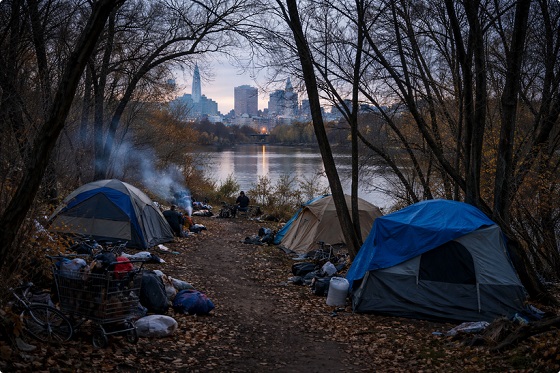
Encampments that were meant to be temporary have become a permanent feature in our communities
As Canadians settle in for the holiday season, 60,000 people across this country will spend Christmas night in a tent, a doorway, or a shelter bed intended to be temporary. Some will have been there for months, perhaps years. The number has quadrupled in six years.
In October 2024, enumerators in 74 Canadian communities conducted the most comprehensive count of homelessness this country has attempted. They found 17,088 people sleeping without shelter on a single autumn night, and 4,982 of them living in encampments. The count excluded Quebec entirely. The real number is certainly higher.
In Ontario alone, homelessness increased 51 per cent between 2016 and 2024. Chronic homelessness has tripled. For the first time, more than half of all homelessness in that province is chronic. People are no longer moving through the system. They are becoming permanent fixtures within it.
Toronto’s homeless population more than doubled between April 2021 and October 2024, from 7,300 to 15,418. Tents now appear in places that were never seen a decade ago. The city has 9,594 people using its shelter system on any given night, yet 158 are turned away each evening because no beds are available.
Calgary recorded 436 homeless deaths in 2023, nearly double the previous year. The Ontario report projects that without significant policy changes, between 165,000 and 294,000 people could experience homelessness annually in that province alone by 2035.
The federal government announced in September 2024 that it would allocate $250 million over two years to address encampments. Ontario received $88 million for ten municipalities. The Association of Municipalities of Ontario calculated that ending chronic homelessness in their province would require $11 billion over ten years. The federal contribution represents less than one per cent of what is needed.
Yet the same federal government found $50 billion for automotive subsidies and battery plants. They borrow tonnes of money to help foreign car manufacturers with EVs, while tens of thousands are homeless. But money alone does not solve problems. Pouring billions into a bureaucratic system that has failed spectacularly without addressing the policies that created the crisis would be useless.
Five years ago, tent cities were virtually unknown in most Canadian communities. Recent policy choices fuelled it, and different choices can help unmake it.
Start with immigration policy. The federal government increased annual targets to over 500,000 without ensuring housing capacity existed. Between 2021 and 2024, refugees and asylum seekers experiencing chronic homelessness increased by 475 per cent. These are people invited to Canada under federal policy, then abandoned to municipal shelter systems already at capacity.
Then there is monetary policy. Pandemic spending drove inflation, which made housing unaffordable. Housing supply remains constrained by policy. Development charges, zoning restrictions, and approval processes spanning years prevent construction at the required scale. Municipal governments layer fees onto new developments, making projects uneconomical.
Shelter policy itself has become counterproductive. The average shelter stay increased from 39 days in 2015 to 56 days in 2022. There are no time limits, no requirements, no expectations. Meanwhile, restrictive rules around curfews, visitors, and pets drive 85 per cent of homeless people to avoid shelters entirely, preferring tents to institutional control.
The expansion of harm reduction programs has substituted enabling for treatment. Safe supply initiatives provide drugs to addicts without requiring participation in recovery programs. Sixty-one per cent cite substance use issues, yet the policy response is to make drug use safer rather than to make sobriety achievable. Treatment programs with accountability would serve dignity far better than an endless supply of free drugs.
Indigenous people account for 44.6 per cent of those experiencing chronic homelessness in Northern Ontario despite comprising less than three per cent of the general population. This overrepresentation is exacerbated by policies that fail to recognize Indigenous governance and self-determination as essential. Billions allocated to Indigenous communities are never scrutinized.
The question Canadians might ask this winter is whether charity can substitute for competent policy. The answer is empirically clear: it cannot. What is required before any meaningful solutions is a reversal of the policies that broke it.
Marco Navarro-Genie is vice-president of research at the Frontier Centre for Public Policy and co-author with Barry Cooper of Canada’s COVID: The Story of a Pandemic Moral Panic (2023).

From the Frontier Centre for Public Policy
Livestock contribute far less to emissions than activists claim, and eliminating them would weaken nutrition, resilience and food security
The war on livestock pushed by Net Zero ideologues is not environmental science; it’s a dangerous, misguided campaign that threatens global food security.
The priests of Net Zero 2050 have declared war on the cow, the pig and the chicken. From glass towers in London, Brussels and Ottawa, they argue that cutting animal protein, shrinking herds and pushing people toward lentils and lab-grown alternatives will save the climate from a steer’s burp.
This is not science. It is an urban belief that billions of people can be pushed toward a diet promoted by some policymakers who have never worked a field or heard a rooster at dawn. Eliminating or sharply reducing livestock would destabilize food systems and increase global hunger. In Canada, livestock account for about three per cent of total greenhouse gas emissions, according to Environment and Climate Change Canada.
Activists speak as if livestock suddenly appeared in the last century, belching fossil carbon into the air. In reality, the relationship between humans and the animals we raise is older than agriculture. It is part of how our species developed.
Two million years ago, early humans ate meat and marrow, mastered fire and developed larger brains. The expensive-tissue hypothesis, a theory that explains how early humans traded gut size for brain growth, is not ideology; it is basic anthropology. Animal fat and protein helped build the human brain and the societies that followed.
Domestication deepened that relationship. When humans raised cattle, sheep, pigs and chickens, we created a long partnership that shaped both species. Wolves became dogs. Aurochs, the wild ancestors of modern cattle, became domesticated animals. Junglefowl became chickens that could lay eggs reliably. These animals lived with us because it increased their chances of survival.
In return, they received protection, veterinary care and steady food during drought and winter. More than 70,000 Canadian farms raise cattle, hogs, poultry or sheep, supporting hundreds of thousands of jobs across the supply chain.
Livestock also protected people from climate extremes. When crops failed, grasslands still produced forage, and herds converted that into food. During the Little Ice Age, millions in Europe starved because grain crops collapsed. Pastoral communities, which lived from herding livestock rather than crops, survived because their herds could still graze. Removing livestock would offer little climate benefit, yet it would eliminate one of humanity’s most reliable protections against environmental shocks.
Today, a Maasai child in Kenya or northern Tanzania drinking milk from a cow grazing on dry land has a steadier food source than a vegan in a Berlin apartment relying on global shipping. Modern genetics and nutrition have pushed this relationship further. For the first time, the poorest billion people have access to complete protein and key nutrients such as iron, zinc, B12 and retinol, a form of vitamin A, that plants cannot supply without industrial processing or fortification. Canada also imports significant volumes of soy-based and other plant-protein products, making many urban vegan diets more dependent on long-distance supply chains than people assume. The war on livestock is not a war on carbon; it is a war on the most successful anti-poverty tool ever created.
And what about the animals? Remove humans tomorrow and most commercial chickens would die of exposure, merino sheep would overheat under their own wool and dairy cattle would suffer from untreated mastitis (a bacterial infection of the udder). These species are fully domesticated. Without us, they would disappear.
Net Zero 2050 is a climate target adopted by federal and provincial governments, but debates continue over whether it requires reducing livestock herds or simply improving farm practices. Net Zero advocates look at a pasture and see methane. Farmers see land producing food from nothing more than sunlight, rain and grass.
So the question is not technical. It is about how we see ourselves. Does the Net Zero vision treat humans as part of the natural world, or as a threat that must be contained by forcing diets and erasing long-standing food systems? Eliminating livestock sends the message that human presence itself is an environmental problem, not a participant in a functioning ecosystem.
The cow is not the enemy of the planet. Pasture is not a problem to fix. It is a solution our ancestors discovered long before anyone used the word “sustainable.” We abandon it at our peril and at theirs.
Dr. Joseph Fournier is a senior fellow at the Frontier Centre for Public Policy. An accomplished scientist and former energy executive, he holds graduate training in chemical physics and has written more than 100 articles on energy, environment and climate science.


Largest fraud in US history? Independent Journalist visits numerous daycare centres with no children, revealing massive scam

Be Careful What You Wish For In 2026: Mark Carney With A Majority
The Top News Stories That Shaped Canadian Energy in 2025 and Will Continue to Shape Canadian Energy in 2026

Some Of The Wackiest Things Featured In Rand Paul’s New Report Alleging $1,639,135,969,608 In Gov’t Waste
-
Business1 day ago
Largest fraud in US history? Independent Journalist visits numerous daycare centres with no children, revealing massive scam
-
 Business1 day ago
“Magnitude cannot be overstated”: Minnesota aid scam may reach $9 billion
-
 Censorship Industrial Complex1 day ago
US Under Secretary of State Slams UK and EU Over Online Speech Regulation, Announces Release of Files on Past Censorship Efforts
-
 Business7 hours ago
What Do Loyalty Rewards Programs Cost Us?
-
 Daily Caller2 days ago
Is Ukraine Peace Deal Doomed Before Zelenskyy And Trump Even Meet At Mar-A-Lago?
-
 Haultain Research7 hours ago
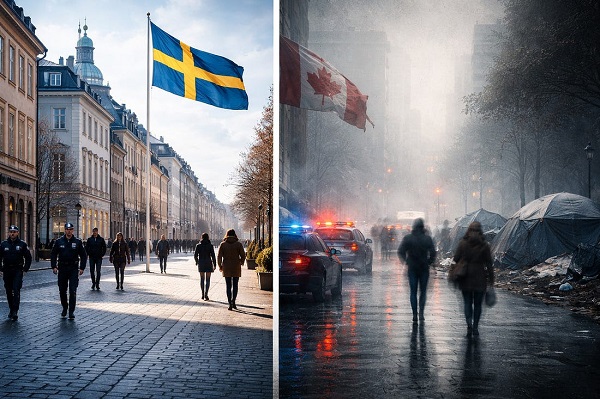
Sweden Fixed What Canada Won’t Even Name