
Alberta
51 new officers, 10 surveillance drones, and patrol dogs to help Alberta to secure southern border with US

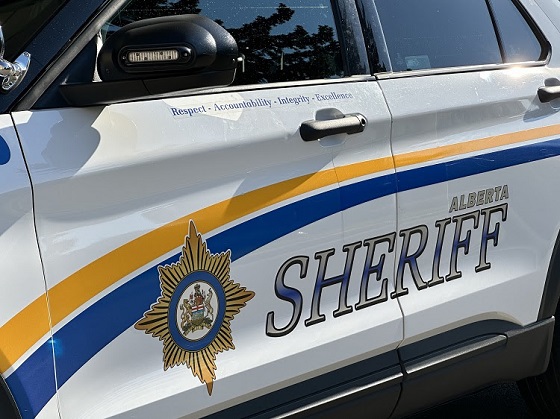
A plan to secure Alberta’s southern border
Alberta’s government is taking immediate and decisive action to secure the Alberta-U.S. border from illegal drugs, migrants and firearms.
Alberta’s government is taking swift action that will curb illegal border activities and strengthen the nation’s border security. New measures will immediately crack down on illegal migrants and drug trafficking across the border.
“We cannot take concerns about border security lightly. By establishing this new team of sheriffs at our southern border, we are actively working to address security concerns and stop the criminals whose activities are destroying lives on both sides of the border.”
A new Interdiction Patrol Team (IPT) within the Alberta Sheriffs will crack down on drug smuggling, gun trafficking and other illegal activities occurring along Alberta’s 298-kilometre international boundary. IPT will be supported by:
- 51 uniformed officers equipped with carbine rifles (weapons for tactical operations);
- 10 support staff, including dispatchers and analysts;
- four drug patrol dogs, critical to ensure reasonable suspicion to search vehicles;
- 10 cold weather surveillance drones that can operate in high winds with dedicated pilots; and
- four narcotics analyzers to test for illicit drugs.
This team will patrol to detect and intercept illicit drugs, illegal firearms and unlawful attempts at illegal international border crossing.
Alberta’s government will also create a two kilometre-deep critical border zone, deemed critical infrastructure, to enable the sheriffs to arrest individuals found attempting to cross the border illegally or attempting to traffic illegal drugs or weapons, without needing a warrant. This critical border zone will be created by amending regulations under the Critical Infrastructure Defence Act. This will not apply to people travelling legally along Alberta highways and roads.
“Alberta’s government is ramping up border enforcement. We have long recognized the need for additional capacity to patrol Alberta’s vulnerable international borders, where any amount of illegal activity is too much. I look forward to working with our partners in law enforcement and across government as we send a clear message to prospective offenders that criminal activity, such as fentanyl trafficking, will not be tolerated at our borders or anywhere else in our province.”
“Stemming illegal cross-border activities at the source prevents their spread to the rest of the province later on, and the Alberta Sheriffs are proud to step up and take on this important role.”
“Regardless of what uniform we wear, or what agency we represent, law enforcement from across the province will aggressively target drug dealers, disrupt the fentanyl trade and keep our communities safe.”

Alberta
Danielle Smith slams Skate Canada for stopping events in Alberta over ban on men in women’s sports


From LifeSiteNews
The Alberta premier has denounced Skate Canada as ‘disgraceful’ for refusing to host events in the province because of a ban on ‘transgender’ men in women’s sports.
Alberta Premier Danielle Smith has demanded an apology after Skate Canada refused to continue holding events in Alberta.
In a December 16 post on X, Smith denounced Skate Canada’s recent decision to stop holding competitions in Alberta due to a provincial law keeping gender-confused men from competing in women’s sports.
“Women and girls have the right to play competitive sports in a safe and fair environment against other biological females,” Smith declared. “This view is held by a vast majority of Albertans and Canadians. It is also common sense and common decency.”
Women and girls have the right to play competitive sports in a safe and fair environment against other biological females.
This view is held by a vast majority of Albertans and Canadians. It is also common sense and common decency.
Skate Canada‘s refusal to hold events in… pic.twitter.com/n4vbkTx6B0
— Danielle Smith (@ABDanielleSmith) December 16, 2025
“Skate Canada‘s refusal to hold events in Alberta because we choose to protect women and girls in sport is disgraceful,” she declared.
“We expect they will apologize and adjust their policies once they realize they are not only compromising the fairness and safety of their athletes, but are also offside with the international community, including the International Olympic Committee, which is moving in the same direction as Alberta,” Smith continued.
Earlier this week, Skate Canada announced their decision in a statement to CBC News, saying, “Following a careful assessment of Alberta’s Fairness and Safety in Sport Act, Skate Canada has determined that we are unable to host events in the province while maintaining our national standards for safe and inclusive sport.”
Under Alberta’s Fairness and Safety in Sport Act, passed last December, biological men who claim to be women are prevented from competing in women’s sports.
Notably, Skate Canada’s statement failed to address safety and fairness concerns for women who are forced to compete against stronger, and sometimes violent, male competitors who claim to be women.
Under their 2023 policy, Skate Canada states “skaters in domestic events sanctioned by Skate Canada who identify as trans are able to participate in the gender category in which they identify.”
While Skate Canada maintains that gender-confused men should compete against women, the International Olympic Committee is reportedly moving to ban gender-confused men from women’s Olympic sports.
The move comes after studies have repeatedly revealed what almost everyone already knew was true, namely that males have a considerable innate advantage over women in athletics.
Indeed, a recent study published in Sports Medicine found that a year of “transgender” hormone drugs results in “very modest changes” in the inherent strength advantages of men.
Additionally, male athletes competing in women’s sports are known to be violent, especially toward female athletes who oppose their dominance in women’s sports.
Last August, Albertan male powerlifter “Anne” Andres was suspended for six months after a slew of death threats and harassments against his female competitors.
In February, Andres ranted about why men should be able to compete in women’s competitions, calling for “the Ontario lifter” who opposes this, apparently referring to powerlifter April Hutchinson, to “die painfully.”
Interestingly, while Andres was suspended for six months for issuing death threats, Hutchinson was suspended for two years after publicly condemning him for stealing victories from women and then mocking his female competitors on social media. Her suspension was later reduced to a year.

From the Canadian Energy Centre
By Will Gibson
Oil sands could maintain current production rates for more than 140 years
Investor interest in Canadian oil producers, primarily in the Alberta oil sands, has picked up, and not only because of expanded export capacity from the Trans Mountain pipeline.
Enverus Intelligence Research says the real draw — and a major factor behind oil sands equities outperforming U.S. peers by about 40 per cent since January 2024 — is the resource Trans Mountain helps unlock.
Alberta’s oil sands contain 167 billion barrels of reserves, nearly four times the volume in the United States.
Today’s oil sands operators hold more than twice the available high-quality resources compared to U.S. shale producers, Enverus reports.
“It’s a huge number — 167 billion barrels — when Alberta only produces about three million barrels a day right now,” said Mike Verney, executive vice-president at McDaniel & Associates, which earlier this year updated the province’s oil and gas reserves on behalf of the Alberta Energy Regulator.
Already fourth in the world, the assessment found Alberta’s oil reserves increased by seven billion barrels.
Verney said the rise in reserves despite record production is in part a result of improved processes and technology.
“Oil sands companies can produce for decades at the same economic threshold as they do today. That’s a great place to be,” said Michael Berger, a senior analyst with Enverus.
BMO Capital Markets estimates that Alberta’s oil sands reserves could maintain current production rates for more than 140 years.
The long-term picture looks different south of the border.
The U.S. Energy Information Administration projects that American production will peak before 2030 and enter a long period of decline.
Having a lasting stable source of supply is important as world oil demand is expected to remain strong for decades to come.
This is particularly true in Asia, the target market for oil exports off Canada’s West Coast.
The International Energy Agency (IEA) projects oil demand in the Asia-Pacific region will go from 35 million barrels per day in 2024 to 41 million barrels per day in 2050.
The growing appeal of Alberta oil in Asian markets shows up not only in expanded Trans Mountain shipments, but also in Canadian crude being “re-exported” from U.S. Gulf Coast terminals.
According to RBN Energy, Asian buyers – primarily in China – are now the main non-U.S. buyers from Trans Mountain, while India dominates purchases of re-exports from the U.S. Gulf Coast. .
BMO said the oil sands offers advantages both in steady supply and lower overall environmental impacts.
“Not only is the resulting stability ideally suited to backfill anticipated declines in world oil supply, but the long-term physical footprint may also be meaningfully lower given large-scale concentrated emissions, high water recycling rates and low well declines,” BMO analysts said.

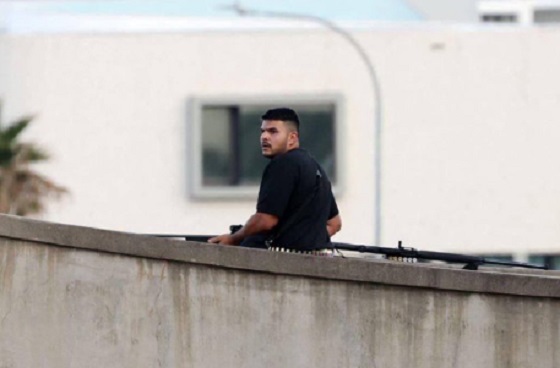
Terror in Australia: 12 killed after gunmen open fire on Hanukkah celebration

Death by a thousand clicks – government censorship of Canada’s internet
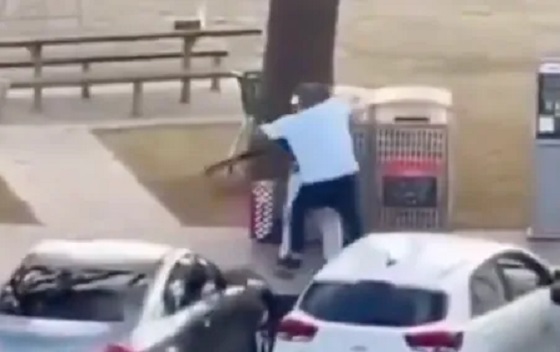
Hero bystander disarms shooter in Australian terror attack
Inflation Reduction Act, Green New Deal Causing America’s Energy Crisis
-
Alberta14 hours ago
Danielle Smith slams Skate Canada for stopping events in Alberta over ban on men in women’s sports
-
 Health1 day ago
Saskatchewan woman approved for euthanasia urged to seek medical help in Canada rather than US
-
 Indigenous1 day ago
Residential school burials controversy continues to fuel wave of church arsons, new data suggests
-
 International1 day ago
FBI didn’t think it had cause to raid Trump but DOJ did it anyway
-
 Health1 day ago
Canadian gov’t considers sharing census data on gender-confused children
-
 Crime16 hours ago
The Uncomfortable Demographics of Islamist Bloodshed—and Why “Islamophobia” Deflection Increases the Threat
-
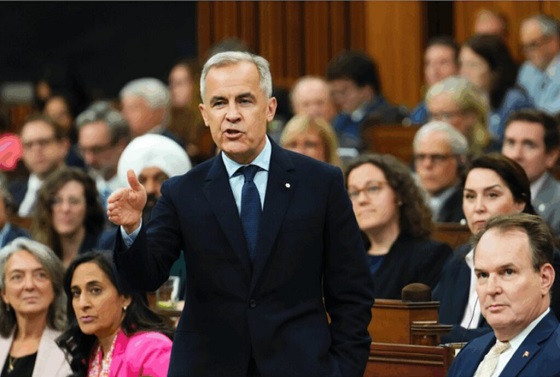 Energy20 hours ago
Liberals Twisted Themselves Into Pretzels Over Their Own Pipeline MOU
-
 Business2 days ago
COP30 finally admits what resource workers already knew: prosperity and lower emissions must go hand in hand