
2025 Federal Election
PPE Videos, CCP Letters Reveal Pandemic Coordination with Liberal Riding Boss and Former JCCC Leader—While Carney Denies Significant Meeting In Campaign

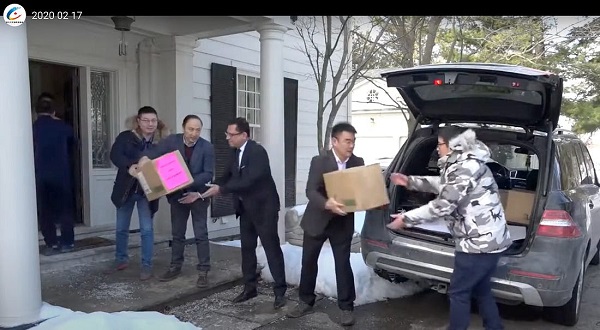

Howard Shen, a senior Liberal organizer and former president of the Jiangsu Commerce Council of Canada—now under scrutiny after Prime Minister Mark Carney falsely denied meeting the group during his January leadership campaign—is seen in a pandemic-era video delivering PPE alongside Liberal MP Majid Jowhari to the council’s president, Rui Jiang, in what appears to be a Chinese Communist Party–coordinated operation.
It is one of many concrete pieces of evidence emerging from a years-long investigation by The Bureau into the JCCC’s structure and leadership, exposing a significant overlap between this pro-Beijing business group and the Liberal Party of Canada itself.
After The Bureau first revealed that Peter Yuen, Mark Carney’s handpicked Liberal candidate to replace Paul Chiang in Markham–Unionville, had ties to pro-Beijing networks in Toronto, The Globe and Mail confirmed that Yuen held the title of honorary director of the JCCC, a group with documented links to Beijing’s United Front Work Department. The Bureau’s review of the JCCC’s activities suggests it functions as an elite platform for the Chinese Communist Party’s overseas trade messaging inside Canada.
While campaigning to replace scandal-weakened Prime Minister Justin Trudeau, Carney met with JCCC leaders during a high-profile Lunar New Year event in Toronto. The group’s website described Carney’s entry into politics as “an important turning point in the upgrading of China–Canada relations.”
But when confronted by The Globe with web posts documenting the meeting, Carney flatly denied it occurred. “I’ve never heard of this group,” he said. “Certainly didn’t have a meeting with them—I’m sorry, you can’t believe everything you read in The Globe.”
Yet internal documents, public records, Chinese-language media, and event photographs confirm that the JCCC and Liberal Party networks in the Greater Toronto Area have long shared operatives and strategic objectives—even collaborating to send PPE to United Front Work Department officials in China during the pandemic.
The Bureau, along with diaspora researchers, has assessed that the Carney meeting was significant and included JCCC leaders involved in that same United Front–coordinated PPE operation that included Liberal riding boss Howard Shen.
Perhaps most significantly, while the JCCC has listed Carney’s Markham–Unionville candidate Peter Yuen as an honorary board chair, the same riding’s senior federal executive has been Howard Shen, also the past president of the JCCC.
The Bureau has sent detailed questions to Carney, the Liberal Party of Canada, and Howard Shen. As of publication, none have responded.
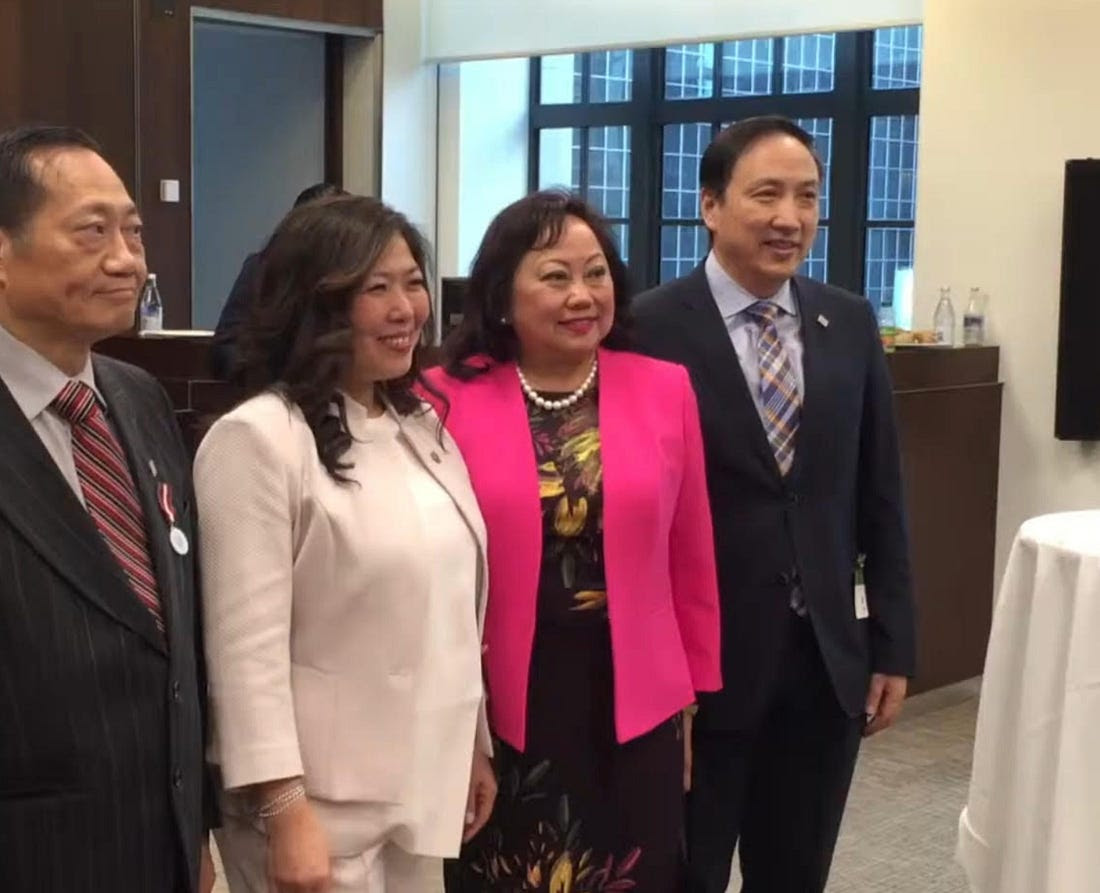
Shen has fundraised for Justin Trudeau since the 2015 federal campaign in Markham, appearing with then–cabinet minister John McCallum and many Toronto-area Liberal MPs. As a riding boss, he aligned with the rise of Mary Ng, who succeeded McCallum in a 2017 by-election and was subsequently appointed to Trudeau’s cabinet.
 |
By 2017, Shen remained a Markham-area Liberal executive while simultaneously serving as JCCC president.
That year, JCCC held the Canada–China Free Trade Agreement Forum—one of the Trudeau era’s most consequential Chinese Canadian business gatherings—advancing JCCC’s calls for deeper trade with Beijing and alignment with the Belt and Road Initiative. The forum promoted reduced reliance on the United States and featured greetings from three Liberal MPs—Mary Ng, Majid Jowhari, and Shaun Chen—alongside Chinese officials including Consul General He Wei.
Also during the pandemic, Shen and the JCCC exchanged letters with Chinese Communist Party and United Front authorities. A 2020 letter from the Jiangsu Provincial Committee of the CCP, co-signed by Party Secretary Lou Qinjian and Governor Wu Zhenglong, praised the JCCC’s donations to China.
“In these difficult times, we thank the Jiangsu Commerce Council of Canada for their support in sending protective equipment and funds to help the people of Jiangsu,” the letter stated. “We also express our deep sympathy to overseas Chinese compatriots in Canada as the pandemic situation worsens.”
The JCCC’s reply—co-signed by president Rui Jiang and Howard Shen—acknowledged that its COVID relief effort was “organized under the guidance” of Chinese Communist Party bodies including the Jiangsu Overseas Friendship Association, United Front Work Department, and Overseas Chinese Affairs Office.
“The Canadian Jiangsu Commerce Council of Canada (JCCC) is one of the most influential associations in Canada,” that letter said, adding the group had “quickly raised funds and PPEs whose combined value amounts to nearly two million yuan.”
The letter was signed by Liberal riding boss Howard Shen, as “Past President of the JCCC.”
Photographs from this period show MP Jowhari assisting with PPE deliveries at a JCCC-organized event, carrying boxes from a Toronto residence to a vehicle.
In video footage dated February 17, 2020, Shen is seen passing a fluorescent-labelled PPE box from the front door of a mansion to Jowhari, who then hands it to Rui Jiang for loading into an SUV.
The sequence—featuring three figures tied to both Liberal politics and Beijing-linked organizations—visually underscores the JCCC’s declared coordination with Chinese state bodies.
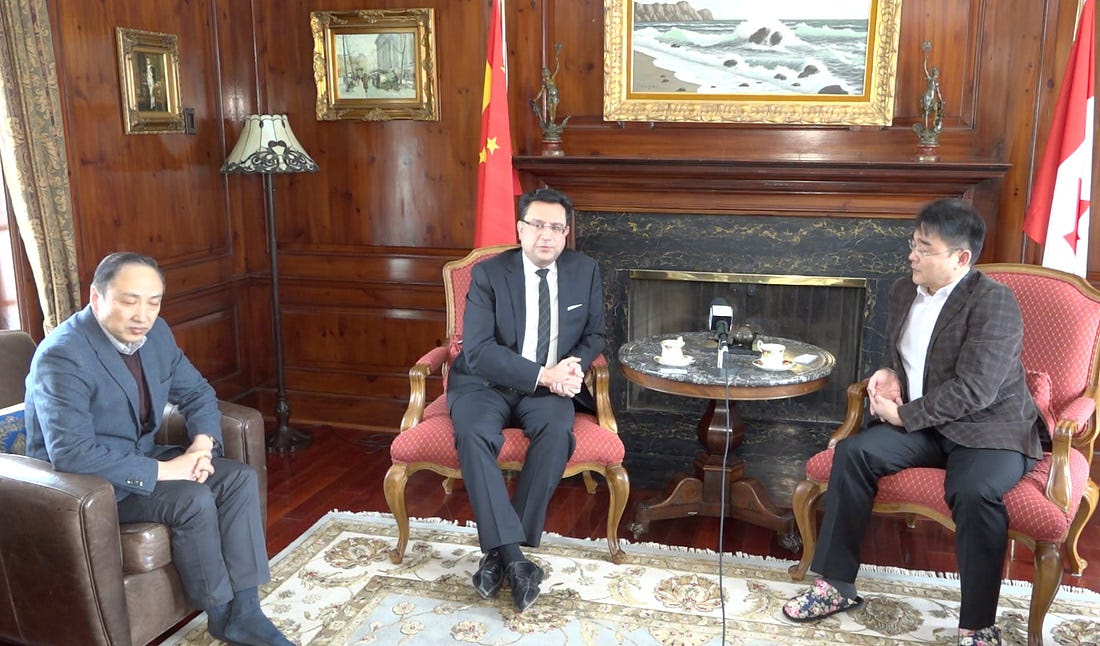
In another video filmed inside the same mansion, Shen and Jowhari—wearing the same outfits—sit beneath a Chinese flag in a wood-paneled room alongside Rui Jiang, who appears in flowered slippers. MP Jowhari discusses his government’s eagerness to provide aid to China.
“Mr. Shen is the former president of our council,” Jiang tells Jowhari. Chuckling, Jowhari replies: “Howard is the president of everyone. Howard is the glue. He’s very well connected. He understands the community, and the government.”
 |
By this point, Shen had transitioned to Vice Chair of the Markham–Thornhill Federal Liberal Association—a position he still holds.
A separate 2020 video shows Chinese Consul General Han Tao thanking Jowhari for “his support to the Chinese community, as well as to the work of the Chinese Consul General in Toronto.” These filmed moments further reinforce Shen’s dual role as a Liberal organizer and community leader acknowledged by Chinese state officials.
Corporate records reviewed by The Bureau show that in 2012, Shen and Rui Jiang were listed as directors of a similar entity: the Jiangsu International Business Association of Canada.
In perhaps the clearest example of JCCC–Liberal Party integration, in 2017—while serving as both JCCC president and Markham riding chair—Shen led the Canada–China Free Trade Forum. The event’s final report urged Ottawa to move quickly on trade with China, avoid human rights issues, and model Canada’s approach on Australia’s FTA with Beijing.
The document positioned Chinese Canadian leaders as “go-betweens” to guide Canadian officials and framed the U.S. as a liability. “Catch the China high-speed train,” the report said, calling the Belt and Road Initiative “the new global path.”
At the time, Shen’s name appeared on both Liberal electoral filings and Chinese-language United Front publications.
Further documents link Howard Shen to the Chinese Professionals Association of Canada. On February 15, 2014, Qiu Yuanping—then Deputy Secretary-General of the CCP’s International Liaison Department—met with CPAC. Around the same time, the Markham–Unionville Federal Liberal Association was formally established, and Howard Shen became a boss of the riding for the Liberals.
Shen’s ties extended beyond Liberal Party politics. In 2011, he joined the executive board of the Canada Hefei Friendship Association alongside Wei Wei, a Markham real estate developer whose luxury mansion was later raided as an underground casino.
Peter Yuen was named the Liberal candidate in Markham–Unionville in March 2025, following the resignation of incumbent MP Paul Chiang amid controversy over foreign interference. Chiang faced mounting scrutiny after The Bureau and other outlets reported on his comments suggesting that Joe Tay—a Conservative candidate and Canadian citizen facing an illegitimate national security charge in Hong Kong—could be turned over to Chinese consular officials in Toronto. The Liberal Party’s decision to tap Yuen—a longtime Toronto police official with prior affiliations to the JCCC and events linked to the United Front Work Department—has only intensified questions, especially as Prime Minister Mark Carney attempts to distance himself from the JCCC during the ongoing federal election campaign.
The Bureau will update this breaking story with any responses from Prime Minister Carney.
The Bureau is a reader-supported publication.
To receive new posts and support my work, consider becoming a free or paid subscriber.
Invite your friends and earn rewards

2025 Federal Election
Too Close for Comfort: Carney Floor Crosser Comes From a Riding Tainted by PRC Interference
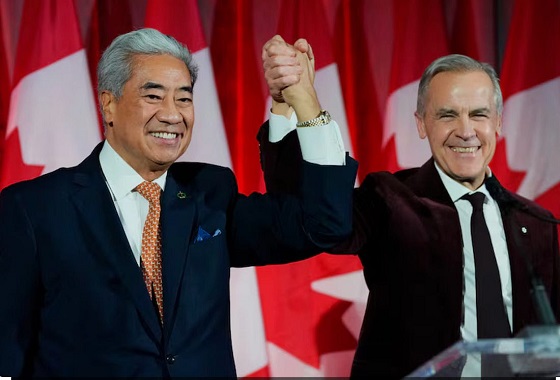

After the Chiang–Tay controversy in Markham-Unionville, and unresolved 2021 vote suppression claims, Michael Ma’s defection turns a fraught riding into a lever for near-majority power.
Mark Carney’s minority government is now one seat shy of a House of Commons majority—not because Canadians changed their minds in an election, but because a newly elected Conservative member of Parliament, Michael Ma, has crossed the floor to join the Liberal caucus.
Floor crossing is legal. It is also one of those Westminster quirks that can be permissible while still corroding public trust—especially when it is used to rewire the meaning of an election after the ballots are counted.
A minority is supposed to be a forcing mechanism. It compels compromise, checks government overreach and corruption, and makes Parliament matter. A majority for Mark Carney—whose government hasn’t put to rest serious ethical concerns carried over from the Trudeau era—does the opposite. It concentrates power, streamlines the machinery, and reduces the opposition’s ability to constrain the executive.
Canadians understand the rules. What they reject is the idea that rules are the same thing as legitimacy, especially at a time when Canada’s own security agencies have repeatedly warned that hostile states are probing and exploiting weak points that fall outside of election periods—such as candidate nominations or leadership races—and when the government itself publicly confirmed an active transnational operation targeting a Conservative federal candidate during the 2025 campaign.
Michael Ma says he crossed because he wants practical governance, and because he believes Carney is offering a steady approach on the economy. It is entirely possible that this decision is purely personal and political. There is no evidence Ma was under any external influence.
But the seat Ma represents, Markham–Unionville, sat at the center of the 2025 campaign’s most explosive foreign-interference controversy, after Liberal incumbent Paul Chiang mused to Chinese-language press that his Conservative rival, Joe Tay, could be turned over to Chinese diplomats to collect the Hong Kong bounty placed on him.
In that context, Carney’s decision to welcome a floor crossing from Chiang’s former riding demands deep scrutiny.

Conservative MP Michael Ma, center, meets with controversial Chinese community leaders who have also been linked to travel to Beijing with the Liberal candidate Ma defeated, Peter Yuen. The photos from CC News are reproduced for news reporting and in the public interest, in reliance on Canada’s fair dealing exception under the Copyright Act.
The broader point of this editorial will be reiterated. Canadian voters can no longer casually accept floor crossings. An MP that decides to change sides must trigger a by-election.
But first, to understand why Ma’s floor crossing is too close for comfort, you have to recall the chain of events that runs from the 2021 election to the 2025 campaign—and now, to Carney’s near-majority.
In September 2021, Markham–Unionville flipped.
Conservative incumbent Bob Saroya, first elected in 2015 and re-elected in 2019, was defeated by Liberal candidate Paul Chiang. Chiang—an ex-police officer—won the seat for Justin Trudeau’s Liberals.
In the years that followed, The Bureau obtained allegations from senior Conservative sources that this was not merely a routine political turnover.
According to multiple senior figures from Erin O’Toole’s 2021 Conservative campaign, O’Toole’s team was briefed by Canadian intelligence that Chinese officials were actively surveilling Saroya during the election—activities that one source described as “coordinated and alarming.”
One source recalled being told, bluntly, that “there were Chinese officials following Bob Saroya around,” and that “CSIS literally said repeatedly that this was ‘coordinated and alarming.’”
The allegation was not simply that Saroya felt watched.
It was that suspected Chinese security personnel were shadowing Saroya’s canvassing team and then visiting the same homes after campaign stops—an intimidation pattern consistent with voter suppression tactics.
Next, Paul Chiang’s controversy.
Early in 2025, Joe Tay began organizing to run in Markham–Unionville.
Tay, a former Hong Kong broadcaster and outspoken critic of Beijing’s repression in Hong Kong, had been placed under a Hong Kong National Security Law bounty—a fact that turned his candidacy into a test of whether Canada can protect citizens targeted by foreign states for their speech.
The Bureau reported that Tay and his team did substantial groundwork in Markham–Unionville, and that he intended to seek the Conservative nomination there.
But for reasons that have never been fully explained, Tay’s trajectory changed at roughly the same time of Chiang’s remarks.
Instead of running in Markham–Unionville, the Conservative Party ultimately assigned him to Don Valley North, a neighboring Toronto riding with a large Chinese diaspora.
“Joe Tay put so much effort into Markham–Unionville,” said a Tay campaign staffer who asked not to be identified.
Tay’s campaign in Don Valley North became one of the most closely scrutinized races in the country.
Alarmingly, he faced the same general pattern of pressure that Saroya’s team and Conservative sources claim shadowed Markham–Unionville in 2021.
Only this time, Canadian election-threat monitors publicly confirmed that a transnational repression operation was targeting Tay. More on that later.
In early 2025, Michael Ma was chosen by the Conservatives to run in Markham–Unionville, a seat with a credible path back for the party.
The scandal erupted on March 28th.
The Bureau is a reader-supported publication.
To receive new posts and support my work, consider becoming a free or paid subscriber.
Paul Chiang—by that point the Liberal member of Parliament for Markham–Unionville and running again—acknowledged making remarks to Chinese-language media suggesting Tay could be taken to the Chinese consulate in Toronto to collect a Hong Kong bounty.
Chiang said he was only joking and apologized.
Tay rejected the apology and called the remarks “the tradecraft of the Chinese Communist Party.” He added: “They are not just aimed at me; they are intended to send a chilling signal to the entire community to force compliance with Beijing’s political goals.”
Former Conservative leader Erin O’Toole used his X account to publicize a broad version of the allegations The Bureau was already aware of in the Saroya defeat of 2021.
“This riding [Markham-Unionville] was one of the worst for Foreign Interference (FI) in 2021,” O’Toole wrote on X. “Comments from the MP/Candidate confirm longstanding concerns about the result. PM Trudeau ignored FI concerns. I hope PM Carney is more serious. He cannot allow this candidate to stand.”
Carney, it is now important to note, refused to replace Paul Chiang, saying the MP had his confidence.
Concurrently, Canada’s election-threat monitors reported that Chinese propaganda messages had attacked Carney’s rival for the Liberal leadership, Chrystia Freeland, while Chinese intelligence’s messages about Carney were positive or ambiguous.
It was only after international Hong Kong diaspora groups mounted a letter-writing campaign to the RCMP, decrying what they called potentially criminal repression activities in Canada’s election, that the RCMP announced a review of the matter, and Chiang stepped down himself.
Carney was spared from taking direct action. There is still no word from the RCMP on what it has found in the case.
O’Toole, when asked to comment about Saroya’s Markham riding experience in 2021, told The Bureau:
‘“Our candidate Bob Saroya was a hardworking MP who won against the Liberal wave in 2015.
He won in 2019 as well, but thousands of votes from the Chinese Canadian community stayed home in 2021.
We heard reports of intimidation of voters. We also know the Consul General from China took particular interest in the riding and made strange comments to Mr. Saroya ahead of the election.
It was always in the top three of the eight or nine ridings that I believe were flipped due to foreign interference. The conduct of Mr. Chiang suggests our serious concerns were warranted.”’
Even if you treat every one of O’Toole’s statements, and the related claims from senior Conservative Party sources with caution—and you should, as CSIS will not confirm or deny these claims—the theme is unmistakable.
Senior political actors were receiving intelligence briefings that they believed described aggressive, targeted pressure in Markham–Unionville.
Next, in the wake of Chiang’s withdrawal, the Liberals replaced him with Peter Yuen.
During the election,The Bureau reported that Yuen, a retired Toronto Police deputy chief, had joined the board of a Chinese international school in Markham that surfaced in testimony related to foreign interference concerns in Don Valley North.
The Globe and Mail also reported new questions about Yuen’s relations with Beijing-friendly community leaders closely connected to the Chinese Consulate.
The Bureau and The Globe also reported on the controversy surrounding Yuen’s trip with some of these Markham-area community leaders—among a small delegation of Ontario politicians invited to Tiananmen Square in September 2015—to attend a military parade hosted by President Xi Jinping.
At a major October 2025 Chinese-Canadian community banquet attended by China’s Toronto consulate officials—including acting consul general Cheng Hongbo—Michael Ma is shown toasting wine with the same prominent Fujian-linked community leader who reportedly traveled with Yuen to the 2015 People’s Liberation Army parade.
At that banquet a few months ago in Markham, Canadian politicians and community leaders stood with Chinese consular officials as the Canadian and Chinese anthems were sung by a woman performing in front of a large screen showing uniformed Chinese military personnel in Tiananmen Square standing at attention.
In the organizers’ published guest list, Michael Ma appears to have been the only Conservative member of Parliament named among the federal representatives, alongside several Liberal MPs and other provincial and municipal officials.
Back to the last federal election.
On April 21, 2025—one week before election day—the Privy Council Office issued a news release describing what the Security and Intelligence Threats to Elections Task Force had observed: a “transnational repression operation” targeting the election, taking place on Chinese-language platforms and featuring a mock “wanted poster” and disparaging content about Joe Tay, the Conservative candidate for Don Valley North.
This was Canada, in public, acknowledging a core authoritarian tactic—digital harassment and intimidation aimed at suppressing political participation—playing out in a Canadian federal election.
The Bureau later reported that federal police advised Tay to suspend door-to-door canvassing, citing safety concerns, and that police reviewed complaints alleging Tay’s campaign team was shadowed in an intimidating manner while canvassing in the final days.
Tay ultimately lost in Don Valley North to Liberal candidate Maggie Chi, but with a higher Conservative vote share than in 2021.
And then came the twist that would matter months later.
Back in Markham, Peter Yuen—the Liberal replacement for Chiang—was defeated on April 28, 2025 by Conservative candidate Michael Ma.
For Canadians trying to follow the larger interference story, the result is confusing. The riding that had become synonymous with the Chiang controversy and the Saroya allegations flipped back to the Conservatives, even as the dissident candidate at the center of the intimidation debate, Joe Tay, was moved next door and lost in a race the federal government said had been targeted by a transnational repression operation.
This brings us to December 2025.
Ma is now a Liberal. His defection is the second Conservative floor crossing to Carney’s Liberals in just over a month, and it leaves Carney one seat short of majority rule. Reuters notes the broader strategic environment in which this is unfolding.
Canada is grappling with a strained trade relationship with the United States under President Donald Trump, and domestic politics are increasingly volatile. Prime Minister Mark Carney met on October 31st with President Xi Jinping, signaling an intent to renew relations with Beijing and expand strategic engagement.
In China’s diplomatic telling: “President Xi noted that this year marks the 55th anniversary of China-Canada diplomatic relations and the 20th anniversary of the China-Canada strategic partnership. Through the joint efforts of both sides, the China-Canada relationship is beginning to recover and improve.”
Here is the democratic problem, stated plainly.
A riding that has been repeatedly flagged—through intelligence briefings described by senior political actors, through public controversy involving foreign-bounty rhetoric, and through government-confirmed warnings about transnational repression tactics in adjacent diaspora ridings—has now produced a member of Parliament whose post-election decision helps move Canada to the brink of majority government without an election.
That is why this moment should prompt action—not hand-wringing.
If Canada is serious about protecting democratic legitimacy, Parliament should adopt a simple rule: if a member of Parliament crosses the floor to join another party—especially if the move materially alters governing power—there should be a by-election. Not because voters “own” an MP. Because voters own Canada’s democracy.
Carney, if he wants to govern as a majority prime minister, should ask Canadians for a majority. He should not accept it—or engineer it—through a quiet accumulation of defectors, least of all at a moment when Ottawa has publicly confirmed that transnational repression tactics have already been deployed against candidates.
2025 Federal Election
Protestor Behind ‘Longest Ballot’ Chaos targeting Poilievre pontificates to Commons Committee
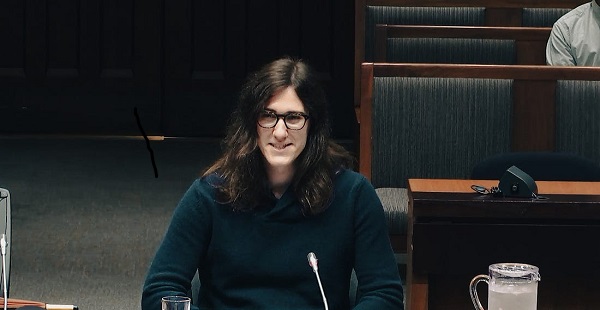


Lawmakers confront organizer Tomas Szuchewycz for flooding ridings with placeholder candidates, targeting Pierre Poilievre’s seat, and wasting public resources.
Szuchewycz’s most notorious move came in Carleton — the riding of Conservative Leader Pierre Poilievre, where the ballot swelled to 91 names, stretching nearly a metre and forcing Elections Canada to redesign how it printed and handled the vote. The LBC framed the stunt as a protest against Canada’s first-past-the-post electoral system. But to most voters, it looked nothing like a principled reform campaign. What they saw was an effort aimed squarely at Poilievre, meant to bury his name among a wall of nobodies and turn the vote into a farce.
Elections Canada had to scramble to manage the chaos: printing extra‑long ballots, re‑training workers, and creating a last‑minute write‑in workaround in Battle River–Crowfoot to keep ballots usable. Seniors and disabled voters complained about the physical size and complexity of the ballot; poll workers faced new logistical headaches; public money was wasted.
At Tuesday’s hearing, Szuchewycz showed no contrition and offered no practical alternative to the system he had tried to upend. Instead, he accused MPs of having a “conflict of interest” in writing election law and demanded that power be handed to an undefined “permanent, non‑partisan body” — without explaining who would select it, how it would operate, or how it would be accountable to Canadians.
The LBC, whose actions led to metre-long ballots in ridings like Carleton (91 candidates) and Battle River–Crowfoot (86), claims to oppose Canada’s first-past-the-post system. But when asked how his proposed independent reform body would be formed, selected, or held accountable, Szuchewycz had no answers.
Conservative MP Michael Cooper led the charge, accusing Szuchewycz of overseeing a signature-harvesting scheme that involved electors signing blank nomination forms—potentially in violation of the Canada Elections Act. He tabled a January 2024 tweet and an August 2024 YouTube video showing organizers gathering signatures under the claim that candidate names would be “filled in later.”
Szuchewycz denied the accusation, claiming nomination papers had either candidate names or the phrase “all candidates” filled in. But when he tried to discredit Cooper’s evidence by calling it “AI-generated,” the committee chair issued a warning for casting doubt on the authenticity of a Member’s documents without basis. The comment was withdrawn under pressure.
Still, Cooper was unsatisfied, warning Szuchewycz that misleading Parliament could amount to contempt.
Other witnesses—experts and former elected officials—were equally critical of the LBC’s tactics. Dr. Lori Turnbull, a professor at Dalhousie University, called the stunt “undesirable” and a “waste of resources,” though she praised Elections Canada for adapting quickly by allowing a write-in workaround in Battle River–Crowfoot to avoid printing a literal wall of names.
Professor Peter Loewen of Cornell University added that the LBC’s ballot-stuffing “violates the spirit” of competitive democracy and burdens front-line elections staff with unnecessary logistical chaos. He warned that a third-party group acting like a political party without oversight was a loophole that needed closing.
Meanwhile, former Liberal MP Louis-Philippe Sauvé described the real-world toll of the stunt: longer lineups, stressed poll workers, and accessibility hurdles for elderly and visually impaired voters.
In stark contrast to these grounded critiques, Szuchewycz’s testimony revolved around vague accusations of “conflict of interest” by MPs and a call to remove Parliament from electoral reform altogether. No constitutional roadmap. No governance model. No practical enforcement mechanism.
At the end of the day, what Tomas Szuchewycz has done isn’t just a stunt, it’s an insult. He claims Canadians “know what he’s protesting,” but let’s be honest: most voters had no clue this was about electoral reform. What they saw was a campaign to flood ballots with nonsense names in key ridings, especially against the Leader of the Opposition, and create chaos for chaos’s sake.
The takeaway wasn’t a conversation about democracy. It was a spectacle, and one that mocked the very voters he pretends to represent. Lets be clear, This wasn’t activism, it was ego masquerading as principle. And it reeked of entitlement.
Tomas Szuchewycz is the embodiment of unchecked privilege: a man who hijacked our electoral process, wasted taxpayer dollars, and offered nothing in return but smug contempt for the very democracy that gave him the space to pull his stunt.
He claims Canadians understood his message. They didn’t. Most people saw a confusing mess, an attack on the Opposition Leader, and a joke made at the expense of voters, poll workers, and the electoral system itself.
So yes — reform is coming. And it can’t come soon enough.
Parliament must not just close the loopholes it should make sure that when someone deliberately sabotages the integrity of an election, they are held accountable, including being forced to repay the public for the cost of their chaos.
Because in a democracy, you have the right to protest.
But not the right to turn an election into a farce on the public’s dime.
Subscribe to The Opposition with Dan Knight
Invite your friends and earn rewards

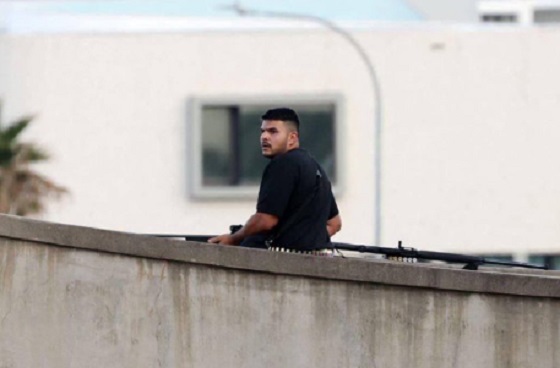
Terror in Australia: 12 killed after gunmen open fire on Hanukkah celebration

Tanker ban politics leading to a reckoning for B.C.

Death by a thousand clicks – government censorship of Canada’s internet

Canada’s free speech record is cracking under pressure
-
Censorship Industrial Complex24 hours ago
Death by a thousand clicks – government censorship of Canada’s internet
-
 Alberta1 day ago
Schools should go back to basics to mitigate effects of AI
-
International1 day ago
At Least 15 Killed In Shooting Targeting Jewish Community At Australia’s Bondi Beach, Police Say
-
 Daily Caller1 day ago
Chinese Billionaire Tried To Build US-Born Baby Empire As Overseas Elites Turn To American Surrogates
-
 Great Reset1 day ago
Viral TikTok video shows 7-year-old cuddling great-grandfather before he’s euthanized
-
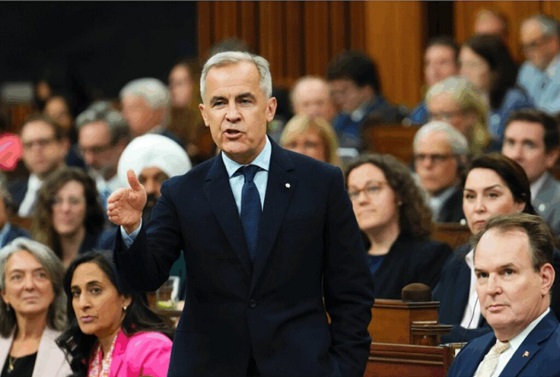 Business1 day ago
Major tax changes in 2026: Report
-
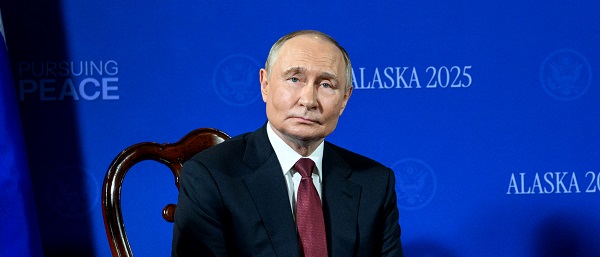 International1 day ago
Russia Now Open To Ukraine Joining EU, Officials Briefed On Peace Deal Say
-
 Crime14 hours ago
Trump designates fentanyl a ‘weapon of mass destruction’