
illegal immigration
Polls: Majority of Americans want troops sent to border, oppose illegal immigration

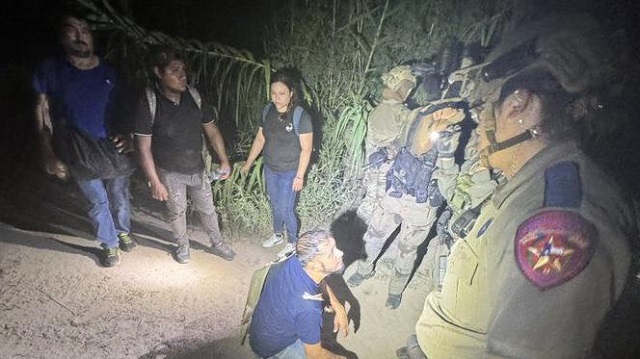
A group of illegal border crossers from Mexico, Honduras and Guatemala arrested on private ranch in Maverick County, Texas.
From The Center Square
By
84% of registered voters oppose ‘illegal’ immigration while 71% support ‘legal’ immigration, showing a clear understanding of the effects of both legal and illegal immigration
Polls are consistently showing two key indictments on the Biden-Harris administration border policy: Americans not only overwhelmingly oppose illegal immigration but also want troops sent to the southern border and the border secure.
Two new recent polls support this trend, although polls have consistently shown that Americans overwhelmingly disapprove of Vice President Kamala Harris’ job as “border czar.”
A new Napolitan News Service poll found that 84% of registered voters believe “illegal immigration is bad for the United States” compared to only 12% who say it is good.
The ratio of opposition/support to illegal immigration has “remained broadly unchanged for decades,” the news service says.
The overwhelming majority polled, 71%, said they support legal immigration, arguing it is good for the country. Those who oppose illegal immigration say it hurts Americans.
“That view has also remained stable for decades. Voters make a clear distinction between legal and illegal immigration,” the news service says.
The primary reason for opposition: crime. Among those polled, 49% cited crime as a top concern; 28% said illegal immigration allows criminals and terrorists into the country; 26% said it places a burden on the economy and healthcare; 16% that it allows in people who are dangerous; 5% that it allows in drugs and dealers.
“Overall, these numbers reflect the fact that voters see America as both a nation of immigrants and a nation of laws,” RMG Research president Scott Rasmussen said. “Voters understand why most immigrants want to bring their families to the land of opportunity. But they are angry at the federal government for allowing and encouraging illegal immigration.”
In a separate poll, 75% said they support sending U.S. troops to “challenge drug cartels and secure the border.”
“That’s up significantly since President Biden took office and the total includes 90% of Republicans and 62% of Democrats,” Napolitan News Service said.
The findings are consistent with several other polls.
A recent Rasmussen Reports poll found that nearly two-thirds surveyed say the southern border crisis should be called an invasion. Large majorities said border security is a vital national security interest (70%) and acknowledged what’s happening is a crisis (72%).
This is after Texas changed the conversation on the border, introducing the term and concept of invasion to the American public, with 55 counties declaring an invasion. Sixty counties also issued disaster declarations citing the border crisis.
A recent Monmouth University Polling Institute report found the majority polled said they support building a border wall, a policy former President Donald Trump implemented that Biden ended on his first day in office. The majority polled, over 80%, said illegal immigration is “either a very serious (61%) or somewhat serious (23%) problem.”
“Public concern about illegal immigration is higher during President Joe Biden’s term than it was under the prior two administrations,” the institute said.
A University of Texas/Texas Politics Project poll found that the majority of Texans, including Hispanics and Blacks, support building a wall and border security measures. It also found that Democrats in Texas are increasingly supporting Trump.
Overall, 65% of all Texas voters said they support Texas building its own wall and barriers; 57% support Texas installing marine buoys in the Rio Grande River; 66% support deploying additional state police and military resources to the border.
A majority of Hispanic Texas voters, 56%, also disapprove of Biden’s handling of immigration and border security, the UT/TPP poll found.
Another UT/TPP poll found that Texans overwhelmingly support Gov. Greg Abbott’s border security efforts through Operation Lone Star, including supporting Texas installing marine barriers, constructing a border wall and physical barriers at the Texas-Mexico border, deploying additional resources to the border, and busing illegal foreign nationals north.
These findings are similar to those from The Center Square Voters’ Voice polls conducted in conjunction with Noble Predictive Insights. One poll last year found that 82% of Americans are concerned about border security. Among them, 50% said the border crisis became worse under the Biden-Harris administration.
Another from March found that 62% of voters say the U.S. is moving in the wrong direction under the Biden-Harris administration with yet another showing that illegal immigration nearly ties inflationary high costs as the top concern.
Another Voter’s Voice poll found that Americans want states to play a role in border security, supporting Texas and other state’s right to secure their borders.

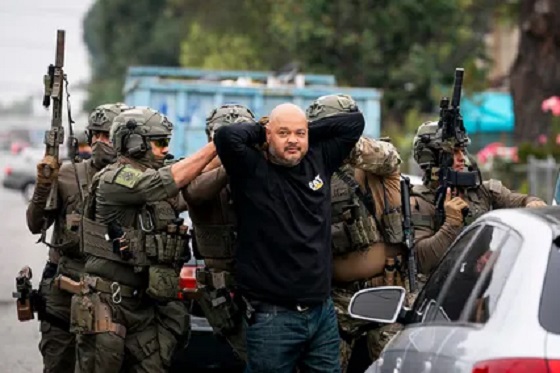

President Trump’s Department of Homeland Security is marking what officials are calling a landmark moment in U.S. immigration enforcement, announcing Wednesday that more than 2.5 million illegal aliens have now left the country since Trump returned to the Oval Office in January. DHS Secretary Kristi Noem said the surge reflects a sweeping, sustained crackdown driven by Immigration and Customs Enforcement teams that — according to internal tallies — have already removed more than 605,000 illegal aliens, most of whom were facing criminal charges or carrying prior convictions. Nearly two million more have opted to self-deport, a wave Noem attributes to stepped-up enforcement and the administration’s aggressive public messaging. She again urged those still in the country illegally to use the government’s CBP Home app, which offers a free one-way flight and a $1,000 stipend to expedite departure.
Senior DHS officials say arrests have climbed as well, with almost 600,000 illegal aliens taken into custody since January 20. “Illegal aliens are hearing our message to leave now,” DHS official McLaughlin said this week. “They know if they don’t, we will find them, we will arrest them, and they will never return.”
The administration argues the impact is being felt far beyond immigration courts and detention facilities, pointing to the U.S. housing market as one of the clearest signs of change. For six straight months, DHS says not a single illegal alien has been released into the interior from the southern border — a dramatic shift after years of mass inflows under President Biden. That decline, they say, is finally filtering into rent and home-price data after years of punishing increases.
Housing and Urban Development Secretary Scott Turner said Americans have now seen four consecutive months of rent decreases — the first sustained drop in years — as fewer illegal aliens compete for housing. Vice President JD Vance emphasized the connection even more bluntly: “The connection between illegal immigration and skyrocketing housing costs is as clear as day. We are proud to be moving in the right direction. Still so much to do.”
Research abroad and at home backs up the administration’s argument. Economists in Denmark released findings earlier this year showing that a one-percentage-point rise in local immigration over a five-year period drove private rental prices up roughly 6 percent and home prices up about 11 percent. The Center for Immigration Studies presented similar data to Congress last year, with researcher Steven Camarota testifying that a 5-percentage-point increase in a metro area’s recent-immigrant share was tied to a 12-percent rise in rent for U.S.-born households.
As DHS leaders frame it, Trump’s second-term enforcement machine is reshaping both border policy and household budgets — an approach they say is finally delivering relief to Americans who spent years squeezed by soaring housing costs and unchecked migration.
illegal immigration
EXCLUSIVE: Canadian groups, First Nation police support stronger border security
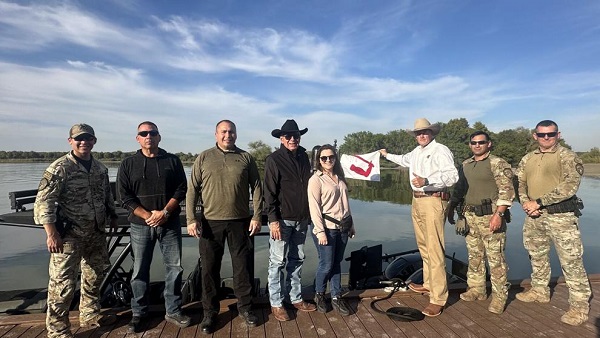
First Nation police chiefs join Texas Department of Public Safety marine units to patrol the Rio Grande River in Hidalgo County, Texas. L-R: Dwayne Zacharie, President of the First Nations Chiefs of Police Association, Ranatiiostha Swamp, Chief of Police of the Akwesasne Mohawk Territory, Brooks County Sheriff Benny Martinez, Jamie Tronnes, Center for North American Prosperity and Security, Goliad County Sheriff Roy Boyd. Photo: Bethany Blankley for The Center Square
From The Center Square
By
Despite Canadian officials arguing that the “Canada-U.S. border is the best-managed and most secure border in the world,” some Canadian groups and First Nation tribal police chiefs disagree.
This week, First Nation representatives traveled to Texas for the first time in U.S.-Canadian history to find ways to implement stronger border security measures at the U.S.-Canada border, including joining an Operation Lone Start Task Force, The Center Square exclusively reported.
Part of the problem is getting law enforcement, elected officials and the general public to understand the reality that Mexican cartels and transnational criminal organizations are operating in Canada; another stems from Trudeau administration visa policies, they argue.
When it comes to public perception, “If you tell Canadians we have a cartel problem, they’ll laugh at you. They don’t believe it. If you tell them we have a gang problem, they will absolutely agree with you 100%. They don’t think that gangs and cartels are the same thing. They don’t see the Hells Angels as equal to the Sinaloa Cartel because” the biker gang is visible, wearing vests out on the streets and cartel operatives aren’t, Jamie Tronnes, executive director of the Center of North American Prosperity and Security, told The Center Square in an exclusive interview.
The center is a US-based project of the MacDonald-Laurier Institute, the largest think tank in Canada. Tronnes previously served as a special assistant to the cabinet minister responsible for immigration and has a background in counterterrorism. She joined First Nation police chiefs to meet with Texas law enforcement and officials this week.
Another Canadian group, Future Borders Coalition, argues, “Canada has become a critical hub for transnational organized crime, with networks operating through its ports, banks, and border communities.” The Sinaloa and Jalisco New Generation Mexican cartels control the fentanyl, methamphetamine and cocaine business in Canada, partnering with local gangs like the Hells Angels and Chinese Communist Party (CCP)-linked actors, who launder profits through casinos, real estate, and shell companies in Vancouver and Toronto, Ammon Blair, a senior fellow at the Texas Public Policy Foundation, and others said at a coalition event prior to First Nation police chiefs and Tronnes coming to Texas.
“The ’Ndrangheta (Italian Mafia) maintains powerful laundering and import operations in Ontario and Quebec, while MS-13 and similar Central American gangs facilitate human smuggling and enforcement. Financial networks tied to Hezbollah and other Middle Eastern groups support laundering and logistics for these criminal alliances,” the coalition reports.
“Together, they form interconnected, technology-driven enterprises that exploit global shipping, cryptocurrency, and AI-enabled communications to traffic whatever yields profit – narcotics, weapons, tobacco, or people. Taking advantage of Canada’s lenient disclosure laws, fragmented jurisdictions, and weak cross-border coordination, these groups have embedded themselves within legitimate sectors, turning Canada into both a transit corridor and safe haven for organized crime,” the coalition reports.
Some First Nation reservations impacted by transnational crime straddle the U.S.-Canada border. One is the Akwesasne Mohawk Reservation, located in Ontario, Quebec, and in two upstate New York counties, where human smuggling and transnational crime is occurring, The Center Square reported. Another is the Tsawwassen First Nation (TWA) Reservation, located in a coastal region south of Vancouver in British Columbia stretching to Point Roberts in Washington state, which operates a ferry along a major smuggling corridor.
Some First Nation reservations like the TWA are suffering from CCP organized crime, Tronnes said. Coastal residents observe smugglers crossing their back yards, going through the reserve; along Canada’s western border, “a lot of fentanyl is being sent out to Asia but it’s also being made in Canada,” Tronnes said.
Transnational criminal activity went largely unchecked under the Trudeau government, during which “border security, national security and national defense were not primary concerns,” Tronnes told The Center Square. “It’s not to say they weren’t concerns, but they weren’t top of mind concerns. The Trudeau government preferred to focus on things like climate change, international human rights issues, a feminist foreign policy type of situation where they were looking more at virtue signaling rather than securing the country.”
Under the Trudeau administration, the greatest number of illegal border crossers, including Canadians, and the greatest number of known, suspected terrorists (KSTs) were reported at the U.S.-Canada border in U.S. history, The Center Square first reported. They include an Iranian with terrorist ties living in Canada and a Canadian woman who tried to poison President Donald Trump, The Center Square reported.
“Had it been a priority for the government to really crack down and provide resources for national security,” federal, provincial and First Nation law enforcement would be better equipped, funded and staffed, Tronnes said. “They would have better ways to understand what’s really happening at the border.”
In February, President Donald Trump for the first time in U.S. history declared a national emergency at the northern border and ordered U.S. military intervention. Months later, his administration acknowledged the majority of fentanyl and KSTs were coming from Canada, The Center Square reported.
Under a new government and in response to pressure from Trump, Canada proposed a $1.3 billion border plan. However, more is needed, the groups argue, including modernizing border technology and an analytics infrastructure, reforming disclosure and privacy rules to enable intelligence sharing, and recognizing and fully funding First Nation police, designating them as essential services and essential to border security.
“National security doesn’t exist without First Nation policing at the border,” Dwayne Zacharie, First Nations Chiefs of Police president, told The Center Square.


Largest fraud in US history? Independent Journalist visits numerous daycare centres with no children, revealing massive scam

Be Careful What You Wish For In 2026: Mark Carney With A Majority

“Magnitude cannot be overstated”: Minnesota aid scam may reach $9 billion

New Poll Shows Ontarians See Oil & Gas as Key to Jobs, Economy, and Trade
-
 Energy23 hours ago
Why Japan wants Western Canadian LNG
-
 Business20 hours ago
Mainstream media missing in action as YouTuber blows lid off massive taxpayer fraud
-
 Business1 day ago
What Do Loyalty Rewards Programs Cost Us?
-
 Business23 hours ago
Land use will be British Columbia’s biggest issue in 2026
-
 International11 hours ago
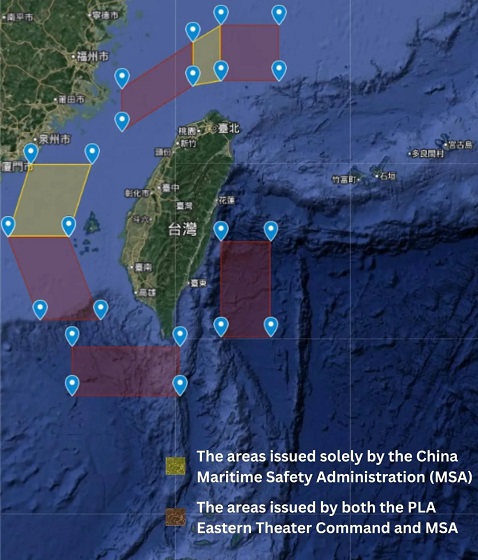
China Stages Massive Live-Fire Encirclement Drill Around Taiwan as Washington and Japan Fortify
-
 Haultain Research1 day ago
Sweden Fixed What Canada Won’t Even Name
-
 Energy11 hours ago
Rulings could affect energy prices everywhere: Climate activists v. the energy industry in 2026
-
 Digital ID10 hours ago
The Global Push for Government Mandated Digital IDs And Why You Should Worry