
MacDonald Laurier Institute
Peterson’s case demonstrates where professional regulators have gone astray

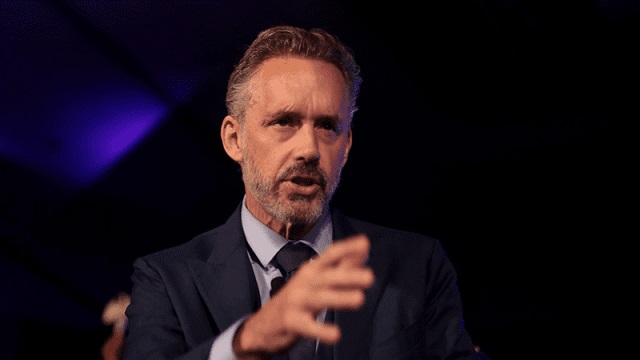
From the Macdonald Laurier Institute
By Stéphane Sérafin
Professional regulators are losing sight of the purpose their disciplinary authority is supposed to serve, to protect society by preserving professional competence.
Members of restricted professions – doctors, lawyers, accountants and psychologists, among others – are subject to the disciplinary authority of their respective professional regulators. This arrangement is intended to ensure a minimum level of professional competence and to protect those relying on these professional services.
This has obvious advantages over purely market mechanisms, at least in theory, owing to the fact that professional regulators can set standards for members that apply before a member has engaged in serious professional misconduct. However, professional regulators have attracted significant controversy in Canada over the past few years as attempts to police members’ off-duty speech and conduct have become a recurring news item.
The problem is that professional regulators are losing sight of the purpose their disciplinary authority is supposed to serve – to protect society by preserving professional competence – and are policing members values for the sake of perceived reputational interests.
While it is tempting to conclude that the difficulties in these controversial cases arise from straightforward regulatory overreach, the problem is more complex. The fact is that regulators have always had the ability to police off-duty conduct, and for good reason, since such conduct may bear directly upon member competence. It is not that regulators are suddenly policing off-duty conduct which used to fall entirely outside their purview, but that the kinds of expression they are trying to censor are no longer focused on protecting society from an incompetent professional but on protecting themselves and their colleagues from association with political views which they find distasteful.
Professional regulators should reverse course, return to their mandates, and focus on ensuring professional competence, not political alignment, among their members.
Consider the best-known Canadian controversy concerning former University of Toronto professor-turned-social-media-influencer Jordan Peterson. As a member of the College of Psychologists of Ontario, Peterson was ordered to undergo social media training following complaints that his social media posts were discriminatory and unprofessional. The College felt that it could make such an order against Peterson without subjecting him to a full disciplinary procedure. It also felt that it could do so solely on the basis of complaints that did not originate with his clients, but arose out of positions that he had publicly staked out on controversial political and cultural issues.
When Peterson challenged the decision through a judicial process, the Ontario Divisional Court found that the College’s decision was reasonable. The Court was of the view that professional regulators had always held the requisite jurisdiction to police member expression, even when that expression did not arise in the context of a member’s strict professional activities. This included the capacity to police expression considered “discriminatory”. Moreover, it was thought to be enough that the expression might adversely impact the reputation of the psychology profession.
The principles invoked by the Divisional Court in this case are difficult to contest in the abstract. To recognize the authority of a professional regulator over a given profession, rather than relying on market mechanisms to ensure basic competence, means that the professional regulator must take a broad view of the kind of conduct that could fall within its ambit.
It would be difficult to claim that the off-duty conduct of a member is entirely without interest for professional regulators, since such conduct can be relevant to determining whether a particular person is fit to remain a member in good standing. An individual who commits a sexual assault outside of work hours, for example, is probably not fit to act as a clinical psychologist, just as someone who embezzles funds in a context divorced from his or her work should probably not be allowed to operate a trust account as a lawyer. No doubt, certain forms of expression that are not directly connected to the member’s professional activities – defaming others, threatening violence, or airing confidential information other than client information – raise similar concerns.
Criminal and civil court processes are not designed to address these concerns, since their purpose is to establish a criminal infringement of community norms and civil liability towards another person, respectively. Not all criminal acts or civil wrongs necessarily impugn a member’s professional competence, and conversely, there may be grounds to sanction a member where the threshold for criminal or civil liability has not been met.
But to say that professional regulators ought to have jurisdiction over the off-duty conduct of their members is one thing; to determine what type of off-duty conduct, specifically, properly attracts their disciplinary jurisdiction is another. The trouble with the Peterson case, as with many of the other recent Canadian controversies, is that the justification offered for the exercise of professional regulatory jurisdiction does not fit the paradigm offered by the examples just referenced, in which the off-duty conduct, including off-duty expression, can be taken to cast doubt on the member’s ability to carry out his or her profession. Instead, these cases present the regulation of off-duty expression by regulators in a manner analogous to the employment context, where the concern is not with the protection of the public interest, but in allowing employers to preserve their own reputation and to avoid vicarious liability for the acts of subordinates.
The view suggested by the Divisional Court in the Peterson case – that professional regulators are simply doing what they have always done – misses the widening focus of regulators beyond professional competence. This widening focus has been precipitated by at least two factors.
First, technological shifts have significantly altered the balance of power between professional regulators and individual members of the public. In an era of social media, an opinion that would have once been expressed to a small audience now finds itself exposed in some cases to an audience of millions. The possibility that someone, somewhere, will find offense, or decide to find offence, with the expression of opinions grows with the scope of the audience. Moreover, the nature of social media is such that any member of that audience can react, in real time, individually or in concert with others, to the opinion being expressed. This means that potentially every public utterance, whether reasonable or not, creates a reputational risk not just for the individual member, but also for the broader profession. Professional regulators are unsurprisingly concerned by this possibility, which affects their own vested interests.
Second, and perhaps more importantly still, broader cultural shifts have also significantly altered the kinds of expressive content that regulators are likely to treat as “unprofessional” or otherwise raising reputational concerns.
Consider another decision, Simone v. Law Society of Ontario, which was narrowly decided by the Law Society of Ontario Tribunal (the body charged with adjudicating complaints against Ontario lawyers and paralegals). In that case, Lisa Simone, an individual seeking membership in the Law Society of Ontario as a paralegal, was subject to “good character review” because of social media posts that she had made which were, among other things, critical of vaccine mandates, the Black Lives Matter organization, and “pride” events. While the Tribunal ultimately decided in favour of the candidate’s good character, and thus her admission as a paralegal, a majority did so apparently on the sole basis that the candidate had expressed remorse for the social media posts in question.
As with the Peterson case, the comments that landed Simone into trouble were associated with positions on the “right” of the political spectrum. They were also brought to the attention of the Law Society through complaints by members of the general public, and were used against her outside of a formal disciplinary proceeding. In other words, this was also not a classic case involving a disciplinary proceeding brought for off-duty conduct that undermined confidence in Simone’s ability to work as a paralegal. Rather, the concern was that the social media posts themselves reflected poorly upon the profession, not just because of their tone (though this was the formal argument made against Ms. Simone’s accreditation) but also, ostensibly, because of their content. This appears to be why the majority in that case repeatedly reaffirmed Ms. Simon’s obligation to comply with human rights laws, as though the mere expression of views critical of vaccine mandates, the Black Lives Matter organization, and “pride” events might infringe those obligations.
To say that professional regulators appear increasingly concerned with the reputational interest of their profession is, in this context, to say that professional regulators appear increasingly concerned with the appearance of complying with narrow cultural and political orthodoxies. These are “orthodoxies”, since they are views that are now largely taken for granted among much of the professional class, or at least among those individuals who are most likely to staff professional regulators and make decisions concerning member conduct.
Where a member of a restricted profession expresses personal viewpoints at odds with these admissible perspectives, the concern is not that the member lacks the requisite competence to exercise their role. Rather, the concern is that the mere expression of these views is “unprofessional”, in the sense that they are potentially damaging, or at least embarrassing, to the profession. That is, the expression of this views is “unprofessional”, owing to the fact that the member’s personal opinions are at odds with the values that the regulator thinks the profession should embrace.
That said, while the opinions that have run afoul of professional regulators have typically been associated with the “right” of the political spectrum – as in the Peterson and Simone cases – there have also been cases in which the authority of professional regulators has been invoked to punish those expressing views more typically associated with the “left”. In one particularly notable incident after the October 7 attacks on Israel by Hamas, students enrolled at the Faculty of Law at Toronto Metropolitan University (formerly Ryerson University) circulated a letter that purported to express solidarity with Palestinians, but also included language referencing a right of “resistance”. Many in the legal profession interpreted the letter as condoning the October 7 terrorist attacks. This prompted calls to deny the students articling positions (a requirement of lawyer licensing in Ontario) and potentially to deny them accreditation altogether.
This and similar cases that have arisen since October 7 may well suggest that the phenomenon that has until recently targeted mostly “right”-coded political opinions may now be weaponized by either side of the political spectrum.
What each of these cases undoubtedly serve to highlight, in any event, is a need to recover the importance of professional competence as the aim of regulators. Ensuring professional competence is the very reason for which professional regulation exists, and why determinations as to who can exercise these particular professions are not left solely to the market.
Canadians need professional regulators to return to their mandate: ensuring a minimum level of professional competence and protecting those relying on professional services. Regulators should not concern themselves with whether the opinions expressed by members are potentially embarrassing because they happen to fall outside the “values” that regulators believe professionals should embrace.
Stéphane Sérafin is an assistant professor in the French Common Law Program at the University of Ottawa.

Indigenous
Residential school burials controversy continues to fuel wave of church arsons, new data suggests


By Edgardo Sepulveda for Inside Policy
Church arsons surged again in 2024 according to new data released by Statistics Canada—continuing a disturbing trend first uncovered by a Macdonald-Laurier Institute investigation published last year.
Scorched Earth: A quantitative analysis of arson at Canadian religious institutions and its threat to reconciliation, which I published last April, warned that the arson wave – almost certainly spurred by ongoing anger over potential unmarked burials of children at residential schools –would not disappear without concerted government policy intervention.
Unfortunately, my prediction is proving accurate.
Newly available custom data from Statistics Canada confirms that arsons in 2024 continued at nearly double the baseline level established from 2011–17.
This persistent elevation is particularly concerning given that arson is a dangerous crime with significant financial costs and, in the case of religious institutions, broader implications for Canadian society and political discourse. Most importantly for those committed to Indigenous reconciliation, the apparent lack of effective policy response risks undermining public support for reconciliation efforts—suggesting these crimes are not being treated with the seriousness they deserve, particularly because many targets are Catholic churches associated with residential school legacies.
Scorched Earth developed specific terms and a conceptual framework to analyze arsons at religious institutions. First, I refer to “potential unmarked burials” rather than other terminology, including “mass graves” – language suggesting verified remains and, potentially, the site of clandestine burials. Neither has been established. No remains have been verified at any of the 21 announced sites. The Tk’emlúps te Secwépemc First Nation revised its own characterization of the Kamloops, BC, announcements in May 2024 to “probable unmarked burial sites,” a significant shift from its initial May 2021 announcement of “remains of 215 children.” This precipitated announcement, together with some of the initial media coverage in Canada and elsewhere, likely contributed to the intensity of the arson response.
Second, the conceptual framework, updated with the latest Statistics Canada data, separates “baseline” from “excess” arson associated with specific shocks, such as the announcements. It shows that arsons at religious institutions have remained elevated since the initial spike in 2021. Based on careful geographic statistical analysis presented in Scorched Earth, I demonstrated that the most likely explanation for elevated arsons was a criminal response prompted by the 17 announcements of potential unmarked burials at former residential schools, beginning in Kamloops, B.C., in May 2021. Four additional announcements occurred in 2024, bringing the total to 21. While data through 2023 showed no detectable increase in arsons related to the Israel-Gaza conflict, analysis of 2024 data suggests this changed: arsons in response to that conflict now constitute a minority of the increase above baseline levels, with the majority remaining those related to announcements of potential unmarked burials.
Investigation and Prosecution Rates Remain Insufficient for Effective Deterrence
Statistics Canada’s newly released custom clearance data for arson at religious institutions provides the first comprehensive official view of law enforcement effectiveness in these cases, superseding the preliminary compilation included in Scorched Earth.
Crimes in Canada are considered “solved” when police identify a suspect with sufficient evidence to support charges. Cases are then classified as “cleared” through two mechanisms: laying charges (“cleared by charge”) or alternative processes such as diversion programs (“cleared otherwise”).
As Figure 2 illustrates, the cleared-by-charge rate for all arson averaged 13.1 per cent over the 2011–24 period. For religious institutions, the yearly average reached 14.4 per cent—marginally higher but still concerning. The clearance rate for religious institutions shows significant year-over-year variability, reflecting the smaller statistical base compared to all arsons. The “cleared otherwise” category adds an average of 4.7 per cent for both arson types.
While these low clearance rates align with those for other property crimes, the continuing elevated arson rate suggests they provide insufficient deterrence for either first-time or serial arsonists. Evidence from Scorched Earth indicates that sustained clearance rates in the mid-30 per cent range—achieved by the National Church Arson Task Force (NCATF) in the United States during the 1990s—effectively reduced church arsons targeting predominantly Black congregations in the American South.
While my statistical analysis indicates that announcements of potential unmarked burials likely motivated many incidents, this remains circumstantial evidence. Direct evidence would require confessions or explicit statements of rationale from arrested arsonists, or credible claims of responsibility from organized groups. Out of the 306 arsons at religious institutions over the 2021-24 period, 53 resulted in charges and 13 were cleared through alternative processes, totaling 64 cleared incidents—an overall clearance rate of 21 per cent.
A clearance rate at this level, while insufficient for effective deterrence, makes it unlikely that most arsons during this period resulted from organized political, ideological, or anti-religious campaigns. A coordinated campaign would likely be visible to investigators even at this clearance level. Since police identify suspects in far more cases than they prosecute, investigators develop a broader perspective on potential culprits than clearance rates alone suggest. Law enforcement officials have not provided any indication of such organized campaigns.
Federal and Provincial Funding Addresses Searches But Ignores Consequences
Neither federal nor provincial governments have introduced policy initiatives addressing elevated arson rates at religious institutions, despite substantial new funding for related matters.
Following the Kamloops announcement, the federal government launched the Residential Schools Missing Children Community Support program, providing $246 million to hundreds of communities, including for research and field investigations. Separately, British Columbia, Alberta, Ontario, and other provinces have committed hundreds of millions in additional dollars, including programs to address mental health effects from the search process and announcements.
This funding inventory highlights a significant policy gap: substantial resources address the cause—announcements of potential unmarked burials—while none target the effect: arsons at religious institutions.
Even viewed narrowly as a crime issue, recent government responses to other property crimes demonstrate available policy tools. When auto theft peaked in 2023, the federal government announced $121 million in federal support, convened a national summit with all levels of government and law enforcement, and released a National Action Plan by May 2024.
Policy Gaps and a Call to Action
The NCATF, created in response to arsons targeting Black churches in the 1990s United States, achieved clearance rates sufficient to reduce incidents. Canada possesses the same policy tools but has not deployed them for residential school-related arsons.
This is not a matter of capacity or institutional precedent. Recent government responses to other serious property crimes, such as auto theft, demonstrate that Canada can mobilize coordinated federal-provincial action when it chooses to. The apparent policy inaction since 2021 for residential school-related arsons must end.
Canada is not powerless to stop the arsonists. The policy recommendations set out in Scorched Earth continue to be valid:
- Create a national or regional integrated police/fire investigations unit focused specifically on arson at religious institutions. This integrated unit would investigate arsons at all religious institutions—Christian, Muslim, Jewish, and others.
- Improve Indigenous police and fire protection services, including to ensure full Indigenous participation in the integrated unit.
- Complete the long-running project of building and maintaining a comprehensive and timely national and on-reserve database of fire statistics.
Law enforcement officials must thoroughly investigate and prosecute the arsonists. The attacks threaten reconciliation and full Indigenous equality—and they must be condemned by all Canadians.
Economist Edgardo Sepulveda has more than 30 years of experience advising clients in more than forty countries. He has written for Jacobin magazine, TVO Today, and the Alberta Federation of Labour, and has been lead author of three peer-reviewed academic articles in the last five years. He received his BA (Hon) from the University of British Columbia and his MA from Queen’s University, both in Economics. He established Sepulveda Consulting Inc. in 2006.


By Stephen Nagy for Inside Policy
Beijing understands what many Canadians still resist: that our greatest national virtues, including our desire to be an “honest broker” on the world stage, have become our most exploitable weaknesses.
On December 1, 2018, RCMP officers arrested Huawei CFO Meng Wanzhou at Vancouver International Airport. As Canadians know well, within days, China seized two Canadians, Michael Kovrig and Michael Spavor, on fabricated espionage charges. For 1,019 days, they endured arbitrary detention while Canada faced an impossible choice of abandoning the rule-of-law or watching its citizens suffer in Chinese prisons.
This was hostage diplomacy. But more insidiously, it was also the opening move in a broader campaign against Canada, guided by the ancient Chinese proverb “借刀杀人” (Jiè dāo shā rén), or “Kill with a borrowed knife.” Beijing’s strategy, like the proverb, exploits others to do its bidding while remaining at arm’s length. In this case, it seeks to exploit Canadian vulnerabilities such as our resource-dependent economy, our multicultural identity, our loosely governed Arctic territories, and our naïve belief that we can balance relationships with all major powers – even when those powers are in direct conflict with one another.
With its “borrowed knife” campaign, Beijing understands what many Canadians still resist: that our greatest national virtues, including our desire to be an “honest broker” on the world stage, have become our most exploitable weaknesses.
The Weaponization of Canadian Niceness
Canadian foreign policy rests on the Pearsonian tradition. It is the belief that our lack of imperial history and (now irrelevant) middle-power status uniquely positions us as neutral mediators. We pride ourselves on sending peacekeepers, not warfighters. We build bridges through dialogue and compromise.
Beijing exploited this subjective, imagined identity. When Canada arrested Meng pursuant to our extradition treaty with the United States, Chinese state media framed it as Canada “choosing sides” and betraying its honest broker role. This narrative trapped Canadian political culture. Our mythology says we transcend conflicts through enlightened multilateralism. But the modern world increasingly demands choosing sides.
When former Prime Minister Jean Chrétien and former Ambassador John McCallum advocated releasing Meng to free the “Two Michaels,” they weren’t acting as Chinese agents. They were expressing a genuinely Canadian impulse that conflict resolves through compromise. Yet this “Canadian solution” was precisely what Beijing sought, abandoning legal principles under pressure.
China’s economic coercion has followed a similar logic. When Beijing blocked Canadian canola, pork, and beef exports – targeting worth $2.7 billion worth of Prairie agricultural products – the timing was transparently political. However, China maintained the fiction of “quality concerns,” making it extremely difficult for Canada to challenge the restrictions via the World Trade Organization. At the same time, Prairie farmers pressured Ottawa to accommodate Beijing.
The borrowed knife was Canadian democratic debate itself, turned against Canadian interests. Beijing didn’t need to directly change policy, it mobilized Canadian farmers, business lobbies, and opposition politicians to do it instead.
The Arctic: Where Mythology Meets Reality
No dimension better illustrates China’s strategy than the Arctic. Canada claims sovereignty over vast northern territories while fielding six icebreakers to Russia’s forty. We conduct summer sovereignty operations that leave territories ungoverned for nine months annually. Chinese state-owned enterprises invest in Arctic mining, Chinese research vessels map Canadian waters, and Beijing now calls itself a “near-Arctic state,” a term appearing nowhere in international law.
This campaign weaponizes the gap between Canadian mythology and capacity. When China proposes infrastructure investment, our reflex is “economic opportunity.” When Chinese researchers request Arctic access, our instinct is accommodation because we’re co-operative multilateralists. Each accommodation establishes precedent, each precedent normalizes Chinese presence, and each normalized presence constrains future Canadian options.
Climate change accelerates these dynamics. As ice melts, the Northwest Passage becomes navigable. Canada insists these are internal waters. China maintains they’re international straits allowing passage. The scenario exposes Canada’s dilemma perfectly. Does Ottawa escalate against our second-largest trading partner over waters we cannot patrol, or accept Chinese transits as fait accompli? Either choice represents failure.
The Diaspora Dilemma
Canada’s multiculturalism represents perhaps our deepest national pride. The Chinese Communist Party has systematically weaponized this openness through United Front Work Department operations, an ostensibly independent community organization that provides genuine services while advancing Beijing’s agenda including: monitoring dissidents, mobilizing Chinese-Canadians for CCP-approved candidates, organizing counter-protests against Tibetan and Uyghur activists, and creating environments where criticism of Beijing risks community ostracism and threats to relatives in China.
The establishment of illegal Chinese police stations in Toronto and Vancouver represents this operation’s logical endpoint. These “overseas service centres” conducted intimidation operations, pressured targets to return to China, and maintained surveillance on diaspora communities.
Canada’s response illuminates our vulnerability. When investigations exposed how Chinese organized crime groups, operating with apparent CCP protection, laundered billions through Vancouver real estate while financing fentanyl trafficking, initial reactions accused investigators of anti-Chinese bias. When CSIS warned that MPs might be compromised, debate focused on whether the warning represented racial profiling rather than whether compromise occurred.
Beijing engineered this trap brilliantly. Legitimate criticism of CCP operations becomes conflated with anti-Chinese racism. Our commitment to multiculturalism gets inverted into paralysis when a foreign government exploits ethnic networks for political warfare. The borrowed knife is Canadian anti-racism, wielded against Canadian sovereignty and this leaves nearly two million Chinese-Canadians under a cloud of suspicion while actual operations continue with limited interference.

What Resistance Requires
Resisting comprehensive pressure demands abandoning comfortable myths and making hard choices.
First, recognize that 21st-century middle-power independence is increasingly fictional. The global order is re-polarizing. Canada cannot maintain equidistant relationships with Washington and Beijing during strategic competition. We can trade with China, but not pretend shared rhetoric outweighs fundamental disagreements about sovereignty and human rights. The Pearsonian honest-broker role is obsolete when major powers want you to choose sides.
Second, invest in sovereignty capacity, not just claims. Sovereignty is exercised or forfeited. This requires sustained investment in military forces, intelligence services, law enforcement, and Arctic infrastructure. It means higher defence spending, more robust counterintelligence, and stricter foreign investment screening, traditionally un-Canadian approaches, which is precisely why we need them.
Third, build coalitions with countries facing similar pressures. Australia, Japan, South Korea, Lithuania, and others have faced comparable campaigns. When China simultaneously blocks Canadian canola, Australian wine, and Lithuanian dairy, that’s not separate trade disputes but a pattern requiring coordinated democratic response. The borrowed knife only works when we’re isolated.
Fourth, Ottawa must do much more to protect diaspora communities while confronting foreign operations. Effective policy must shut down United Front operations and illegal police stations while ensuring actions don’t stigmatize communities. Success requires clear communication that we’re targeting a foreign government’s operations, not an ethnic community.
Finally, we must accept the necessity of selective economic diversification. Critical infrastructure, sensitive technologies, and strategic resources cannot be integrated with an authoritarian state weaponizing interdependence. This means higher costs and reduced export opportunities – but maximum efficiency sometimes conflicts with strategic resilience. Canada can achieve this objective with a synergistic relationship with the US and other allies and partners that understand the tangential link between economic security and national security.
Conclusion
Canada’s myths, that we transcend conflicts, that multiculturalism creates only strength, that resource wealth brings pure prosperity and positivity, coupled with our deep vein of light-but-arrogant anti-Americanism, have become exploitable weaknesses. Beijing systematically tested each myth and used the gap between self-conception and reality as leverage.
The borrowed knife strategy works because we keep handing over the knife. Our openness becomes the vector for interference. Our trade dependence becomes the lever for coercion. Our niceness prevents us from recognizing we’re under attack.
Resistance doesn’t require abandoning Canadian values. It requires understanding that defending them demands costs we’ve historically refused to pay. The Chinese “Middle Kingdom” that tells the world it has had 5,000 years of peaceful history has entered a world that doesn’t reward peaceability, it exploits it. The question is whether we’ll recognize the borrowed knife for what it is and put it down before we bleed out from self-inflicted wounds.
Stephen R. Nagy is a professor of politics and international studies at the International Christian University in Tokyo and a senior fellow and China Project lead at the Macdonald-Laurier Institute (MLI). The title for his forthcoming monograph is “Japan as a Middle Power State: Navigating Ideological and Systemic Divides.”


Terror in Australia: 12 killed after gunmen open fire on Hanukkah celebration

Death by a thousand clicks – government censorship of Canada’s internet

Hero bystander disarms shooter in Australian terror attack

Schools should go back to basics to mitigate effects of AI
-
 Alberta1 day ago
Danielle Smith slams Skate Canada for stopping events in Alberta over ban on men in women’s sports
-
 Health2 days ago
Saskatchewan woman approved for euthanasia urged to seek medical help in Canada rather than US
-
Indigenous2 days ago
Residential school burials controversy continues to fuel wave of church arsons, new data suggests
-
 International2 days ago
FBI didn’t think it had cause to raid Trump but DOJ did it anyway
-
 International22 hours ago
TOTAL AND COMPLETE BLOCKADE: Trump cuts off Venezuela’s oil lifeline
-
 Crime1 day ago
The Uncomfortable Demographics of Islamist Bloodshed—and Why “Islamophobia” Deflection Increases the Threat
-
 COVID-1921 hours ago
Senator Demands Docs After ‘Blockbuster’ FDA Memo Links Child Deaths To COVID Vaccine
-
 Energy1 day ago
Liberals Twisted Themselves Into Pretzels Over Their Own Pipeline MOU