
Economy
Ottawa’s Regulatory Assault on the Extraction Sector and Its Impact on Investment

From the Fraser Institute
Business investment is a foundational requirement for a prosperous economy. It provides the resources to establish new companies, expand existing ones, and invest in new factories, machinery, and technologies. Business investment in Canada has declined markedly for over a decade. It is a major reason why Canadian living standards are stagnating in absolute terms and declining relative to many peer countries, particularly the United States.1
One factor behind declining business investment is the heavy regulatory burden imposed by the current federal government on the extraction sector, which includes: mining, quarrying, and oil and gas. Since 1990, this sector averaged 17.3 percent of total non-residential business investment, and reached as high as 28.7 percent of the total in 2013.2
The federal government has been particularly critical of the oil and gas sector. As an example of such sentiment, in a 2017 speech Prime Minister Trudeau said it would take time to “phase out” the oil sands, indicating the long-term goal of the federal government to eliminate the fossil fuel industry (Muzyka, 2017). The prime minister’s comments were followed by a number of new regulations that directly or indirectly targeted the oil and gas sector:
• In 2019, Bill C-69 amended and introduced federal acts to overhaul the governmental review process for approving major infrastructure projects (Parliament of Canada, 2018). The changes were heavily criticized for prolonging the already lengthy approval process, increasing uncertainty, and further politicizing the process (Green, 2019).
• In 2019, Bill C-48 changed regulations for vessels transporting oil to and from ports on British Columbia’s northern coast, effectively banning such shipments and thus limiting the ability of Canadian firms to export (Parliament of Canada, 2019).
• Indications from the federal government that a mandatory hard cap on GHG emissions would eventually be introduced for the oil and gas sector. In 2023, such a cap was introduced (Kane and Orland, 2023), excluding other GHG emitting sectors of the economy (Watson, 2022).
• In early 2023, the government announced new fuel regulations, which will further increase the cost of fuels beyond the carbon tax (ECCC, 2023).
• In late 2023, with limited consultation with industry or the provinces, the Trudeau government announced major new regulations for methane emissions in the oil and gas sector, which will almost inevitably raise costs and curtail production (Tasker, 2016).
The growing regulatory burden has a number of implications that impede or even prohibit oil and gas investment, by increasing costs and uncertainty, making it less attractive to invest in Canada. Both a 2022 survey of mining companies and a 2023 survey of petroleum companies identified the same three risks as inhibiting investment in Canadian provinces—uncertainty over disputed land claims, protected areas, and environmental regulations.3
It is also important to recognize that the Trudeau government introduced a carbon tax in 2016, which conceptually should replace regulations related to greenhouse gas (GHG) emissions such as those listed previously rather than be an additional policy lever used to manage GHG emissions.4
The regulations discussed above, as well as direct decisions by the federal government had tangible effects on the oil and gas sector:
• In late 2016, the Northern Gateway pipeline running from northern Alberta to Kitimat, British Columbia was cancelled by the Trudeau government, further limiting the ability of firms in Alberta to get their products to export markets (Tasker, 2016).
• In 2017, TransCanada Corp. cancelled its $15.7 billion Energy East pipeline, which would have transported oil from Alberta to Saint John, New Brunswick. The project was cancelled in large measure due to changes in national policy regarding the approval of large infrastructure projects (Canadian Press, 2017).
• While the Trans Mountain pipeline from Edmonton to Burnaby, BC was approved, Kinder Morgan exited the project in 2018 due to uncertainties and questions about the economics of the project, forcing the Trudeau government to take the ownership. The cost of the project has since increased by more than four times the original estimate to $30.9 billion (Globe and Mail Editorial Board, 2023).
• In 2019, US-based Devon Energy announced plans to exit Canada’s oilsands to pursue more profitable opportunities in the United States (Healing, 2019).
• In 2020, Teck Resources abandoned its $20 billion Frontier oilsands mine in Alberta because of increasing regulatory uncertainty (Connolly, 2020).
• In 2020, Warren Buffett’s Berkshire Hathaway decided not to invest $4 billion in Saguenay LNG, a liquified natural gas plant and pipeline, due to political and regulatory risks (CBC News, 2020).
The divestitures above are not an exhaustive list. Other companies including Norwegian Equinor (formerly Statoil), France’s TotalEnergies SE (formerly Total SA), US-based Murphy Oil, and ConocoPhillips have all reduced their investments in Canada’s oil and gas sector.
The government’s mounting regulations and hostilities towards the oil and gas sector did not go unnoticed outside of Canada. A 2018 article in The Economist listed the many failures to develop pipeline infrastructure in Canada to bring much-demanded oil and gas to market. Indeed, the piece called it a “three-ring circus” that risked “alienating foreign investors who are already pulling back from Canada” (Economist, 2018).
It is first important to acknowledge the overall decline in business investment in Canada since 2014. Overall, total non-residential business investment (inflation-adjusted) declined by 7.3 percent between 2014 and 2022.5, 6
The decline in business investment in the extractive sector (mining, quarrying, and oil and gas) is even more pronounced. Since 2014, business investment excluding residential structures and adjusted for inflation has declined from $101.9 billion to $49.7 billion in 2022, a reduction of 51.2 percent (figure 1).7

A similar decline in business investment of 52.1 percent is observed for conventional oil and gas, falling from $46.6 billion in 2014 to $22.3 billion in 2022 (inflation-adjusted) (figure 1). In percentage terms the decline in non-conventional oil extraction was even larger at 71.2 percent, falling from $37.3 billion in 2014 to $10.7 billion in 2022.8
Simply put, the declines in the extraction sector are larger than the total decline in overall non-residential business
investment between 2014 and 2022, indicating the magnitude of the overall effect of the decline in business investment in this sector.
The importance of business investment to the health of an economy and the rising living standards of citizens cannot be overstated. One of the major challenges facing Canadian prosperity are regulatory barriers, particularly in the oil and gas sector.
In that light, much of the regulatory burden added over the last eight years to the oil and gas sector should simply be eliminated. In some ways this is already being forced on the federal government through court decisions. For instance, in October of 2023, the Supreme Court of Canada ruled that parts of Bill C-69 were unconstitutional as they infringed on areas of exclusive provincial jurisdiction, requiring revisions to the Act (Dryden, 2023).
A careful and clear analysis is needed of the costs and benefits of the regulatory measures imposed on the oil and gas sector, including Bill C-48, the recent methane regulations, and the emissions cap. Based on this analysis, the regulatory measures should be adjusted to help improve the ability of Canada’s energy sector to attract and retain investment.
Author:



From the Fraser Institute
Do economic rivalries between Texas and California or New York and Florida feel like yet another sign that America has become hopelessly divided? There’s a bright side to their disagreements, and a new ranking of economic freedom across the states helps explain why.
As a popular bumper sticker among economists proclaims: “I heart federalism (for the natural experiments).” In a federal system, states have wide latitude to set priorities and to choose their own strategies to achieve them. It’s messy, but informative.
New York and California, along with other states like New Mexico, have long pursued a government-centric approach to economic policy. They tax a lot. They spend a lot. Their governments employ a large fraction of the workforce and set a high minimum wage.
They aren’t socialist by any means; most property is still in private hands. Consumers, workers and businesses still make most of their own decisions. But these states control more resources than other states do through taxes and regulation, so their governments play a larger role in economic life.
At the other end of the spectrum, New Hampshire, Tennessee, Florida and South Dakota allow citizens to make more of their own economic choices, keep more of their own money, and set more of their own terms of trade and work.
They aren’t free-market utopias; they impose plenty of regulatory burdens. But they are economically freer than other states.
These two groups have, in other words, been experimenting with different approaches to economic policy. Does one approach lead to higher incomes or faster growth? Greater economic equality or more upward mobility? What about other aspects of a good society like tolerance, generosity, or life satisfaction?
For two decades now, we’ve had a handy tool to assess these questions: The Fraser Institute’s annual “Economic Freedom of North America” index uses 10 variables in three broad areas—government spending, taxation, and labor regulation—to assess the degree of economic freedom in each of the 50 states and the territory of Puerto Rico, as well as in Canadian provinces and Mexican states.
It’s an objective measurement that allows economists to take stock of federalism’s natural experiments. Independent scholars have done just that, having now conducted over 250 studies using the index. With careful statistical analyses that control for the important differences among states—possibly confounding factors such as geography, climate, and historical development—the vast majority of these studies associate greater economic freedom with greater prosperity.
In fact, freedom’s payoffs are astounding.
States with high and increasing levels of economic freedom tend to see higher incomes, more entrepreneurial activity and more net in-migration. Their people tend to experience greater income mobility, and more income growth at both the top and bottom of the income distribution. They have less poverty, less homelessness and lower levels of food insecurity. People there even seem to be more philanthropic, more tolerant and more satisfied with their lives.
New Hampshire, Tennessee, and South Dakota topped the latest edition of the report while Puerto Rico, New Mexico, and New York rounded out the bottom. New Mexico displaced New York as the least economically free state in the union for the first time in 20 years, but it had always been near the bottom.
The bigger stories are the major movers. The last 10 years’ worth of available data show South Carolina, Ohio, Wisconsin, Idaho, Iowa and Utah moving up at least 10 places. Arizona, Virginia, Nebraska, and Maryland have all slid down 10 spots.
Over that same decade, those states that were among the freest 25 per cent on average saw their populations grow nearly 18 times faster than those in the bottom 25 per cent. Statewide personal income grew nine times as fast.
Economic freedom isn’t a panacea. Nor is it the only thing that matters. Geography, culture, and even luck can influence a state’s prosperity. But while policymakers can’t move mountains or rewrite cultures, they can look at the data, heed the lessons of our federalist experiment, and permit their citizens more economic freedom.
Business
The world is no longer buying a transition to “something else” without defining what that is
From Resource Works
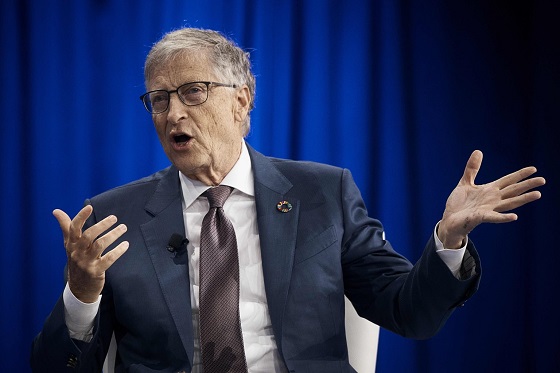
Even Bill Gates has shifted his stance, acknowledging that renewables alone can’t sustain a modern energy system — a reality still driving decisions in Canada.
You know the world has shifted when the New York Times, long a pulpit for hydrocarbon shame, starts publishing passages like this:
“Changes in policy matter, but the shift is also guided by the practical lessons that companies, governments and societies have learned about the difficulties in shifting from a world that runs on fossil fuels to something else.”
For years, the Times and much of the English-language press clung to a comfortable catechism: 100 per cent renewables were just around the corner, the end of hydrocarbons was preordained, and anyone who pointed to physics or economics was treated as some combination of backward, compromised or dangerous. But now the evidence has grown too big to ignore.
Across Europe, the retreat to energy realism is unmistakable. TotalEnergies is spending €5.1 billion on gas-fired plants in Britain, Italy, France, Ireland and the Netherlands because wind and solar can’t meet demand on their own. Shell is walking away from marquee offshore wind projects because the economics do not work. Italy and Greece are fast-tracking new gas development after years of prohibitions. Europe is rediscovering what modern economies require: firm, dispatchable power and secure domestic supply.
Meanwhile, Canada continues to tell itself a different story — and British Columbia most of all.
A new Fraser Institute study from Jock Finlayson and Karen Graham uses Statistics Canada’s own environmental goods and services and clean-tech accounts to quantify what Canada’s “clean economy” actually is, not what political speeches claim it could be.
The numbers are clear:
- The clean economy is 3.0–3.6 per cent of GDP.
- It accounts for about 2 per cent of employment.
- It has grown, but not faster than the economy overall.
- And its two largest components are hydroelectricity and waste management — mature legacy sectors, not shiny new clean-tech champions.
Despite $158 billion in federal “green” spending since 2014, Canada’s clean economy has not become the unstoppable engine of prosperity that policymakers have promised. Finlayson and Graham’s analysis casts serious doubt on the explosive-growth scenarios embraced by many politicians and commentators.
What’s striking is how mainstream this realism has become. Even Bill Gates, whose philanthropic footprint helped popularize much of the early clean-tech optimism, now says bluntly that the world had “no chance” of hitting its climate targets on the backs of renewables alone. His message is simple: the system is too big, the physics too hard, and the intermittency problem too unforgiving. Wind and solar will grow, but without firm power — nuclear, natural gas with carbon management, next-generation grid technologies — the transition collapses under its own weight. When the world’s most influential climate philanthropist says the story we’ve been sold isn’t technically possible, it should give policymakers pause.
And this is where the British Columbia story becomes astonishing.
It would be one thing if the result was dramatic reductions in emissions. The provincial government remains locked into the CleanBC architecture despite a record of consistently missed targets.
Since the staunchest defenders of CleanBC are not much bothered by the lack of meaningful GHG reductions, a reasonable person is left wondering whether there is some other motivation. Meanwhile, Victoria’s own numbers a couple of years ago projected an annual GDP hit of courtesy CleanBC of roughly $11 billion.
But here is the part that would make any objective analyst blink: when I recently flagged my interest in presenting my research to the CleanBC review panel, I discovered that the “reviewers” were, in fact, two of the key architects of the very program being reviewed. They were effectively asked to judge their own work.
You can imagine what they told us.
What I saw in that room was not an evidence-driven assessment of performance. It was a high-handed, fact-light defence of an ideological commitment. When we presented data showing that doctrinaire renewables-only thinking was failing both the economy and the environment, the reception was dismissive and incurious. It was the opposite of what a serious policy review looks like.
Meanwhile our hydro-based electricity system is facing historic challenges: long term droughts, soaring demand, unanswered questions about how growth will be powered especially in the crucial Northwest BC region, and continuing insistence that providers of reliable and relatively clean natural gas are to be frustrated at every turn.
Elsewhere, the price of change increasingly includes being able to explain how you were going to accomplish the things that you promise.
And yes — in some places it will take time for the tide of energy unreality to recede. But that doesn’t mean we shouldn’t be improving our systems, reducing emissions, and investing in technologies that genuinely work. It simply means we must stop pretending politics can overrule physics.
Europe has learned this lesson the hard way. Global energy companies are reorganizing around a 50-50 world of firm natural gas and renewables — the model many experts have been signalling for years. Even the New York Times now describes this shift with a note of astonishment.
British Columbia, meanwhile, remains committed to its own storyline even as the ground shifts beneath it. This isn’t about who wins the argument — it’s about government staying locked on its most basic duty: safeguarding the incomes and stability of the families who depend on a functioning energy system.
Resource Works News


Wisdom of Our Elders: The Contempt for Memory in Canadian Indigenous Policy

Terror in Australia: 12 killed after gunmen open fire on Hanukkah celebration

Egypt, Iran ‘completely reject’ World Cup ‘Pride Match’ plan

Tanker ban politics leading to a reckoning for B.C.
-
Crime19 hours ago
Terror in Australia: 12 killed after gunmen open fire on Hanukkah celebration
-
 Crime19 hours ago
Hero bystander disarms shooter in Australian terror attack
-
 Business1 day ago
Inflation Reduction Act, Green New Deal Causing America’s Energy Crisis
-
Business1 day ago
Fuelled by federalism—America’s economically freest states come out on top
-
 Daily Caller1 day ago
‘There Will Be Very Serious Retaliation’: Two American Servicemen, Interpreter Killed In Syrian Attack
-
 illegal immigration2 days ago
US Notes 2.5 million illegals out and counting
-
 Automotive2 days ago
Politicians should be honest about environmental pros and cons of electric vehicles
-
 Alberta2 days ago
The Recall Trap: 21 Alberta MLA’s face recall petitions