
Alberta
National Crisis Approaching Due To The Carney Government’s Centrally Planned Green Economy

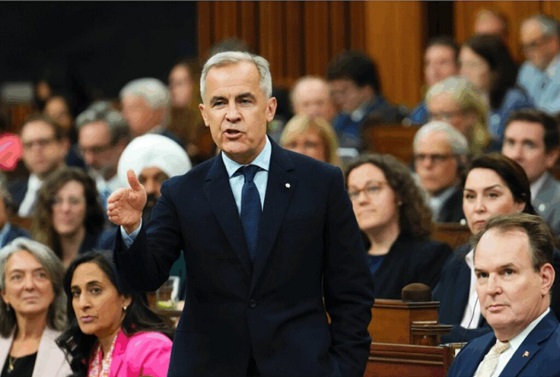
From Energy Now
By Ron Wallace
Welcome to the Age of Ottawa’s centrally planned green economy.
On November 13, 2025, the Carney government announced yet another round of projects to be referred to the newly created Major Projects Office (MPO) established under the authority of the Building Canada Act (2025). That Office, designed to coordinate and streamline federal approvals for infrastructure projects deemed by Cabinet to be in the “national interest”. The announcement made scant reference to the fact that most of the referred projects had already received the regulatory permits required for construction or are, in several cases, already well under way.
Meanwhile, the aspirations of Alberta’s Premier Danielle Smith were not realized with a “Memorandum of Understanding” (MoU) signed with the Carney government before the 112th Grey Cup in Winnipeg. It remains to be seen if Canada and Alberta can in fact “create the circumstances whereby the oil and gas emissions cap would no longer be required” and if these negotiations will result in a “grand bargain” with the federal government. For its part, Alberta has signaled a willingness to change its industrial carbon tax program to encourage corporations to invest in emissions reduction projects while Alberta’s major energy producers have signalled that they are willing to consider carbon capture and methane reduction within an agreed industrial carbon pricing scheme. Notwithstanding concerns about its financial and technical viability, the Pathways Alliance Project appears to have become a cornerstone of Alberta’s negotiations with the federal government.
In early 2025 Premier Smith issued a list of nine demands accompanied by a six month ultimatum demanding the federal government roll back key elements of its climate policy. Designed to re-assert Alberta’s autonomy over natural resources, Smith’s core issues centered on the repeal of Bill C-69 (the “no new pipelines act) and Bill C-48 (the Oil Tanker Moratorium Act) scrapping the proposed Clean Electricity Regulations and abandonment of the net-zero automobile mandate. In face of a possible refusal by Ottawa to deal with these outstanding issues, Premier Smith launched a “Next Steps” panel as a province-wide consultation to “strengthen provincial sovereignty within Canada” – a process that could possibly lead to a referendum on Alberta’s future within Confederation.
Subsequently, in early October, Premier Smith also announced that her government, in collaboration with three pipeline industry partners, would advance an application to the Major Projects Office for a new oil pipeline from Alberta to a marine terminal on the northwest coast of British Columbia. The intent of the application is to have this new pipeline designated as a ‘project in the national interest’ to receive an accelerated review and approval timeline. Alberta is planning to submit that application in May 2026 to address the five criteria set by Ottawa for national interest determinations. Notably, the removal of what Premier Smith has termed ‘bad laws’ would be a prerequisite to construction of this proposed project.
As the Carney government continues its complex dance around these issues it remains to be seen how, or if, Smith’s demands for Canada to roll back federal legislation will be met. While Premier Smith staunchly advocated for the removal of what she termed to be the ‘bad laws’ standing in the way of the “ultimate approval” of a pipeline to the B.C. coast it remains to be seen if the Carney government will to accede to most, or even any, of these demands in ways that could clear the way for a new oil export pipeline from Alberta. At a time when the Carney government appears to be doubling down on its priority to reduce Canadian emissions it remains to be seen if Alberta can in fact increase oil production without increasing emissions.
Liberal MP Corey Hogan, who serves as parliamentary secretary to the Minister of Energy and Natural Resources the Honourable Tim Hodgson, noted that: “So as long as we can get to common understandings of what all of those mean, there’s not really a need for an emissions cap.” This ‘common understanding’ may signal a willingness by Ottawa to set aside the Trudeau government’s signature proposed oil and gas emissions cap in exchange for major carbon capture and storage projects in Alberta that would be combined with strong carbon pricing and methane regulations.
While this ‘common understanding’ may yet lead to a ‘grand bargain’ it would nevertheless effectively create two different classes of oil in Canada, each operating under different sets of regulations and different cost structures. Western Canada’s crude oil producers would be forced to shoulder costly and technically challenging decarbonization requirements in face of a federal veto over any new oil projects that weren’t ‘decarbonized.’ Canadian-produced oil would be faced with entering international export markets at a significant, if not ruinous, competitive disadvantage risking not only profitability but market share. Meanwhile, this hypocritical policy would allow eastern Canadian oil refiners to import ‘carbonized’ oil from countries with significantly looser environmental standards.
Carney’s November 2025 “Canada Strong” federal budget sets out $141.4 billion in new spending over five years with a projected $78.3 billion deficit for 2025–26. As Jack Mintz points out, while that budget claims to be “spending less to invest more”, annual capital spending will double from $30 billion a year to $60 billion a year over five years:
“… as federal program spending, which excludes interest on debt, is forecast to rise by 16 per cent from $490 billion this fiscal year to $568 billion in 2029-30. During the current year alone, the spending increase is a remarkable seven per cent. Public debt charges will soar by 43 per cent from $53 billion to $76 billion due to growing indebtedness and higher interest rates. No surprise there. Deficits — $78 billion this year alone — accumulate by a whopping $320 billion over five years.”
Since 2015 Canada has experienced a flight of investment capital approaching CAD$650 billion due to lost, or deferred, resource projects – particularly in the energy sector. While many economists recognize that Canada’s fiscal status may be worse than it appears, the Carney government is asking Canadians to ignore these figures while they implement industrial policies that, for all intents and purposes, represent a significant regression into central planning. The ‘modernization’ of the National Energy Board that began early in the Trudeau government’s mandate appears now to have been but a first step in the progressive centralization of control by the federal government. Gone are the days when an independent expert energy regulator made national interest determinations based upon cross-examined evidence presented in a public forum. Instead, a cabinet cloaked in confidentiality that is clearly inclined toward emissions reduction as its paramount consideration, will now determine and select projects.
This process of centralized decision-making represents a dilemma that confronts not just Premier Smith but the entire Canadian energy sector. The emerging financial debacle in the Canadian EV battery and vehicular manufacturing market is but one example of how centrally planned criteria designed to achieve a Net Zero economy will almost invariably lead to unanticipated, if not economically disastrous, results.
In short, the “green economy” is not working. The Fraser Institute noted that while Federal spending on the green economy surged from $600 million in 2014/15 to $23 billion in 2024/25, a nearly 40-fold increase, the green economy’s share of GDP rose only marginally from 3.1% in 2014 to 3.6% in 2023. Moreover, promised “green jobs” have not materialized at scale while traditional energy sectors vital to Alberta’s and the Canadian GDP have been actively constrained.
This economic reality has apparently not yet dawned in Ottawa. As Gwyn Morgan points out, Prime Minister Carney who, in 2021 with Michael Bloomberg, launched the Glasgow Financial Alliance for Net Zero (GFANZ), has not changed his determination to hike Canadian carbon taxes, proposing to increase the industrial levy from $80 to $170/ton by 2030. GFANZ was created to align global financial institutions with net-zero emissions targets bringing together sector-specific alliances like the Net Zero Banking Alliance (NZBA) and the Net Zero Asset Managers (NZAM). However, early in 2025 GFANZ faced significant challenges as major U.S. banks exited the NZBA followed by the Net-Zero Insurance Alliance (NZIA) that disbanded entirely in 2024 after a wave of member withdrawals. GFANZ was forced to undergo a strategic restructuring in January 2025 to shift from a coalition-of-alliances to a more open, standalone platform focused on mobilizing capital for the low-carbon transition through pragmatic climate financing. ‘Pragmatic’ indeed.
While Carney’s GFANZ has effectively imploded, his government ignores developing new realities in climate policy by continuing to implement the Trudeau government’s green agenda with programs like the Pan-Canadian Framework on Clean Growth and Climate Change. That program contains a plethora of ‘green economy’ measures designed to reduce carbon emissions in parallel with the 2030 Emissions Reduction Plan that commits Canada to reducing greenhouse gases (GHG) to achieve net-zero by 2050.
These policies ignore the recent change of mind by thought-leaders like Bill Gates who acknowledges that “climate change, disease, and poverty are all major problems we should deal with them in proportion to the suffering they cause.” This aligns his thinking with that of Bjorn Lomborg who states:
“Climate change demands action, but not at the expense of poverty reduction. Rich governments should invest in long-overdue R&D for breakthrough green technologies — affordable, reliable alternatives that everyone, rich and poor alike, will adopt. That is how we can solve climate without sacrificing the vulnerable. More countries, including Canada, need to get on board with the mission of returning the World Bank to focusing on poverty. Raiding development funds for climate initiatives isn’t just misguided. It’s an affront to human suffering.”
Philip Cross also expressed hope that 2025 may yet represent a “turning point in a return to sanity in public policy:”
“Nowhere is the change more evident than in attitudes to green energy policies, once the rallying cry for left-wing parties in North America. Support has collapsed for three pillars of green energy advocacy: building electric vehicles to eliminate our need for oil pipelines and refineries; using the financial clout of the Net-Zero Banking Alliance to force firms to eliminate carbon emissions; and legally mandating the shift from fossil fuels to green energy.”
Nonetheless, Prime Minister Carney appears resolute in the belief that Canadian policies for Net Zero are not hobbling investment in the energy sector while choosing to ignore alternative regulatory and investment tools that could make a material difference for the economy. Carney also appears to ignore major Canadian firms like TC Energy that have re-directed investments of $8.5 billion into the U.S. as they cite significant concerns about the Canadian regulatory structure. Similarly, Enbridge has advocated for “significant energy policy changes” in Canada while focussing attention not on new export pipelines but instead to incrementally upgrade capacity within its existing Mainline system network.
Canada’s destiny as a ‘decarbonized energy superpower’ will be largely determined by the serious economic consequences that will result from a sustained ideological push into ‘clean energy’. That said, will this be accomplished by a chaotic, ever-more centralized process of decision making, masquerading as a coherent national energy policy?
Conclusion
As Gwyn Morgan has succinctly written, it remains to be seen if the Carney government will be willing to make a “climate climbdown” in face of the reality that net zero goals are being broadly abandoned globally or will they continue to sacrifice the Canadian economy to single-minded, unrealistic or unattainable, goals for emissions reduction?
To date none of the projects referred by the Carney government to the Major Projects Office has been designated as ‘being in the national interest’. Moreover, the Alberta bitumen pipeline advocated by Premier Smith has not yet appeared on any list. Nonetheless, she apparently remains resolute in maintaining negotiations with Ottawa stating: “Currently, we are working on an agreement with the federal government that includes the removal, carve out or overhaul of several damaging laws chasing away private investment in our energy sector, and an agreement to work towards ultimate approval of a bitumen pipeline to Asian markets.”
As Alberta’s ultimatums and deadlines to Ottawa pass, it would be reasonable to question whether Premier Smith is, in fact, being confronted with the illusory freedom of a Hobson’s choice: Either Alberta must accept, at unprecedented cost, Ottawa’s determination to realize Net Zero or it will get nothing at all. While she may be seeking federal support to enable, or accelerate, construction of new pipelines, all Ottawa may be willing to concede is a promise to do better with an MoU that would ultimately impose massive costs for ‘decarbonization’ on Alberta while eastern Canada imports oil from other, less constrained, jurisdictions. Is this a “Grand Bargain?”
Budget 2025 has introduced a Climate Competitiveness Strategy for nuclear, hydro, wind and grid modernization that projects over CAD$1 trillion in spending over five years. It also reaffirms a commitment to increase carbon taxes by $80-$170/tonne for CO2-equivalent emissions by 2030. Since it appears committed to maintaining, or even expanding, Trudeau-era green legislation, some might question any commitments from the Carney government to enter into an even-handed debate on Canadian energy policies that are so critical to Alberta’s energy sector? As the Fraser Institute points out:
“The Canadian case shows an even greater mismatch between Ottawa’s COP commitments and its actual results. Despite billions spent by the federal government on the low-carbon economy (electric vehicle subsidies, tax credits to corporations, etc.), fossil fuel consumption increased 23 per cent between 1995 and 2024. Over the same period, the share of fossil fuels in Canada’s total energy consumption rose from 62.0 to 66.3 per cent.”
While the creation of the MPO may give the appearance of accelerating projects deemed to be in the national interest it nonetheless requires a circumvention of an existing legislative base. This approach further enhances a centrally-planned economy and presupposes that more, not less, bureaucracy will somehow make Canada an “energy superpower”.
Canada continues to overlook rising economic challenges while pursuing climate goals with inconsistent policies. As such, it risks becoming an outlier in energy policy at a time when the world is beginning to recognize the immense costs and implausibility of implementing policies for Net Zero.
Premier Danielle Smith may yet face a pivotal moment in Alberta’s, and possibly Canadian, history. If Ottawa’s past performance is but a prologue, predictions of a happy outcome may require a significant dose of optimism.
Ron Wallace is a former Member of the National Energy Board.

Alberta
Trump’s Venezuela Geopolitical Earthquake Shakes up Canada’s Plans as a “Net Zero” Energy Superpower

From Energy Now
By Ron Wallace
Get the Latest Canadian Focused Energy News Delivered to You! It’s FREE: Quick Sign-Up Here
Prime Minister Carney’s ‘well-laid plans’ for Canada to become a net zero energy superpower may suddenly be at risk – with significant consequences for Alberta. Recent events in Venezuela should force a careful re-examination of the economic viability of producing “decarbonized” heavy oil.
Having amassed military forces in the Caribbean throughout 2025 under Operation Southern Spear, on 3 January 2026 the Trump administration launched Operation Absolute Resolve, termed one of the most dramatic U.S. military actions in the Western Hemisphere since Operation Just Cause in Panama in 1989. Targeting multiple locations across Venezuela it led to the capture and removal of Venezuelan President Nicolás Maduro and his wife Cilia Flores. Initially held aboard the USS Iwo Jima they have been taken to the U.S. to face criminal charges for “narcoterrorism” and other offences.
In what has been termed a “$17 trillion reset”, Alberta may be at risk of losing its hard-won U.S. Gulf Coast (USGC) dominance to a resurgent rival – this coming at a time when Alberta and Canada are proposing to expend billions on “decarbonized” oil with punitive regulatory conditions that would not apply to Venezuelan, or any other international producers, of heavy oil. With U.S. forces capturing President Nicolás Maduro and President Trump declaring American administration of Venezuela to “get the oil flowing” again, the revival of Venezuela’s vast heavy crude reserves—over 300 billion barrels, the world’s largest—could flood the market with a cheaper, proximate supply tailored to U.S. refineries.
Historically, Alberta capitalized on Venezuela’s collapse when production there plummeted, due to mismanagement and sanctions, from 3 million barrels per day in the mid-2000’s to under 1 million today. This allowed Canadian heavy blends like Western Canadian Select to become the dominant feedstock for U.S. Gulf Coast refiners. In 2025, Canada supplied over one-third of the region’s heavy imports, tightening differentials and bolstering Alberta’s revenues.
A U.S.-revived Venezuelan oil industry, even if investment for infrastructure takes years to implement, would be a serious threat that risks displacing Canadian oil with lower-cost alternative supplies that also are geographically closer to U.S. refiners. This seismic geopolitical shift now confronts Prime Minister Mark Carney and Premier Danielle Smith as they attempt to implement their November 2025 Memorandum of Understanding (MoU), one that commits Alberta to produce “decarbonized” oil through massive carbon capture projects like Pathways Plus associated with Carbon Pricing Equivalency Agreements, are vastly expensive measures that could undermine Canadian price competitiveness against unsanctioned Venezuelan crude. Possibly of greater importance, Canadian insistence on “net zero” targets associated with pipelines and heavy oil production, policies that have caused significant capital flight from the Canadian energy sector, may further diminish the attractiveness of Alberta oil projects to international investors. Since 2015 Canada has experienced a flight of investment capital approaching CAD$650 billion due to lost, or deferred, resource projects – particularly in the energy sector. Will these policies and plans for the Alberta-Canada MoU allow Canada to become an “energy superpower” in this new age of international competition?
While short-term disruptions from the U.S. intervention might temporarily tighten heavy supply (and therefore benefit Canadian producers) the long-term prospect of U.S.-controlled Venezuelan oil production unquestionably represents a sea-change for international oil markets and may, potentially strengthen the economic case, if not urgency, for new Canadian Pacific pipelines to provide market access away from the U.S.
Historically, the U.S.–Venezuela oil trade relationship was a highly integrated system that was seriously disrupted, beginning in the 1970’s, by nationalization programs and by subsequent U.S. sanctions. The U.S. Gulf Coast (USGC) refinery complex is among the most highly developed in the world, one that required billions in investments for coking, desulfurization and hydrocracker units specifically designed to process heavy, sour Venezuelan crude. Importing approximately 40 million barrels of heavy crude per month in 2025, the USGC refiners scrambled to replace lost, sanctioned Venezuelan oil with Canadian Cold Lake, Mexican Maya and Brazilian heavy grades. Canada, offering a supply that was stable, pipeline‑connected and geopolitically low‑risk was the only producer with enough heavy crude to meaningfully offset those Venezuelan losses. In the twelve months ending February 2025, Canada supplied 13.6 million barrels/month representing 34% (the largest single source) to those U.S. refiners. As a result, Canadian Cold Lake and WCS differentials tightened with the Cold Lake WTI discount narrowing from $13.57/bbl (February) to $9.45/bbl (May).
However, with a federal government consumed with concerns about emissions and the attainment of an improbable national goal of Net Zero, and with terms in an MoU that will require material capital expenditures to produce “decarbonized” oil, Alberta and Canada would be wise to recognize that this geopolitical sea-change will affect not just prior assumptions about Canadian oil production (and MoU’s) but may yet work to change the fundamental economic assumptions of global oil economics.
Premier Smith has consistently argued that Canada needs to develop an “alternate reality” one in which Alberta oil producers and international export pipelines allow Canada to contribute to global energy security in ways that preclude “economic self-destruction.” In face of these geopolitical events, especially at a time of mounting national deficits, Canada may have precious little time to get its act together to effectively, and competitively, maintain and secure international markets for Alberta oil.
Dr. Ron Wallace is a former National Energy Board member who has also worked in the Venezuelan heavy oil sector.
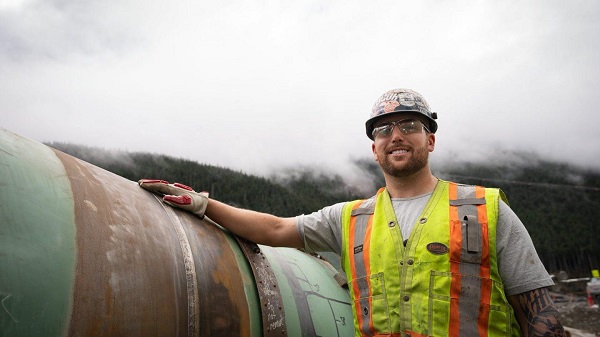
From the Canadian Energy Centre
Canada’s energy landscape changed significantly in 2025, with mounting U.S. economic pressures reinforcing the central role oil and gas can play in safeguarding the country’s independence.
Here are the Canadian Energy Centre’s top five most-viewed stories of the year.
5. Alberta’s massive oil and gas reserves keep growing – here’s why

The Northern Lights, aurora borealis, make an appearance over pumpjacks near Cremona, Alta., Thursday, Oct. 10, 2024. CP Images photo
Analysis commissioned this spring by the Alberta Energy Regulator increased the province’s natural gas reserves by more than 400 per cent, bumping Canada into the global top 10.
Even with record production, Alberta’s oil reserves – already fourth in the world – also increased by seven billion barrels.
According to McDaniel & Associates, which conducted the report, these reserves are likely to become increasingly important as global demand continues to rise and there is limited production growth from other sources, including the United States.
4. Canada’s pipeline builders ready to get to work

Photo courtesy Coastal GasLink
Canada could be on the cusp of a “golden age” for building major energy projects, said Kevin O’Donnell, executive director of the Mississauga, Ont.-based Pipe Line Contractors Association of Canada.
That eagerness is shared by the Edmonton-based Progressive Contractors Association of Canada (PCA), which launched a “Let’s Get Building” advocacy campaign urging all Canadian politicians to focus on getting major projects built.
“The sooner these nation-building projects get underway, the sooner Canadians reap the rewards through new trading partnerships, good jobs and a more stable economy,” said PCA chief executive Paul de Jong.
3. New Canadian oil and gas pipelines a $38 billion missed opportunity, says Montreal Economic Institute

Steel pipe in storage for the Trans Mountain Pipeline expansion in 2022. Photo courtesy Trans Mountain Corporation
In March, a report by the Montreal Economic Institute (MEI) underscored the economic opportunity of Canada building new pipeline export capacity.
MEI found that if the proposed Energy East and Gazoduq/GNL Quebec projects had been built, Canada would have been able to export $38 billion worth of oil and gas to non-U.S. destinations in 2024.
“We would be able to have more prosperity for Canada, more revenue for governments because they collect royalties that go to government programs,” said MEI senior policy analyst Gabriel Giguère.
“I believe everybody’s winning with these kinds of infrastructure projects.”
2. Keyera ‘Canadianizes’ natural gas liquids with $5.15 billion acquisition

Keyera Corp.’s natural gas liquids facilities in Fort Saskatchewan, Alta. Photo courtesy Keyera Corp.
In June, Keyera Corp. announced a $5.15 billion deal to acquire the majority of Plains American Pipelines LLP’s Canadian natural gas liquids (NGL) business, creating a cross-Canada NGL corridor that includes a storage hub in Sarnia, Ontario.
The acquisition will connect NGLs from the growing Montney and Duvernay plays in Alberta and B.C. to markets in central Canada and the eastern U.S. seaboard.
“Having a Canadian source for natural gas would be our preference,” said Sarnia mayor Mike Bradley.
“We see Keyera’s acquisition as strengthening our region as an energy hub.”
1. Explained: Why Canadian oil is so important to the United States

Enbridge’s Cheecham Terminal near Fort McMurray, Alberta is a key oil storage hub that moves light and heavy crude along the Enbridge network. Photo courtesy Enbridge
The United States has become the world’s largest oil producer, but its reliance on oil imports from Canada has never been higher.
Many refineries in the United States are specifically designed to process heavy oil, primarily in the U.S. Midwest and U.S. Gulf Coast.
According to the Alberta Petroleum Marketing Commission, the top five U.S. refineries running the most Alberta crude are:
- Marathon Petroleum, Robinson, Illinois (100% Alberta crude)
- Exxon Mobil, Joliet, Illinois (96% Alberta crude)
- CHS Inc., Laurel, Montana (95% Alberta crude)
- Phillips 66, Billings, Montana (92% Alberta crude)
- Citgo, Lemont, Illinois (78% Alberta crude)


The U.S. Just Removed a Dictator and Canada is Collateral Damage
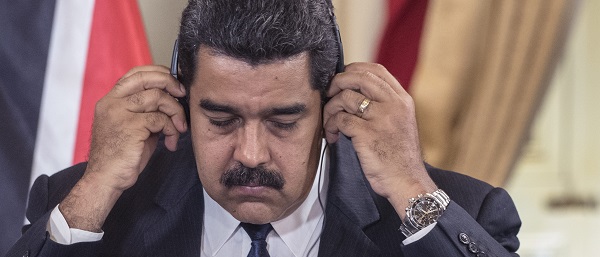
Scathing Indictment Claims Nicolás Maduro Orchestrated Drug-Fueled ‘Culture Of Corruption’ Which Plagued Entire Region

US Justice Department Accusing Maduro’s Inner Circle of a Narco-State Conspiracy
Trump Says U.S. Strike Captured Nicolás Maduro and Wife Cilia Flores; Bondi Says Couple Possessed Machine Guns
-
 Daily Caller1 day ago
Minnesota Governor resigns from re-election campaign as massive government frauds revealed
-
 Environment1 day ago
Left-wing terrorists sabotage German power plant, causing massive power outage
-
 International20 hours ago
Poilievre, Carney show support for Maduro capture as NDP’s interim leader denounces it
-
 Energy1 day ago
Trump’s Venezuela Move: A $17 Trillion Reset of Global Geopolitics and a Pivotal Shift in US Energy Strategy
-
 International1 day ago
Maduro, wife plead not guilty in first court appearance
-
 Frontier Centre for Public Policy1 day ago
Is Canada still worth the sacrifice for immigrants?
-
 Education1 day ago
Mother petitions Supreme Court after school hid daughter’s ‘gender transition’
-
 Bruce Dowbiggin1 day ago
The Olympic Shutout: No Quebec Players Invited For Canada