
Dan McTeague
My fellow boomers, Carney’s ‘Green’ obsessions are bad for all of us!


 By Dan McTeague
One common narrative of this election has been “The Boomers vs. Everyone Else.” Poll after poll after poll has shown Mark Carney and his band of Trudeau Liberals with big leads among Boomers — Canadians over the age of 60, or so — with younger age groups favouring Pierre Poilievre and the Conservatives, sometimes by quite a lot.
Now, I am on record as being somewhat skeptical of the polls. They just don’t track with my experience on the ground, either door knocking for candidates or talking to people in my life. Maybe I’m wrong, but for me they just don’t pass the smell test.
That said, as a card-carrying Boomer myself, I am well aware that a great many members of my generation have been talked into supporting Carney. Some because they’re simply deluded and selfish, and have no concern for the future — an unfortunate characteristic of the ‘Me Generation,’ whose catchphrase was “Live in the Now!,” at least until our hair turned grey and we traded in our groovy sunglasses for bifocals, at which point we switched it to “Live in the Past!”
Deficits? Rising crime? A soaring cost of living, underlined by elevated food and energy prices? Their attitude is, ‘Who cares? I’ve got my investments and my retirement account! I’ve got my condo in Florida and the value of my house has exploded! I’ve got nothing to worry about!’
Or, as Lisa Raitt put it on CBC the other night, many Boomers “really don’t have a problem with the spending that is coming from a Liberal government. In fact, they embrace it. They enjoy it. And… I find it very frustrating because I look at the younger demographic who are really concerned about it because they’re the ones that are going to be stuck with the bill.”
But other Boomers are tempted by Carney because they’re legitimately confused about the best approach to this strange moment. Six months ago it seemed to them like a good idea to give the Conservatives a shot to get our country back on track. But then Donald Trump started in on his 51st state nonsense, and suddenly the mainstream media was crowing that the best way to punch Trump in the nose was to vote Liberal. Even when Trump himself has tacitly endorsed Carney, and the only nose endangered by a fourth Liberal term is ours, as we cut it off to spite our face.
This second group of Boomers has been convinced that a vote for Carney is a vote for change, that he’s not an ideologue like Trudeau, that he’s a businessman and a “safe pair of hands,” whom we can trust to turn the country around. That is, more-or-less, the CBC-approved narrative, but in no way does it match the facts on the ground.
Remember, Carney was a member of the Trudeau inner circle for years, which makes his continual deflection about the Liberals’ terrible record — “I just got here!” — totally disingenuous. His fingerprints are all over the Liberals’ policies, especially those related to energy. Remember that he was the king of carbon taxation, until its unpopularity led him to distance himself from the policy, zeroing out (not repealing) the Consumer Carbon tax, while doubling down on the Industrial Carbon Tax and remaining firmly committed to the so-called Clean Fuel Standards.
He’s stuck with the Trudeau government’s Electric Vehicle mandate, which requires that all new cars purchased in Canada be EVs beginning in 2035, despite the fact that EVs are more expensive than gas-and-diesel driven vehicles, and that the federal program subsidizing buying them has run out of money. And that doesn’t even touch on the fact that they don’t work well in cold climates like ours, that they will strain our electrical grid, and that there is no actual environmental benefit to switching to EVs. (Meanwhile, Poilievre has wisely pledged to end the EV mandate.)
And a good long look at Carney’s actual career should clear up the question of whether he’s less of an ideologue than Trudeau. In fact, he was always a hardcore environmentalist first and a banker second. Don’t forget that he founded the Glasgow Financial Alliance for Net-Zero (GFANZ,) an organization whose goal is to force his Net-Zero ideology on an unsuspecting world by pressuring banks and other financial institutions not to lend to or invest in oil and gas companies or projects, whether or not those projects would generate revenue and benefit their shareholders. Carney himself described GFANZ as being “relentlessly, ruthlessly, absolutely focused on the transition to net-zero.”
Now GFANZ has fallen a long way over the past few months, as major banks in both the U.S. and Canada dropped out of it over accusations that its activities constituted collusion. But even so, Carney’s obsession with ridding the world of hydrocarbon energy doesn’t bode well for a country like ours whose economy is so heavily reliant on oil and gas.
While Carney himself was personally raking in millions of dollars at Brookfield and elsewhere, the Carney-advised Liberals were running our national finances into the ground, leaving us second-to-last for real GDP growth in the OECD since they came to power. We’ve gone from fifth place on the quality of life index, in 2014, tied with Denmark and Finland, to twenty-ninth today! Mark Carney owns that.
This is exactly the kind of person you don’t want running your country. And that is something that Boomers of all stripes should recognize. Carney-supported policies have made life harder and more expensive in the present moment, and if he’s elected, Carney-enacted policies will make life harder and more expensive, not just in the distant future, but in the near and medium term as well, and not just for your children and grandchildren, but for you and your investments as well.
Keep that in mind when you go to the polls.
Dan McTeague is President of Canadians for Affordable Energy.


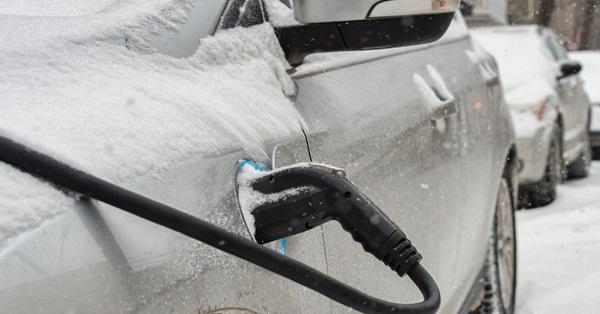

Things have only gone from bad to worse for the global Electric Vehicle industry. And that’s a problem for Canada, because successive Liberal governments have done everything in their power to hitch our cart to that horse.
Earlier this month, the Trump Administration rolled back more Biden-era regulations that effectively served as a back-door EV mandate in the United States. These rules mandated that all passenger cars be able to travel at least 65.1 miles (and for light trucks, 45.2 miles) per gallon of gasoline or diesel, by the year 2031. Since no Internal Combustion Engine (ICE) vehicle could realistically conform to those standards, that would have essentially boxed them out of the market.
Trump’s rolling them back was a fulfillment of his campaign promise to end the Biden Administration’s stealth EV mandates. But it was also a simple recognition of the reality that EVs can’t compete on their own merits.
For proof of that, look no further than our second bit of bad news for EVs: Ford Motor Company has just announced a massive $19.5 billion write-down, almost entirely linked to its aggressive push into EVs. They’ve lost $13 billion on EVs in the past two years alone.
The company invested tens of billions on these go-carts, and lost their shirt when it turned out the market for them was miniscule.
Ford’s EV division president Andrew Frick explained, “Ford is following the customer. We are looking at the market as it is today, not just as everyone predicted it to be five years ago.”
Of course, five years ago, the market was assuming that government subsidies-plus-mandates would create a market for EVs at scale, which hasn’t happened.
As to what this portends for the market, the Wall Street Journal argued, “The company’s pivot from all-electric vehicles is a fresh sign that America’s roadways – after a push to remake them – will continue to look in the near future much like they do today, with a large number of gas-powered cars and trucks and growing use of hybrids.”
And that’s not just true in the U.S. Across the Atlantic, reports suggest the European Union is preparing to delay their own EV mandates to 2040. And the U.K.’s Labour government is considering postponing their own 2030 ICE vehicle ban to align with any EU change in policy.
It’s looking like fewer people around the world will be forced by their governments to buy EVs. Which means that fewer people will be buying EVs.
Now, that is a headache for Canada. Our leaders, at both the federal and provincial levels, have bet big on the success of EVs, investing billions in taxpayer dollars in the hopes of making Canada a major player in the global EV supply chain.
To bolster those investments, Ottawa introduced its Electric Vehicle mandate, requiring 100 per cent of new light-duty vehicle sales to be electric by 2035. This, despite the fact that EVs remain significantly more expensive than gas-and-diesel driven vehicles, they’re poorly suited to Canada’s vast distances and cold climate, and our charging infrastructure is wholly inadequate for a total transition to EVs.
But even if these things weren’t true, there still aren’t enough of us to make the government’s investment make sense. Their entire strategy depends on exporting to foreign markets that are rapidly cooling on EVs.
Collapsing demand south of the border – where the vast majority of the autos we build are sent – means that Canadian EVs will be left without buyers. And postponed (perhaps eventually canceled) mandates in Europe mean that we will be left without a fallback market.
Canadian industry voices are growing louder in their concern. Meanwhile, plants are already idling, scaling back production, or even closing, leaving workers out in the cold.
As GM Canada’s president, Kristian Aquilina, said when announcing her company’s cancellation of the BrightDrop Electric delivery van, “Quite simply, we just have not seen demand for these vehicles climb to the levels that we initially anticipated…. It’s simply a demand and a market-driven response.”
Prime Minister Mark Carney, while sharing much of the same environmental outlook as his predecessor, has already been compelled by economic realities to make a small adjustment – delaying the enforcement of the 2026 EV sales quotas by one year.
But a one-year pause doesn’t solve the problem. It kicks the can down the road.
Mr. Carney must now make a choice. He can double down on this troubled policy, continuing to throw good money after bad, endangering a lot of jobs in our automotive sector, while making transportation more expensive and less reliable for Canadians. Or he can change course: scrap the mandates, end the subsidies, and start putting people and prosperity ahead of ideology.
Here’s hoping he chooses the latter.
The writing is on the wall. Around the world, the forced transition to EVs is crashing into economic reality. If Canada doesn’t wake up soon, we’ll be left holding the bag.

By Dan McTeague
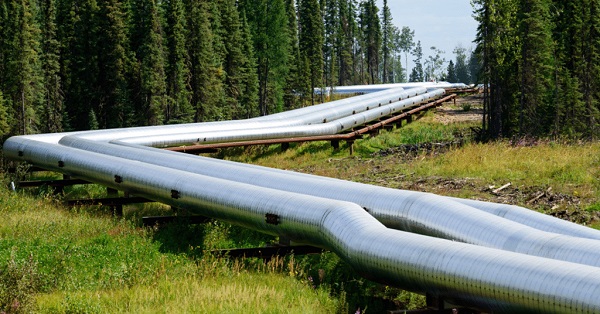
Will Carney’s new pipeline deal actually help get a pipeline built in Canada? As we said before, the devil is in the details.
While the establishment and mainstream media cheer on the new pipeline agreement, there are specific details you need to be aware of.
Dan McTeague explains in his latest video.

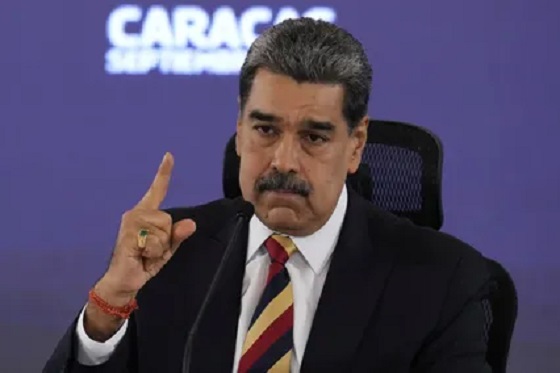
Trump confirms first American land strike against Venezuelan narco networks

The U.S. Just Removed a Dictator and Canada is Collateral Damage
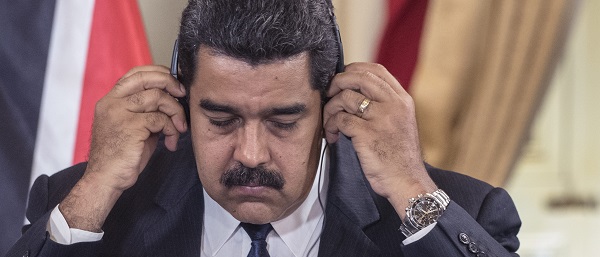
Scathing Indictment Claims Nicolás Maduro Orchestrated Drug-Fueled ‘Culture Of Corruption’ Which Plagued Entire Region

US Justice Department Accusing Maduro’s Inner Circle of a Narco-State Conspiracy
-
Daily Caller2 days ago
Scathing Indictment Claims Nicolás Maduro Orchestrated Drug-Fueled ‘Culture Of Corruption’ Which Plagued Entire Region
-
 Business2 days ago
Virtue-signalling devotion to reconciliation will not end well
-
 Opinion1 day ago
Hell freezes over, CTV’s fabrication of fake news and our 2026 forecast is still searching for sunshine
-
 Daily Caller2 days ago
Trump Says US Going To Run Venezuela After Nabbing Maduro
-
 COVID-191 day ago
A new study proves, yet again, that the mRNA Covid jabs should NEVER have been approved for young people.
-
 Environment6 hours ago
Left-wing terrorists sabotage German power plant, causing massive power outage
-
 International1 day ago
“History in the making”: Venezuelans in Florida flood streets after Maduro’s capture
-
 Frontier Centre for Public Policy9 hours ago
Is Canada still worth the sacrifice for immigrants?