
Great Reset
Middle school girls who refused to compete against male banned from next track meet


From LifeSiteNews
Four of the five girls filed a lawsuit against the Harrison County Board of Education protesting the ban while Attorney General Patrick Morrisey said, ‘I will do everything in my power to defend these brave young girls. ‘This is just wrong.’
Five West Virginia female middle school athletes who refused to throw the shot put against a boy after a circuit court exempted him from a state law that prevents males from competing on female sports’ teams have been banned from participating in their next competition.
On April 18, the five girls attended the 2024 Harrison County Middle School Championships track and field meet where they were scheduled to compete in shot put.
The five students stepped out of the shot-put circle without throwing, forfeiting in protest of the participation of an eighth-grade male student presenting himself as a girl during the competition.
After four of the five girls filed a lawsuit against the Harrison County Board of Education protesting the ban, West Virginia Attorney General Patrick Morrisey stepped in and wrote an amicus brief on their behalf.
“I will do everything in my power to defend these brave young girls,” Morrisey wrote Monday on X. “This is just wrong. We must stand for what’s right and oppose these radical trans policies.”
“The only thing this decision does is teach these children to keep their mouths shut and not disagree with what they saw as unfairness,” said Morrisey, according to a statement from his office. “That is outrageous and it tramples these students’ rights to freedom of speech and expression.”
“Their actions at the earlier track meet were not disruptive or aggrandizing. They were the quiet demonstration of the student-athletes’ evident unhappiness with the competitive consequences of a federal appellate court’s decision,” said Morrisey, a Republican candidate for governor.
“Rather than being punished for their conduct or being sidelined in an effort to score points, all should commend these young athletes for putting their personal performances aside to demonstrate their discontent with an unjust result that affects them personally and within that event,” he said.
Other conservatives took to X to express support for the banned girls.
“How many young girls are losing opportunities because cowardly liberal and RINO politicians are caving to mental illness?” the Travis Media Group asked.
JUST IN: The 5 girls from Lincoln Middle School in West Virginia who protested a trans student participating in shot put by refusing to participate, have been banned from school sports.
Harrison County Board of Education made the decision, and now they’re being sued by the… pic.twitter.com/t6dannzqhg
— 🇺🇸Travis Media Group🇺🇸 (@TM1Politics) April 30, 2024
“Girls banned from girls’ sports instead of a male being banned from girls’ sports,” wrote Greg Scott, vice president of policy for the Center for Arizona Policy’s, noting, “and this isn’t California or New York. This is Wild and Abominable West Virginia.”
Girls banned from girls' sports instead of a male being banned from girls' sports.
And this isn't California or New York.
This is Wild and Abominable West Virginia. https://t.co/oTB0xwovh7
— Greg Scott (@GScottSays) April 30, 2024
“You can’t participate in this meet until you admit girls don’t exist,” said the Redheaded Libertarian, “unless you want abortions, because it’s your rights as girls.”
NEW: Five middle schoolers who refused to compete against a biological male in the shot put have been banned from future competitions.
Where are all the outraged feminists?
West Virginia Attorney General Patrick Morrisey is now filing a lawsuit against the Harrison County… pic.twitter.com/CntWcdJMJf
— Collin Rugg (@CollinRugg) April 30, 2024

From LifeSiteNews
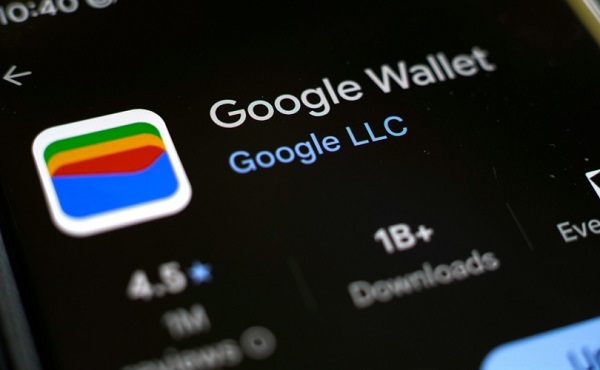
The new GC Wallet is supposed to be a ‘foundational component’ of a controversial yet-to-come digital ID system.
Despite clear signs that most Canadians do not want a national digital ID, the Liberal government of Prime Minister Mark Carney has quietly released a new type of digital ID app on Google’s Play Store called GC Wallet.
The new app appeared on Google sometime late last week and was developed by Canada’s Employment and Social Development department. This is the same department, as reported by LifeSiteNews, that recently said it would move ahead with digital identification for anyone seeking federal benefits, including seniors on Old Age Security.
The new GC Wallet, say officials, is a “secure and convenient way to store and access your official digital credentials,” allowing users to keep important documents on it, such as temporary visas along with pilot licenses, and has an offline QR code function built in.
According to the government, the new GC Wallet is supposed to be a “foundational component” of a yet-to-come digital ID system that most likely will be expanded to a variety of documents.
The app was blasted on X by Kyle Kemper, the half-brother of former Prime Minister Justin Trudeau.
In an X post late last week, Kemper claimed the new app can “use your device’s camera to scan QR codes and import credentials issued by authorized institutions. Present your digital documents using dynamic QR codes or secure on-screen displays, making it easy to verify your identity and other information at airport boarding gates and other checkpoints.”
“The government of Canada has silently deployed a digital wallet on the Google Play Store for Digital ID. They have also cancelled an industry RFP process. I am digging into this and will offer detailed comments soon,” he wrote.
The GC Wallet is under development and, according to the feds, is “part of a limited Government of Canada pilot and is intended solely for use by approved participants.
The app is not available for broad public use at this time.
During COVID, the Canadian federal government released a digital-type app called ArriveCAN app for travel that was a form of digital ID. The app was riddled with technical glitches along with privacy concerns from users.
Last week, as reported by LifeSiteNews, without oversight from elected federal MPs, Canada’s Department of Immigration had research done to investigate a national ID system using digital passports for domestic use and how such a system would be enforced.
As reported by LifeSiteNews, the Canadian government hired outside consultants tasked with looking into whether or not officials should proceed with creating a digital ID system for all citizens and residents.
As per a May 20 Digital Credentials Issue memo, as noted by Blacklock’s Reporter, the “adoption” of such a digital ID system may be difficult.”
Digital IDs and similar systems have long been pushed by globalist groups like the World Economic Forum, an organization with which Carney has extensive ties, under the guise of ease of access and security.
One of Canada’s most staunchly pro-life MPs, Leslyn Lewis, recently warned Canadians to be “on guard” against a push by the ruling Liberal Party to bring forth Digital IDs, saying they should be voluntary.
Censorship Industrial Complex
Death by a thousand clicks – government censorship of Canada’s internet


The Justice Centre for Constitutional Freedoms announces its latest publication, Death by a thousand clicks: The rise of internet censorship and control in Canada, authored by veteran journalist and researcher Nigel Hannaford. The report outlines how recommendations from the Broadcasting and Telecommunications Legislative Review Panel in 2020 set the stage for a series of federal bills that have collectively transformed Canada’s once open internet into a state-managed digital environment that restricts what Canadians may access, share, and say online.
The report highlights the following federal legislation:
Online Streaming Act (C-11): Passed in 2023, this Bill gives the CRTC power to regulate online videos and other content, including material created by everyday Canadians. It also lets the government influence online “discoverability,” meaning it can push certain content to the top of your feeds while making other content harder to find.
Online News Act (C-18): Also passed in 2023, this Bill forces platforms to pay approved news outlets, a measure that led to increased dependence of media organizations on the government and widespread blocking of Canadian news as a result of Meta’s news ban on Facebook and Instagram.
Online Harms Act (C-63): Although this Bill was halted by the 2025 election, it would have empowered a new “Digital Safety Commission” to order content removals, demand platform data, levy severe financial penalties on service providers for non-compliance with regulations created by the federal cabinet, and impose house arrest on Canadians who had not been charged with or convicted of any crime. It also would have allowed the Canadian Human Rights Commission to pursue Canadians over non-criminal “discriminatory” speech, together creating a sweeping censorship regime under the guise of addressing so-called “harms” that were already illegal.
Strong Borders Act (C-2): Introduced in June 2025 and currently at second reading, this Bill authorizes law enforcement to obtain subscriber information and metadata without a warrant, chilling anonymous online expression and eroding digital privacy.
An Act respecting cyber security, amending the Telecommunications Act and making consequential amendments to other Acts (C-8): Introduced in April 2025 and now before committee, this Bill expands government access to private networks and enables federal officials to direct telecommunications providers to kick individual Canadians off the internet without due process or appeal.
Combatting Hate Act (C-9): Introduced in September 2025 and currently before Parliament, this Bill broadens “hate-propaganda” offences, removes Attorney General oversight for prosecutions, encourages widespread self-censorship, and makes Canada more like the United Kingdom, where thousands of citizens are arrested over their social media commentary.
Report author Nigel Hannaford said, “It is important for Canadians to know that these bills are not isolated technical updates. Together they form a coordinated shift toward state-managed digital speech.”
“If we value open debate, privacy, and democratic accountability, we need to repeal the laws already passed and stop the ones now before Parliament,” he added.
Benjamin Klassen, Research and Education Coordinator for the Justice Centre, said, “It is important Canadians stay informed about these important issues. An informed public is essential to a free society.”
“Through research reports like this one, our Education team works to explain complex legislation in a way that empowers Canadians to participate in the national debate around important policies and defend their rights and freedoms,” he added.
To protect free expression online, Canadians should demand the repeal of Bills C-11 and C-18, insist that MPs vote against Bills C-2, C-8, and C-9, and elect representatives committed to restoring a free and open internet.


Terror in Australia: 12 killed after gunmen open fire on Hanukkah celebration

Tanker ban politics leading to a reckoning for B.C.

Canada’s free speech record is cracking under pressure

Hero bystander disarms shooter in Australian terror attack
-
Crime2 days ago
Terror in Australia: 12 killed after gunmen open fire on Hanukkah celebration
-
Crime2 days ago
Hero bystander disarms shooter in Australian terror attack
-
Censorship Industrial Complex14 hours ago
Death by a thousand clicks – government censorship of Canada’s internet
-
 Alberta17 hours ago
Schools should go back to basics to mitigate effects of AI
-
International20 hours ago
At Least 15 Killed In Shooting Targeting Jewish Community At Australia’s Bondi Beach, Police Say
-
 Daily Caller16 hours ago
Chinese Billionaire Tried To Build US-Born Baby Empire As Overseas Elites Turn To American Surrogates
-
 Media2 days ago
Reporters determined to drive their industry and its reputation into the abyss one Tweet at a time
-
 Great Reset18 hours ago
Viral TikTok video shows 7-year-old cuddling great-grandfather before he’s euthanized