
Dan McTeague
Mark Carney would be bad for Canada

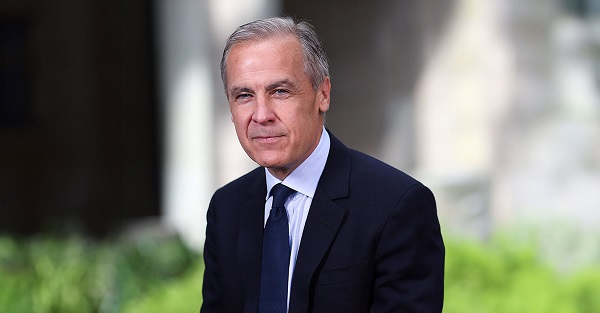

Carney is a champion of ESG, and the founder and co-chair of the Glasgow Financial Alliance for Net Zero (GFANZ,) which seeks to harness the might of global finance to bring about a Net-Zero global economy
Whether Carney will actually throw his hat in the ring is hard to predict. He did announce that he will “be considering this decision closely with my family over the coming few days.” But his years-long flirtation with electoral politics suggests that Carney is politically ambitious. And in the tradition of the politically ambitious, he’s lining up his constituents. At this very moment he’s busy making calls, and promises, to Liberal MPs looking for their support. Over the next several days we will hear an unending stream of praise for Carney, that he’s a ‘breath of fresh air,’ that he’s ‘just what Canada needs,’ and on and on.
Well don’t you believe it. Because one thing is for certain — Canada does not need another uber-elite, WEF hobnobbing, Green Agenda-pushing leader at the helm of any political party.
Let’s not forget who Carney is.
The former Governor of the Banks of Canada and England, Carney currently runs the megafirm Brookfield, whose offices he recently moved from Canada to the U.S., and serves as the UN Special Envoy for Climate Leadership and Finance.
Rich, established, and part of the green elite: that is Mark Carney.
I warned about Carney during the Covid-19 pandemic in 2020 when he — along with climate activist and Trudeau-whisperer Gerald Butts — was pushing hard for what he called a ‘green recovery.’ At the time Carney was framing the economic and health crisis as an opportunity to ‘leapfrog’ into a new economy. Four years later and we have all experienced first hand the real meaning of this utopian green vision — soaring energy costs which have made it harder to heat our homes, gas up our cars and buy groceries.
Conservatives call him “Carbon Tax Carney,” a nickname which his apologists have started to say is unfair, since after years of championing the Carbon Tax, he has recently distanced himself from it.
Well, of course he has! Support for the Carbon Tax has cratered across the country, and Carney is just one of many long-time supporters jumping ship in the hope that their reputation — and their wider agenda — doesn’t get sucked down with it.
Carney has been, and continues to be, a carnival barker for interventionist policies and regulation to control carbon emissions. When it comes to action on the environment and the economy Carney is of the “just do what we smart people say” school. He constantly talks of an impending climate crisis, and supports his alarmist fellow travellers like climate doomster Greta Thunberg, whom he has praised for her “many positive contributions.”
Carney has persistently advocated for strict controls on corporate governance to direct support — that is, money — towards his favored fuels and technologies. In fact, his apparent “about face” on the Carbon Tax (he said it “served a purpose up until now”) came about in the context of his Senate testimony in favor of Bill S-243, the “Climate-Aligned Finance Act,” which seeks to make it nearly impossible for banks to invest in, or loan money to, oil and gas projects in Canada, and tries to force financial institutions to appoint board members ideologically opposed to hydrocarbon energy.
Carney is a champion of ESG, and the founder and co-chair of the Glasgow Financial Alliance for Net Zero (GFANZ,) which seeks to harness the might of global finance to bring about a Net-Zero global economy. After a lot of initial excitement and acclaim (at least from the Davos-brigade), GFANZ has had trouble coping with the difficult economic times which Carney’s preferred policies have contributed to bringing about, not to mention the potential for antitrust litigation from the U.S. Department of Justice, which seems increasingly likely. Some of the group’s biggest members — Morgan Stanley, Goldman Sachs, CitiGroup, Bank of America, and Wells Fargo — have dropped out of the alliance just in the past month.
That might mean that GFANZ is not long for this world, but even so it should remain as a black mark on Carney’s résumé. It demonstrates that his economic instincts, whichsome are praising, are always towards more control, by the likes of him, over how the rest of us live our lives. And its downfall likely foreshadows what a Prime Minister Carney would do to Canada’s economy.
On energy and the environment, Carney is Trudeau with Wall Street and central bank experience: a green ideologue, but a more sophisticated one.
Canadians are fed up with green ideologues, polished or otherwise. Their ideas undermine our economic well-being, by making energy a lot more expensive. Ultimately, a Liberal Party under Mark Carney’s leadership would represent more of the same green grifting policies we saw under Justin Trudeau.
Dan McTeague is President of Canadians for Affordable Energy.

Support Dan’s Work to Keep Canadian Energy Affordable!
Canadians for Affordable Energy is run by Dan McTeague, former MP and founder of Gas Wizard. We stand up and fight for more affordable energy.

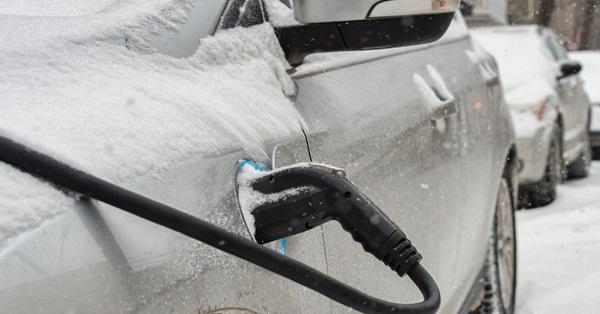

Things have only gone from bad to worse for the global Electric Vehicle industry. And that’s a problem for Canada, because successive Liberal governments have done everything in their power to hitch our cart to that horse.
Earlier this month, the Trump Administration rolled back more Biden-era regulations that effectively served as a back-door EV mandate in the United States. These rules mandated that all passenger cars be able to travel at least 65.1 miles (and for light trucks, 45.2 miles) per gallon of gasoline or diesel, by the year 2031. Since no Internal Combustion Engine (ICE) vehicle could realistically conform to those standards, that would have essentially boxed them out of the market.
Trump’s rolling them back was a fulfillment of his campaign promise to end the Biden Administration’s stealth EV mandates. But it was also a simple recognition of the reality that EVs can’t compete on their own merits.
For proof of that, look no further than our second bit of bad news for EVs: Ford Motor Company has just announced a massive $19.5 billion write-down, almost entirely linked to its aggressive push into EVs. They’ve lost $13 billion on EVs in the past two years alone.
The company invested tens of billions on these go-carts, and lost their shirt when it turned out the market for them was miniscule.
Ford’s EV division president Andrew Frick explained, “Ford is following the customer. We are looking at the market as it is today, not just as everyone predicted it to be five years ago.”
Of course, five years ago, the market was assuming that government subsidies-plus-mandates would create a market for EVs at scale, which hasn’t happened.
As to what this portends for the market, the Wall Street Journal argued, “The company’s pivot from all-electric vehicles is a fresh sign that America’s roadways – after a push to remake them – will continue to look in the near future much like they do today, with a large number of gas-powered cars and trucks and growing use of hybrids.”
And that’s not just true in the U.S. Across the Atlantic, reports suggest the European Union is preparing to delay their own EV mandates to 2040. And the U.K.’s Labour government is considering postponing their own 2030 ICE vehicle ban to align with any EU change in policy.
It’s looking like fewer people around the world will be forced by their governments to buy EVs. Which means that fewer people will be buying EVs.
Now, that is a headache for Canada. Our leaders, at both the federal and provincial levels, have bet big on the success of EVs, investing billions in taxpayer dollars in the hopes of making Canada a major player in the global EV supply chain.
To bolster those investments, Ottawa introduced its Electric Vehicle mandate, requiring 100 per cent of new light-duty vehicle sales to be electric by 2035. This, despite the fact that EVs remain significantly more expensive than gas-and-diesel driven vehicles, they’re poorly suited to Canada’s vast distances and cold climate, and our charging infrastructure is wholly inadequate for a total transition to EVs.
But even if these things weren’t true, there still aren’t enough of us to make the government’s investment make sense. Their entire strategy depends on exporting to foreign markets that are rapidly cooling on EVs.
Collapsing demand south of the border – where the vast majority of the autos we build are sent – means that Canadian EVs will be left without buyers. And postponed (perhaps eventually canceled) mandates in Europe mean that we will be left without a fallback market.
Canadian industry voices are growing louder in their concern. Meanwhile, plants are already idling, scaling back production, or even closing, leaving workers out in the cold.
As GM Canada’s president, Kristian Aquilina, said when announcing her company’s cancellation of the BrightDrop Electric delivery van, “Quite simply, we just have not seen demand for these vehicles climb to the levels that we initially anticipated…. It’s simply a demand and a market-driven response.”
Prime Minister Mark Carney, while sharing much of the same environmental outlook as his predecessor, has already been compelled by economic realities to make a small adjustment – delaying the enforcement of the 2026 EV sales quotas by one year.
But a one-year pause doesn’t solve the problem. It kicks the can down the road.
Mr. Carney must now make a choice. He can double down on this troubled policy, continuing to throw good money after bad, endangering a lot of jobs in our automotive sector, while making transportation more expensive and less reliable for Canadians. Or he can change course: scrap the mandates, end the subsidies, and start putting people and prosperity ahead of ideology.
Here’s hoping he chooses the latter.
The writing is on the wall. Around the world, the forced transition to EVs is crashing into economic reality. If Canada doesn’t wake up soon, we’ll be left holding the bag.

By Dan McTeague
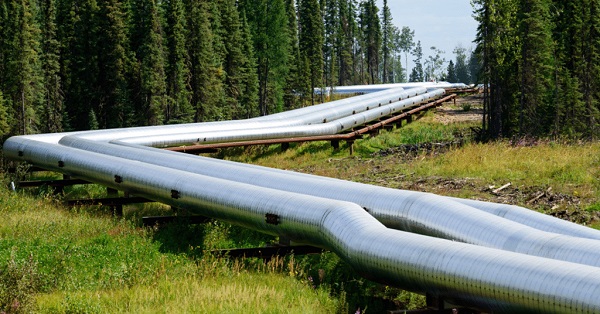
Will Carney’s new pipeline deal actually help get a pipeline built in Canada? As we said before, the devil is in the details.
While the establishment and mainstream media cheer on the new pipeline agreement, there are specific details you need to be aware of.
Dan McTeague explains in his latest video.


Argentina’s Milei delivers results free-market critics said wouldn’t work

Australian PM booed at Bondi vigil as crowd screams “shame!”

‘Almost Sounds Made Up’: Jeffrey Epstein Was Bill Clinton Plus-One At Moroccan King’s Wedding, Per Report

There’s No Bias at CBC News, You Say? Well, OK…
-
International2 days ago
Australian PM booed at Bondi vigil as crowd screams “shame!”
-
 Uncategorized2 days ago
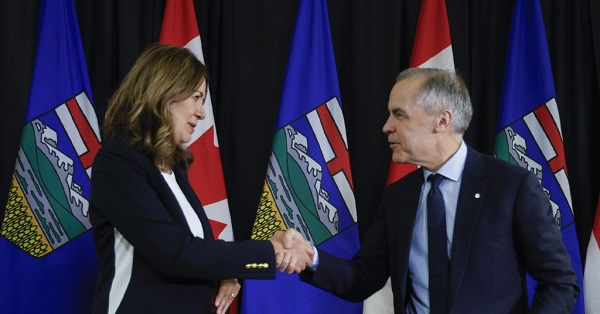
Mortgaging Canada’s energy future — the hidden costs of the Carney-Smith pipeline deal
-
 Alberta1 day ago
Alberta Next Panel calls to reform how Canada works
-
Automotive1 day ago
Canada’s EV gamble is starting to backfire
-
 Digital ID17 hours ago
Canadian government launches trial version of digital ID for certain licenses, permits
-
 Agriculture1 day ago
End Supply Management—For the Sake of Canadian Consumers
-
 Business16 hours ago
The “Disruptor-in-Chief” places Canada in the crosshairs
-
 International16 hours ago
World-leading biochemist debunks evolutionary theory