
Business
Major tax changes in 2026: Report

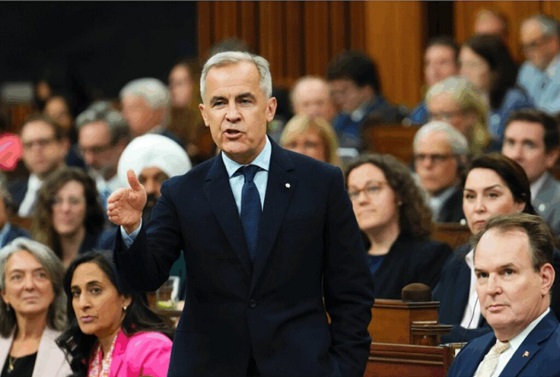

The Canadian Taxpayers Federation released its annual New Year’s Tax Changes report today to highlight the major tax changes in 2026.
“There’s some good news and bad news for taxpayers in 2026,” said Franco Terrazzano, CTF Federal Director. “The federal government cut income taxes, but it’s hiking payroll taxes. The government cancelled the consumer carbon tax, but it’s hammering Canadian businesses with a higher industrial carbon tax.”
Payroll taxes: The federal government is raising the maximum mandatory Canada Pension Plan and Employment Insurance contributions in 2026. These payroll tax increases will cost a worker up to an additional $262 next year.
For workers making $85,000 or more, federal payroll taxes (CPP and EI tax) will cost $5,770 in 2026. Their employers will also be forced to pay $6,219.
Income tax: The federal government cut the lowest income tax rate from 15 to 14 per cent. This will save the average taxpayer $190 in 2026, according to the Parliamentary Budget Officer.
Carbon taxes: The government cancelled its consumer carbon tax effective April 1, 2025. However, the government still charges carbon taxes through its industrial carbon tax and a hidden carbon tax embedded in fuel regulations.
The industrial carbon tax will increase to $110 per tonne in 2026. While the government hasn’t provided further details on how much the industrial carbon tax will cost Canadians, 70 per cent of Canadians believe businesses pass on most or some of the cost of the tax to consumers, according to a Leger poll.
Alcohol taxes: Federal alcohol taxes are expected to increase by two per cent on April 1, 2026. This alcohol tax hike will cost taxpayers about $41 million in 2026-27, according to industry estimates.
First passed in the 2017 federal budget, the alcohol escalator tax automatically increases excise taxes on beer, wine and spirits every year without a vote in Parliament. Since being imposed, the alcohol escalator tax has cost taxpayers about $1.6 billion, according to industry estimates.
“Canadians pay too much tax because the government wastes too much money,” Terrazzano said. “Canadians are overtaxed and need serious tax cuts to help make life more affordable and our economy more competitive.
“Prime Minister Mark Carney needs to significantly cut spending, provide major tax relief and scrap all carbon taxes.”
You can read the CTF’s New Year’s Tax Changes report here.


From the Daily Caller News Foundation
By Greg Blackie
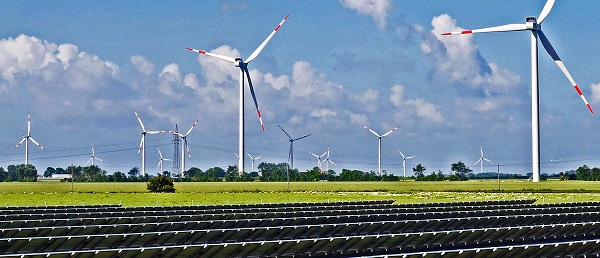
Our country is facing an energy crisis. No, not because of new demand from data centers or AI. Instead, it’s because utilities in nearly every state, due to government imposed “renewable” mandates, self-imposed mandates, and the supercharging of the Green New Scam under the so-called “Inflation Reduction Act,” have been shutting down vital coal resources and building out almost exclusively intermittent and costly resources like solar, wind, and battery storage.
President Donald Trump understands this, and that is why on day one of his administration he declared an Energy Emergency. Then, a few months later, the President signed a trio of Executive Orders designed to keep our “beautiful, clean coal” burning and providing the reliable, baseload, and affordable electricity Americans have benefitted from for generations.
Those orders have been used to keep coal generation online that was slated to shut down in Michigan and will potentially keep two units operating that were scheduled to shut down in Colorado this December. In Arizona, however, the Cholla Power Plant in Navajo County was shuttered by the utility just weeks after Trump explicitly called out the plant for saving in a press conference.
Dear Readers:
As a nonprofit, we are dependent on the generosity of our readers.
Please consider making a small donation of any amount here.
Thank you!
Unlike states with green mandates, Arizona essentially has none. Instead, our utilities, like many around the country, have self-imposed commitments to go “Net Zero” by 2050. To meet that target, they have planned to shut down all coal generation in the state by 2032 and plan to build out almost exclusively solar, wind, and battery storage to meet an expected explosive growth in demand, at a cost of tens of billions of dollars. So it is no surprise that like much of the rest of the country, Arizona is facing an energy crisis.
Taking a look at our largest regulated utilities (APS, TEP, and UNS) and the largest nonprofit utility, SRP, future plans paint an alarming picture. Combined, over the next 15 years, these utilities expect to see demand increase from 19,200 MW to 28,000 MW. For reference, 1,000 MW of electricity is enough to power roughly 250,000 homes. To meet that growth in demand, however, Arizonans will only get a net increase of 989 MW of reliable generation (coal, natural gas, and nuclear) compared to 22,543 MW (or nearly 23 times as much) of intermittent solar, wind, and battery storage.
But what about all of the new natural gas coming into the state? The vast majority of it will be eaten up just to replace existing coal resources, not to bring additional affordable energy to the grid. For example, the SRP board recently voted to approve the conversion of their Springerville coal plant to natural gas by 2030, which follows an earlier vote to convert another of their coal plants, Coronado, to natural gas by 2029. This coal conversion trap leaves ratepayers with the same amount of energy as before, eating up new natural gas capacity, without the benefit of more electricity.
So, while the Arizona utilities plan to collectively build an additional 4,538 MW of natural gas capacity over the next 15 years, at the same time they will be removing -3,549 MW (all of what is left on the grid today) of coal. And there are no plans for more nuclear capacity anytime soon. Instead, to meet their voluntary climate commitments, utilities plan to saddle ratepayers with the cost and resultant blackouts of the green new scam.
It’s no surprise then that Arizona’s largest regulated utilities, APS and TEP, are seeking double digit rate hikes next year. It’s not just Arizona. Excel customers in Colorado (with a 100% clean energy commitment) and in Minnesota (also with a 100% clean energy commitment) are facing nearly double-digit rate hikes. The day before Thanksgiving, PPL customers in Rhode Island (with a state mandate of 100% renewable by 2033) found out they may see rate hikes next year. Dominion (who has a Net Zero by 2050 commitment) wanted to raise rates for customers in Virginia by 15%. Just last month, regulators approved a 9% increase. Importantly, these rate increases are to recover costs for expenses incurred years ago, meaning they are clearly to cover the costs of the energy “transition” supercharged under the Biden administration, not from increased demand from data centers and AI.
It’s the same story around the country. Electricity rates are rising. Reliability is crumbling. We know the cause. For generations, we’ve been able to provide reliable energy at an affordable cost. The only variable that has changed has been what we are choosing to build. Then, it was reliable, dispatchable power. Now, it is intermittent sources that we know cost more, and that we know cause blackouts, all to meet absurd goals of going 100% renewable – something that no utility, state, or country has been able to achieve. And we know the result when they try.
This crisis can be avoided. Trump has laid out the plan to unleash American Energy. Now, it’s time for utilities to drop their costly green new scam commitments and go back to building reliable and affordable power that generations to come will benefit from.
Greg Blackie, Deputy Director of Policy at the Arizona Free Enterprise Club. Greg graduated summa cum laude from Arizona State University with a B.S. in Political Science in 2019. He served as a policy intern with the Republican caucus at the Arizona House of Representatives and covered Arizona political campaigns for America Rising during the 2020 election cycle.

From the Fraser Institute
Do economic rivalries between Texas and California or New York and Florida feel like yet another sign that America has become hopelessly divided? There’s a bright side to their disagreements, and a new ranking of economic freedom across the states helps explain why.
As a popular bumper sticker among economists proclaims: “I heart federalism (for the natural experiments).” In a federal system, states have wide latitude to set priorities and to choose their own strategies to achieve them. It’s messy, but informative.
New York and California, along with other states like New Mexico, have long pursued a government-centric approach to economic policy. They tax a lot. They spend a lot. Their governments employ a large fraction of the workforce and set a high minimum wage.
They aren’t socialist by any means; most property is still in private hands. Consumers, workers and businesses still make most of their own decisions. But these states control more resources than other states do through taxes and regulation, so their governments play a larger role in economic life.
At the other end of the spectrum, New Hampshire, Tennessee, Florida and South Dakota allow citizens to make more of their own economic choices, keep more of their own money, and set more of their own terms of trade and work.
They aren’t free-market utopias; they impose plenty of regulatory burdens. But they are economically freer than other states.
These two groups have, in other words, been experimenting with different approaches to economic policy. Does one approach lead to higher incomes or faster growth? Greater economic equality or more upward mobility? What about other aspects of a good society like tolerance, generosity, or life satisfaction?
For two decades now, we’ve had a handy tool to assess these questions: The Fraser Institute’s annual “Economic Freedom of North America” index uses 10 variables in three broad areas—government spending, taxation, and labor regulation—to assess the degree of economic freedom in each of the 50 states and the territory of Puerto Rico, as well as in Canadian provinces and Mexican states.
It’s an objective measurement that allows economists to take stock of federalism’s natural experiments. Independent scholars have done just that, having now conducted over 250 studies using the index. With careful statistical analyses that control for the important differences among states—possibly confounding factors such as geography, climate, and historical development—the vast majority of these studies associate greater economic freedom with greater prosperity.
In fact, freedom’s payoffs are astounding.
States with high and increasing levels of economic freedom tend to see higher incomes, more entrepreneurial activity and more net in-migration. Their people tend to experience greater income mobility, and more income growth at both the top and bottom of the income distribution. They have less poverty, less homelessness and lower levels of food insecurity. People there even seem to be more philanthropic, more tolerant and more satisfied with their lives.
New Hampshire, Tennessee, and South Dakota topped the latest edition of the report while Puerto Rico, New Mexico, and New York rounded out the bottom. New Mexico displaced New York as the least economically free state in the union for the first time in 20 years, but it had always been near the bottom.
The bigger stories are the major movers. The last 10 years’ worth of available data show South Carolina, Ohio, Wisconsin, Idaho, Iowa and Utah moving up at least 10 places. Arizona, Virginia, Nebraska, and Maryland have all slid down 10 spots.
Over that same decade, those states that were among the freest 25 per cent on average saw their populations grow nearly 18 times faster than those in the bottom 25 per cent. Statewide personal income grew nine times as fast.
Economic freedom isn’t a panacea. Nor is it the only thing that matters. Geography, culture, and even luck can influence a state’s prosperity. But while policymakers can’t move mountains or rewrite cultures, they can look at the data, heed the lessons of our federalist experiment, and permit their citizens more economic freedom.


Terror in Australia: 12 killed after gunmen open fire on Hanukkah celebration

Tanker ban politics leading to a reckoning for B.C.

Canada’s free speech record is cracking under pressure

Hero bystander disarms shooter in Australian terror attack
-
Crime2 days ago
Terror in Australia: 12 killed after gunmen open fire on Hanukkah celebration
-
Crime2 days ago
Hero bystander disarms shooter in Australian terror attack
-
Business2 days ago
Inflation Reduction Act, Green New Deal Causing America’s Energy Crisis
-
 Alberta10 hours ago
Schools should go back to basics to mitigate effects of AI
-
International13 hours ago
At Least 15 Killed In Shooting Targeting Jewish Community At Australia’s Bondi Beach, Police Say
-
 Censorship Industrial Complex7 hours ago
Death by a thousand clicks – government censorship of Canada’s internet
-
 Media2 days ago
Reporters determined to drive their industry and its reputation into the abyss one Tweet at a time
-
 Daily Caller9 hours ago
Chinese Billionaire Tried To Build US-Born Baby Empire As Overseas Elites Turn To American Surrogates