

Connect with us
[bsa_pro_ad_space id=12]

Opinion

Louisiana AG alleges popular gaming site Roblox is overrun with ‘child predators’ in lawsuit

Published

4 minute read

From LifeSiteNews

By Doug Mainwaring

Every parent should be aware of the clear and present danger posed to their children by Roblox,” Louisiana Attorney General Liz Murrill said.

Louisiana’s attorney general is suing the hugely popular Roblox online kids’ gaming platform, alleging that it “endangers the safety of the children” and is “overrun with harmful content and child predators.”

In a lawsuit filed Thursday in Louisiana’s 21st Judicial District, State Attorney General Liz Murrill accuses Roblox of facilitating the distribution of child sexual abuse material and the sexual exploitation of children while knowingly and intentionally failing to implement basic safety controls to protect child users from predators.

Roblox “prioritizes user growth, revenue, and profits over child safety,” Murrill noted.

“Every parent should be aware of the clear and present danger posed to their children by Roblox so they can prevent the unthinkable from ever happening in their own home,” Murrill said.

Launched in 2006, the site facilitates online “experiences” for its over 80 million active daily users — 40% of whom are under age 12 — and encourages users to interact with each other online.

“Users can easily say they are younger or older than their actual age — allowing child predators to pose as children and for children to bypass any age requirement,” notes a statement from the AG’s office that cited an example of how a predator easily infiltrated the site to have access to children:

Just last month in Livingston Parish, law enforcement officers executed a search warrant at the residence of an individual suspected of possessing child sexual abuse material. At the time of the arrest, the suspect was actively using the online platform Roblox. Notably, the individual was in possession of and had employed voice-altering technology designed to mimic the voice of a young female, allegedly for the purpose of luring and sexually exploiting minor users of the platform.

According to the AG’s office, “a recent report even revealed a group of 3,334 members openly traded child pornography and solicited sexual acts from minors.”

Murrill took to social media to display a series of explicit examples of the disturbing “experiences” that young children and teens can be exposed to on Roblox.

“This is what your kids are doing on Roblox. Playing ‘Public Showers’ experiences – Maturity level ‘N/A’” Murrill explained.

“Here’s another ‘experience’ that children were exposed to on Roblox: Escape to Epstein Island,” Murrill wrote on X.


“This is another ‘experience’ that children can be exposed to on Roblox: Public Bathroom Simulator,” Murrill offered on X.

According to Murrill, children have also had access to 600 “Diddy” games on the Roblox platform.

On the day before the lawsuit was filed in Louisiana, Democrat U.S. House member Ro Khanna of California announced a petition demanding transparency from Roblox regarding their child safety issues.

Last week, a young man who has reportedly made it his mission to expose child predators on Roblox was banned from the platform after receiving a cease-and-desist demand from Roblox.

“Roblox has done more to silence a whistleblower than to stop predators on their own platform,” popular “I Meme Therefore I AM” X user noted.

“Let that sink in,” she added.

Todayville is a digital media and technology company. We profile unique stories and events in our community. Register and promote your community event for free.

Follow Author

Censorship Industrial Complex

US Condemns EU Censorship Pressure, Defends X

Published on

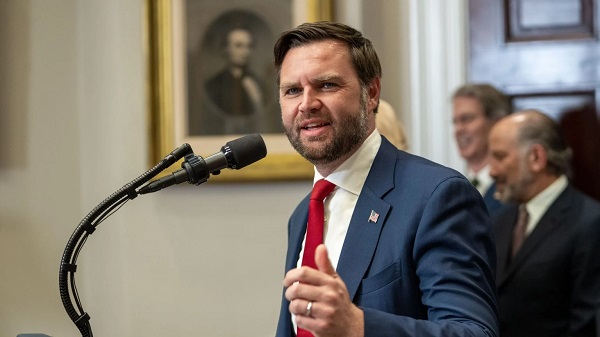
US Vice President JD Vance criticized the European Union this week after rumors reportedly surfaced that Brussels may seek to punish X for refusing to remove certain online speech.

In a post on X, Vance wrote, “Rumors swirling that the EU commission will fine X hundreds of millions of dollars for not engaging in censorship. The EU should be supporting free speech not attacking American companies over garbage.”

His remarks reflect growing tension between the United States and the EU over the future of online speech and the expanding role of governments in dictating what can be said on global digital platforms.

Screenshot of a verified social-media post with a profile photo, reading: "Rumors swirling that the EU commission will fine X hundreds of millions of dollars for not engaging in censorship. The EU should be supporting free speech not attacking American companies over garbage." Timestamp Dec 4, 2025, 5:03 PM and "1.1M Views" shown.

Vance was likely referring to rumors that Brussels intends to impose massive penalties under the bloc’s Digital Services Act (DSA), a censorship framework that requires major platforms to delete what regulators define as “illegal” or “harmful” speech, with violations punishable by fines up to six percent of global annual revenue.

For Vance, this development fits a pattern he’s been warning about since the spring.

In a May 2025 interview, he cautioned that “The kind of social media censorship that we’ve seen in Western Europe, it will and in some ways, it already has, made its way to the United States. That was the story of the Biden administration silencing people on social media.”

He added, “We’re going to be very protective of American interests when it comes to things like social media regulation. We want to promote free speech. We don’t want our European friends telling social media companies that they have to silence Christians or silence conservatives.”

Yet while the Vice President points to Europe as the source of the problem, a similar agenda is also advancing in Washington under the banner of “protecting children online.”

This week’s congressional hearing on that subject opened in the usual way: familiar talking points, bipartisan outrage, and the recurring claim that online censorship is necessary for safety.

The House Subcommittee on Commerce, Manufacturing, and Trade convened to promote a bundle of bills collectively branded as the “Kids Online Safety Package.”

The session, titled “Legislative Solutions to Protect Children and Teens Online,” quickly turned into a competition over who could endorse broader surveillance and moderation powers with the most moral conviction.

Rep. Gus Bilirakis (R-FL) opened the hearing by pledging that the bills were “mindful of the Constitution’s protections for free speech,” before conceding that “laws with good intentions have been struck down for violating the First Amendment.”

Despite that admission, lawmakers from both parties pressed ahead with proposals requiring digital ID age verification systems, platform-level content filters, and expanded government authority to police online spaces; all similar to the EU’s DSA censorship law.

Vance has cautioned that these measures, however well-intentioned, mark a deeper ideological divide. “It’s not that we are not friends,” he said earlier this year, “but there’re gonna have some disagreements you didn’t see 10 years ago.”

That divide is now visible on both sides of the Atlantic: a shared willingness among policymakers to restrict speech for perceived social benefit, and a shrinking space for those who argue that freedom itself is the safeguard worth protecting.

If you’re tired of censorship and surveillance, join Reclaim The Net.

Fight censorship and surveillance. Reclaim your digital freedom.

Get news updates, features, and alternative tech explorations to defend your digital rights.

Continue Reading

Business

Loblaws Owes Canadians Up to $500 Million in “Secret” Bread Cash

Published on

Continue Reading

Trending

X