
National
Liberals Welcome Mark Carney Into Their Elite Circle, Because Another Globalist Is Just What Canada Needs

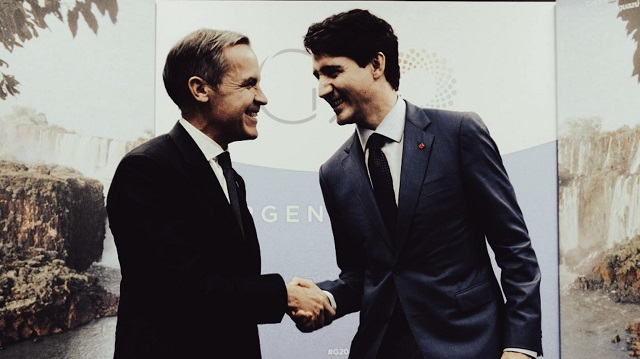

From The Opposition News Network
By Dan Knight
Why Carney’s WEF Ties, Carbon Taxes, and Reckless Economic Policies Spell More of the Same for Canadians Under the Liberal Leadership
Let’s break it down, folks. Mark Carney, the supposed “economic savior” for the Liberal Party, was just announced as an advisor to Trudeau’s sinking ship. We’re told he’s here to focus on “economic growth” and help the middle class. Really? Does anyone actually believe that? This guy is the definition of globalist, woke, elite policy, and the idea that he’s going to be the one to turn things around is a joke.
Whether Mark Carney can salvage the sinking Liberal brand is questionable at best, but what’s undeniable is that the party is in free fall, and people are jumping ship. Just last week, the Liberal campaign director Jeremy Broadhurst who was a significant member of the liberal party called it quits, signaling deeper chaos within the ranks. And this all leads back to Carney. I’ve thought this through since last year: nobody within the current Liberal party can lead. It’s detestable, riddled with failure, and there’s zero charisma left in that sinking ship.
If you take a look at Mélanie Joly, she’s been an utter disaster with foreign policy—just look at the Israel debacle, where her inconsistent stances have hurt Canada’s credibility. Then there’s Anita Anand, who promised big savings for Canadians in her role at the Treasury, but where are the results? Nowhere to be seen. Canadians are still waiting for those elusive “big cuts.”
And finally, Chrystia Freeland—she’s presided over one of the worst economic periods in recent history, with soaring debt, inflation, and out-of-touch policies like bragging about biking to work while ordinary Canadians are struggling to pay for gas and groceries. It’s failures all around, and voters see right through it.
Justin Trudeau is headed for a Titanic-like disaster in the next election. As 338Canada’s polling numbers make clear, Trudeau’s ship is going down. And when it does, Mark Carney will be waiting in the wings to take over. The Liberal deep state is banking on Carney being their fiscal savior, hoping he can stand as a counter to the fiscally responsible Pierre Poilievre. But let’s be real: Mark Carney is just Justin Trudeau 2.0. Whether he can succeed or not is anyone’s guess, but it’s clear the Liberals are doubling down on the same disastrous ideology that got them here in the first place.
And believe me Mark Carney isn’t some independent economic genius who’s going to swoop in and save the Liberal Party. No, he’s the ultimate globalist insider, with deep ties to the World Economic Forum (WEF) and the same out-of-touch elites who have been shaping Trudeau’s disastrous policies from day one. The WEF is all about a top-down, centralized control of the economy, and Carney’s their man in Canada. He’s been a leading voice in pushing for the Great Reset—you know, the one where “you’ll own nothing and be happy”—a world where personal freedom and national sovereignty take a backseat to global control.
Carney’s been in bed with the WEF for years, rubbing shoulders with Klaus Schwab and the rest of the Davos crowd who think they know better than regular Canadians. They’re obsessed with their climate agenda, which sounds great on paper until you realize it’s nothing more than an excuse to impose carbon taxes and regulations that cripple businesses and raise the cost of living for everyone except the rich. Carney was one of the loudest voices behind the ESG (Environmental, Social, Governance) movement, which forces corporations to prioritize social justice and climate goals over profitability and jobs. And who suffers? Middle-class Canadians who just want to put food on the table and keep the lights on.
Look, this isn’t speculation. Carney’s record speaks for itself. As Governor of the Bank of England, he was the architect of quantitative easing, which means printing more money out of thin air. The result? Inflation skyrocketed, and who got hurt? Not the global elites, not the bankers, but the regular folks whose savings became worthless and whose cost of living exploded. This is exactly what we’ve been seeing under Trudeau’s watch, and Carney is here to push more of the same failed policies.
And let’s get something straight: Mark Carney isn’t just indifferent to tax cuts—he actively opposes them. During his time at the Bank of England, Carney consistently pushed back on fiscal conservatism, instead advocating for higher taxes to fund massive government programs, particularly around climate initiatives. His World Economic Forum (WEF) ties reinforce this mindset. The WEF’s agenda is all about redistribution under the guise of climate action and “equity,” and Carney is right at the forefront. He promotes policies that prioritize environmental and social goals over economic freedom, and tax cuts simply don’t fit into that agenda.
Carney’s support for carbon taxes is one of the clearest examples. He’s been a vocal supporter of these taxes, which disproportionately hurt middle- and lower-income families while doing next to nothing to meaningfully reduce emissions. But here’s why Carney doesn’t care about tax cuts: they don’t fit his globalist vision of top-down control. Instead of allowing Canadians to keep more of their money and spur private sector growth, he’s all in on higher taxes and more government intervention to meet global targets that come straight from the WEF playbook.
And let’s be crystal clear here: these carbon taxes that Trudeau and Carney love so much haven’t stopped a single wildfire, tornado, or hurricane. All they’ve done is drive jobs and manufacturing out of Canada and into countries like China and India, where carbon emissions and pollution are an afterthought. It’s virtue-signaling at its finest.
If you don’t believe me, go to any store in Canada—go to Canadian Tire, check out where that toaster is made. China. Your Dyson vacuum? China. Head over to Mark’s Work Wearhouse, try finding a single sock not made in China. Good luck. You won’t find it. Because what the Trudeau government and Mark Carney’s woke climate agenda have done is force our industries to offshore to places where environmental regulations don’t exist. We’ve exported our emissions, our jobs, and our economic power to countries that don’t give a damn about carbon or pollution.
Meanwhile, here in Canada, we’re being told that we have to pay more for gas and groceries because we need to do our part for the environment. All while Trudeau flies to Davos in his private jet to rub elbows with the global elite, pretending he’s saving the planet on the tax payers dime. It’s a complete farce. The carbon tax isn’t saving the environment; it’s driving up the cost of living and destroying Canadian manufacturing. It’s a scam designed to make elites like Carney and Trudeau look virtuous while the rest of us pay the price.
So, let’s end with this: Canadians, it’s time for real change. This government has failed every generation, from students struggling to find jobs and buy homes, to retirees facing new capital gains taxes. The Liberals have been a disaster for everyone. They’ve crushed opportunities for young people and are now squeezing older generations with their reckless economic policies.
If you think Mark Carney is going to offer something different from Justin Trudeau, think again. He’s just an older, more polished version of Trudeau, with the same World Economic Forum (WEF) ties, the same reckless “spend, spend, spend” approach through quantitative easing (QE), and the same disdain for lowering taxes. Carney isn’t the change we need—he’s more of the same, doubling down on failed globalist policies that harm everyday Canadians.
And oh, by the way—don’t let Chrystia Freeland in on the secret that Mark Carney’s circling her job. She’ll have to bike herself right on out of Parliament! Maybe she can find a new gig lecturing us about climate change from her taxpayer-funded chauffeur. But seriously, folks, Canada deserves better than this circus of failed leadership.
It’s time we broke free from this disastrous, virtue-signaling government and got back to basics—hard work, opportunity, and good old-fashioned freedom. Let’s reclaim our country, rebuild an economy where every generation can actually thrive, and put Canadians first again. Enough of the elite lectures from the likes of Trudeau, Carney, and Freeland. Time to chart a new course!

Subscribe to The Opposition with Dan Knight . For the full experience, upgrade your subscription.

From the Frontier Centre for Public Policy
By Lee Harding
Alarming claims out of P.E.I. point to deep foreign interference, and the federal government keeps stalling. Why?
Explosive new allegations of Chinese interference in Prince Edward Island show Canada’s institutions may already be compromised and Ottawa has been slow to respond.
The revelations came out in August in a book entitled “Canada Under Siege: How PEI Became a Forward Operating Base for the Chinese Communist Party.” It was co-authored by former national director of the RCMP’s proceeds of crime program Garry Clement, who conducted an investigation with CSIS intelligence officer Michel Juneau-Katsuya.
In a press conference in Ottawa on Oct. 8, Clement referred to millions of dollars in cash transactions, suspicious land transfers and a network of corporations that resembled organized crime structures. Taken together, these details point to a vulnerability in Canada’s immigration and financial systems that appears far deeper than most Canadians have been told.
P.E.I.’s Provincial Nominee Program allows provinces to recommend immigrants for permanent residence based on local economic needs. It seems the program was exploited by wealthy applicants linked to Beijing to gain permanent residence in exchange for investments that often never materialized. It was all part of “money laundering, corruption, and elite capture at the highest levels.”
Hundreds of thousands of dollars came in crisp hundred-dollar bills on given weekends, amounting to millions over time. A monastery called Blessed Wisdom had set up a network of “corporations, land transfers, land flips, and citizens being paid under the table, cash for residences and property,” as was often done by organized crime.
Clement even called the Chinese government “the largest transnational organized crime group in the history of the world.” If true, the allegation raises an obvious question: how much of this activity has gone unnoticed or unchallenged by Canadian authorities, and why?
Dean Baxendale, CEO of the China Democracy Fund and Optimum Publishing International, published the book after five years of investigations.
“We followed the money, we followed the networks, and we followed the silence,” Baxendale said. “What we found were clear signs of elite capture, failed oversight and infiltration of Canadian institutions and political parties at the municipal, provincial and federal levels by actors aligned with the Chinese Communist Party’s United Front Work Department, the Ministry of State Security. In some cases, political donations have come from members of organized crime groups in our country and have certainly influenced political decision making over the years.”
For readers unfamiliar with them, the United Front Work Department is a Chinese Communist Party organization responsible for influence operations abroad, while the Ministry of State Security is China’s main civilian intelligence agency. Their involvement underscores the gravity of the allegations.
It is a troubling picture. Perhaps the reason Canada seems less and less like a democracy is that it has been compromised by foreign actors. And that same compromise appears to be hindering concrete actions in response.
One example Baxendale highlighted involved a PEI hotel. “We explore how a PEI hotel housed over 500 Chinese nationals, all allegedly trying to reclaim their $25,000 residency deposits, but who used a single hotel as their home address. The owner was charged by the CBSA, only to have the trial shut down by the federal government itself,” he said. The case became a key test of whether Canadian authorities were willing to pursue foreign interference through the courts.
The press conference came 476 days after Bill C-70 was passed to address foreign interference. The bill included the creation of Canada’s first foreign agent registry. Former MP Kevin Vuong rightly asked why the registry had not been authorized by cabinet. The delay raises doubts about Ottawa’s willingness to confront the problem directly.
“Why? What’s the reason for the delay?” Vuong asked.
Macdonald-Laurier Institute foreign policy director Christopher Coates called the revelations “beyond concerning” and warned, “The failures to adequately address our national security challenges threaten Canada’s relations with allies, impacting economic security and national prosperity.”
Former solicitor general of Canada and Prince Edward Island MP Wayne Easter called for a national inquiry into Beijing’s interference operations.
“There’s only one real way to get to the bottom of what is happening, and that would be a federal public inquiry,” Easter said. “We need a federal public inquiry that can subpoena witnesses, can trace bank accounts, can bring in people internationally, to get to the bottom of this issue.”
Baxendale called for “transparency, national scrutiny, and most of all for Canadians to wake up to the subtle siege under way.” This includes implementing a foreign influence transparency commissioner and a federal registry of beneficial owners.
If corruption runs as deeply as alleged, who will have the political will to properly respond? It will take more whistleblowers, changes in government and an insistent public to bring accountability. Without sustained pressure, the system that allowed these failures may also prevent their correction.
Lee Harding is a research fellow for the Frontier Centre for Public Policy.
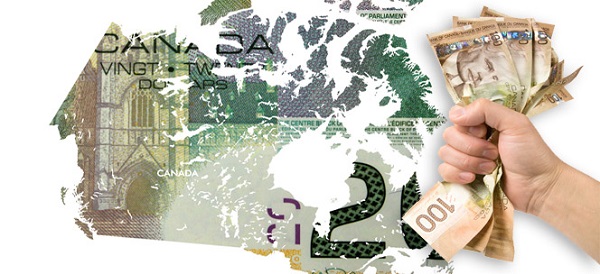

What Prime Minister Mark Carney gives with his left hand, he takes away with his right hand.
Canadians are already overtaxed and need serious tax cuts to make life more affordable and make our economy more competitive. But at best, the New Year will bring a mixed bag for Canadian taxpayers.
The federal government is cutting income taxes, but it’s hiking payroll taxes. The government cancelled the consumer carbon tax, but it’s hammering Canadian businesses with a higher industrial carbon tax.
The federal government cut the lowest income tax bracket from 15 to 14 per cent. That will save the average taxpayer $190 in 2026, according to the Parliamentary Budget Officer.
But the government is taking more money from Canadians’ paycheques with higher payroll taxes.
Workers earning $85,000 or more will pay $5,770 in federal payroll taxes in 2026. That’s a $262 payroll tax hike. Their employers will also be forced to pay $6,219.
So Canadians will save a couple hundred bucks from the income tax cut in the new year, but many Canadians will pay a couple hundred bucks more in payroll taxes.
It’s the same story with carbon taxes.
After massive backlash from ordinary Canadians, the federal government dropped its consumer carbon tax that cost average families hundreds of dollars every year and increased the price of gas by about 18 cents per litre.
But Carney’s first budget shows he wants higher carbon taxes on Canadian businesses. Carney still hasn’t provided Canadians a clear answer on how much his business carbon tax will cost. He did, however, provide a hint during a press conference he held after signing a memorandum of understanding with the Alberta government.
“It means more than a six times increase in the industrial price on carbon,” Carney said.
Carney previously said that by “changing the carbon tax … We are making the large companies pay for everybody.”
Carney’s problem is that Canadians aren’t buying what he’s selling on carbon taxes.
Just 12 per cent of Canadians believe Carney that businesses will pay most of the cost of his carbon tax, according to a Leger poll. Nearly 70 per cent of Canadians say businesses will pass most or some of the cost to consumers.
Canadians understand that it doesn’t matter what type of lipstick politicians put on their carbon tax pig, all carbon taxes make life more expensive.
Carney is also continuing his predecessor’s tradition of automatically increasing booze taxes.
Ottawa will once again hike taxes on beer, wine and spirits in 2026 through its undemocratic alcohol tax escalator.
First passed in the 2017 federal budget, the alcohol escalator tax automatically increases federal taxes on beer, wine and spirits every year without a vote in Parliament.
Federal alcohol taxes are expected to increase by two per cent on April 1, and cost taxpayers $41 million in 2026. Since being imposed, the alcohol escalator tax has cost taxpayers about $1.6 billion, according to industry estimates.
Canadians are overtaxed and need the federal government to seriously lighten the load.
The biggest expense for the average Canadian family isn’t the home they live in, the food they eat or the clothes they buy. It’s the taxes they pay to all levels of government. More than 40 per cent of the average family’s budget goes to paying taxes, according to the Fraser Institute.
Politicians are taking too much money from Canadians. And their high taxes are driving away investment and jobs.
Canada ranks a dismal 27th out of 38 industrialized countries on individual tax competitiveness, according to the Tax Foundation. Canada ranks 22nd on business tax competitiveness. Canada is behind the United States on both measures.
A little bit of tax relief here and there isn’t going to cut it. Carney’s New Year’s resolution needs to be to embark on a massive tax cutting campaign.


Largest fraud in US history? Independent Journalist visits numerous daycare centres with no children, revealing massive scam
Why Japan wants Western Canadian LNG

“Magnitude cannot be overstated”: Minnesota aid scam may reach $9 billion

Be Careful What You Wish For In 2026: Mark Carney With A Majority
-
 International2 days ago
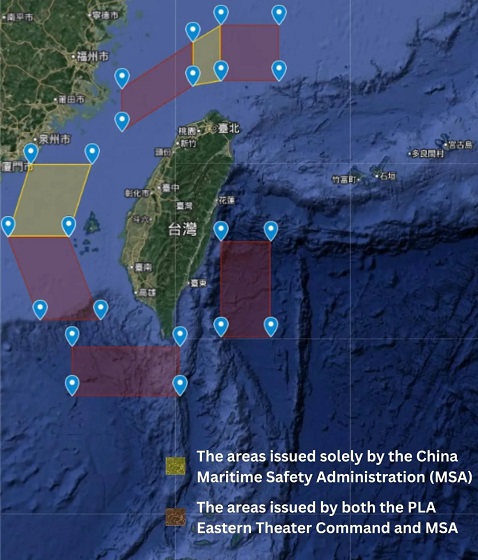
China Stages Massive Live-Fire Encirclement Drill Around Taiwan as Washington and Japan Fortify
-
 Energy2 days ago
Rulings could affect energy prices everywhere: Climate activists v. the energy industry in 2026
-
 Business13 hours ago
Disclosures reveal Minnesota politician’s husband’s companies surged thousands-fold amid Somali fraud crisis
-
 Digital ID2 days ago
The Global Push for Government Mandated Digital IDs And Why You Should Worry
-
 Alberta14 hours ago
The Canadian Energy Centre’s biggest stories of 2025
-
Business1 day ago
Canada needs serious tax cuts in 2026
-
 Business1 day ago
DOOR TO DOOR: Feds descend on Minneapolis day cares tied to massive fraud
-
 Business13 hours ago
Resurfaced Video Shows How Somali Scammers Used Day Care Centers To Scam State