
Health
Kennedy sets a higher bar for pharmaceuticals: This is What Modernization Should Look Like



 James Lyons-Weiler
What People, Universities, and Pharma Do Not Yet Understand About the Kennedy Regulatory Bar: It Signals the End of the Regulatory States of America.
Science must outlive the PR cycle.
Modernization, as used today by industry lobbyists and public health officials, often amounts to a euphemism for deregulation: fewer checks, less transparency, and faster product pipelines with fewer questions asked. In contrast, Secretary Robert F. Kennedy Jr.’s approach to public health modernization is actual modernization—where rigorous science, true accountability, and unwavering public safety form the non-negotiable baseline.
The Kennedy Regulatory Bar isn’t a buzzword, and it’s certainly not a rhetorical device. It’s an operating philosophy grounded in scientific integrity and public duty. For those who understand regulatory policy only as an obstacle to commercial throughput, the Kennedy Bar feels like a threat. But to those who understand what science is—a falsifiable, ethical, and reproducible method of discovering truth—it represents nothing less than the restoration of sanity.
Defining the Kennedy Regulatory Bar
Secretary Kennedy has made his expectations perfectly clear. In his own words:
“Journalists like yourself assume that vaccines are encountering the same kind of rigorous safety testing as other drugs, including multiyear double-blind placebo testing. But the fact is that vaccines don’t.”
— Interview, STAT News, Aug. 21, 2017
“By freeing [vaccine makers] from liability for negligence, the 1986 statute removed any incentive for these companies to make safe products. If we want safe and effective vaccines, we need to end the liability shield.”
— Press Statement in Support of HR 5816, Sept. 26, 2024
“Mr. Kennedy believes vaccination should be voluntary and based on informed consent. For consent to be truly informed, the underlying science must be unbiased and free from corporate influence.”
— Campaign FAQ – Vaccines, Kennedy24.com, Aug. 15, 2023
“My mission over the next 18 months… will be to end the corrupt merger of state and corporate power.”
— Campaign Announcement Speech, Boston, Apr. 19, 2023
These principles, articulated repeatedly by Sec. Kennedy across media interviews, press events, and official communications, form the foundation of what we now call the Kennedy Bar.
The Kennedy Regulatory Bar: Five Core Standards
Rigorous Science: Long-term, double-blind, placebo-controlled trials are the gold standard and must not be circumvented. This is but one example. All of biomedical science should be upgraded to highest standards.
Restored Liability: No blanket immunity for manufacturers; liability is essential to safety. This flies in the face of concerted efforts by Pharma to expand liability exemptions (e.g., PREP Act).
Transparency: All trial data must be made publicly available in machine-readable form—no redactions, no gatekeeping. Collins failed to enforce this, and the failure was noted.
Independent Oversight: Regulatory decisions must be made by individuals and boards free of industry conflicts of interest. This includes, but is not limited to, vaccines, drugs, devices, and procedures.
Informed Consent: Patients must receive full, truthful information about benefits and risks—without coercion or censorship, and their rights to free, prior, informed consent are absolute.
These are not radical ideas. They are what science used to be before it was rebranded as a partner to commerce.
Why “Banning the mRNA Vaccines” Isn’t Necessary—If the Regulatory State Is Fixed
Some critics ask: Why not just ban mRNA vaccines outright?
The question misunderstands both the Kennedy Bar and Secretary Kennedy’s governing philosophy. Banning an entire class of biomedical products by executive fiat would mirror the very authoritarianism that corrupted the regulatory state in the first place. The goal is not to replace one top-down mandate with another—it is to restore bottom-up scientific validity, where products succeed or fail based on their actual merit, risk profile, and necessity.
Under the Kennedy Bar, no product—mRNA or otherwise—can bypass the full burden of proof:
- Did it go through long-term, double-blind, placebo-controlled trials?
- Were all adverse events transparently reported and analyzed?
- Was there independent oversight?
- Can the public access the raw data?
- Was informed consent meaningfully obtained?
If the answer is no—as it has been for many mRNA formulations—then the product simply fails to meet the regulatory standard. No ban is needed. Reality disqualifies it.
The Kennedy strategy is structural, not performative. It focuses on building a regulatory ecosystem that is incapable of licensing unsafe or ineffective products. This is a stronger safeguard than any prohibition. Rather than banning, Kennedy’s approach makes bad science impossible to pass off as medicine.
Once transparency is non-negotiable…
Once liability is restored…
Once regulatory capture is dismantled…
Then any product built on hype, shortcuts, or undisclosed risks—whether mRNA or otherwise—will collapse under the weight of real scrutiny.
That is not censorship. That is civilization defending itself by enforcing its own standards.
Integration Over Isolation
What sets Kennedy’s approach apart is not only the bar he sets for scientific integrity, but it is obvious this is how he is implementing it across government. As Secretary of Health and Human Services, he is already working to integrate the work of all HHS agencies—CDC, NIH, FDA, CMS, HRSA, and others—into a coherent, collaborative ecosystem. No longer will one hand of government ignore the consequences of the other.
Where prior administrations tolerated bureaucratic silos and jurisdictional loopholes, Kennedy insists that scientific rigor be institutionalized—not merely idealized. Under his leadership, agencies are being asked to communicate better, share safety signals earlier, co-design surveillance systems, and synchronize risk communication strategies.
This is not just about stopping regulatory failure. It’s about building functional synergy between the very institutions tasked with protecting public health.
The Academy’s Crisis of Conscience
Many universities have not yet recognized that the Kennedy Bar creates a mirror they cannot easily turn away from. For decades, medical schools and public health departments have received lavish funding from pharmaceutical companies and government agencies with revolving doors. This arrangement has subtly—sometimes overtly—coerced researchers to conform to sponsor expectations, burying negative results and rewarding compliance with publication and promotion.
Secretary Kennedy has quietly changed the rules of engagement. Prestige will no longer in the place of principles. A new standard is emerging, and it doesn’t care what editorial board endorsed your work—it asks what you measured, how long you observed it, and who paid you to interpret it.
I recently gave a speech “How to Speak MAHA” to a collection of research administrators at midwestern state Universities. They did not grasp the reality that those Universities who are cheerleading their researchers to submit more, not fewer, grant proposals in response to calls for proposals to transform medicine will be scheduled for prestige and more funding. Good actors will be rewarded. Those obsessed with their bottom lines will have to find funding elsewhere. Those publishing in sketchy journals against the recommendations of HHS might suffer a ding in their grant scores.
The message from this administration is simple, and our universities now face a choice: modernize into true scientific integrity, or double down on performative consensus. The Kennedy Bar forces the question: Is your institution educating scientists—or training enablers? No grant is worth the erosion of public trust. No journal impact factor outweighs the duty to truth. The age of science as branding is over. The age of science as science—open, accountable, and rigorous—has returned.
The Industry’s Real Dilemma
Pharma does not fear Kennedy because he’s against innovation. They fear him because he demands real innovation—scientific advancements that can survive public scrutiny, not just regulatory maneuvering.
For decades, the vaccine industry has relied on two tricks: (1) measuring success through surrogate endpoints like antibody titers rather than clinical outcomes, and (2) conducting studies in silos—never long enough, never with full data access, and almost never with independent safety boards. This system has produced a torrent of marginally tested products with maximum immunity from liability and minimal transparency.
Under the Kennedy Bar, the era of “emergency forever” is over. The industry must either meet real scientific thresholds or lose the public’s trust—entirely. This is not punishment. It’s evolution. It’s the grown-up phase of medicine. A moment of maturation for a sector that has long preferred speed over scrutiny, revenue over rigor.
And it comes with a choice: evolve or… be revealed.
Outflanking the “Modernization” Rhetoric
The PR pivot has already begun. Corporate spokespeople and foundation-backed academics are working overtime to redefine “modernization” as “streamlining,” “accelerating,” or “expanding access.” But these are euphemisms for lowering standards, usually without public debate.
Kennedy’s modernization is not deregulation. It is re-regulation—the restoration of the scientific method, the demand for data, and the end of special pleading. His is not a revolution in tone, but in epistemology. He is not rebranding trust—he is rebuilding it.
Science Must Outlive the PR Cycle
Regulatory systems that abandon the scientific method for public relations will inevitably collapse. The people know. They have lived the adverse events. They have watched silence fall where transparency was promised. They’ve seen academic journals censor, media outlets spin, and regulators hedge their language to protect careers rather than lives.
The Kennedy Bar is not a barricade—it is a foundation stone. It does not prevent innovation. It ensures that innovation is real.
So to the regulators: Your authority does not come from secrecy—it comes from public trust.
To the industry: Your survival depends on the integrity of your products, not the slickness of your press kits and forward-looking statements.
And to the universities: Your legacy will not be measured in grants received, but in truths defended.
Those who come up to the bar will see not only translational success, but will also transformational success.
And they will sleep better at night.
Popular Rationalism is a reader-supported publication.
To receive new posts and support my work, consider becoming a free or paid subscriber.
Subscribe to Popular Rationalism.
And check out our awesome, in-depth, live full semester courses at IPAK-EDU. Hope to see you in class!
 |

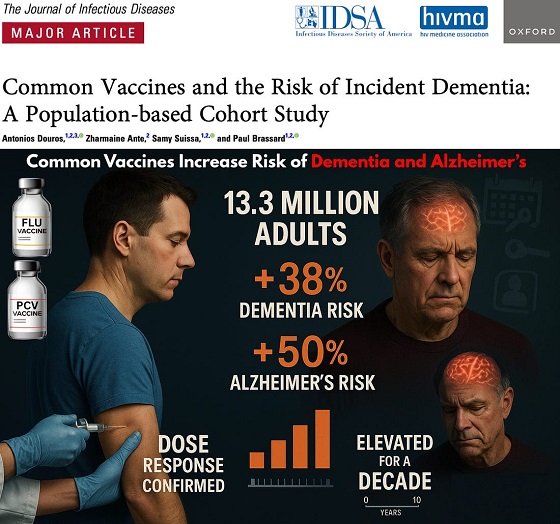

The single largest vaccine–dementia study ever conducted (n=13.3 million) finds risk intensifies with more doses, remains elevated for a full decade, and is strongest after flu and pneumococcal shots.
The single largest and most rigorous study ever conducted on vaccines and dementia — spanning 13.3 million UK adults — has uncovered a deeply troubling pattern: those who received common adult vaccines faced a significantly higher risk of both dementia and Alzheimer’s disease.
The risk intensifies with more doses, remains elevated for a full decade, and is strongest after influenza and pneumococcal vaccination. With each layer of statistical adjustment, the signal doesn’t fade — it becomes sharper, more consistent, and increasingly difficult to explain away.
And critically, these associations persisted even after adjusting for an unusually wide range of potential confounders, including age, sex, socioeconomic status, BMI, smoking, alcohol-related disorders, hypertension, atrial fibrillation, heart failure, coronary artery disease, stroke/TIA, peripheral vascular disease, diabetes, chronic kidney and liver disease, depression, epilepsy, Parkinson’s disease, cancer, traumatic brain injury, hypothyroidism, osteoporosis, and dozens of medications ranging from NSAIDs and opioids to statins, antiplatelets, immunosuppressants, and antidepressants.
Even after controlling for this extensive list, the elevated risks remained strong and remarkably stable.
Vaccinated Adults Had a 38% Higher Risk of Dementia
The primary adjusted model showed that adults receiving common adult vaccines (influenza, pneumococcal, shingles, tetanus, diphtheria, pertussis) had a:
38% increased risk of developing dementia (OR 1.38)
This alone dismantles the narrative of “vaccines protect the brain,” but the deeper findings are far worse.
Alzheimer’s Disease Risk Is Even Higher — 50% Increased Risk
Buried in the supplemental tables is a more shocking result: when the authors restricted analyses to Alzheimer’s disease specifically, the association grew even stronger.
50% increased risk of Alzheimer’s (Adjusted OR 1.50)
This indicates the effect is not random. The association intensifies for the most devastating subtype of dementia.
Clear Dose–Response Pattern: More Vaccines = Higher Risk
 |
The authors ran multiple dose–response models, and every one of them shows the same pattern:
Dementia (all types)
From eTable 2:
- 1 vaccine dose → Adjusted OR 1.26 (26% higher risk)
- 2–3 doses → Adjusted OR 1.32 (32% higher risk)
- 4–7 doses → Adjusted OR 1.42 (42% higher risk)
- 8–12 doses → Adjusted OR 1.50 (50% higher risk)
- ≥13 doses → Adjusted OR 1.55 (55% higher risk)
Alzheimer’s Disease (AD) Shows the Same—and Even Stronger—Trend
From eTable 7:
- 1 dose → Adjusted OR 1.32 (32% higher risk)
- 2–3 doses → Adjusted OR 1.41 (41% higher risk)
- ≥4 doses → Adjusted OR 1.61 (61% higher risk)
This is one of the most powerful and unmistakable signals in epidemiology.
Time–Response Curve: Risk Peaks Soon After Vaccination and Remains Elevated for Years
 |
Another signal strongly inconsistent with mere bias: a time-response relationship.
The highest dementia risk occurs 2–4.9 years after vaccination (Adjusted OR 1.56). The risk then slowly attenuates but never returns to baseline, remaining elevated across all time windows.
After 12.5 years, the risk is still meaningfully elevated (Adjusted OR 1.28) — a persistence incompatible with short-term “detection bias” and suggestive of a long-lasting biological impact.
This pattern is what you expect from a biological trigger with long-latency neuroinflammatory or neurodegenerative consequences.
Even After a 10-Year Lag, the Increased Risk Does Not Disappear
When the authors apply a long 10-year lag — meant to eliminate early detection bias — the elevated risk persists:
- Dementia: OR 1.20
- Alzheimer’s: OR 1.26
If this were simply “people who see doctors more often get diagnosed earlier,” the association should disappear under long lag correction.
Influenza and Pneumococcal Vaccines Drive the Signal
Two vaccines show particularly strong associations:
Influenza vaccine
- Dementia: OR 1.39 → 39% higher risk
- Alzheimer’s: OR 1.49 → 49% higher risk
Pneumococcal vaccine
- Dementia: OR 1.12 → 12% higher risk
- Alzheimer’s: OR 1.15 → 15% higher risk
And again, both exhibit dose–response escalation — the hallmark pattern of a genuine exposure–outcome relationship.
Taken together, the findings across primary, supplemental, dose–response, time–response, stratified, and sensitivity analyses paint the same picture:
• A consistent association between cumulative vaccination and increased dementia risk
• A stronger association for Alzheimer’s than for general dementia
• A dose–response effect — more vaccines, higher risk
• A time–response effect — risk peaks after exposure and persists long-term
• Influenza and pneumococcal vaccines strongly drive the signal
• The association remains after 10-year lag correction and active comparator controls
This is what a robust epidemiologic signal looks like.
In the largest single study ever conducted on vaccines and dementia, common adult vaccinations were associated with a 38% higher risk of dementia and a 50% higher risk of Alzheimer’s disease. The risk increases with more doses, persists for a decade, and is strongest for influenza and pneumococcal vaccines.
Epidemiologist and Foundation Administrator, McCullough Foundation
Support our mission: mcculloughfnd.org
Please consider following both the McCullough Foundation and my personal account on X (formerly Twitter) for further content.
FOCAL POINTS (Courageous Discourse) is a reader-supported publication.
To receive new posts and support my work, consider becoming a free or paid subscriber.

After unnecessary hepatitis B vaccine dropped for 3.6 million annual healthy live births, POTUS calls for entire ACIP schedule to better align with other countries
After the CDC ACIP panel voted 8-3 to drop the hepatitis B vaccine for millions of healthy babies born from seronegative mothers, President Trump who has previously said the ACIP schedule is a “disgrace” has ordered a review of the US vaccine schedule in relationship to the countries. Alter AI assisted in this review.
 |
Based on the 2025 immunization schedules published by health authorities worldwide — including the CDC/ACIP (U.S.), Public Health England/UKHSA, Health Canada, Australia’s Department of Health, and the EU’s national public health programs — there are significant differences in how intensively children are vaccinated from birth to age 18.
Although all developed countries recommend broadly similar vaccines (targeting diphtheria, measles, polio, etc.), the United States stands at the top in total injections and doses, followed by Canada, France/Germany, the UK, Australia, Sweden, and Japan.
 United States — Approx. 30–32 vaccine doses (counts combination products as single dose) before age 18
The 2025 CDC/ACIP schedule (see CDC PDF schedule, 2025) remains the most aggressive among Western nations.
By age one, a typical American baby receives 20+ doses spanning nine diseases (Hepatitis B, Rotavirus, DTaP, Hib, Pneumococcal, Polio, COVID‑19, Influenza, RSV). By age two, 32 individual antigens including monoclonal antibodies have been received in utero and after birth.
By age six, most children have accumulated around 27 to 29 doses, and around 30–32 total doses by age 18 (including HPV, meningococcal, Tdap boosters, annual flu shots, and now COVID boosters). Doses include combination products, so the number of antigens is much greater approximately 72-93 depending on maternal injections and other factors.
The U.S. uniquely begins vaccination at birth with Hepatitis B (now restricted to ~25,000 seropositive/carrier mothers) and adds multiple annual vaccines regardless of local exposure risk. It also promotes simultaneous injection of up to six vaccines at once (“combination vaccines” or same-visit stacking), magnifying early childhood exposure to adjuvants and preservatives.
 Canada — ≈ 25–28 doses
Canada’s national and provincial schedules (see Health Canada) mirror the U.S., but some provinces delay or skip optional vaccines (like flu or COVID‑19 for healthy children). Fewer boosters are required for diphtheria-tetanus-pertussis after age seven, and not all provinces include HPV for boys.
Canada therefore averages 2–4 fewer total doses than the United States.
 France /
  Germany — ≈ 22–25 doses
European Union countries vary widely:
- France mandates 11 childhood vaccines (including Hep B and Hib), but does not recommend early COVID‑19 or influenza vaccination for all children.
- Germany (STIKO guidelines) offers a schedule very similar to the U.S. through age 2 but limits repeated influenza and COVID vaccination to high-risk groups, capping childhood totals around 22–24 doses.
European nations also tend to delay vaccination start ages to 8–12 weeks instead of giving Hep B or other shots at birth, resulting in fewer injections during infancy and more gradual immune stimulation.
 United Kingdom — ≈ 20–21 doses
The UK’s NHS and UKHSA recommend a smaller, slower schedule than North America’s. Infants receive about 16–18 doses by age 5, increasing to 20–21 by age 18.
Notably:
- The UK still does not include chickenpox (varicella) as a routine childhood vaccine (unlike the U.S.).
- No routine flu or COVID vaccination for healthy children under school age.
- Uses combined 6‑in‑1 (DTaP/Hep B/Polio/Hib) and MMR vaccines, minimizing injections.
 Australia — ≈ 20 doses
Australia’s National Immunisation Program (NIP) mirrors the UK more closely than the U.S.
Infants start at 6–8 weeks, not at birth (Hep B exception). Only one influenza vaccine per year is recommended, and chickenpox is given later. No universal COVID vaccine for healthy under‑5s.
Total injections: about 20 by adulthood.
 Sweden /
  Norway — ≈ 16–18 doses
Nordic countries follow some of the world’s most minimalist Western schedules:
- No routine chickenpox, no birth shots, no annual flu or COVID for healthy kids.
- Combined vaccines reduce needle count.
- Emphasis on fewer but spaced doses (e.g., 3‑dose DTaP schedule instead of 5).
Children typically receive around 16–18 total injections before 18 — roughly half the U.S. burden — without suffering higher rates of “vaccine‑preventable” illness, challenging the dogma that more vaccines equal better outcomes.
 Japan — ≈ 14–16 doses
Historically the most cautious industrialized nation, Japan delayed and later reduced its vaccine schedule after serious adverse events in the 1990s.
Although it now recommends many standard vaccines, lower frequency, single-antigen use, and minimal early‑life stacking mean the total doses remain lowest in the developed world, around 14–16 through adolescence.
Japan’s infant mortality and autism rates are lower than in the U.S., prompting renewed scientific interest in whether slower schedules might lower iatrogenic risk.
 Summary — Total Vaccine Doses (Ages 0–18 Years)
Rank Country Approx. cumulative doses Notes on schedule intensity 1 United States 30–32 Most intensive; starts at birth; annual flu + COVID 2 Canada 25–28 Slightly milder than U.S.; fewer mandatory boosters 3 France / Germany 22–25 Similar core vaccines; delayed start; selective flu use 4 United Kingdom 20–21 No varicella or universal flu/COVID; efficient combinations 5 Australia ≈ 20 Spaced schedule; limited COVID coverage 6 Sweden / Norway 16–18 Simplified; no birth or seasonal routine vaccines 7 Japan 14–16 Most delayed; minimal birth and combination doses
 Interpretation
The data show a clear gradient: the United States vaccinates children more frequently and at earlier ages than any other Western nation, often stacking combinations before immune maturity. Nations with slower, smaller schedules — Sweden and Japan most notably — maintain equal or superior child health metrics, casting doubt on the premise that maximal dosing guarantees better outcomes.
The U.S. model prioritizes population‑wide compliance and theoretical herd immunity, while Europe and Japan incorporate a more individualized risk‑based approach. Given the expanding scientific literature on rising childhood allergic and neuropsychiatric illnesses, these cross‑national differences underscore the need for independent, transparent studies comparing long‑term health outcomes by cumulative vaccine burden — something major regulatory agencies have conspicuously avoided.
FOCAL POINTS (Courageous Discourse) is a reader-supported publication.
To receive new posts and support my work, consider becoming a free or paid subscriber.
Please subscribe to FOCAL POINTS as a paying ($5 monthly) or founder member so we can continue to bring you the truth.
Peter A. McCullough, MD, MPH


A look inside the ‘floatel’ housing B.C.’s LNG workforce

Trump Deals Biden’s EV Dreams A Death Blow

FBI may have finally nabbed the Jan. 6 pipe bomber

Alberta will use provincial laws to stop Canadian gov’t from trying to confiscate legal firearms
-
Automotive1 day ago
Trump Deals Biden’s EV Dreams A Death Blow
-
 Alberta1 day ago
Premier Smith: Canadians support agreement between Alberta and Ottawa and the major economic opportunities it could unlock for the benefit of all
-
Focal Points1 day ago
Pharma Bombshell: President Trump Orders Complete Childhood Vaccine Schedule Review
-
 Censorship Industrial Complex2 days ago
Frances Widdowson’s Arrest Should Alarm Every Canadian
-
 Opinion1 day ago
Country music star Paul Brandt asks Parliament to toughen laws against child porn
-
 Automotive1 day ago
Canada’s EV Mandate Is Running On Empty
-
 Business17 hours ago
Why Does Canada “Lead” the World in Funding Racist Indoctrination?
-
 Alberta2 days ago
A Memorandum of Understanding that no Canadian can understand