
Alberta
Just in time for Canada Day weekend! Crescent Falls ready to be enjoyed again

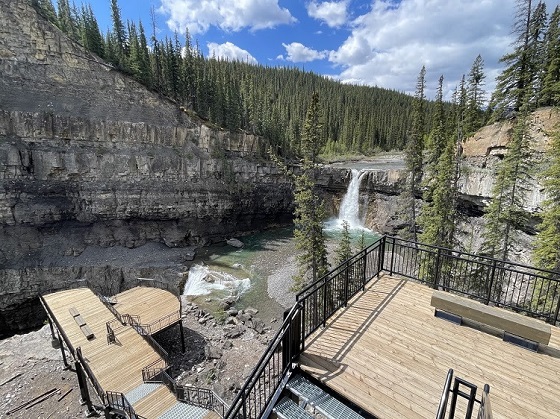
The new staircase structure and viewing platform are among many upgrades that visitors can look forward to at the reopening Crescent Falls Provincial Recreation Area. (Credit: Alberta Parks).
The popular Crescent Falls Provincial Recreation Area reopens following a significant capital investment to improve visitor safety and experiences.
Crescent Falls Provincial Recreation Area is ready to welcome visitors back to enjoy one of the most remarkable, accessible waterfall viewing opportunities in Alberta. The upgrades at Crescent Falls will help improve the park’s visitor experience. Guests can expect expanded parking, improved access roads, trails and day use areas, new and improved viewing areas to take in the falls and upgraded safety measures, including signage and wayfinding.
The Provincial Recreation Area (PRA) is reopening over the July long weekend after being closed since 2023. Visitors will notice increased public safety upgrades through additions such as new parking lots, a new stair structure to access the lower falls, new pedestrian trails, a new vehicle bridge to access the camping area and a viewing platform to enjoy the Crescent Falls.
“We are thrilled to welcome visitors back to Crescent Falls Provincial Recreation Area in time for the Canada Day long weekend. These additions will help visitors to safely access and enjoy the area’s natural beauty. Parks are for people and Alberta’s government will continue to invest in high-quality outdoor recreation opportunities.”
“Today marks a significant milestone for our community as we reopen the Crescent Falls Provincial Recreation Area following extensive upgrades. Our province is well known for its incredible natural beauty, and these improvements will make our backcountry more accessible and ensure that Albertans and those visiting our great province can continue to explore our stunning landscapes for years to come.”


From the Fraser Institute
By Tegan Hill and Austin Thompson
According to Calgarians for Thoughtful Growth (CFTG)—an organization advocating against “blanket rezoning”— housing would be more affordable if the mayor and council restricted what homes can be built in Calgary and where. But that gets the economics backwards.
Blanket rezoning—a 2024 policy that allowed homebuilders to construct duplexes, townhomes and fourplexes in most neighbourhoods—allowed more homebuilding, giving Calgarians more choice, and put downward pressure on prices. Mayor Farkas and several councillors campaigned on repealing blanket rezoning and on December 15 council will debate a motion that could start that process. As Calgarians debate the city’s housing rules, residents should understand the trade-offs involved.
When CFTG claims that blanket rezoning does “nothing” for affordability, it ignores a large body of economic research showing the opposite.
New homes are only built when they can be sold to willing homebuyers for a profit. Restrictions that limit the range of styles and locations for new homes, or that lock denser housing behind a long, costly and uncertain municipal approval process, inevitably eliminate many of these opportunities. That means fewer new homes are built, which worsens housing scarcity and pushes up prices. This intuitive story is backed up by study after study. An analysis by Canada’s federal housing agency put it simply: “higher residential land use regulation seems to be associated with lower housing affordability.”
CFTG also claims that blanket rezoning merely encourages “speculation” (i.e. buying to sell in the short-term for profit) by investors. Any profitable housing market may invite some speculative activity. But homebuilders and investors can only survive financially if they make homes that families are willing to buy or rent. The many Calgary families who bought or rented a new home enabled by blanket rezoning did so because they felt it was their best available option given its price, amenities and location—not because they were pawns in some speculative game. Calgarians benefit when they are free to choose the type of home and neighbourhood that best suits their family, rather than being constrained by the political whims of city hall.
And CFTG’s claim that blanket rezoning harms municipal finances also warrants scrutiny. More specifically, CFTG suggests that developers do not pay for infrastructure upgrades in established neighbourhoods, but this is simply incorrect. The City of Calgary charges an “Established Area Levy” to cover the cost of water and wastewater upgrades spurred by redevelopment projects—raising $16.5 million in 2024 alone. Builders in the downtown area must pay the “Centre City Levy,” which funds several local services (and generated $2.5 million in 2024).
It’s true that municipal fees on homes in new communities are generally higher, but that reflects the reality that new communities require far more new pipes, roads and facilities than established neighbourhoods.
Redeveloping established areas of the city means more residents can make use of streets, transit and other city services already in place, which is often the most cost-effective way for a city to grow. The City of Calgary’s own analysis finds that redevelopment in established neighbourhoods saves billions of taxpayer dollars on capital and operating costs for city services compared to an alternative scenario where homebuilding is concentrated in new suburban communities.
An honest debate about blanket rezoning ought to acknowledge the advantages this system has in promoting housing choice, housing affordability and the sustainability of municipal finances.
Clearly, many Calgarians felt blanket rezoning was undesirable when they voted for mayoral and council candidates who promised to change Calgary’s zoning rules. However, Calgarians also voted for a mayor who promised that more homes would be built faster, and at affordable prices—something that will be harder to achieve if city hall imposes tighter restrictions on where and what types of homes can be built. This unavoidable tension should be at the heart of the debate.
CFTG is promoting a comforting fairy tale where Calgary can tighten restrictions on homebuilding without limiting supply or driving up prices. In reality, no zoning regime delivers everything at once—greater neighbourhood control inevitably comes at the expense of housing choice and affordability. Calgarians—including the mayor and council—need a clear understanding of the trade-offs.

Tegan Hill
Director, Alberta Policy, Fraser Institute

Austin Thompson
Senior Policy Analyst, Fraser Institute

From the Canadian Energy Centre
For Canada, the path to a stronger economy — and stronger global influence — runs through energy.
That’s the view of David Detomasi, a professor at the Smith School of Business at Queen’s University.
Detomasi, author of Profits and Power: Navigating the Politics and Geopolitics of Oil, argues that there is a moral case for developing Canada’s energy, both for Canadians and the world.

David Detomasi. Photo courtesy Smith School of Business, Queen’s University
CEC: What does being an energy superpower mean to you?
DD: It means Canada is strong enough to affect the system as a whole by its choices.
There is something really valuable about Canada’s — and Alberta’s — way of producing carbon energy that goes beyond just the monetary rewards.
CEC: You talk about the moral case for developing Canada’s energy. What do you mean?
DD: I think the default assumption in public rhetoric is that the environmental movement is the only voice speaking for the moral betterment of the world. That needs to be challenged.
That public rhetoric is that the act of cultivating a powerful, effective economic engine is somehow wrong or bad, and that efforts to create wealth are somehow morally tainted.
I think that’s dead wrong. Economic growth is morally good, and we should foster it.
Economic growth generates money, and you can’t do anything you want to do in social expenditures without that engine.
Economic growth is critical to doing all the other things we want to do as Canadians, like having a publicly funded health care system or providing transfer payments to less well-off provinces.
Over the last 10 years, many people in Canada came to equate moral leadership with getting off of oil and gas as quickly as possible. I think that is a mistake, and far too narrow.
Instead, I think moral leadership means you play that game, you play it well, and you do it in our interest, in the Canadian way.
We need a solid base of economic prosperity in this country first, and then we can help others.
CEC: Why is it important to expand Canada’s energy trade?
DD: Canada is, and has always been, a trading nation, because we’ve got a lot of geography and not that many people.
If we don’t trade what we have with the outside world, we aren’t going to be able to develop economically, because we don’t have the internal size and capacity.
Historically, most of that trade has been with the United States. Geography and history mean it will always be our primary trade partner.
But the United States clearly can be an unreliable partner. Free and open trade matters more to Canada than it does to the U.S. Indeed, a big chunk of the American people is skeptical of participating in a global trading system.
As the United States perhaps withdraws from the international trading and investment system, there’s room for Canada to reinforce it in places where we can use our resource advantages to build new, stronger relationships.
One of these is Europe, which still imports a lot of gas. We can also build positive relationships with the enormous emerging markets of China and India, both of whom want and will need enormous supplies of energy for many decades.
I would like to be able to offer partners the alternative option of buying Canadian energy so that they are less reliant on, say, Iranian or Russian energy.
Canada can also maybe eventually help the two billion people in the world currently without energy access.
CEC: What benefits could Canadians gain by becoming an energy superpower?
DD: The first and primary responsibility of our federal government is to look after Canada. At the end of the day, the goal is to improve Canada’s welfare and enhance its sovereignty.
More carbon energy development helps Canada. We have massive debt, an investment crisis and productivity problems that we’ve been talking about forever. Economic and job growth are weak.
Solving these will require profitable and productive industries. We don’t have so many economic strengths in this country that we can voluntarily ignore or constrain one of our biggest industries.
The economic benefits pay for things that make you stronger as a country.
They make you more resilient on the social welfare front and make increasing defence expenditures, which we sorely need, more affordable. It allows us to manage the debt that we’re running up, and supports deals for Canada’s Indigenous peoples.
CEC: Are there specific projects that you advocate for to make Canada an energy superpower?
DD: Canada’s energy needs egress, and getting it out to places other than the United States. That means more transport and port facilities to Canada’s coasts.
We also need domestic energy transport networks. People don’t know this, but a big chunk of Ontario’s oil supply runs through Michigan, posing a latent security risk to Ontario’s energy security.
We need to change the perception that pipelines are evil. There’s a spiderweb of them across the globe, and more are being built.
Building pipelines here, with Canadian technology and know-how, builds our competitiveness and enhances our sovereignty.
Economic growth enhances sovereignty and provides the resources to do other things. We should applaud and encourage it, and the carbon energy sector can lead the way.


Wisdom of Our Elders: The Contempt for Memory in Canadian Indigenous Policy
Liberal bill “targets Christians” by removing religious exemption in hate-speech law

Canada’s free speech record is cracking under pressure

Conservative MP warns Liberals’ national AI plan could increase gov’t surveillance
-
National1 day ago
Canada’s free speech record is cracking under pressure
-
 Energy22 hours ago
Tanker ban politics leading to a reckoning for B.C.
-
 Energy22 hours ago
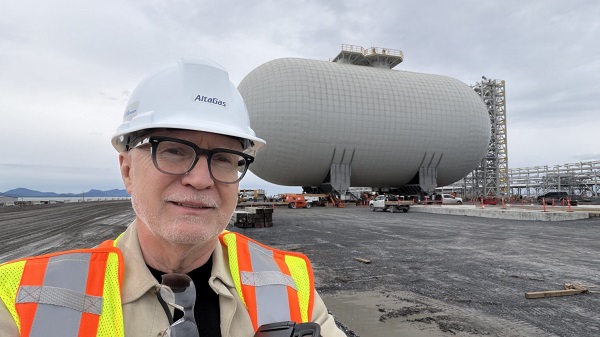
Meet REEF — the massive new export engine Canadians have never heard of
-
 Business1 day ago
Taxpayers Federation calls on politicians to reject funding for new Ottawa Senators arena
-
 Censorship Industrial Complex2 days ago
Ottawa’s New Hate Law Goes Too Far
-
 Fraser Institute23 hours ago
Claims about ‘unmarked graves’ don’t withstand scrutiny
-
 Business23 hours ago
Too nice to fight, Canada’s vulnerability in the age of authoritarian coercion
-
 Business1 day ago
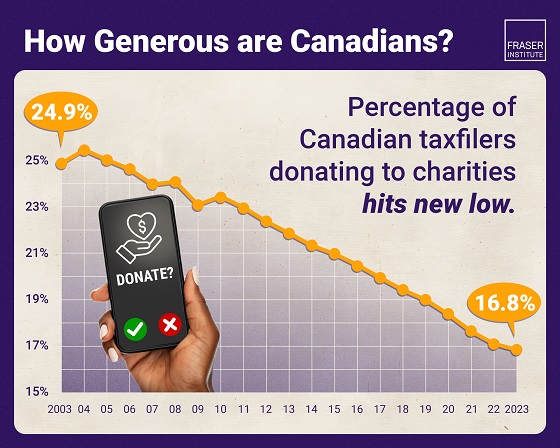
Albertans give most on average but Canadian generosity hits lowest point in 20 years