
Censorship Industrial Complex
Jordan Peterson reveals DEI ‘expert’ serving as his ‘re-education coach’ for opposing LGBT agenda

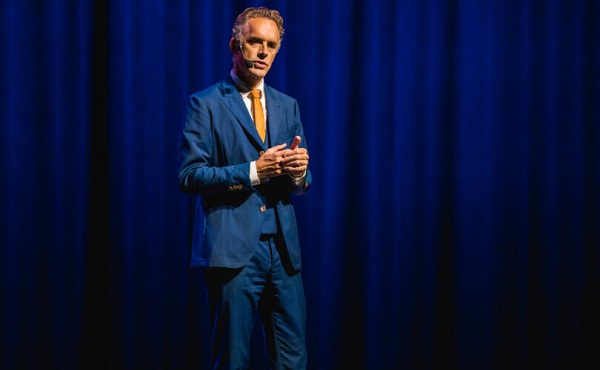
From LifeSiteNews
The Ontario College of Psychologists has selected Jordan Peterson’s “re-education coach” for having publicly opposed the LGBT agenda.
In a June 16 op-ed published by the National Post, Canadian psychologist Dr. Jordan Peterson revealed that U.K. citizen Harry Cayton will guide him through the mandatory training.
“In the last week … the College has re-established contact, after months of unnecessary delay, which occurred in violation of their own order and guidelines. They have made me an entirely new offer, all the while insisting that this was their intent all along, which it most clearly was not,” Peterson said.
“All they really want, it turns out, is one two-hour session, which will not involve any ‘social media’ training,” he further explained. “This will be conducted by a man — one Harry Cayton — a citizen of the U.K., who is neither social media expert, according to the College and is definitely not a psychologist.”
Harry Cayton, a supposed expert on “professional regulation and governance,” is known professionally for promoting Diversity, Equity, and Inclusion (DEI) initiatives.
In 2021, he was appointed to conduct an independent review of the British Columbia Law Society’s governance structure, specifically examining how it supports DEI goals.
Additionally, in 2022, while appearing on Ascend Radio’s podcast, Cayton argued there should be more DEI regulations in professional associations.
Peterson has promised to make the details of his “re-education” public, questioning why the College wishes to hide what Cayton plans to discuss with him.
“If I am the intransigent fool, and he is the wizard to set things right, why not bless everyone interested with his wisdom, and allow them to participate in the restructuring of my psyche and eventual enlightening? Why the concern with confidentiality?” he asked.
Peterson also explained that he will publicize the training “so that people who are interested can decide for themselves what is going on.”
In January 2024, Peterson lost his appeal of the board’s decision to compel him to undergo mandatory re-education, meaning that he must attend the training or risk losing his license to practice psychology in Ontario.
Peterson also revealed that his “legal options have” now “been exhausted” after Ontario’s highest court rejected his appeal of the College’s 2022 ruling that his public political statements ran afoul of the administrative board’s rules and that he must therefore submit to, and personally pay for, a “coaching program” on professionalism.
Peterson is a widely-known critic of Canada’s increasingly totalitarian government. He has also spoken frequently on the need for young men to accept and take on personal responsibility. While he has seemingly inspired others to explore Christianity, he has not yet espoused a personal belief in any religion, though he affirmed his wife Tammy in her decision to convert to Catholicism in 2024.

Censorship Industrial Complex
Liberals gain support for ‘hate speech’ bill targeting Bible passages against homosexuality

From LifeSiteNews
The Bloc Québécois are now backing the hate-speech Bill C-9 in Canada after the Liberal government agreed to take away a religious exception.
A Liberal government bill to criminalize parts of the Bible dealing with homosexuality under Canada’s new “hate speech” laws looks closer to becoming reality after gaining the support of the Bloc Québécois party when a religious exception was removed.
The National Post reported that the Bloc Québécois are now backing the hate-speech Bill C-9 after the Liberal government of Prime Minister Mark Carney agreed to take away a religious exception.
Bill C-9, the Combating Hate Act, as reported by LifeSiteNews, has been blasted by constitutional experts as allowing empowered police and the government to go after those it deems to have violated a person’s “feelings” in a “hateful” way.
As reported by LifeSiteNews, a government insider revealed that the Liberal government plans to remove religious exemptions from Canada’s hate-speech laws by modifying a bill. This would affect passages of the Bible dealing with homosexuality.
A recent media report states that the Carney Liberals and the separatist Bloc Québécois want to amend Bill C-9, which would “criminalize sections of the Bible, Quran, Torah, and other sacred texts,” Conservative leader Pierre Poilievre noted yesterday on X.
Both the Liberals and the Bloc are on board to support the removal of a religious exemption in Canada’s Criminal Code for the bill.
On Monday, Canadian Justice Minister Sean Fraser was rather mum on the deal made with the Bloc, which now says the deal is on thin ice due to canceled justice committee meetings.
Fraser said that it is his “priority” to see “this bill adopted,” but admitted it will need the support of other parties.
“That’s going to require that we collaborate with different parties who have different points of view,” he said.
However, it appears that such meetings will take place this week, but Conservative Party MPs have promised to fight the removal of the religious exception.
Liberal MP Marc Miller had said earlier in the year that certain passages of the Bible are “hateful” because of what it says about homosexuality, and those who recite the passages should be jailed. As reported by LifeSiteNews, he was recently appointed as a government minister by Carney.
Canadian Conservative MP Leslyn Lewis blasted the Carney Liberals’ federal plan to criminalize parts of the Bible as an attack on “Christians,” warning it sets a “dangerous precedent” for Canadian society.
In response, the party launched a petition over fear that religious texts could be criminalized.
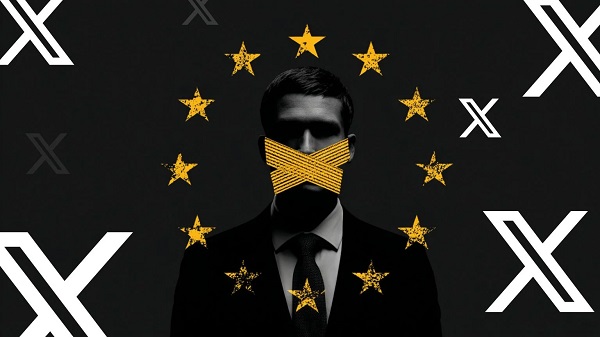

Europe calls it transparency, but it looks a lot like teaching the internet who’s allowed to speak.
|
When the European Commission fined X €120 million on December 5, officials could not have been clearer. This, they said, was not about censorship. It was just about “transparency.”
They repeat it so often you start to wonder why.
The fine marks the first major enforcement of the Digital Services Act, Europe’s new censorship-driven internet rulebook.
It was sold as a consumer protection measure, designed to make online platforms safer and more accountable, and included a whole list of censorship requirements, fining platforms that don’t comply.
The Commission charged X with three violations: the paid blue checkmark system, the lack of advertising data, and restricted data access for researchers.
None of these touches direct content censorship. But all of them shape visibility, credibility, and surveillance, just in more polite language.
Musk’s decision to turn blue checks into a subscription feature ended the old system where establishment figures, journalists, politicians, and legacy celebrities got verification.
The EU called Musk’s decision “deceptive design.” The old version, apparently, was honesty itself. Before, a blue badge meant you were important. After, it meant you paid. Brussels prefers the former, where approved institutions get algorithmic priority, and the rest of the population stays in the queue.
The new system threatened that hierarchy. Now, anyone could buy verification, diluting the aura of authority once reserved for anointed voices.
Reclaim The Net is sustained by its readers.
Your support fuels the fight for privacy, free speech and digital civil liberties while giving you access to exclusive content, practical how to guides, premium features and deeper dives into freedom-focused tech.
Become a supporter here.
However, that’s not the full story. Under the old Twitter system, verification was sold as a public service, but in reality it worked more like a back-room favor and a status purchase.
The main application process was shut down in 2010, so unless you were already famous, the only way to get a blue check was to spend enough money on advertising or to be important enough to trigger impersonation problems.
Ad Age reported that advertisers who spent at least fifteen thousand dollars over three months could get verified, and Twitter sales reps told clients the same thing. That meant verification was effectively a perk reserved for major media brands, public figures, and anyone willing to pay. It was a symbol of influence rationed through informal criteria and private deals, creating a hierarchy shaped by cronyism rather than transparency.
Under the new X rules, everyone is on a level playing field.
Government officials and agencies now sport gray badges, symbols of credibility that can’t be purchased. These are the state’s chosen voices, publicly marked as incorruptible. To the EU, that should be a safeguard.
The second and third violations show how “transparency” doubles as a surveillance mechanism. X was fined for limiting access to advertising data and for restricting researchers from scraping platform content. Regulators called that obstruction. Musk called it refusing to feed the censorship machine.
The EU’s preferred researchers aren’t neutral archivists. Many have been documented coordinating with governments, NGOs, and “fact-checking” networks that flagged political content for takedown during previous election cycles.
They call it “fighting disinformation.” Critics call it outsourcing censorship pressure to academics.
Under the DSA, these same groups now have the legal right to demand data from platforms like X to study “systemic risks,” a phrase broad enough to include whatever speech bureaucrats find undesirable this month.
The result is a permanent state of observation where every algorithmic change, viral post, or trending topic becomes a potential regulatory case.
The advertising issue completes the loop. Brussels says it wants ad libraries to be fully searchable so users can see who’s paying for what. It gives regulators and activists a live feed of messaging, ready for pressure campaigns.
The DSA doesn’t delete ads; it just makes it easier for someone else to demand they be deleted.
That’s how this form of censorship works: not through bans, but through endless exposure to scrutiny until platforms remove the risk voluntarily.
The Commission insists, again and again, that the fine has “nothing to do with content.”
That may be true on a direct level, but the rules shape content all the same. When governments decide who counts as authentic, who qualifies as a researcher, and how visibility gets distributed, speech control doesn’t need to be explicit. It’s baked into the system.
Brussels calls it user protection. Musk calls it punishment for disobedience. This particular DSA fine isn’t about what you can say, it’s about who’s allowed to be heard saying it.
TikTok escaped similar scrutiny by promising to comply. X didn’t, and that’s the difference. The EU prefers companies that surrender before the hearing. When they don’t, “transparency” becomes the pretext for a financial hammer.
The €120 million fine is small by tech standards, but symbolically it’s huge.
It tells every platform that “noncompliance” means questioning the structure of speech the EU has already defined as safe.
In the official language of Brussels, this is a regulation. But it’s managed discourse, control through design, moderation through paperwork, censorship through transparency.
And the louder they insist it isn’t, the clearer it becomes that it is.
|
|
|
|
Reclaim The Net Needs Your
With your help, we can do more than hold the line. We can push back. We can expose censorship, highlight surveillance overreach, and amplify the voices of those being silenced.
If you have found value in our work, please consider becoming a supporter.
Your support does more than keep us independent. It also gives you access to exclusive content, deep dive exploration of freedom focused technology, member-only features, and practical how-to posts that help you protect your rights in the real world.
You help us expand our reach, educate more people, and continue this fight.
Please become a supporter today.
Thank you for your support.
|

Trump Deals Biden’s EV Dreams A Death Blow
Canadian bishops condemn Liberal ‘hate speech’ proposal that could criminalize quoting Scripture
Liberal bill “targets Christians” by removing religious exemption in hate-speech law

Pharma Bombshell: President Trump Orders Complete Childhood Vaccine Schedule Review
-
National1 day ago
Liberal bill “targets Christians” by removing religious exemption in hate-speech law
-
 Business2 days ago
Canada invests $34 million in Chinese drones now considered to be ‘high security risks’
-
 Economy2 days ago
Affordable housing out of reach everywhere in Canada
-
 Business1 day ago
Looks like the Liberals don’t support their own Pipeline MOU
-
 Business2 days ago
The Climate-Risk Industrial Complex and the Manufactured Insurance Crisis
-
 Crime1 day ago
Inside the Fortified Sinaloa-Linked Compound Canada Still Can’t Seize After 12 Years of Legal War
-
 Health2 days ago
The Data That Doesn’t Exist
-
 Business1 day ago
Canada Can Finally Profit From LNG If Ottawa Stops Dragging Its Feet