
Indigenous
Internal emails show Canadian gov’t doubted ‘mass graves’ narrative but went along with it

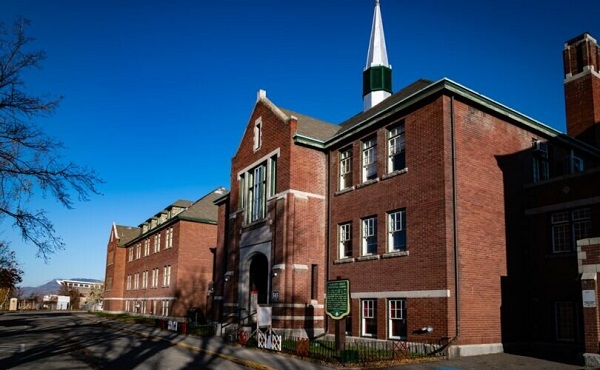
From LifeSiteNews
Parks Canada employees admitted that ground-penetrating radar results were likely false positives.
Internal emails have revealed that federal workers questioned the residential school narrative as early as 2023, despite gaslighting Canadians who questioned media’s claims.
According to confidential staff emails published by Blacklock’s Reporter on July 4, Parks Canada, the government agency which manages national parks, admitted that claims of hundreds of graves found at an Indian Residential School in Kamloops, British Columbia were unfounded and likely false.
“Authors refer to the 215 ground-penetrating radar hits that were reported in 2021 as ‘graves’ or ‘burials,’” wrote one Parks Canada consultant. “But none of these sites have been investigated further to determine that they are graves.
Like most Canadians, Parks Canada staff initially believed the alleged discovery of 215 so-called “unmarked” graves in Kamloops during the summer of 2021. The story alleged that hundreds of Indigenous children were killed and secretly buried at the residential school.
READ: Canadian councilor punished for denying unproven ‘mass graves’ narrative seeks court review
Canada’s Residential School system was a structure of boarding schools funded by the Canadian government and run by both the Catholic Church and other churches that ran from the late 19th century until the last school closed in 1996.
While some children did tragically die at the once-mandatory boarding schools, evidence has revealed that many of the children passed away as a result of unsanitary conditions due to underfunding by the federal government, not the Catholic Church.
In 2021, Parks Canada hired historians “to help identify any gaps or errors” in the claim of finding 215 unmarked graves before designating the Kamloops Indian Residential School as a historic site.
However, according to their internal emails, Parks Canada discovered that the technology used to discover the “graves” is often misleading and cannot be relied upon.
“Ground-penetrating radar often throws up false positives, anomalies that are not indicative of anything significant,” a consultant wrote. “I suggest that until there is further investigation of the sites at Kamloops the report refer to them as ‘possible graves’ or ‘probable graves’ or ‘likely graves’ rather than ‘graves.’”
As a result, Parks Canada changed their report to list the anomalies as “probable unmarked graves” rather than “unmarked graves.”
“The challenge is that ground-penetrating radar does not provide evidence of potential unmarked graves,” said the staff email. “It provides evidence of anomalies. I am quoting the archaeologists here.”
“Regarding the topic of ground-penetrating radar, I’ve made a suggested revision,” wrote another manager. “It might be preferable to not use the term ‘anomalies’ for now.” Staff were also advised to “stay extra quiet” on the designation of the Residential School as a national historic site.
To date, there have been no mass graves discovered at residential schools. However, following claims blaming the deaths on the Catholic clergy who ran the schools, over 100 churches have been burned or vandalized across Canada in seeming retribution.
READ: Despite claims of 215 ‘unmarked graves,’ no bodies have been found at Canadian residential school
Despite their conclusions, Parks Canada refused to publicly contradict the residential school narrative. On their website discussing the schools, the government agency does not mention the unmarked graves and also fails to debunk the claims of mass unmarked graves.
Furthermore, while the agency internally questioned and doubted the validity of the claims, Canadians who publicly opposed the mainstream narrative were condemned as denialists and often punished.
Despite the lack of physical evidence, in 2022, Canada’s House of Commons under Liberal Prime Minister Justin Trudeau, formalized the controversy and declared the residential school program to be considered a historic act of “genocide.”

C2C Journal
Learning the Truth about “Children’s Graves” and Residential Schools is More Important than Ever

This is a special preview article from the:
By Tom Flanagan
When the book Grave Error was published by True North in late 2023, it became an instant best-seller. People wanted to read the book because it contained well-documented information not readily available elsewhere concerning the history of Canada’s Indian Residential Schools (IRS) and the facts surrounding recent claims about “unmarked graves.”
Dead Wrong: How Canada Got the Residential School Story So Wrong is the just-published sequel to Grave Error. Edited by Chris Champion and me, with chapters written by knowledgeable academics, journalists, researchers and even several contributors who once worked directly in residential schools or dedicated Indian hospitals, Dead Wrong was published because the struggle for accurate information on this contentious subject continues. Let me share with you a little of what’s in Dead Wrong.
Outrageously, the New York Times, the world’s most influential newspaper among liberals and “progressives”, has never retracted its outrageously false headline that “mass graves” were uncovered at Kamloops in 2021. Journalist Jonathan Kay exposes that scandal.
With similarly warped judgment, the legacy media were enthused about last year’s so-called documentary Sugarcane, a feature-length film sponsored by National Geographic and nominated for an Academy Award. The only reporter to spot Sugarcane’s dozens of egregious factual errors was independent journalist Michelle Stirling; her expose is included in Dead Wrong.
In spring 2024, the small Interior B.C. city of Quesnel made national news when the mayor’s wife bought ten copies of Grave Error for distribution to friends. After noisy protests by people who had never read the book, Quesnel city council voted to censure Mayor Ron Paull and tried to force him from office. It’s all described in Dead Wrong.
Also not to be forgotten is how the Law Society of B.C. has forced upon its members training materials that assert against all evidence that children’s remains have been discovered at Kamloops. As told by James Pew, B.C. MLA Dallas Brodie was expelled not from the NDP but from the Conservative caucus for daring to point out this obvious and incontrovertible
falsehood. But the facts are that ground-penetrating radar (used at the former Kamloops IRS) can detect only “anomalies” or “disturbances”, not identify what those might be; that no excavations have been carried out; and that no human remains whatsoever, let alone “215 children’s bodies”, have been found there. Brodie is completely correct.
Then there is the story of Jim McMurtry, suspended by the Abbotsford District School Board shortly after the May 2021 Kamloops announcement. McMurtry’s offence was to tell students the truth that, while some Indigenous students did die in residential schools, the main cause was tuberculosis. His own book The Scarlet Lesson is excerpted in Dead Wrong.
Historian Ian Gentles and former IRS teacher Pim Wiebel offer a richly detailed analysis of health and medical conditions in the schools. They show that these were much better than what prevailed in the Indian reserves from which most students came.
Another important contribution to understanding the medical issues is by Dr. Eric Schloss, narrating the history of the Charles Camsell Indian Hospital in Edmonton. IRS facilities usually included small clinics, but students with serious problems were often transferred to Indian Hospitals for more intensive care. Schloss, who worked in the Camsell, describes how it delivered state-of-the-art medicine, probably better than the care available to most non-native children anywhere in Canada at the time.
Rodney Clifton’s contribution, “They would call me a ‘Denier,’” describes his personal experiences working in two IRS in the 1960s. Clifton does not tell stories of hunger, brutal punishment and suppression of Indigenous culture, but of games, laughter and trying to learn native languages from his Indian and Inuit charges.
And far from the IRS system being a deliberate, sustained program of cultural genocide, as Toronto lawyer and historian Greg Piasetzki explains, the historical fact is that “Canada Wanted to Close All Residential Schools in the 1940s. Here’s why it couldn’t.” That’s because for many Aboriginal parents, particularly single parents and/or those with large numbers of children,
residential schools were the best deal available. In addition to schooling their kids, they offered paid employment to large numbers of Indigenous Canadians as cooks, janitors, farmers and health care workers, and later as teachers and even principals.
Another gravely important issue is the recent phenomenon of charging critics with “residential school denialism.” This is a false accusation hurled by true believers in what has become known as the “Kamloops narrative”, aimed at shutting down criticism or questions. A key event in this process was when NDP MP Leah Gazan in 2022 persuaded the House of Commons to approve a
resolution “That, in the opinion of the House this government must recognize what happened in Canada’s Indian residential schools as genocide.”
In 2024, Gazan took the next step by introducing a private member’s bill to criminalize dissent about the IRS system. Remember, the slur of “denialist” is a term drawn from earlier debates about the Holocaust. Gazan’s bill failed to pass, but she reintroduced it in 2025. Had such provisions been in force back in 2021, it might well have become a crime to point out that the
Kamloops GPR survey had identified soil anomalies, not buried bodies. Frances Widdowson examines this sordid political campaign of denunciation.
As the proponents of the Kamloops narrative fail to provide convincing hard evidence for it, they hope to mobilize the authority of the state to stamp out dissent. One of the main goals behind publication of Dead Wrong is to head off this drive toward authoritarianism.
Happily, Dead Wrong is already an Amazon best-seller based on pre-publication orders. The struggle for truth continues.
The original, full-length version of this article was recently published by C2C Journal.
Tom Flanagan is the author of many books on Indigenous history and policy, including (with C.P. Champion) the best-selling Grave Error: How the Media Misled Us and the Truth about Residential Schools.
Indigenous
Canadian mayor promises to ‘vigorously defend’ property owners against aboriginal land grab

From LifeSiteNews
Port Coquitlam, British Columbia, is fighting a Kwikwetlem First Nation’s claim that, if successful, would see aboriginals in essence be given large swaths of land owned by the city.
A Canadian mayor said he will “vigorously defend” the property rights of residents in light of a recent court ruling that gave a portion of a municipality to aboriginals via a title claim they won in court.
Mayor Brad West of Port Coquitlam, British Columbia, vowed to residents, “We have, and will continue to, vigorously defend public ownership of these lands, along with private property rights in our jurisdiction.”
“We will ensure the public is kept informed,” he promised in a post on X.
Port Coquitlam is fighting a Kwikwetlem First Nation’s claim made in 2016 that, if successful, would see the aboriginals in essence be given large swaths of land owned by the city.
The city said that at this time that there are “no civil claims initiated by any First Nations involving private property within the City of Port Coquitlam.”
The city promised in a statement that if the changes are made, it will notify residents immediately.
“While the City recognizes public concern resulting from recent media coverage of the Cowichan/Richmond case, it is important to note that no private lands within Port Coquitlam are currently the subject of litigation,” the statement read.
West’s comments come in light of a recent court ruling in British Columbia affecting property rights, Cowichan Tribes v. Canada (Attorney General), which saw the provincial Supreme Court rule that decades-long land grants by the government were not valid and violated a land title held by the tribes.
The ruling included large parts of Richmond, British Columbia, which is in the Vancouver area, essentially given to local tribes.
There are many other similar legal battles taking place in British Columbia, which, unlike the rest of Canada, has no official treaties in place with local Indigenous peoples but only agreements without legal clarity.
As reported by LifeSiteNews, John Carpay, founder and president of the Justice Centre for Constitutional Freedoms (JCCF), noted the court “told the people (of various ethnicities) who live in some parts of Richmond, B.C., that the money they paid for their own properties does not guarantee them the right to own and enjoy their own homes.”
Carpay noted that “the fact that aboriginal ethnic groups arrived in Canada earlier than other ethnic groups should be completely irrelevant when it comes to the application of the law.”
“Nobody disputes that different aboriginal tribes lived in this land before the arrival of Europeans, Africans, and Asians. The question is: Why should this fact matter?” he noted.
Carpay observed that when officials and courts apply the “law” differently to come after “Canadians because of their race, ancestry, ethnicity, or descent,” the predictable and inevitable outcome “is strife, resentment, and fear.”


From Underdog to Top Broodmare

Will the New West Coast Pipeline MoU Lead to Results? Almost Certainly Not According to AI

Poilievre says West Coast Pipeline MOU is no guarantee
Carney forces Alberta to pay a steep price for the West Coast Pipeline MOU
-
 Energy1 day ago
Canadians will soon be versed in massive West Coast LPG mega-project
-
 Alberta2 days ago
Keynote address of Premier Danielle Smith at 2025 UCP AGM
-
 Daily Caller1 day ago
Tom Homan Predicts Deportation Of Most Third World Migrants Over Risks From Screening Docs
-
 COVID-192 days ago
The dangers of mRNA vaccines explained by Dr. John Campbell
-
C2C Journal23 hours ago
Learning the Truth about “Children’s Graves” and Residential Schools is More Important than Ever
-
 National1 day ago
Media bound to pay the price for selling their freedom to (selectively) offend
-
 Alberta23 hours ago
New era of police accountability
-
 Artificial Intelligence1 day ago
‘Trouble in Toyland’ report sounds alarm on AI toys