
C2C Journal
Indecent Proposals: How Activist Investors Hijacked Responsible Corporate Governance

From the C2C Journal
By Gina Pappano of InvestNow
It’s a central tenet of the free-market economy: a corporation’s job is to maximize investment returns to its shareholders. Bluntly, to make money. And “shareholder proposals” have been a powerful tool enabling investors to pressure a company’s board to take a particular action to increase its value. In recent years, however, activist groups have been weaponizing shareholder proposals to pressure companies into pursuing ideological goals, especially environmental and “progressive” social-welfare causes. In the case of the oil and natural gas industry, they’ve even pushed for companies to take actions that would drive them out of business. Veteran markets expert Gina Pappano examines this damaging phenomenon – and the new movement pushing back.
No matter what business they engage in, the purpose of all corporations – their raison d’être – is to generate returns on their shareholders’ investment and to maximize shareholder value by achieving a rising price in the stock market, paying dividends to shareholders, and eventually perhaps engineering a profitable “exit” from the market by being taken over at a premium. This understanding is known as “shareholder primacy” and it is so central to good corporate governance that companies and regulators have developed a mechanism, the shareholder proposal, whereby anyone who holds stock in a corporation can petition its board of directors to examine some practice or other with an eye towards improving the company and its value.
But in the 21st century – especially in the last decade or so – activist groups have repurposed shareholder proposals into weapons used to pressure companies to adopt policies informed by the group’s ideological concerns. No sector in Canada has been targeted by ideologically driven agendas more than the oil and natural gas industry, a crucial branch of Canada’s economy that includes hundreds of producers, pipeline companies, refinery operators and service companies, many of which are publicly traded. Using shareholder proposals whose goal is the limitation and eventual elimination of Canada’s oil and natural gas production, activists who are shareholders-of-convenience are attempting to villainize one of the most productive, vital and longstanding pillars of our country’s economy.
 Popular delusions: Climate activists push for an end to the oil and natural gas industry even as an energy-hungry world set records last year for energy consumption and oil production; the world will need crude oil and natural gas for decades to come and Canada could be a preferred supplier. (Sources: (photo) Rainforest Action Network, licensed under CC BY-NC 2.0; (chart) Energy Institute)
Stand.earth, Investors for Paris Compliance, the BC General Employees’ Union, Environmental Defence Canada, the Shareholder Association for Research and Education and MÉDAC are just a few of the activist groups that over the past few years have presented anti-fossil-fuel shareholder proposals to Canada’s “Big Five” banks and to oil and natural gas companies. Last year, for example, Stand.earth demanded that the Royal Bank of Canada’s (RBC) “Board of Directors adopt a policy for a time-bound phase-out of the RBC’s lending and underwriting to projects and companies engaging in new fossil fuel exploration, development and transportation.” In other words, they were asking Canada’s biggest bank to stop supporting an industry that provides hundreds of thousands of Canadian jobs, pays tens of billions of dollars in taxes annually and forms the economic backbone of three Canadian provinces.
The demands of these groups are premised on convincing shareholders that eliminating one of our country’s most productive sectors will benefit Canada socially and environmentally and reduce global CO2 emissions, when the facts demonstrate that nothing Canada could do domestically could influence emissions on a global scale. The most recent Statistical Review of World Energy, for example, described 2023 as a “year of record highs in an energy hungry world”.
The world will continue to need crude oil and natural gas for decades to come – not only the energy these fuels provide, but the thousands of crucial products that are made from them. Canadian oil and natural gas companies, with their high environmental and safety standards and technical expertise, should be among the preferred suppliers of the energy that powers the world. Yet the activists driving these economically ruinous crusades, based on dogma and ideology, want shareholders, investors and Canadians at large to vote in favour of their proposals. How did we get here?
The Annual General Meeting as Town Hall Meeting
 Annual general meetings (AGM) used to be mostly stodgy affairs, dedicated to discussing a company’s financial statements and general business; the rise of shareholders’ proposals has made some of them much more contentious. Depicted, (top) Ford’s AGM, 1980; (middle) Bank of America’s AGM, 2024; (bottom) an activist is removed from Shell’s 2023 AGM. (Sources of photos: (top) Ford Motor Company; (middle) Rainforest Action Network, licensed under CC BY-NC 2.0; (bottom) Sky News)
Historically, the annual general meeting (AGM) of a corporation (whether privately held or publicly traded) was called to present and discuss the previous year’s results as embodied in the audited annual financial statements, to elect any new directors that might be required, to announce the retirement of existing directors if applicable, to announce any major changes to the company’s executive team, and to discuss any other relevant business as the company’s leadership might deem necessary. These were often stodgy and boring events, especially if things were ticking along smoothly. And these are still the core matters to which the majority of AGMs are devoted among Canada’s approximately 3,500 publicly traded companies as well as the vastly more numerous privately held companies.
But since the Second World War, and especially over the past 30 or so years, AGMs have become more – much more. In the United States’, the Securities and Exchange Commission’s (SEC) Shareholder Proposal Rule (Rule 14-a8) came into force in 1942. In testifying before Congress on the then-new rule in 1943, SEC Commissioner Robert H. O’Brien explained that its motivation was to “approximate the widely attended town hall meeting type of forum characteristic of the days when nearly all corporations were closely held and geographically limited.”
The Town Hall analogy is a good one. In a 2022 speech entitled The Shareholder Proposal Rule: A Cornerstone of Corporate Democracy, former SEC Director Renee Jones laid out the role and the rights of the shareholder. “Shareholders, that is individuals or institutions that invest in a corporation, are purchasing a share of the company with the understanding that the board of directors and senior management team will use their investment wisely, making sound corporate decisions with the intent of increasing profits, to which [the shareholders] are entitled to a share. They are also entitled to certain governance rights including the right to elect directors, approve major corporate transactions and express their views on corporate governance matters and other fundamental issues related to the corporation’s business. Additionally, shareholders generally have the right to bring matters before other shareholders for a vote at a shareholder or ‘town hall’ meeting.”
The bulk of the foregoing paragraph is a good synopsis of a shareholder’s rights and roles as it has been understood for the past 200-300 years. But Jones packed a lot into the sentence following the word “Additionally”. What she mentioned has in fact happened – with a vengeance. Since the enactment of the U.S. Shareholder Proposal Rule and the U.S.-inspired Canada Business Corporations Act’s Shareholder Proposal Regime, the number of shareholder proposals being presented every year in each country has increased exponentially.
The mechanism allows for any shareholder to present a proposal to a corporation provided the shareholder meets certain technical requirements set out by the SEC or the Canada Business Corporations Act, as the case may be. The proposal is printed in the set of corporate documents sent to all stockholders prior to any AGM. At the AGM, the shareholder presents the proposal and there is a vote.
In the early years, most shareholder proposals concerned matters of corporate governance. It was not until the 1960s and 70s that the phenomenon took off, possibly reflecting the era’s increased social activism. For example, in 1969 a group called the Medical Committee for Human Rights filed a shareholder proposal asking Dow Chemical Corporation to stop manufacturing napalm, an explosive chemical used with at-times horrifying effects in the Vietnam War. In the 1970s and 1980s, the anti-Apartheid movement used the shareholder proposal process to pressure corporations to terminate their business dealings in South Africa.
 Renee Jones, a former director of the U.S. Securities and Exchange Commission, defended the right of shareholders to bring matters to a vote at AGMs; many such proposals have focussed on left-leaning environmental, social and governance (ESG) topics, and companies have been anxious to play along. At right, a screenshot from the presentation entitled “Unlocking the Power of Environmental, Social and Governance Data” by the World Economic Forum. (Source of right photo: World Economic Forum, licensed under CC BY-NC-SA 2.0)
Most such proposals did not tend to get very far, however; Boards of Directors typically recommended voting against them, and that tended to be the end of it. Most shareholders in publicly traded companies do not delve very deeply into the affairs of the often-numerous companies in which they might hold a position. A small business owner who is saving for retirement, for example, might well hold shares in several dozen companies via their RRSP portfolio; what they or their investment adviser monitor above all is whether dividends are being paid and share prices are doing well.
Accordingly, most shareholders take their cue from the Board of Directors and vote according to their recommendation, via so-called “proxy” forms, which also cover votes on standard matters like approving the financial statements and electing new directors. In this vein, proxy advisory firms have arisen, which institutional investors and large public pension funds rely upon to guide their voting. This is why it is very difficult to vote against a board and why most shareholder proposals fail at the AGM ballot.
Still, the number of shareholder proposals has grown dramatically and this increase has coincided with a rise in ideologically driven proposals. And none more than those associated with the environmental, social and governance (ESG) movement. In even a cursory investigation into this issue, one is struck by the degree to which shareholder proposals and ESG have become inextricably linked. Many of the current definitions of shareholder proposals one comes across, in fact, claim that they are “an important corporate governance tool which allow[s] shareholders to engage with public companies with respect to environmental, social and corporate governance issues.” Effectively, the shareholder proposal mechanism has been hijacked and harnessed to one dominant purpose.
Shareholders vs. Stakeholders
The evolution away from shareholder primacy to what is known as stakeholder primacy in the purpose and governance of corporations has been closely aligned with the rise of ESG investing. Proponents of so-called “stakeholder capitalism” contend that corporations should care less about superficial concerns like profits for shareholders and instead focus on the good of all their “stakeholders”, by which they mean anyone who is affected by, depends on or makes use of a company: customers, employees, the communities in which a company operates, the environment, governments and society as a whole. Klaus Schwab, founder of the World Economic Forum, is a prominent proponent of stakeholder capitalism, writing a book of that title.
The company’s actual investors, who make its work possible, should presumably get some consideration as well, but their good tends to get lost in the idealistic rhetoric which accompanies the ESG approach. The corporation’s original purpose as a profit-maximizing entity dedicated to serving its shareholders’ financial interests becomes subsumed by the deluge of social welfare-oriented activities (“giving back to the community”) and support for environmental causes. It is noteworthy that all of this is heavily skewed towards “progressive”, i.e., left-leaning, causes. In some cases, this has become self-destructive if not borderline suicidal, such as the BP CEO who some years ago infamously stated that the “B” in British Petroleum should be reimagined as “Beyond”.
 Advocates of “stakeholder capitalism” believe companies should care less about profit – but it’s the push for those profits that makes companies successful, creates jobs and wealth, and finances retirement for millions. (Source of photo: Scott Beale, licensed under CC BY-NC-ND 2.0)
An important and current statement of ESG principles can be found in the United Nations-supported Principles of Responsible Investing (PRI), which has been signed by over 3,500 asset managers pledging to further “environmental, social, and corporate governance” goals in order to “better align investors with broader objectives of society.” Under this vision, society presumably no longer has much need for profitable companies whose earnings help build up the retirement accounts of tens of millions of future pensioners, but has become primarily focused on saving whales, fighting climate change or paying for free social housing.
It is interesting to note that the Canada Pension Plan (CPP) Investment Board is one of the PRI’s founding signatories. As a future beneficiary of Canada’s public pension system, I find myself worried by this fact. Like millions of other Canadians, my future wellbeing depends on the continued solvency of the CPP which, in turn, depends on the ongoing profitability of the companies in which it invests. The same can be said about dozens of other pension funds such as those for teachers, nurses and government employees.
 The United Nations-supported Principles of Responsible Investing, signed by 3,500 asset managers – including the Canada Pension Plan Investment Board – demanded that companies pursue ESG goals to “better align investors with broader objectives of society”; ideological dogma has replaced the pursuit of shareholder value. (Source of photos: (left) expatpostcards/Shutterstock; (right) Sheila Fitzgerald/Shutterstock)
The two most prominent concepts among ESG investing principles and in shareholder proposals meant to push ESG agendas are: (1) diversity, equity and inclusion (DEI), and (2) “sustainability”. DEI is a highly ideological, neo-Marxist doctrine with which C2C readers are by now amply familiar. Sustainability is a somewhat older term that refers to goals pursued by the environmentalist movement, which currently include “net zero”, so-called decarbonization and the divestment from, reduction or outright banning of fossil fuel production and consumption.
Most shareholder proposals focused on sustainability are sector-specific. Oil and natural gas companies and financial institutions received the largest number in the 2023 AGM season. In Canada, most proposals have been aimed either at pushing oil and natural gas companies to net zero and decarbonization goals or at pressuring the Big Five chartered banks to stop investing in oil and natural gas companies and projects.
In 2022, for instance, Investors for Paris Compliance (I4PC) asked Calgary-based pipeline and utilities giant Enbridge Inc. to “strengthen their net zero commitment such that the commitment is consistent with a science-based, net zero target.” I4PC defines net zero to mean “no new oil and gas fields are required beyond those already approved for development in conjunction with a historic investment surge in clean technologies.” So not only was I4PC demanding that Enbridge officially commit to long-term decline in its business (since all oil and natural gas fields deplete over time, requiring continuous reinvestment in new fields merely to maintain current production), but it was also prescribing a huge (“historic”) amount of investment in so-called “clean” technologies that are outside Enbridge’s core business (wind turbines do not require pipelines).
 Oil and natural gas companies and financial institutions have been the primary targets of shareholder proposals in Canada, which typically demand aggressive decarbonization and divestment from the energy sector. Shown at bottom, protesters march at the RBC AGM, Toronto. (Sources: (chart) Harvard Law School Forum on Corporate Governance; (photo) Rainforest Action Network, licensed under CC BY-NC 2.0)
The Gathering Pushback in the United States
There are glimmerings of an awakening that the wave of activist shareholder proposals and ESG investing is materially impairing investment returns and could prove economically ruinous. Investors are, in effect, being defrauded by companies diverting capital, executive attention and employee talents towards expensive social goals that do not, say, develop new products or generate revenue.
In the U.S., pushback has been gathering from several directions. Warren Buffett, the famous “Sage of Omaha,” has openly expressed skepticism about ESG investing and things like corporate reporting on climate change efforts – although it is a sign of the ideology’s thorough penetration of the investment world that Buffett’s stance would be labelled “unconventional” in a business magazine.
 One of the world’s most successful investors, Warren Buffett, has been decidedly lukewarm on ESG, a position one business magazine called “unconventional” – an indication of how thoroughly the ideology has penetrated. (Source of photo: Fortune Live Media, licensed under CC BY-NC-ND 2.0)
More substantively, new asset management firms have been launched by entrepreneurs who concluded that the stakeholder primacy model just does not work. Strive Asset Management was founded in early 2022 explicitly to “live by a strict commitment to shareholder primacy – an unwavering mandate that the purpose of a for-profit corporation is to maximize long-run value to investors.” Its founders are private equity manager Anson Freriks and flamboyant commentator Vivek Ramaswamy, who was a candidate for the most recent Republican Presidential nomination, won by Donald Trump.
Strive believes that companies should do what they do best and not fall prey to other agendas. The fund was started specifically to “solve a problem,” as its website explains: “Large financial institutions, including the biggest asset managers, were using their clients’ money to advance social, cultural, environmental and political agendas in corporate America’s boardrooms. Asset managers and for-profit corporations have a fiduciary duty to maximize value, and that duty had been neglected.”
Strive’s pitch clearly resonated with investors, as the firm soon became one of the fastest-growing asset managers in the U.S. And its position appears to be having an effect. The latest edition of Strive’s newsletter, The Fiduciary Focus, includes the following headlines: “The Financial Times Credits Strive for Pushing Companies to Drop ESG-Linked Compensation,” “John Deere Pulling Back on ESG,” and “Wall Street Cools on Sustainable Funds.”
 “Asset managers and for-profit corporations have a fiduciary duty to maximize value,” says Vivek Ramaswamy, co-founder of Strive, an asset management firm committed to the primacy of shareholders’ financial interests; the firm’s data on the fall of ESG-focussed fund launches suggests his approach is resonating with investors. (Source of left photo: AP Photo/J. Scott Applewhite)
There is also growing concern in the political arena that ESG investment and other socially motivated corporate activities pose a threat both to the financial integrity of public pension funds and a challenge to democratic governance. A number of U.S. states have taken formal steps to confront and counter the ESG investment behemoth. One such measure is the non-profit State Financial Officers Foundation (SFOF). According to its website, “SFOF’s mission is to drive fiscally sound public policy, by partnering with key stakeholders, and educating Americans on the role of responsible financial management in a free market economy.”
The organization and its members are firm and vocal defenders of shareholder primacy. Among their activities have been letter-writing campaigns to corporations and fund managers that urge them to scale back political activism and instead focus on the interests of their shareholders. They are putting teeth to their words: according to a recent Torys Report, 18 of the SFOF’s member states have enacted anti-ESG laws, including prohibiting fund managers from considering ESG factors in their investments and state entities from investing with asset managers deemed to be discriminating against or boycotting the fossil fuel industry.
Some of the SFOF member states have also put their money where their mouths are in pushing to restore shareholder primacy. The organization recently supported the State of Texas Permanent School Fund (a large investment fund with US$53 billion in assets that helps pay for the state’s school system) as it cancelled a US$8.5 billion investment with BlackRock, one of the world’s largest investment funds and a prominent proponent of ESG investing. As SFOF urged, “BlackRock should withdraw from international organizations seeking to orchestrate opposition to fossil fuel investment, abandon ‘decarbonization’ policies that are a form of boycotting fossil fuels, and stop using its proxy voting authority to promote an anti-fossil fuel agenda.”
 Pushing back: The U.S. State Financial Officers Foundation has urged corporations and fund managers to put shareholders first; 18 member states have enacted anti-ESG laws, including prohibitions on state entities investing with asset managers deemed to be discriminating against or boycotting the fossil fuel industry. (Source of photo: Center for Media and Democracy)
Further pushback is coming from some of the recipients of activist shareholder proposals. It is perhaps not surprising that ExxonMobil is among the leaders here. The company has long been reviled by environmentalists for its insistence on keeping profitability, technical excellence and energy production central to its business. To some, it is the ugly face of “Big Oil”.
In January, ExxonMobil filed a lawsuit to block a shareholder resolution put forward by the groups Follow This and Arjuna Capital, whose stated objective was to force the company to commit to precipitous cuts in CO2emissions, including with respect to the downstream effects from the combustion of its products by customers. Exxon argued that such a resolution would force the company to “change the nature of its ordinary business or to go out of business entirely.” Which is what these “shareholders” intend; Exxon’s lawsuit quotes Arjuna Capital’s contention that “Exxon should shrink” and Follow This’s statement that its goal is “to wind down the company’s business in oil and natural gas.”
As Follow This states on its website: “We buy shares in order to work on our mission to stop climate change.” And, it says, its shareholder proposal aims to make ExxonMobil “stop exploring for more oil and gas.” While this kind of agenda is no longer surprising, ExxonMobil’s response was. Corporations generally try to deal with motivated activists by adopting some version of their favoured policies in the hopes they’ll go away (not that they do). ExxonMobil’s bolder, more confrontational tactic may be pointing the way, because in late June both activist groups not only dropped their proposals but promised not to bring forward similar demands in future; in return, ExxonMobil agreed to have its lawsuit dismissed.
 Blazing the trail: ExxonMobil early this year filed a lawsuit to block two activist groups from submitting shareholder proposals demanding that the company stop exploring for oil and natural gas and, thereby, “change the nature of its ordinary business or to go out of business entirely”; in June the activist groups backed down. (Source of photo: ET Auto)
Still more pushback in the U.S. is coming from the small but growing number of advocacy organizations submitting anti-ESG shareholder proposals that call on corporations to refocus themselves on shareholder-centred capitalism. The National Center for Public Policy Research and the National Legal and Policy Center are two such organizations. According to a recent SquareWell Partners report entitled “What Do Shareholders Propose?” these kinds of proposals surged by 64 percent in 2023.
Now What About Canada?
This process is still at a much earlier stage in Canada. Last year the not-for-profit organization I lead, InvestNow, submitted and presented shareholder proposals to three Canadian banks asking for explicit commitments to continue to invest in and finance the Canadian oil and natural gas sector. These were the first proposals of this nature presented to Canadian banks and their shareholders. The overwhelming majority of the vote – 99.5 percent of it – was against InvestNow’s proposal. However, fellow shareholders and even some board members approached me after the meeting and thanked me for standing up to the banks and for advocating on behalf of Canadian oil and natural gas and everyday Canadians.
We were back again doing the same this year, presenting shareholder proposals at the AGMs of all five big chartered banks – BMO, CIBC, Scotiabank, RBC and TD – asking them to commission and issue reports qualifying and quantifying the impacts and costs of their net zero commitments. This time we received one percent support for our proposal, a 100 percent increase over last year.
This year InvestNow also submitted our first shareholder proposal to an energy company. We asked Suncor Energy Inc., one of Canada’s largest oil producers and refiners (with production this year estimated at approximately 800,000 barrels per day), to drop its pledge to achieve net zero carbon emissions by 2050 and rededicate the company to its core business of producing and refining crude oil. In our view, Suncor should be producing more oil and getting it out to more customers in Canada and around the world – not contributing to its own demise and that of its industry. And it should do this unapologetically. In the face of growing global demand and concerns over energy security, Suncor should increase Canada’s energy supply, thereby helping to reduce energy costs for Canadians and the world.
 In the first actions of their kind in Canada, the not-for-profit group InvestNow – led by the author – submitted several shareholder proposals to Canadian banks, asking them to commit to keep investing in the oil and natural gas sector, and to Suncor Energy Inc., asking it to drop its “net zero” commitment; Suncor, the author points out, has held its overall greenhouse gas emissions virtually flat year-over-year, and should unapologetically keep producing oil. (Sources: (photo) Suncor; (graph) Statista)
Like Exxon, Suncor has received many anti-fossil-fuel shareholder proposals over the years. Unlike Exxon, however, Suncor has not yet publicly pushed back. But why not? Suncor has worked concertedly to improve its “emissions intensity”, which is the volume of greenhouse gas emissions per unit of oil or natural gas produced, and has held its overall greenhouse gas emissions essentially flat, as the accompanying graph shows. [Editor’s note: the recent passage of the Liberals’ Bill C-59, which makes it illegal for energy companies and advocacy groups to defend themselves, on pain of criminal penalties, caused a vast amount of useful technical information to be abruptly removed from the internet.] Why commit to an arbitrary target like net zero, especially one that would necessitate massive declines in the use of oil and natural gas? Net zero wouldn’t increase shareholder value. Quite the opposite, since fossil fuels are Suncor’s main business.
Although InvestNow’s proposal was rejected by Suncor’s board, our hope is that we planted a seed in the directors’ minds about their duty of care and fiduciary obligations to the company’s shareholders and that they will soon find the courage and conviction to say “No” to the activists and “Yes” to shareholder proposals like ours.
Canada’s shareholder proposal regime was put in place as a response to the U.S.’s rule on shareholder proposals. Hopefully, the boards of directors at Canadian corporations and financial institutions, investors, customers and citizens at large will see what is happening south of the border and will add to the still-budding pushback movement in our own country. It’s time.
Gina Pappano is executive director of InvestNow and was formerly head of market intelligence at the Toronto Stock Exchange (TSX) and TSX Venture Exchange (TSXV).
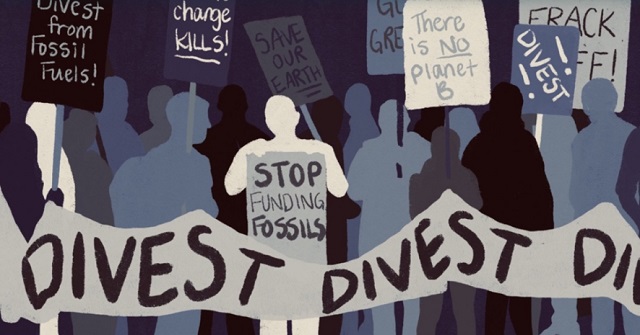
Source of main image: Kenzie Todd, retrieved from History and Future of Divestment at St. Olaf.



By Peter Best
What do children owe their parents? Love, honour and respect are a good start. But what about parents who were once political figures – does the younger generation owe a duty of care to the beliefs of their forebears?
Two recent cases in Canada highlight the inter-generational conflict at play in Canada over Indigenous politics. One concerns Prime Minister Mark Carney and his father Robert. The other, a recent book on the life of noted aboriginal thinker William Wuttunee edited by his daughter Wanda. In each case, the current generation has let its ancestors down – and left all of Canada worse off.
William Wuttunee was born in 1928 in a one-room log cabin on a reserve in Saskatchewan, where he endured a childhood of poverty and hardship. Education was his release, and he went on to become the first aboriginal to practice law in Western Canada; he also served as the inaugural president of the National Indian Council in 1961.
Wuttunee rose to prominence with his controversial 1971 book Ruffled Feathers, that argued for an end to Canadian’s Indian Reserve system, which he believed trapped his people in poverty and despair. He dreamed of a Canada where Indigenous people lived side-by-side all other Canadians and enjoyed the same rights and benefits.
Such an argument for true racial equality put Wuttunee at odds with the illiberal elite of Canada’s native community, who still believe in a segregated, race-based relationship between Indigenous people and the rest of Canada. For telling truth to power, Wuttunee was ostracized from the native political community and banned from his own reserve. He died in 2015.
This year, William’s daughter Wanda had the opportunity to rectify the past mistreatment of her father. In the new book Still Ruffling Feathers – Let Us Put Our Minds Together, Wanda, an academic at the University of Manitoba, and several other contributors claim to “fearlessly engage” with her father’s ideas. Unfortunately, the authors mostly seek to bury, rather than
praise, Wuttunee’s vision of one Canada for all.
Wanda claims her father’s desire for a treaty-free, reserve-free Canada would be problematic today because it would have required giving up all the financial and legal goodies that have since been showered upon Indigenous groups. But there is a counterfactual to consider. What if Indigenous Canadians had simply enjoyed the same incremental gains in income, health and other social indicators as the rest of the country during this time?
Ample evidence on the massive and longstanding gap between native and non-native Canadians across a wide variety of socio-economic indicators suggest that integration would have been the better bet. The life expectancy for Indigenous Albertans, for example, is a shocking 19 years shorter than for a non-native Albertans. William Wuttunee was right all along about the damage done by the reserve system. And yet nearly all of the contributors to Wanda’s new book refuse to admit this fact.
The other current example concerns Robert Carney, who had a long and distinguished career in aboriginal education. When the future prime minister was a young boy, Robert was the principal of a Catholic day school in Fort Smith, Northwest Territories; he later became a government administrator and a professor of education. What he experienced throughout his
lifetime led the elder Carney to become an outspoken defender of Canada’s now-controversial residential schools.
When the 1996 Royal Commission on Aboriginal Peoples (RCAP) attacked the legacy of residential schools, Carney penned a sharp critique. He pointed out that the schools were not jails despite frequent claims that students were there against their will; in fact, parents had to sign an application form to enroll their children in a residential school. Carney also bristled at
the lack of context in the RCAP report, noting that the schools performed a key social welfare function in caring for “sick, dying, abandoned and orphaned children.”
In the midst of the 2025 federal election campaign, Mark Carney was asked if he agreed with his father’s positive take on residential schools. “I love my father, but I don’t share those views,” he answered. Some Indigenous activists have subsequently accused Robert Carney of residential school “denialism” and “complicity” in the alleged horrors of Canada’s colonial education system.
Like Wanda Wuttunee, Mark Carney let his father down by distancing himself from his legacy for reasons of political expediency. He had an opportunity to offer Canadians a courageous and fact-based perspective on a subject of great current public interest by drawing upon his intimate connection with an expert in the field. Instead, Mark Carney caved to the
requirements of groupthink. As a result, his father now stands accused of complicity in a phony genocide.
As for William Wuttunee, he wanted all Canadians – native and non-native alike – to be free from political constraints. He rejected racial segregation, discrimination and identity politics in all forms. And yet in “honouring” his life’s work, his daughter misrepresents his legacy by sidestepping the core truths of his central belief.
No one doubts that Wanda Wuttunee and Mark Carney each loved their dads, as any son or daughter should. And there is no requirement that a younger generation must accept without question whatever their parents thought. But in the case of Wuttunee and Carney, both offspring have deliberately chosen to tarnish their fathers’ legacies in obedience to a poisonous
ideology that promotes the entirely un-Canadian ideal of permanent racial segregation and inequity. And all of Canada is the poorer for it.
Peter Best is a retired lawyer living in Sudbury, Ontario. The original, longer version of this story first appeared in C2CJournal.ca.
Artificial Intelligence
The Emptiness Inside: Why Large Language Models Can’t Think – and Never Will

This is a special preview article from the:
Early attempts at artificial intelligence (AI) were ridiculed for giving answers that were confident, wrong and often surreal – the intellectual equivalent of asking a drunken parrot to explain Kant. But modern AIs based on large language models (LLMs) are so polished, articulate and eerily competent at generating answers that many people assume they can know and, even
better, can independently reason their way to knowing.
This confidence is misplaced. LLMs like ChatGPT or Grok don’t think. They are supercharged autocomplete engines. You type a prompt; they predict the next word, then the next, based only on patterns in the trillions of words they were trained on. No rules, no logic – just statistical guessing dressed up in conversation. As a result, LLMs have no idea whether a sentence is true or false or even sane; they only “know” whether it sounds like sentences they’ve seen before. That’s why they often confidently make things up: court cases, historical events, or physics explanations that are pure fiction. The AI world calls such outputs
“hallucinations”.
But because the LLM’s speech is fluent, users instinctively project self-understanding onto the model, triggered by the same human “trust circuits” we use for spotting intelligence. But it is fallacious reasoning, a bit like hearing someone speak perfect French and assuming they must also be an excellent judge of wine, fashion and philosophy. We confuse style for substance and
we anthropomorphize the speaker. That in turn tempts us into two mythical narratives: Myth 1: “If we just scale up the models and give them more ‘juice’ then true reasoning will eventually emerge.”
Bigger LLMs do get smoother and more impressive. But their core trick – word prediction – never changes. It’s still mimicry, not understanding. One assumes intelligence will magically emerge from quantity, as though making tires bigger and spinning them faster will eventually make a car fly. But the obstacle is architectural, not scalar: you can make the mimicry more
convincing (make a car jump off a ramp), but you don’t convert a pattern predictor into a truth-seeker by scaling it up. You merely get better camouflage and, studies have shown, even less fidelity to fact.
Myth 2: “Who cares how AI does it? If it yields truth, that’s all that matters. The ultimate arbiter of truth is reality – so cope!”
This one is especially dangerous as it stomps on epistemology wearing concrete boots. It effectively claims that the seeming reliability of LLM’s mundane knowledge should be extended to trusting the opaque methods through which it is obtained. But truth has rules. For example, a conclusion only becomes epistemically trustworthy when reached through either: 1) deductive reasoning (conclusions that must be true if the premises are true); or 2) empirical verification (observations of the real world that confirm or disconfirm claims).
LLMs do neither of these. They cannot deduce because their architecture doesn’t implement logical inference. They don’t manipulate premises and reach conclusions, and they are clueless about causality. They also cannot empirically verify anything because they have no access to reality: they can’t check weather or observe social interactions.
Attempting to overcome these structural obstacles, AI developers bolt external tools like calculators, databases and retrieval systems onto an LLM system. Such ostensible truth-seeking mechanisms improve outputs but do not fix the underlying architecture.
The “flying car” salesmen, peddling various accomplishments like IQ test scores, claim that today’s LLMs show superhuman intelligence. In reality, LLM IQ tests violate every rule for conducting intelligence tests, making them a human-prompt engineering skills competition rather than a valid assessment of machine smartness.
Efforts to make LLMs “truth-seeking” by brainwashing them to align with their trainer’s preferences through mechanisms like RLHF miss the point. Those attempts to fix bias only make waves in a structure that cannot support genuine reasoning. This regularly reveals itself through flops like xAI Grok’s MechaHitler bravado or Google Gemini’s representing America’s Founding Fathers as a lineup of “racialized” gentlemen.
Other approaches exist, though, that strive to create an AI architecture enabling authentic thinking:
Symbolic AI: uses explicit logical rules; strong on defined problems, weak on ambiguity;
Causal AI: learns cause-and-effect relationships and can answer “what if” questions;
Neuro-symbolic AI: combines neural prediction with logical reasoning; and
Agentic AI: acts with the goal in mind, receives feedback and improves through trial-and-error.
Unfortunately, the current progress in AI relies almost entirely on scaling LLMs. And the alternative approaches receive far less funding and attention – the good old “follow the money” principle. Meanwhile, the loudest “AI” in the room is just a very expensive parrot.
LLMs, nevertheless, are astonishing achievements of engineering and wonderful tools useful for many tasks. I will have far more on their uses in my next column. The crucial thing for users to remember, though, is that all LLMs are and will always remain linguistic pattern engines, not epistemic agents.
The hype that LLMs are on the brink of “true intelligence” mistakes fluency for thought. Real thinking requires understanding the physical world, persistent memory, reasoning and planning that LLMs handle only primitively or not all – a design fact that is non-controversial among AI insiders. Treat LLMs as useful thought-provoking tools, never as trustworthy sources. And stop waiting for the parrot to start doing philosophy. It never will.
The original, full-length version of this article was recently published as Part I of a two-part series in C2C Journal. Part II can be read here.
Gleb Lisikh is a researcher and IT management professional, and a father of three children, who lives in Vaughan, Ontario and grew up in various parts of the Soviet Union.


Terror in Australia: 12 killed after gunmen open fire on Hanukkah celebration

Death by a thousand clicks – government censorship of Canada’s internet

Hero bystander disarms shooter in Australian terror attack
Inflation Reduction Act, Green New Deal Causing America’s Energy Crisis
-
 Alberta14 hours ago
Danielle Smith slams Skate Canada for stopping events in Alberta over ban on men in women’s sports
-
 Health1 day ago
Saskatchewan woman approved for euthanasia urged to seek medical help in Canada rather than US
-
 Indigenous1 day ago
Residential school burials controversy continues to fuel wave of church arsons, new data suggests
-
 International1 day ago
FBI didn’t think it had cause to raid Trump but DOJ did it anyway
-
 Health1 day ago
Canadian gov’t considers sharing census data on gender-confused children
-
 Crime16 hours ago
The Uncomfortable Demographics of Islamist Bloodshed—and Why “Islamophobia” Deflection Increases the Threat
-
 Energy19 hours ago
Liberals Twisted Themselves Into Pretzels Over Their Own Pipeline MOU
-
 Business2 days ago
COP30 finally admits what resource workers already knew: prosperity and lower emissions must go hand in hand