
Energy
If Canada won’t build new pipelines now, will it ever?

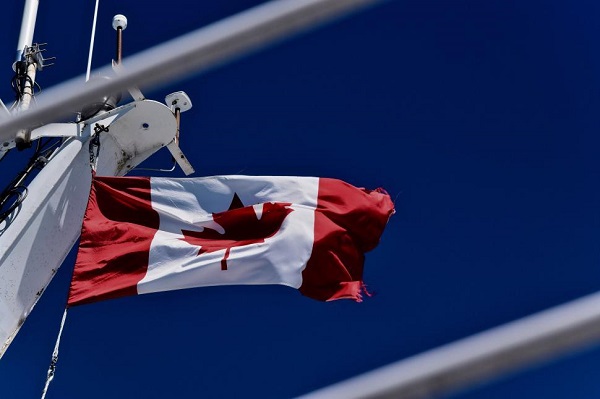

Canada must not allow ideological dogma and indecision to squander a rare chance to lock in our energy sovereignty for good
Canada teeters on the edge, battered by a trade war and Trump’s tariff threats from its once-steady southern ally, yet held back by its own indecision. Trump’s 25 percent tariffs have exposed a brutal truth: Canada’s economy, especially its oil exports, is nearly 100 percent dependent on the U.S.
Voices are crying out to lament the regulatory chaos, ideological zeal, and whispers of “peak oil” that stall progress. If Canada won’t build pipelines when its sovereignty and prosperity are at stake, will it ever? The economics are clear, peak oil is a myth, and the only barriers are self-imposed: dogma, tangled rules, and bad thinking.
The infrastructure Canada can command is immense. Four million barrels of crude flow to the U.S. daily, and Trump’s threats have made that number look even bigger.
The Trans Mountain Expansion (TMX) is proof—linking Alberta to Asia’s markets, with royalties already filling public coffers.
But it’s a lone success. Energy East and Northern Gateway are buried, killed by delays and poor decisions. Private capital is gun-shy, scarred by TMX’s $34 billion price tag, ballooned by a broken system. Why risk billions when the path is a minefield?
The stakes are higher than ever. Forget the claim that oil demand peaks this year at 102 million barrels daily. Experts see a different horizon: Goldman Sachs predicts growth to 2034, OPEC to 2050, BP to 2035—some forecasts topping 80 million barrels.
Enbridge’s Greg Ebel sees “well north” of 100 million by mid-century, driven by Asia’s demand and the developing world’s hunger for energy. Peak oil is a ghost story, not a reality. Canada sits on the third-largest reserves in the world and could dominate the global market, not just feed one neighbour. Pipelines to every coast—east, west, and north—would unlock that future and secure riches for decades.
So what’s holding us back? Ideology, for starters.
Environmental lobbying and influence wrap resource projects in suffocating red tape—emissions caps and endless assessments that kill progress. Years of environmental studies and “net zero” hurdles that no pipeline can clear are choking off bold ideas.
Quebec’s stance has softened under Trump’s pressure, but problematic ideals still linger that blind leaders to reality. The regulatory mess makes it worse.
Today’s system demands a $1 billion bet upfront—engineering, consultations—before a shovel hits the dirt. Companies like TC Energy have been burned before, and others won’t play unless there’s reform. TMX worked because it was a government rescue, but its cost is a deterrent to others.
Then there’s the mess of bad ideas. Government officials will talk about pipelines one day and then express doubts about them the next, leaving a void of leadership. Former prime minister Jean Chrétien very strongly backed a West-East pipeline at the Liberal Party leadership convention.
New leader Mark Carney supports energy links but will not name pipelines, even though public support for them has surged. Four out of five Canadians back coast-to-coast pipelines—but leaders continue to waver.
If not now—when we’re in a trade war and facing annexation—when? Canada’s future is about the infrastructure it controls, not the excuses it clings to. The wealth is waiting, the demand is there, and the barriers are ours to break. Ditch the dogma, fix the rules, and build. Or remain a nation forever poised to rise but never brave enough to do it.


From the Daily Caller News Foundation
During the latest marathon cabinet meeting on Dec. 2, Energy Secretary Chris Wright made news when he told President Donald Trump that “The biggest determinant of the price of energy is politicians, political leaders, and polices — that’s what drives energy prices.”
He’s right about that, and it is why the back-and-forth struggle over federal energy and climate policy plays such a key role in America’s economy and society. Just 10 months into this second Trump presidency, the administration’s policies are already having a profound impact, both at home and abroad.
While the rapid expansion of AI datacenters over the past year is currently being blamed by many for driving up electric costs, power bills were skyrocketing long before that big tech boom began, driven in large part by the policies of the Obama and Biden administration designed to regulate and subsidize an energy transition into reality. As I’ve pointed out here in the past, driving up the costs of all forms of energy to encourage conservation is a central objective of the climate alarm-driven transition, and that part of the green agenda has been highly effective.
Dear Readers:
As a nonprofit, we are dependent on the generosity of our readers.
Please consider making a small donation of any amount here.
Thank you!
President Trump, Wright, and other key appointees like Interior Secretary Doug Burgum and EPA Administrator Lee Zeldin have moved aggressively throughout 2025 to repeal much of that onerous regulatory agenda. The GOP congressional majorities succeeded in phasing out Biden’s costly green energy subsidies as part of the One Big Beautiful Bill Act, which Trump signed into law on July 4. As the federal regulatory structure eases and subsidy costs diminish, it is reasonable to expect a gradual easing of electricity and other energy prices.
This year’s fading out of public fear over climate change and its attendant fright narrative spells bad news for the climate alarm movement. The resulting cracks in the green facade have manifested rapidly in recent weeks.
Climate-focused conflict groups that rely on public fears to drive donations have fallen on hard times. According to a report in the New York Times, the Sierra Club has lost 60 percent of the membership it reported in 2019 and the group’s management team has fallen into infighting over elements of the group’s agenda. Greenpeace is struggling just to stay afloat after losing a huge court judgment for defaming pipeline company Energy Transfer during its efforts to stop the building of the Dakota Access Pipeline.
350.org, an advocacy group founded by Bill McKibben, shut down its U.S. operations in November amid funding woes that had forced planned 25 percent budget cuts for 2025 and 2026. Employees at EDF voted to form their own union after the group went through several rounds of budget cuts and layoffs in recent months.
The fading of climate fears in turn caused the ESG management and investing fad to also fall out of favor, leading to a flood of companies backtracking on green investments and climate commitments. The Net Zero Banking Alliance disbanded after most of America’s big banks – Goldman Sachs, J.P. Morgan Chase, Citigroup, Wells Fargo and others – chose to drop out of its membership.
The EV industry is also struggling. As the Trump White House moves to repeal Biden-era auto mileage requirements, Ford Motor Company is preparing to shut down production of its vaunted F-150 Lightning electric pickup, and Stellantis cancelled plans to roll out a full-size EV truck of its own. Overall EV sales in the U.S. collapsed in October and November following the repeal of the $7,500 per car IRA subsidy effective Sept 30.
The administration’s policy actions have already ended any new leasing for costly and unneeded offshore wind projects in federal waters and have forced the suspension or abandonment of several projects that were already moving ahead. Capital has continued to flow into the solar industry, but even that industry’s ability to expand seems likely to fade once the federal subsidies are fully repealed at the end of 2027.
Truly, public policy matters where energy is concerned. It drives corporate strategies, capital investments, resource development and movement, and ultimately influences the cost of energy in all its forms and products. The speed at which Trump and his key appointees have driven this principle home since Jan. 20 has been truly stunning.
David Blackmon is an energy writer and consultant based in Texas. He spent 40 years in the oil and gas business, where he specialized in public policy and communications.

From Resource Works
Innovative housing solution minimizes community impact while supporting the massive labour force needed for the Woodfibre LNG project.
The Woodfibre LNG project — a national leader in Indigenous partnerships and a cornerstone of global energy security — relies on a large construction workforce that drives economic prosperity across the region. For many of these workers, “home” is a ship.
Refitted from a cruise liner into a dedicated accommodation vessel, or “floatel,” this innovative solution houses up to 600 workers near Squamish, B.C., while keeping pressure off local housing and minimizing the project’s community footprint.
These exclusive images, captured a year ago, offer a rare retrospective look inside the original floatel. MV Isabelle X. With a second accommodation ship, the MV Saga X, recently arrived, this photo essay gives a timely, ground-level view of life aboard: individual cabins, a full-service dining hall, recreation spaces and custom laundry facilities. It’s a glimpse into the offshore dormitory that anchors daily life for the crew bringing this vital energy project to completion.

An arcade room is seen on a “floatel” that Woodfibre LNG plans to use to house 600 construction workers at a liquefied natural gas export facility being built near Squamish, during a media tour in Vancouver, on Thursday, May 9, 2024. The ship arrived in B.C. waters in January after a 40-day journey from Estonia, where it had sheltered Ukrainian refugees, but the District of Squamish council voted three to four against a one-year permit for its use last week.

A dining area is seen on a “floatel” that Woodfibre LNG plans to use to house 600 construction workers at a liquefied natural gas export facility being built near Squamish, during a media tour in Vancouver, on Thursday, May 9, 2024. The ship arrived in B.C. waters in January after a 40-day journey from Estonia, where it had sheltered Ukrainian refugees, but the District of Squamish council voted three to four against a one-year permit for its use last week.

A cabin is seen on a “floatel” that Woodfibre LNG plans to use to house 600 construction workers at a liquefied natural gas export facility being built near Squamish, during a media tour in Vancouver, on Thursday, May 9, 2024. The ship arrived in B.C. waters in January after a 40-day journey from Estonia, where it had sheltered Ukrainian refugees, but the District of Squamish council voted three to four against a one-year permit for its use last week.

Bridgemans Services Group president Brian Grange stands at the stern on a renovated cruise ship known as a “floatel” that Woodfibre LNG plans to use to house 600 construction workers at a liquefied natural gas export facility being built near Squamish, during a media tour in Vancouver, on Thursday, May 9, 2024. The ship arrived in B.C. waters in January after a 40-day journey from Estonia, where it had sheltered Ukrainian refugees, but the District of Squamish council voted three to four against a one-year permit for its use last week.

A custom built heat pump unit that allows the ship to avoid using diesel while docked and at anchor is seen on a “floatel” that Woodfibre LNG plans to use to house 600 construction workers at a liquefied natural gas export facility being built near Squamish, during a media tour in Vancouver, on Thursday, May 9, 2024. The ship arrived in B.C. waters in January after a 40-day journey from Estonia, where it had sheltered Ukrainian refugees, but the District of Squamish council voted three to four against a one-year permit for its use last week.

The main entry and exit area for workers is seen on a “floatel” that Woodfibre LNG plans to use to house 600 construction workers at a liquefied natural gas export facility being built near Squamish, during a media tour in Vancouver, on Thursday, May 9, 2024. The ship arrived in B.C. waters in January after a 40-day journey from Estonia, where it had sheltered Ukrainian refugees, but the District of Squamish council voted three to four against a one-year permit for its use last week.

A renovated cruise ship known as a “floatel” that Woodfibre LNG plans to use to house 600 construction workers at a liquefied natural gas export facility being built near Squamish, is seen at anchor in the harbour in Vancouver, on Thursday, May 9, 2024. The ship arrived in B.C. waters in January after a 40-day journey from Estonia, where it had sheltered Ukrainian refugees, but the District of Squamish council voted three to four against a one-year permit for its use last week.

A tugboat and water taxi are seen docked at a renovated cruise ship known as a “floatel” that Woodfibre LNG plans to use to house 600 construction workers at a liquefied natural gas export facility being built near Squamish, at anchor in the harbour in Vancouver, on Thursday, May 9, 2024. The ship arrived in B.C. waters in January after a 40-day journey from Estonia, where it had sheltered Ukrainian refugees, but the District of Squamish council voted three to four against a one-year permit for its use last week.
All photos credited to THE CANADIAN PRESS/Darryl Dyck
Resource Works News


Canadians will soon be versed in massive West Coast LPG mega-project

Keynote address of Premier Danielle Smith at 2025 UCP AGM

Canada Needs an Alternative to Carney’s One Man Show

Net Zero goal is a fundamental flaw in the Ottawa-Alberta MOU
-
 Energy1 day ago
Canada following Europe’s stumble by ignoring energy reality
-
 International15 hours ago
FBI may have finally nabbed the Jan. 6 pipe bomber
-
 Business1 day ago
Canada’s climate agenda hit business hard but barely cut emissions
-
 COVID-199 hours ago
University of Colorado will pay $10 million to staff, students for trying to force them to take COVID shots
-
 MAiD2 days ago
From Exception to Routine. Why Canada’s State-Assisted Suicide Regime Demands a Human-Rights Review
-
 espionage15 hours ago
Digital messages reportedly allege Chinese police targeted dissident who died suspiciously near Vancouver
-
 Business2 days ago
Carney government should privatize airports—then open airline industry to competition
-
 Censorship Industrial Complex1 day ago
Conservative MP Leslyn Lewis slams Liberal plan targeting religious exemption in hate speech bil