
Great Reset
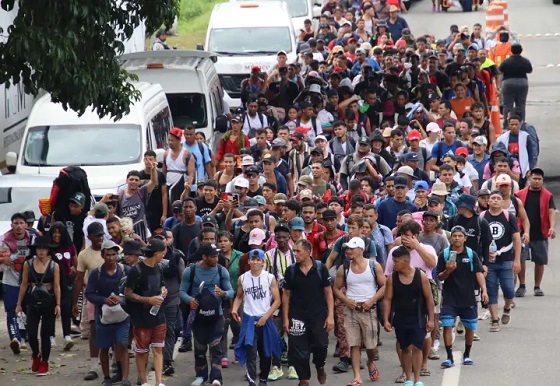
Hundreds of thousands of migrants are being held in southern Mexico until US Election Day

From The Center for Immigration Studies
By Todd Bensman
TAPACHULA, Mexico — This town near the border of Guatemala holds a migrant time bomb ready to go off just after the US presidential election.
The fuse was lit in December 2023, when the Joe Biden-Kamala Harris administration sent senior lieutenants to Mexico to work out the details of what remains a highly mysterious grand diplomatic bargain.
Worried about what the optics of the southern border would do to their re-election chances — though not the migrant crisis itself — the White House wanted to stop the pictures of crowds of people gathered at the wall.
The deal was to have Mexico deploy 32,500 troops to the US border to round up untold thousands of intending border crossers from the northern precincts and force-ship them — “internal deportation” by planes and buses — thousands of miles to Mexico’s southern provinces and entrap them in cities like Tapachula in Chiapas state behind militarized roadblocks.
Mexico closed off most of its freight trains to migrant free riders, bulldozed northern camps, and patrolled relentlessly for more deportee targets.
Meanwhile, the administration increased “parole” programs that flew migrants directly from countries like Venezuela, thus avoiding the border entirely.
The effect was immediate. Illegal border crossings plummeted from an embarrassing, record-breaking 12,000 to 14,000 per day in November and December 2023 to about 3,000 or 4,000 per day before January was even over.
But the crisis isn’t over.
The just-released 2025 Homeland Threat Assessment from the Department of Homeland Security says the decrease in illegal border crossing is largely due to “increased Mexican enforcement efforts.”
What happens if that enforcement stops?
Tapachula is bursting at the seams.
No one really knows how many people are stacked up, but local shelter managers reported to me that they had filled up long ago.
The publisher of Noticia De Tapachula, the daily newspaper, told me 150,000 immigrants were in town at any given time, a 42% increase in the city’s normal population of 350,000. Untold thousands more are stacked up in Villahermosa, a city of 830,000.
Mexico’s response has been to try to spread the immigrants around the southern portion of the country.
I spent time at two different roadside areas where federal immigration officers would call out names from the crowd, who would board buses that delivered them to other regional cities in Chiapas — but NOT beyond them and certainly never beyond Mexico City.
Mexico is still trying to hold up its end of the bargain, at least until November 5, even though more migrants are starting to slip through and making it over the Texas or California borders.
The question is what happens after the American election.
No matter who wins, Mexico might well consider that it more than satisfied its obligation to the current White House occupant and open the floodgates.
If it’s Donald Trump, Americans should expect a massive tidal wave of caravans for the 10 weeks before Inauguration Day. All the migrants I’ve spoken to say they fear a Trump presidency, and will rush to the border in a last-ditch attempt.
If it’s Harris, perhaps the massive tidal wave will go on for the next four years, much like the last four.
Todd Bensman, a senior national security fellow at the Center for Immigration Studies, is the author of “Overrun: How Joe Biden Unleashed the Greatest Border Crisis in U.S. History.”

Censorship Industrial Complex
Global media alliance colluded with foreign nations to crush free speech in America: House report

From LifeSiteNews
By Dan Frieth
The now-defunct ad coalition GARM shared insider data and urged boycotts of Twitter to punish non-compliance with its ‘harmful content’ standards, a US House Judiciary report shows.
A new report from the U.S. House Judiciary Committee has shed light on what it describes as an alarming collaboration between powerful corporations and foreign governments aimed at suppressing lawful American speech.
The investigation focuses on the Global Alliance for Responsible Media (GARM), an initiative founded in 2019 by the World Federation of Advertisers (WFA), which the committee accuses of acting as a censorship cartel.
According to the report, GARM, whose members control about 90 percent of global advertising spending, exploited its market dominance to pressure platforms like Twitter (now X) into compliance with its restrictive content policies.
A copy of the report can be found HERE.
The committee highlighted how GARM sought to “effectively reduce the availability and monetization” of content it deemed harmful, regardless of public demand for free expression.
Documents obtained by the committee reveal direct coordination between GARM and foreign regulators, including the European Commission and Australia’s eSafety commissioner.
In one exchange, a European bureaucrat encouraged advertisers to leverage their influence to “push Twitter to deliver on GARM asks.”

Similarly, Australia’s eSafety Commissioner Julie Inman Grant praised GARM’s “significant collective power in helping to hold the platforms to account” and sought updates to “take into account in our engagement and regulatory decisions.”

Robert Rakowitz, GARM’s co-founder and initiative lead, expressed a chilling goal in private correspondence, stating that silencing President Donald Trump was his “main thing” and likening the president’s speech to a “contagion” he aimed to contain “to protect infection overall.”

The report outlines how GARM distributed previously unavailable non-public information about Twitter’s adherence to its standards, fully aware this would prompt advertisers to boycott the platform if it failed to conform. According to the House report, Rakowitz admitted that this information sharing was designed to encourage members not to advertise on Twitter.
He went as far as to draft statements urging GARM members to halt advertising on the platform, telling colleagues he had gone “as close as possible” to saying Twitter “is unsafe, cease and desist.”
Despite the widespread impact of GARM’s actions, including what the committee describes as coerced “concessions” from platforms, internal polling circulated within GARM showed that “66 percent of American consumers valued free expression over protection from harmful content.”
Still, GARM pressed ahead with efforts to “eliminate all categories of harmful content in the fastest possible timing,” ignoring consumer preferences.
Even after GARM dissolved in 2024 amid legal challenges, similar efforts persisted.
A new coalition led by Dentsu and The 614 Group briefly attempted to revive GARM’s mission before disbanding under scrutiny. Gerry D’Angelo, a former GARM leader, reflected on the initiative’s overreach, stating, “Did we go too far in those first rounds of exclusionary restrictions? I would say yes.”
The Judiciary Committee warns that despite GARM’s downfall, the threat of collusion to stifle free expression remains.
It pledged to continue oversight to defend “the fundamental principles” of the Constitution and ensure that markets, not coordinated censorship efforts, shape the flow of information in the digital age.
Reprinted with permission from Reclaim The Net.


The whistleblower has always been anonymous, and it remains very suspicious that the very organization he created would turn on him after receiving an anonymous letter that they admitted may not have been credible.
World Economic Forum founder Klaus Schwab stepped down from his chairman position at the organization on April 20, 2025, amid accusations of fraud. Our computer had forecast that the WEF would enter a declining trend with the 2024 ECM turning point. This staged coup happened about 37 years after the first Davos meeting (8.6 x 4.3). From our model’s perspective, this was right on time. Now, Schwab and the WEF are working to repair ties.
An anonymous whistleblower claimed that Klaus Schwab and his wife collaborated with USAID to steal tens of millions in funding. The whistleblower has always been anonymous, and it remains very suspicious that the very organization he created would turn on him after receiving an anonymous letter that they admitted may not have been credible. Something like this would never be acceptable in any court of law, especially if it’s anonymous. It would be the worst or the worst hearsay, where you cannot even point to who made the allegation.
Back in April, the WEF said its board unanimously supported the decision to initiate an independent investigation “following a whistleblower letter containing allegations against former Chairman Klaus Schwab. This decision was made after consultation with external legal counsel.”
Now, the WEF is attempting to repair its relationship with its founder ahead of the next Davos meeting. Bloomberg reported that the WEF would like to “normalize their relationship [with Klaus Schwab] in order to safeguard the forum and the legacy of the founder.”
Peter Brabeck-Letmathe has replaced Schwab for the time being, but is less of a commanding force. Schwab’s sudden departure has caused instability in the organization and its ongoing mission. Board members are concerned that support for the organization will begin to decline as this situation remains unresolved.

The World Economic Forum’s annual revenue in 2024 was 440 million francs ($543 million), with the majority of proceeds coming from member companies and fees. Yet, the number of people registered to attend the 2025 Davos event is on par if not slightly exceeding the number of participants from the year prior.

Schwab’s departure has damaged the Davos brand. There is a possibility that the organization is attempted to rebrand after Agenda 2030 failed. The WEF attempted to move away from its zero tolerance stance on ESG initiatives after they became widely unpopular among the big industry players and shifting governments. The brand has attempted to integrate the importance of digital transformation and AI to remain relevant as the tech gurus grow in power and popularity. Those who are familiar with Klaus Schwab know the phrase, “You will own nothing and be happy.” These words have been widely unpopular and caused a type of sinister chaos to surround the brand that was once respected as the high-brow institution of globalist elites.
European Central Bank President Christine Lagarde was slated to replace Schwab in 2027 when her term ends, and all reports claimed that he was prepared to remain in the chairman role for an additional two years to ensure Lagarde could take his place. What changed seemingly overnight that would cause the organization to discard Schwab before he was due to retire?
Schwab denies any misconduct and filed lawsuits against the whistleblowers, calling the accusations “calumnious” and “unfounded.” He believes “character assassination” was the premise of the claims.

I am no fan of Klaus Schwab, as everyone knows. I disagree with his theories from start to finish. Nevertheless, something doesn’t smell right here. This appears to be an internal coup, perhaps to distract attention from the question of alleged funds for the WEF from USAID, or to try to salvage the failed Agenda 2030. Perhaps they will claim that no misconduct had occurred since DOGE did not raise concerns or there is a possibility that those behind the internal coup are concerned that Schwab’s counter lawsuit could uncover new corruption. The investigation into Schwab has not concluded, but after only three months, the WEF would like to wrap it up. It appears that the WEF does not want to welcome Schwab back; rather, they would like to ensure an amicable resolution to maintain both the brand’s reputation as well as the founder’s.

RFK Jr. says Hep B vaccine is linked to 1,135% higher autism rate

Blind to the Left: Canada’s Counter-Extremism Failure Leaves Neo-Marxist and Islamist Threats Unchecked

Why it’s time to repeal the oil tanker ban on B.C.’s north coast

Alberta Provincial Police – New chief of Independent Agency Police Service
-
 Energy1 day ago
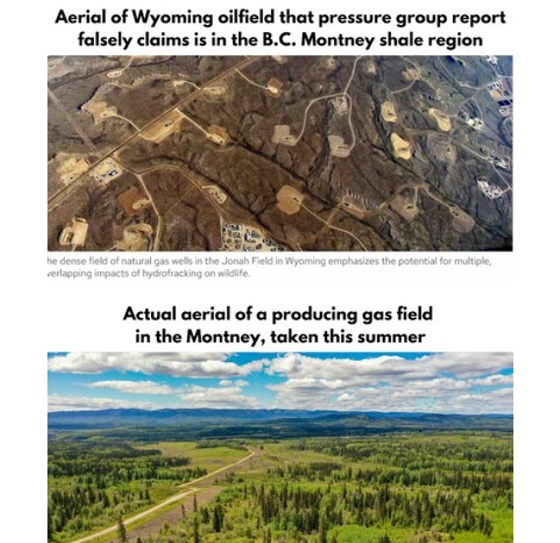
B.C. Residents File Competition Bureau Complaint Against David Suzuki Foundation for Use of False Imagery in Anti-Energy Campaigns
-
 Alberta2 days ago
Alberta uncorks new rules for liquor and cannabis
-
 COVID-191 day ago
Court compels RCMP and TD Bank to hand over records related to freezing of peaceful protestor’s bank accounts
-
 Crime2 days ago
Project Sleeping Giant: Inside the Chinese Mercantile Machine Linking Beijing’s Underground Banks and the Sinaloa Cartel
-
 C2C Journal23 hours ago
Canada Desperately Needs a Baby Bump
-
 International1 day ago
Trump transportation secretary tells governors to remove ‘rainbow crosswalks’
-
 Alberta1 day ago
Alberta Next: Alberta Pension Plan
-
 Agriculture11 hours ago
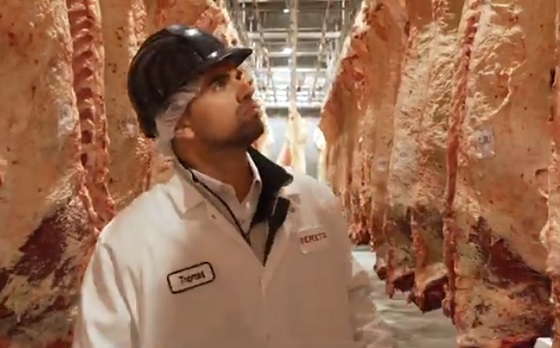
Lacombe meat processor scores $1.2 million dollar provincial tax credit to help expansion