
Economy
Human population set to decline for the first time since the Black Death


From LifeSiteNews
By Steven Mosher of the Population Research Institute
The world’s population is not only not exploding, it’s on the cusp of collapsing.
The collapse in birth rates that began in post-war Europe has, in the decades since, spread to every single corner of the globe.
Many nations are already feeling this death spiral, filling more coffins than cradles each year.
Just this past year, Japan lost nearly a million people. Poland lost 130,000.
However, the big story comes from China, home to one-sixth of the world’s population.
The decades-long devastation wrought by the one-child policy has sent that country, for centuries the pacesetter in population, into absolute decline.
China finally admitted that its population was shrinking, but demographers — including myself — believe that the numbers have been falling for almost a decade.
The Chinese government’s official population figure of 1.44 billion also greatly exaggerates its overall numbers, some analysts say by as much as 130 million people.
India, the country that has now overtaken China in population, is still growing, but not for long.
The average Indian woman was having only two children over her reproductive lifetime, the Indian government reported in 2021, well below the 2.25 or so needed to sustain the current population.
The same story is being repeated all over the world, as birthrates in Latin America, the Middle East, and even Africa are not just falling — they are collapsing.
The current total fertility of Tunisian women, for example, is estimated at 1.93.
The result of all these empty wombs is that humanity just passed a major milestone, although not one we should celebrate.
For the first time in the 60,000 or so years that human beings first arrived on the planet, we are not having enough babies to replace ourselves. No wonder Donald Trump has suggested providing free IVF to all Americans “because we want more babies,” he says.
Because of ever-lengthening life spans, the population will continue to grow until mid-century. But when this demographic momentum ends—and it will end—we will reach a second grim milestone on humanity’s downward trajectory:
For the first time since the Black Death in the Middle Ages, human numbers will decline.
The 14th century bubonic plague was the worst pandemic in human history. It killed off half the population of Europe and perhaps a third of the population of the Middle East.
But even as the plague was filling mass graves, the survivors kept filling cradles. And because the birth rate remained high the global population recovered although it took a century or so.
This time around, we may not be so fortunate. All the factors that influence fertility, from marriage rates to urbanization to education levels, are pushing births downward.
Now you may be excused for not knowing about the current birth dearth.
After all, powerful international agencies like the UN Population Fund and the World Bank have done their best to keep it out of the public eye.
Moreover, these agencies, set up during the height of the hysteria over “overpopulation” in the 1960s, like to overestimate births in one country and pad population numbers in another.
For example, the UN, in its annual World Population Prospects, claims that 705,000 babies were born in Colombia last year, when the country’s own government pegs the number at just 510,000.
This is not a rounding error.
Neither is the UN’s claim that Indian women are still averaging 2.25 children, defying the country’s own published statistics, which show that it is now below 2.0.
All this number fudging allows the UN to claim that the global total fertility rate last year was at 2.25, still above replacement
It’s even wrong about replacement rate fertility, which it says is 2.1 children per women.
It’s wrong because in many countries sex-selection abortion skews the sex ratio strongly in favor of boys.
To make up for the tens of millions of unborn baby girls missing in China, India and other Asian countries, those countries need more need 2.2 or even 2.3 children on average.
The UN exaggerates human numbers for the same reason that the Biden-Harris administration exaggerated employment numbers: for financial gain and political survival.
There are billions of dollars at stake, funding that is fueled by a dark fear of mushrooming human numbers.
The population control movement does not intend to go quietly to its grave, even as it continues to dig humanity’s own, so it feeds this fear.
But the world’s population is not only not exploding, it’s on the cusp of collapsing. Which is why it’s time to end the war on population.
This article was originally published on www.pop.org on September 3rd, 2024, before being reprinted in the John Paul II Academy for Human Life and the Family’s Academy Review in November 2024. Edited and republished here with permission.

Banks
To increase competition in Canadian banking, mandate and mindset of bank regulators must change
From the Fraser Institute
By Lawrence L. Schembri and Andrew Spence
Canada’s weak productivity performance is directly related to the lack of competition across many concentrated industries. The high cost of financial services is a key contributor to our lagging living standards because services, such as payments, are essential input to the rest of our economy.
It’s well known that Canada’s banks are expensive and the services that they provide are outdated, especially compared to the banking systems of the United Kingdom and Australia that have better balanced the objectives of stability, competition and efficiency.
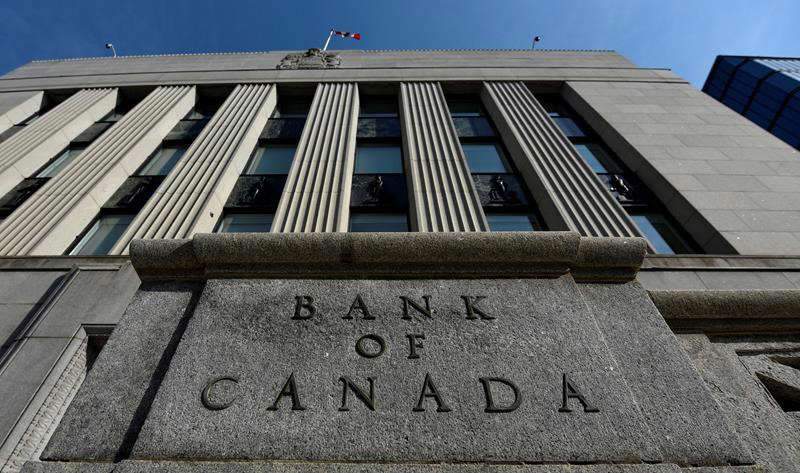
Canada’s banks are increasingly being called out by senior federal officials for not embracing new technology that would lower costs and improve productivity and living standards. Peter Rutledge, the Superintendent of Financial Institutions and senior officials at the Bank of Canada, notably Senior Deputy Governor Carolyn Rogers and Deputy Governor Nicolas Vincent, have called for measures to increase competition in the banking system to promote innovation, efficiency and lower prices for financial services.
The recent federal budget proposed several new measures to increase competition in the Canadian banking sector, which are long overdue. As a marker of how uncompetitive the market for financial services has become, the budget proposed direct interventions to reduce and even eliminate some bank service fees. In addition, the budget outlined a requirement to improve price and fee transparency for many transactions so consumers can make informed choices.
In an effort to reduce barriers to new entrants and to growth by smaller banks, the budget also proposed to ease the requirement that small banks include more public ownership in their capital structure.
At long last, the federal government signalled a commitment to (finally) introduce open banking by enacting the long-delayed Consumer Driven Banking Act. Open banking gives consumers full control over who they want to provide them with their financial services needs efficiently and safely. Consumers can then move beyond banks, utilizing technology to access cheaper and more efficient alternative financial service providers.
Open banking has been up and running in many countries around the world to great success. Canada lags far behind the U.K., Australia and Brazil where the presence of open banking has introduced lower prices, better service quality and faster transactions. It has also brought financing to small and medium-sized business who are often shut out of bank lending.
Realizing open banking and its gains requires a new payment mechanism called real time rail. This payment system delivers low-cost and immediate access to nonbank as well as bank financial service providers. Real time rail has been in the works in Canada for over a decade, but progress has been glacial and lags far behind the world’s leaders.
Despite the budget’s welcome backing for open banking, Canada should address the legislative mandates of its most important regulators, requiring them to weigh equally the twin objectives of financial system stability as well as competition and efficiency.
To better balance these objectives, Canada needs to reform its institutional framework to enhance the resilience of the overall banking system so it can absorb an individual bank failure at acceptable cost. This would encourage bank regulators to move away from a rigid “fear of failure” cultural mindset that suppresses competition and efficiency and has held back innovation and progress.
Canada should also reduce the compliance burden imposed on banks by the many and varied regulators to reduce barriers to entry and expansion by domestic and foreign banks. These agencies, including the Office of the Superintendent of Financial Institutions, Financial Consumer Agency of Canada, Financial Transactions and Reports Analysis Centre of Canada, the Canada Deposit Insurance Corporation plus several others, act in largely uncoordinated manner and their duplicative effort greatly increases compliance and reporting costs. While Canada’s large banks are able, because of their market power, to pass those costs through to their customers via higher prices and fees, they also benefit because the heavy compliance burden represents a significant barrier to entry that shelters them from competition.
More fundamental reforms are needed, beyond the measures included in the federal budget, to strengthen the institutional framework and change the regulatory mindset. Such reforms would meaningfully increase competition, efficiency and innovation in the Canadian banking system, simultaneously improving the quality and lowering the cost of financial services, and thus raising productivity and the living standards of Canadians.

Lawrence L. Schembri
Senior Fellow, Fraser Institute

Andrew Spence
Alberta
Premier Smith: Canadians support agreement between Alberta and Ottawa and the major economic opportunities it could unlock for the benefit of all

From Energy Now
By Premier Danielle Smith
Get the Latest Canadian Focused Energy News Delivered to You! It’s FREE: Quick Sign-Up Here
If Canada wants to lead global energy security efforts, build out sovereign AI infrastructure, increase funding to social programs and national defence and expand trade to new markets, we must unleash the full potential of our vast natural resources and embrace our role as a global energy superpower.
The Alberta-Ottawa Energy agreement is the first step in accomplishing all of these critical objectives.
Recent polling shows that a majority of Canadians are supportive of this agreement and the major economic opportunities it could unlock for the benefit of all Canadians.
As a nation we must embrace two important realities: First, global demand for oil is increasing and second, Canada needs to generate more revenue to address its fiscal challenges.
Nations around the world — including Korea, Japan, India, Taiwan and China in Asia as well as various European nations — continue to ask for Canadian energy. We are perfectly positioned to meet those needs and lead global energy security efforts.
Our heavy oil is not only abundant, it’s responsibly developed, geopolitically stable and backed by decades of proven supply.
If we want to pay down our debt, increase funding to social programs and meet our NATO defence spending commitments, then we need to generate more revenue. And the best way to do so is to leverage our vast natural resources.
At today’s prices, Alberta’s proven oil and gas reserves represent trillions in value.
It’s not just a number; it’s a generational opportunity for Alberta and Canada to secure prosperity and invest in the future of our communities. But to unlock the full potential of this resource, we need the infrastructure to match our ambition.
There is one nation-building project that stands above all others in its ability to deliver economic benefits to Canada — a new bitumen pipeline to Asian markets.
The energy agreement signed on Nov. 27 includes a clear path to the construction of a one-million-plus barrel-per-day bitumen pipeline, with Indigenous co-ownership, that can ensure our province and country are no longer dependent on just one customer to buy our most valuable resource.
Indigenous co-ownership also provide millions in revenue to communities along the route of the project to the northwest coast, contributing toward long-lasting prosperity for their people.
The agreement also recognizes that we can increase oil and gas production while reducing our emissions.
The removal of the oil and gas emissions cap will allow our energy producers to grow and thrive again and the suspension of the federal net-zero power regulations in Alberta will open to doors to major AI data-centre investment.
It also means that Alberta will be a world leader in the development and implementation of emissions-reduction infrastructure — particularly in carbon capture utilization and storage.
The agreement will see Alberta work together with our federal partners and the Pathways companies to commence and complete the world’s largest carbon capture, utilization and storage infrastructure project.
This would make Alberta heavy oil the lowest intensity barrel on the market and displace millions of barrels of heavier-emitting fuels around the globe.
We’re sending a clear message to investors across the world: Alberta and Canada are leaders, not just in oil and gas, but in the innovation and technologies that are cutting per barrel emissions even as we ramp up production.
Where we are going — and where we intend to go with more frequency — is east, west, north and south, across oceans and around the globe. We have the energy other countries need, and will continue to need, for decades to come.
However, this agreement is just the first step in this journey. There is much hard work ahead of us. Trust must be built and earned in this partnership as we move through the next steps of this process.
But it’s very encouraging that Prime Minister Mark Carney has made it clear he is willing to work with Alberta’s government to accomplish our shared goal of making Canada an energy superpower.
That is something we have not seen from a Canadian prime minister in more than a decade.
Together, in good faith, Alberta and Ottawa have taken the first step towards making Canada a global energy superpower for benefit of all Canadians.
Danielle Smith is the Premier of Alberta


A look inside the ‘floatel’ housing B.C.’s LNG workforce

FBI may have finally nabbed the Jan. 6 pipe bomber

Alberta will use provincial laws to stop Canadian gov’t from trying to confiscate legal firearms

Trump Deals Biden’s EV Dreams A Death Blow
-
Automotive19 hours ago
Trump Deals Biden’s EV Dreams A Death Blow
-
Alberta1 day ago
Premier Smith: Canadians support agreement between Alberta and Ottawa and the major economic opportunities it could unlock for the benefit of all
-
 Focal Points1 day ago
Pharma Bombshell: President Trump Orders Complete Childhood Vaccine Schedule Review
-
 Energy2 days ago
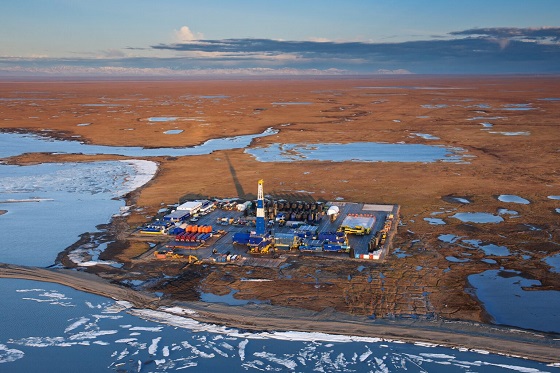
Senate votes to reopen Alaska Coastal Plain to energy leasing
-
 Censorship Industrial Complex1 day ago
Frances Widdowson’s Arrest Should Alarm Every Canadian
-
 Opinion1 day ago
Country music star Paul Brandt asks Parliament to toughen laws against child porn
-
 Automotive18 hours ago
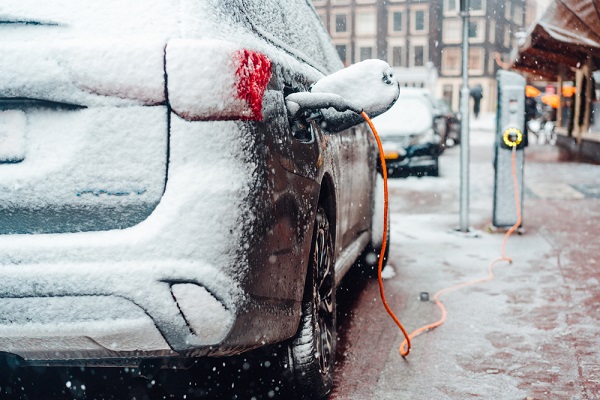
Canada’s EV Mandate Is Running On Empty
-
 Daily Caller2 days ago
Trump Orders Review Of Why U.S. Childhood Vaccination Schedule Has More Shots Than Peer Countries