
International
Hawley: Whistleblowers say Trump’s security detail was unprepared, inexperienced


From The Center Square
Senate committee holding bipartisan investigation, hearing
Multiple whistleblowers have come forward telling U.S. Sen. Josh Hawley, R-Mo., that many working as part of former President Donald Trump’s security detail at a rally in Pennsylvania one week ago weren’t Secret Service and were “unprepared and inexperienced personnel,” Hawley says.
The accusation comes after the U.S. Senate Homeland Security and Governmental Affairs Committee, on which Hawley sits, announced it will conduct a bipartisan investigation into the July 13 assassination attempt of Trump.
Multiple whistleblowers contacted his office “with disturbing new information behind the assassination attempt on the former president,” he said.
They did so after Hawley opened a whistleblower tip line, pledging to protect the anonymity of everyone who contacts his office. Whistleblowers are encouraged to make protected disclosures by calling (202) 224-6154 or emailing [email protected].
In response to the information he has received so far, Hawley contacted Department of Homeland Security Secretary Alejandro Mayorkas, who oversees the U.S. Secret Service, demanding answers.
“Whistleblowers who have direct knowledge of the event have approached my office. According to the allegations, the July 13 rally was considered to be a ‘loose’ security event,” he wrote to Mayorkas.
“Whistleblower allegations suggest the majority of DHS officials were not in fact USSS agents but instead drawn from the department’s Homeland Security Investigations. This is especially concerning given that HSI agents were unfamiliar with standard protocols typically used at these types of events, according to the allegations.”
Other security failures identified, he says, include not using canine units to monitor entry and detect threats among the perimeter or crowd; unauthorized individuals accessing the backstage areas; and DHS personnel not “appropriately polic[ing] the security buffer around the podium and … not stationed at regular intervals around the event’s security perimeter.”
Hawley demanded answers after DHS “has not been appropriately forthcoming with members of Congress,” he said, and after he called on the committee’s chair, U.S. Sen. Gary Peters, D-Mich., to immediately launch an investigation.
“Although we still do not have all the facts, the little that we do know suggests a staggering security failure,” he wrote to Peters. “Evidently, the shooter was able to gain an elevated position on a rooftop with a clear line of sight of the President, well within accurate range, with a firearm. The details of this tragedy must be vigorously investigated by Congress, including the motive of the shooter, and the serious operational failures that occurred on July 13.” Hawley called on Peters to “launch a full, public, and comprehensive committee investigation into this assassination attempt and failures to adequately protect the former president,” including calling Mayorkas and Secret Service Director Kimberly Cheatle to testify.
Peters and U.S. Sen. Rand Paul, R-KY, the ranking member of the committee, announced the committee will conduct a bipartisan investigation and hold a hearing. They first requested an urgent briefing with the Secret Service, DHS and the Federal Bureau of Investigation. A call committee members did have, Hawley says, was ended before they could ask a single question. “This is completely unacceptable and contrary to the public’s interest in transparency,” he added.
Peters said the committee “is focused on getting all of the facts about the security failures that allowed the attacker to carry out this heinous act of violence that threatened the life of former President Trump, killed at least one person in the crowd, and injured several others.”
Peters and Paul also sent letters to Mayorkas and to FBI Director Christopher Wray requesting a range of documents and information on security process, among other information. A briefing was requested before July 25 and a public hearing is scheduled for Aug. 1.
Hawley is also demanding answers from BlackRock CEO Larry Fink requesting all records related to the assassination attempt after it became public that the alleged shooter appeared in one of BlackRock’s commercials.
What appears to be a clip of the commercial “has circulated widely on social media and raised the question about what your company knows about the shooter,” Hawley told Fink.
Fink is requested to provide the information by July 24.
When accepting his party’s nomination for president, Trump said at the Republican National Convention last week that surviving the assassination attempt was “a gift from God.” At a rally on Saturday, one week after the shooting, he said he “took a bullet for democracy.”
Honest reporting on election integrity

Artificial Intelligence
AI is accelerating the porn crisis as kids create, consume explicit deepfake images of classmates

From LifeSiteNews
“Ten years ago it was sexting and nudes causing havoc in classrooms,” writes Sally Weale in a chilling new report at the Guardian. “Today, advances in artificial intelligence (AI) have made it child’s play to generate deepfake nude images or videos, featuring what appear to be your friends, your classmates, even your teachers. This may involve removing clothes, getting an image to move suggestively or pasting someone’s head on to a pornographic image.”
I have been covering the rise of the next horrific manifestation of our collective porn crisis here at LifeSiteNews since 2019, when I warned that the rise of “deepfakes” would inevitably result in people making artificial pornography of their peers. Just a few years later, I reported on stories of middle-schoolers making deepfake pornography of kids they attended class with; last year, I reported on the rise of “nudify” apps that can digitally undress people in photographs, and the trauma, bullying, and inevitable sexual blackmail that has resulted.
The Guardian report reveals how swiftly this crisis is escalating. One teacher described an incident in which a teenage boy took out his phone, chose a social media image of a girl from a neighboring school, and used the “nudify” app to digitally remove her clothes. The teacher was shocked to see that the boy wasn’t even hiding his actions, because he didn’t see what he was doing as shocking, or even shameful. “It worries me that it’s so normalized,” she said. Other students reported the boy, his parents were contacted, and the police were called. The victimized girl was not even told.
The crisis is global. “In Spain last year, 15 boys in the south-western region of Extremadura were sentenced to a year’s probation after being convicted of using AI to produce fake naked images of their female schoolmates, which they shared on WhatsApp groups,” Weale writes. “About 20 girls were affected, most of them aged 14, while the youngest was 11.”
A similar situation unfolded in Australia, where 50 high school students had deepfake images distributed; in the United States, 30 female students in New Jersey discovered that “pornographic images of them had been shared among their male classmates on Snapchat.”
The mother of one student in Australia said that “her daughter was so horrified by the sexually explicit images that she vomited.” In the United Kingdom, the problem has exploded overnight:
A new poll of 4,300 secondary school teachers in England, carried out by Teacher Tapp on behalf of the Guardian, found that about one in 10 were aware of students at their school creating “deepfake, sexually explicit videos” in the last academic year. Three-quarters of these incidents involved children aged 14 or younger, while one in 10 incidents involved 11-year-olds, and 3% were younger still, illustrating just how easy the technology is to access and use. Among participating teachers, 7% said they were aware of a single incident, and 1% said it had happened twice, while a similar proportion said it had happened three times or more in the last academic year. Earlier this year, a Girlguiding survey found that one in four respondents aged 13 to 18 had seen a sexually explicit deepfake image of a celebrity, a friend, a teacher or themselves.
Predictably, teachers are also being targeted. Girls and women are left shattered by this victimization. Laura Bates, author of The New Age of Sexism: How the AI Revolution Is Reinventing Misogyny, writes: “It feels like someone has taken you and done something to you and there is nothing you can do about it. Watching a video of yourself being violated without your consent is an almost out-of-body experience.” Boys, meanwhile, are engaging in criminal behavior often without even knowing it. In the world they have grown up in, pornography is normal – and this is merely the next step.
The experts that Weale interviews are, as usual, at a loss of what can be done about this crisis. They emphasize education, while admitting that this is the equivalent of taking a water pistol to a raging forest fire. They are skeptical that guidelines or bans around technology at school will help. Understandably, educators are demoralized and even despairing. Pornography and sexting have already transformed schools. Deepfake pornography is now making an already ugly crisis far more personal, and there is no indication that the problem can be stopped without dramatic action.
The only genuine solution was put forward by Dame Rachel de Souza, the children’s commissioner for England. She has advocated that “nudification apps such as ClothOff” be simply banned. “Children have told me they are frightened by the very idea of this technology even being available, let alone used,” de Souza stated. De Souza is correct. The solution to the porn crisis is both tremendously difficult, but extraordinarily simple: we must simply make this content – and these apps – illegal.
The good news is that the first step in this direction has already been taken in the U.K. On November 3, the government tabled the Crime and Policing Bill in Parliament. It includes an amendment criminalizing pornography featuring strangulation or suffocation – usually referred to as “choking” – with legal requirements for tech platforms to block this content from U.K. users.
This is the first time a genre of pornography has been criminalized on the basis that even if it is consensual, it genuinely harms society. That is an encouraging precedent, because it applies to virtually all hardcore pornography – and certainly to the “nudification” apps that are set to make middle school a hyper-sexualized hell for women and girls.
The porn industry is destroying society. We must destroy it first.

Health
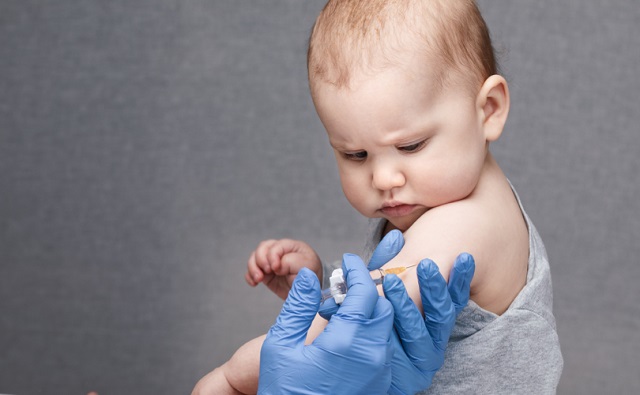
News RFK Jr.’s vaccine committee to vote on ending Hepatitis B shot recommendation for newborns
From LifeSiteNews
The goal is to examine whether vaccines on the recommended schedule are contributing to the rise in allergies, autoimmune diseases, and other conditions such as autism.
Vaccine advisors to Department of Health and Human Services Secretary Robert F. Kennedy Jr. plan to vote on ending the recommendation of the Hepatitis B shot for infants and discuss other changes to the childhood vaccination schedule.
The federal advisers, selected by RFK Jr., will meet on Thursday and Friday to review the childhood vaccination schedule, according to a report from The Washington Post. The goal is to examine whether vaccines on the recommended schedule are contributing to the rise in allergies, autoimmune diseases, and other conditions such as autism.
The vaccine panel, headed by Kirk Milhoan, a pediatric cardiologist and critic of the COVID shots, plans to vote on ending the Hepatitis B vaccine recommendation for infants within 24 hours of birth. The panel will decide whether to delay the first dose to a later time.
Critics of the very early administration of the first Hepatitis B vaccine dose argue that it represents an unnecessary risk, as the vast majority of children are not at risk of infection.
The vaccine committee makes recommendations to the CDC director on the vaccine schedule. Directors have typically adopted the panel’s recommendations, compelling insurers to cover certain vaccines. These recommendations also provide a guideline for most pediatricians and medical organizations.
READ: Florida moving to be first state to end all childhood vaccine mandates
“We’re looking at what may be causing some of the long-term changes we’re seeing in population data in children, specifically things such as asthma and eczema and other autoimmune diseases,” Milhoan told The Washington Post.
“What we’re trying to do is figure out if there are factors within vaccines,” he added.
He said that the committee is examining the potential dangers of using aluminum as an adjuvant, an ingredient meant to trigger an immune response strong enough for the body to develop antibodies and protect the person from the disease.
RFK Jr.’s panel has been heavily criticized by establishment health organizations and the pharmaceutical industry. Big Pharma officials have said that removing aluminum from vaccines and replacing it with another adjuvant would cost billions of dollars and take years.
The CDC recently revised its website on the issue of autism and vaccines, now stating, “The claim ‘vaccines do not cause autism’ is not an evidence-based claim because studies have not ruled out the possibility that infant vaccines cause autism.” The CDC had previously held that there was definitely no link between vaccines and autism. The change was made at the direct order of RFK Jr.
The McCullough Foundation, founded by famous cardiologist and COVID response critic Dr. Peter McCullough, goes even further in its critique of childhood vaccines. In a recent extensive report, the authors analyzed 12 studies comparing routinely vaccinated with unvaccinated children. According to the report, all of these studies showed “superior overall health outcomes among the unvaccinated, including significantly lower risks of chronic medical problems and neuropsychiatric disorders such as ASD [Autism spectrum disorder].”


Canadians will soon be versed in massive West Coast LPG mega-project
Keynote address of Premier Danielle Smith at 2025 UCP AGM

Canada Needs an Alternative to Carney’s One Man Show

Net Zero goal is a fundamental flaw in the Ottawa-Alberta MOU
-
National2 days ago
Canada Needs an Alternative to Carney’s One Man Show
-
 Alberta1 day ago
This new Canada–Alberta pipeline agreement will cost you more than you think
-
 Daily Caller2 days ago
Tech Mogul Gives $6 Billion To 25 Million Kids To Boost Trump Investment Accounts
-
 Business2 days ago
Recent price declines don’t solve Toronto’s housing affordability crisis
-
 Automotive1 day ago
Power Struggle: Governments start quietly backing away from EV mandates
-
 Energy1 day ago
Unceded is uncertain
-
 Business2 days ago
Canada’s future prosperity runs through the northwest coast
-
 Business9 hours ago
Canada’s climate agenda hit business hard but barely cut emissions